After 2009, the number of incidents involving alleged improper solicitation of donations dropped to nearly zero. But the court maintains the problem still exists.
by Massimo Introvigne
Article 4 of 6. Read article 1, article 2, and article 3.
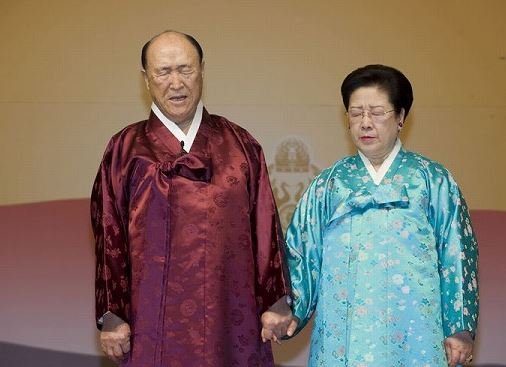
The High Court’s ruling to dissolve the Unification Church as a religious organization is grounded in the claim that it engaged in illegal solicitation of donations. However, the Church argues that such solicitation ceased in 2009, except in very few cases. Therefore, dissolving the organization in 2026, based on practices the Church had largely eliminated 17 years earlier, seems unreasonable.
The decision highlights how, although the Church had implemented measures since 1987 to address the problematic activities of the company Happy World (discussed in the previous article of this series), it became increasingly aware in the early 21th century that “spiritual sales” and pressure to donate put its members at risk of criminal and civil actions. While the court states that the criminal sentence against believers in the Shinsei Ltd. case (also covered earlier) was the immediate trigger for the Church’s response, it is also true that, in 2008, the Act on Specific Commercial Transactions was amended to become significantly stricter, primarily to protect consumers better.
As a result, in 2009, the Church issued a “Compliance Declaration,” which the verdict discusses at length not as a single document but as a plurality of official instructions sent to members in 2009, followed by interpretive texts in subsequent years. The latest guidelines, confirming that these directives were in full force and including new instructions, were sent to members in 2022 and 2023 in the wake of the Abe assassination and the controversies that followed.
The court recognizes that these directives were comprehensive. They included detailed instructions not to encourage or solicit donations by linking them to the karmic relationships of ancestors, and to avoid receiving donations that are disproportionate to the followers’ economic circumstances. The directives also specified that donations should come from individuals who have adequately studied the Unification doctrine, and that the recipient should be clearly identified as the Unification Church. Additionally, there were rules against soliciting donations from devotees with mental health issues or who appeared senile. Regarding donations from older people, members were advised to consider factors such as their decision-making ability, faith, living circumstances, and family situation to prevent issues arising from unreasonable donations.
If anything, as the High Court acknowledges, measures taken after the Abe assassination were even more strict, and the Church established an Independent Compensation Committee, including nationally renowned lawyers, to quickly reimburse dissatisfied donors.
And when, following the emotional reactions to Abe’s shooting, the government passed a new law on religious donations, the Church immediately vowed to comply, even though many experts criticized the law as a threat to religious liberty. Parenthetically, the High Court decision uses this 2023 law retroactively to evaluate the Church’s actions before it was enacted. It claims, unconvincingly, that this is not a case of retroactive law enforcement because the 2023 statute clarified and interpreted provisions that were implicitly included in earlier laws.
The measures introduced by the Church to end “spiritual sales” and improper solicitation of donations should have closed the case. Since it is illogical to dissolve a religious corporation for sins, whether real or perceived, committed more than fifteen years ago, and that it has since learned not to repeat, the logical conclusion is that the Church should not be dissolved.
Contrary to common reasoning, the High Court holds that the Compliance Declaration and its guidelines failed to adequately address the problem of illicit solicitation of donations. To support this claim, the court contradicts its own calculations. The ruling mainly depends on counting cases where the Church lost civil lawsuits. It lists three cases where donors successfully sued the Church over donations or travel expenses to Korea—costs that a former believer later regretted—dating from after the 2009 Compliance Declaration, specifically between 2010 and 2013. No cases of donations after 2013 are mentioned. Additionally, the High Court cites a single settlement involving a donor who, after being a Church member for just five months in 2016, received a refund.
Clearly, four cases over 15 years do not indicate a trend. They merely show that the mechanism mandated by the Compliance Declaration took some years to be firmly established. Meanwhile, the cases decreased to a handful and eventually to zero.
However, the High Court introduces two new, unusual categories. The first includes cases where there is “a considerable possibility” that donations were unlawfully solicited after the Compliance Declaration. In this category, the High Court identified only two cases: a 2024 Supreme Court decision overturning previous rulings favorable to the Unification Church and a settlement. In the two cases, relatives attempted a complicated reconstruction of donations made by a deceased believer and a believer who had allegedly lost mental capacity.
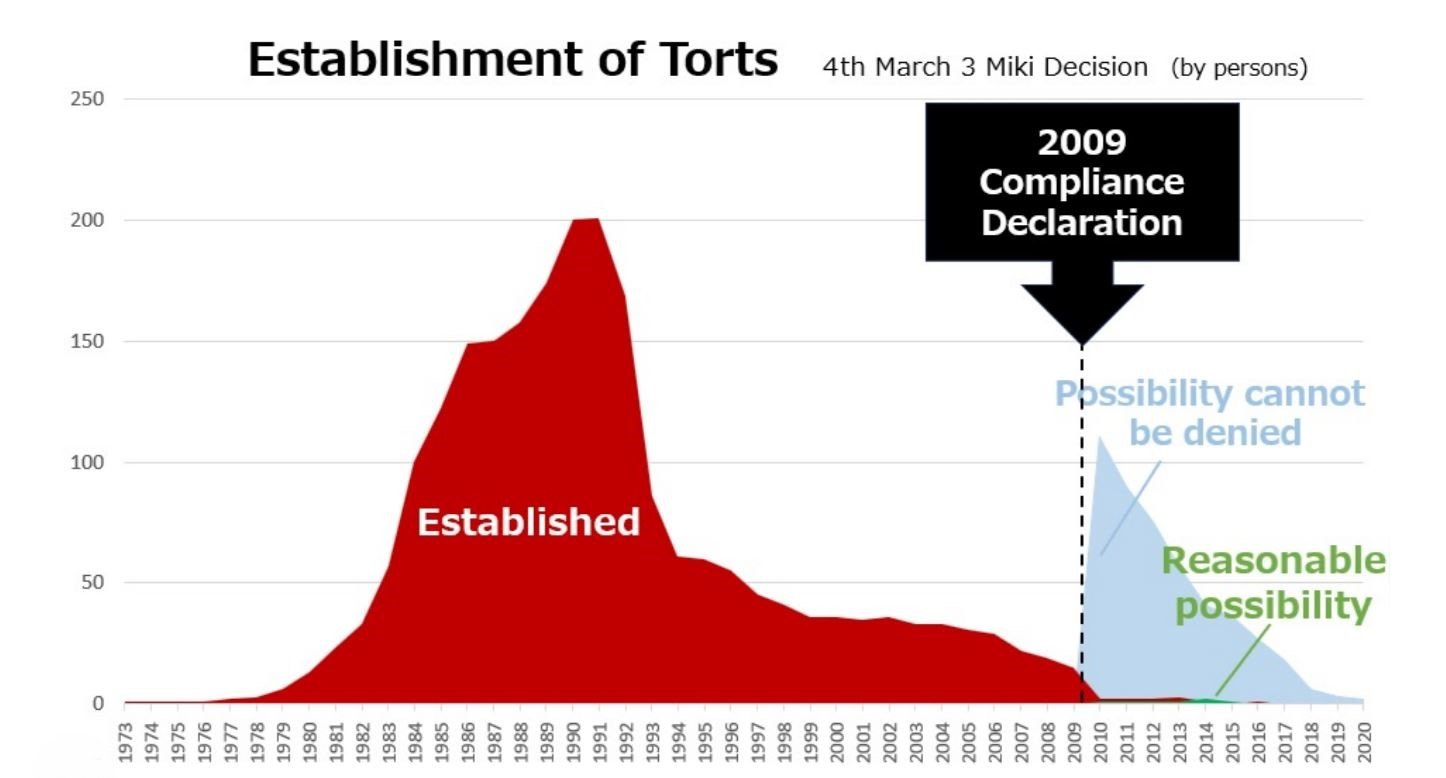
To reach significant numbers, the High Court constructs a second new category, the “cases in which it cannot be denied that there is a possibility” that donations were solicited through illicit means after the Compliance Declaration. The difference with the previous category is that here there is a mere “possibility” rather than “a considerable possibility.” Here, the High Court lists settlements involving 138 former members. To claim a veneer of fairness, it states that “cases in which settlement was concluded after the Shooting Incident [the Abe assassination] in this case are not included, because it cannot be ruled out that, in light of the heightened social criticism directed at the Appellant [the Unification Church], the Appellant may have agreed to settlement even in cases where the claimants’ allegations did not necessarily have sufficient basis.”
However, the 138 listed cases—about ten per year from 2010 to 2023—are not clearly cases of illicit post-2009 solicitation of donations. If they were, the High Court would have included them in its first list of post-2009 (but pre-2014) wrongdoings, which listed only three civil decisions and one settlement. According to the court’s own words, the 138 cases “do not permit a conclusive finding.” Whether donations were made after 2009 and solicited through improper means “cannot be ruled out,” but the opposite cannot be ruled out either. In summary, this is purely speculation, and no decision should have been based on it.
The numbers being thus inconclusive, the High Court resorts to three other arguments to prove that the illicit solicitation of donations continued after the Compliance Declaration of 2009. The first is that the amount of donations received by the Unification Church fluctuated but did not substantially decline after 2009. Of course, this is not evidence of any wrongdoing. If anything, it proves that, notwithstanding all social criticism, most members remained steadfast in the faith. To support dissolution, the court should not prove that donations were collected, but that they were collected through illicit means.
The second argument is that, after 2009, the church continued to set “numerical targets” or quotas for expected donations and evaluated pastors based on whether they met these quotas. The High Court admits that the system was gradually “mitigated” and that meeting the donation quota was only one of several criteria used to evaluate pastors (according to the church, affecting their overall performance by 10%). However, it maintains that the church could establish high numerical targets for donations again in the future—which is, again, speculation—and it appears to consider budgeting donations in advance as inherently objectionable.
Here, the court falls into the common mistake of treating practices shared by many denominations as unique when controversial organizations adopt them. Donations are the primary source of income for most churches. A budget forecast that does not account for donations would not make sense for a church. The High Court’s wording is not neutral; it maliciously redefines budget forecasts as “quotas.” Regarding the evaluation of pastors, all churches today require them to be wise managers, not just spiritual leaders. A pastor who cannot collect donations would not be effective, although this should not be the only way to judge his work—and it isn’t in the Unification Church.
The third argument exposes the High Court’s true purpose. It repeatedly states that the improper solicitation of donations is likely to happen again, because their “root cause lies in the Church itself.” It suggests that as long as the Church promotes the universal mission of the True Parents, along with sacrifice, devotion, and helping suffering ancestors, it will inevitably continue to gather large donations and prompt believers to solicit contributions unlawfully. Therefore, dissolution becomes unavoidable.
It seems that the court’s only satisfaction would be a public admission that the church’s theology is flawed and inherently abusive, coupled with a pledge to modify or eliminate core elements of the Unification doctrine. The decision ultimately circles back, showing it does not address abuses that are mostly corrected but rather seeks to suppress the church based on its fundamental nature and beliefs.
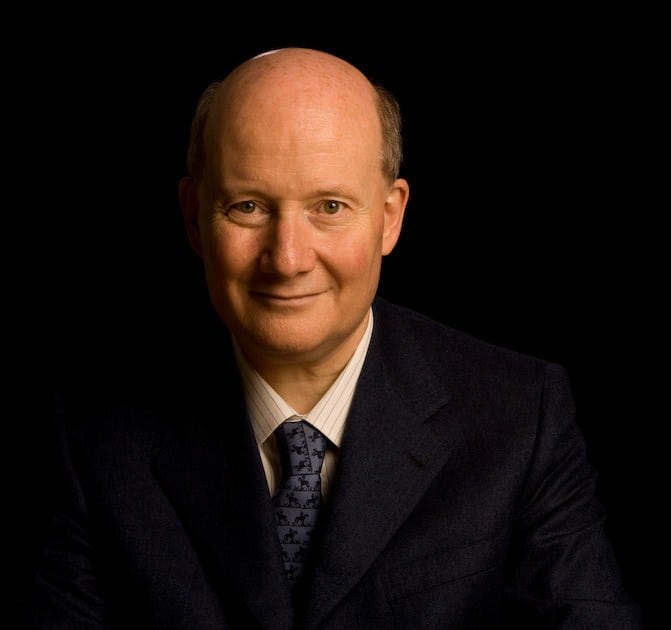
Massimo Introvigne (born June 14, 1955 in Rome) is an Italian sociologist of religions. He is the founder and managing director of the Center for Studies on New Religions (CESNUR), an international network of scholars who study new religious movements. Introvigne is the author of some 70 books and more than 100 articles in the field of sociology of religion. He was the main author of the Enciclopedia delle religioni in Italia (Encyclopedia of Religions in Italy). He is a member of the editorial board for the Interdisciplinary Journal of Research on Religion and of the executive board of University of Pennsylvania Press’ Nova Religio. From January 5 to December 31, 2011, he has served as the “Representative on combating racism, xenophobia and discrimination, with a special focus on discrimination against Christians and members of other religions” of the Organization for Security and Co-operation in Europe (OSCE). From 2012 to 2015 he served as chairperson of the Observatory of Religious Liberty, instituted by the Italian Ministry of Foreign Affairs in order to monitor problems of religious liberty on a worldwide scale.