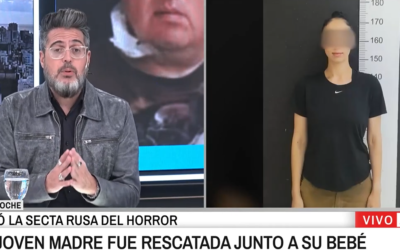
A new hearing in the case of an imaginary “cult” underscores the misuse of anti-trafficking laws by Argentine prosecutors obsessed with “cultic brainwashing.”
by María Vardé

On January 21, a new hearing was held in the case involving Russian citizen Konstantin Rudnev, who has been detained in Argentina for nearly ten months under an as yet imprecise charge of human trafficking in connection with an alleged “Russian cult.”
Judge Gustavo Zapata granted house arrest on the basis of medical expert reports describing a fragile health condition that has caused him to lose thirty (30) kilograms. The decision is not final at the time of writing. A prior ruling along the same lines had already been set aside by a higher court on two grounds: risk of flight and possible influence over the victim. However, house arrest entails monitoring through an electronic ankle bracelet. Rudnev’s travel documents have been seized, and the only person identified as a victim is currently in Russia with her family.
But that is not all: the alleged victim denies that status altogether, along with the entire accusatory hypothesis. The issue, therefore, is not the “consent” to an act but the very existence of the act itself. At the same time, pretrial detention is prolonged through a narrative that reinterprets the testimony contradicting the accusation as a product of “coercive persuasion.”
The conditions of Rudnev’s detention—according to the case file and testimony from family members—describe a harsh regime marked by physical deterioration and controversial medical treatments. Prolonged pretrial detention generates cumulative material and symbolic effects, while prosecutors were granted a year to “continue investigating.” The situation becomes even more striking when one considers that the alleged victim, before leaving the country, added a handwritten statement to the case file denying that status and today acts as a private complainant against the prosecutors, alleging that a false victim status was imposed against her against her will. In addition, other women charged in the case also denied belonging to a spiritual group under Rudnev’s leadership. They unanimously rejected declaring themselves victims of any crime, despite the intense pressure they report having suffered from judicial officials. Most even denied knowing Rudnev.
This shift—from the voices of the alleged victims to an interpretive reading that discredits those voices under the presumption of manipulation—is not unique to the Rudnev case. In the Buenos Aires Yoga School (EYBA) case, which involved Juan Percowicz and Carlos Barragán, charged with leading an alleged “spiritual cult” for purposes of human trafficking, a comparable dynamic can be observed. The women identified as victims of sexual exploitation denied both that status and the alleged facts. They also voluntarily underwent psychological and psychiatric examinations by the Forensic Medical Corps. The reports recorded preserved mental capacity and the absence of indicators of annulment of self-determination. Even so, their denials were dismissed as the product of “coercive persuasion,” in open contradiction to the forensic reports. As in the Rudnev case, these women filed complaints against the prosecutors.
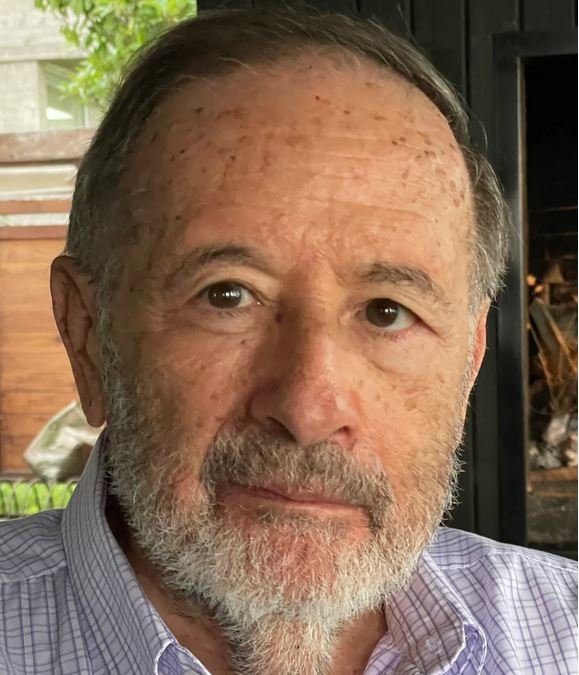
Percowicz, over 80 years old, remained detained for more than a month in a facility that a court described as uninhabitable and degrading, and whose closure it ordered shortly thereafter. House arrest was granted only belatedly. His account of detention and confinement was published by Willy Fautré, co-founder and director of Human Rights Without Frontiers, underscoring the physical and psychological impact of incarceration on an elderly person with health problems.
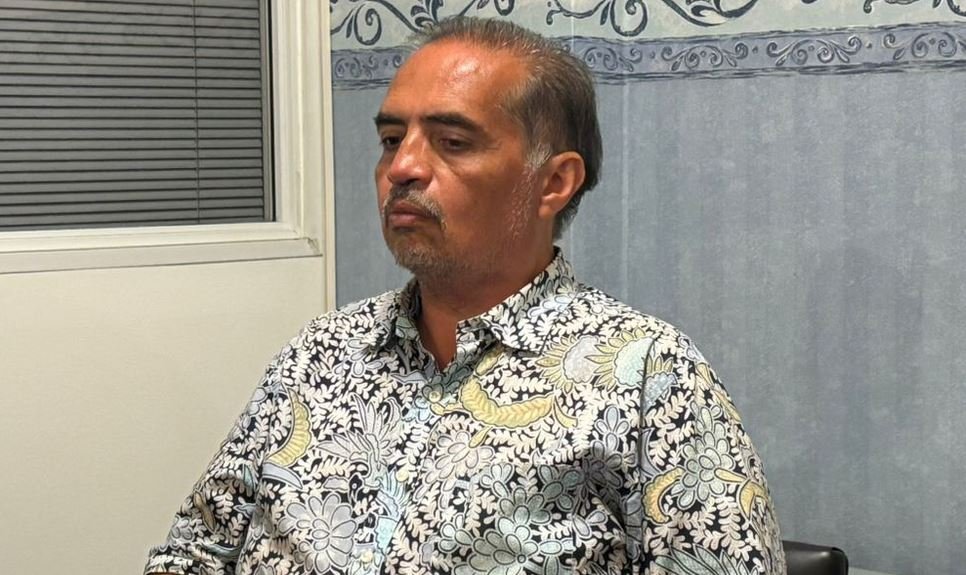
Even more serious was the case of Carlos Barragán—analyzed by sociologist Susan Palmer—who suffers from a chronic illness requiring strict, lifelong treatment. He remained detained for 84 days without access to medication or adequate clinical care, suffering severe deterioration that included bone injuries and cardiovascular complications culminating in open-heart surgery. Procedurally, his situation is illustrative: he was portrayed in the media as responsible for an “archive” of sexual recordings produced through the exploitation of the alleged victims, but the Court of Appeals confirmed that the examination of the seized material (more than 4,100 VHS tapes) contained no such content; subsequently, the investigating judge ordered his dismissal (final).
Two recent acquittals exemplify how certain trafficking cases in religious contexts can advance supported by morally charged categories (“cult,” “brainwashing”) that later do not withstand evidentiary scrutiny. In the Iglesia Tabernáculo Internacional case (Paraná), the court emphasized that some defendants went to trial after more than a year of pretrial detention, despite the accusatory hypothesis ultimately revealing a foundational evidentiary inconsistency. That reconstruction also reviewed the treatment afforded to those presented as victims: several described pressure and mistreatment during the investigative phase by anti-trafficking officials, aimed at obtaining incriminating statements against their pastors, even when they denied having been exploited. In the case of Pastor Tagliabué (Mar del Plata), after more than three years of pretrial detention, the court acquitted the defendant, emphasizing that the accusation rested on reinterpreting favorable statements by the alleged victims as the effect of “brainwashing.” At trial, those inferences were found to be conjectures lacking evidentiary support.
In these scenarios, what proves decisive is how the process responds when key testimony does not confirm the accusatory hypothesis. Anti-cult rhetoric offers an interpretive closure that tends to make the contradiction “explainable”: if alleged victims deny that status, the denial is read as a sign of “recruitment”; if defendants invoke religious or discipleship ties, those ties are re-read as “psychological control.” In practical terms, the effect is twofold. On the one hand, the self-determination of those who reject victim status is discredited, translating their decisions into symptoms of manipulation. On the other hand, a dangerousness associated with “cultic leadership” is presumed, normalizing pretrial detention as a primary response—even when the only alleged victim resides 15,000 kilometers away from where the defendant would serve house arrest.
Critical studies on human trafficking in Argentina have shown precisely how the anti-trafficking apparatus tends to produce a standardized figure of the victim, and to treat refusal to recognize such status as indirect evidence of dependency rather than as an empirical datum to be institutionally weighed with caution. In this context, the role of the Office of the Prosecutor for Trafficking and Exploitation of Persons (PROTEX) is central. In addition to intervening in specific cases—such as EYBA, Tagliabué, and International Tabernacle—PROTEX conducts nationwide training for judicial operators, disseminating operational guidelines and interpretive frameworks. This pedagogical-institutional function helps explain the homogeneity of vocabulary and specific lines of reasoning. It includes the circulation of notions rejected by the vast majority of the scientific community and foreign to the Criminal Code, such as “coercive persuasion,” which expands the category of victim and discredits testimony that denies the prosecutorial hypothesis.
The Rudnev case, therefore, not only reopens a discussion about health and alternative measures, but also compels consideration of how risk is assessed when the accusation rests on categories with a high moral charge—“cult,” “leader”—and when the voices of the alleged victims contradict the criminal hypothesis. From an anthropological and religious freedom perspective, it is vital to recall a fundamental principle of institutional rationality: the more exceptional the measure (preventive confinement), the more demanding the standard of justification must be. In cases shaped by interpretive frameworks that tend to invalidate the word of those who deny being victims, the challenge is twofold: to prevent penal protection from turning into anticipatory harm, and to ensure that decisions on pretrial detention—and on house arrest—are grounded in evidence and proportionality, not in scripts activated before the facts are established.

Maria Vardé graduated in Anthropological Sciences at the University of Buenos Aires and is currently a researcher at the Instituto de Ciencias Antropológicas, Facultad de Filosofía y Letras, Universidad de Buenos Aires (Institute of Anthropological Sciences, Faculty of Philosophy and Humanities, University of Buenos Aires). She has written and lectured on archeology, spirituality, and freedom of religion or belief.