Rudnev believed he would find peace in Argentina, but the long arm of anti-cult slander pursued him there as well.
by Massimo Introvigne and María Vardé
Article 4 of 4. Read article 1, article 2, and article 3.

In 2021, Rudnev left the Russian prison system as a man transformed, though not in the way his accusers had once predicted. When he entered at forty-three, he was healthy and physically strong, accustomed to long walks in the Siberian forests he loved. Eleven years later, he emerged at fifty-four, his body marked by the accumulated damage of confinement and deprivation. In prison, he had been forbidden to practice yoga, walk, stretch, or even perform the breathing exercises that had been part of his daily life for decades. Guards monitored him closely, ensuring that he did nothing that might compromise his well-being. He accepted this with a kind of quiet resignation, a posture his wife describes not as submission but as spiritual endurance, a refusal to let bitterness take root. He served his sentence from bell to bell, without complaint, even as the outside world continued to recycle the same sensationalized stories about him, stories that had long since detached themselves from verifiable fact.
During the eleven years Rudnev was in jail in Russia, dozens of independent teachers used his name (or “Ashram Shambhala”) and texts. Some of them, including Soledad Domec in Chile, became controversial in turn. We do not intend to examine their cases here, but what is clear is that Rudnev was not responsible for what they taught and did.
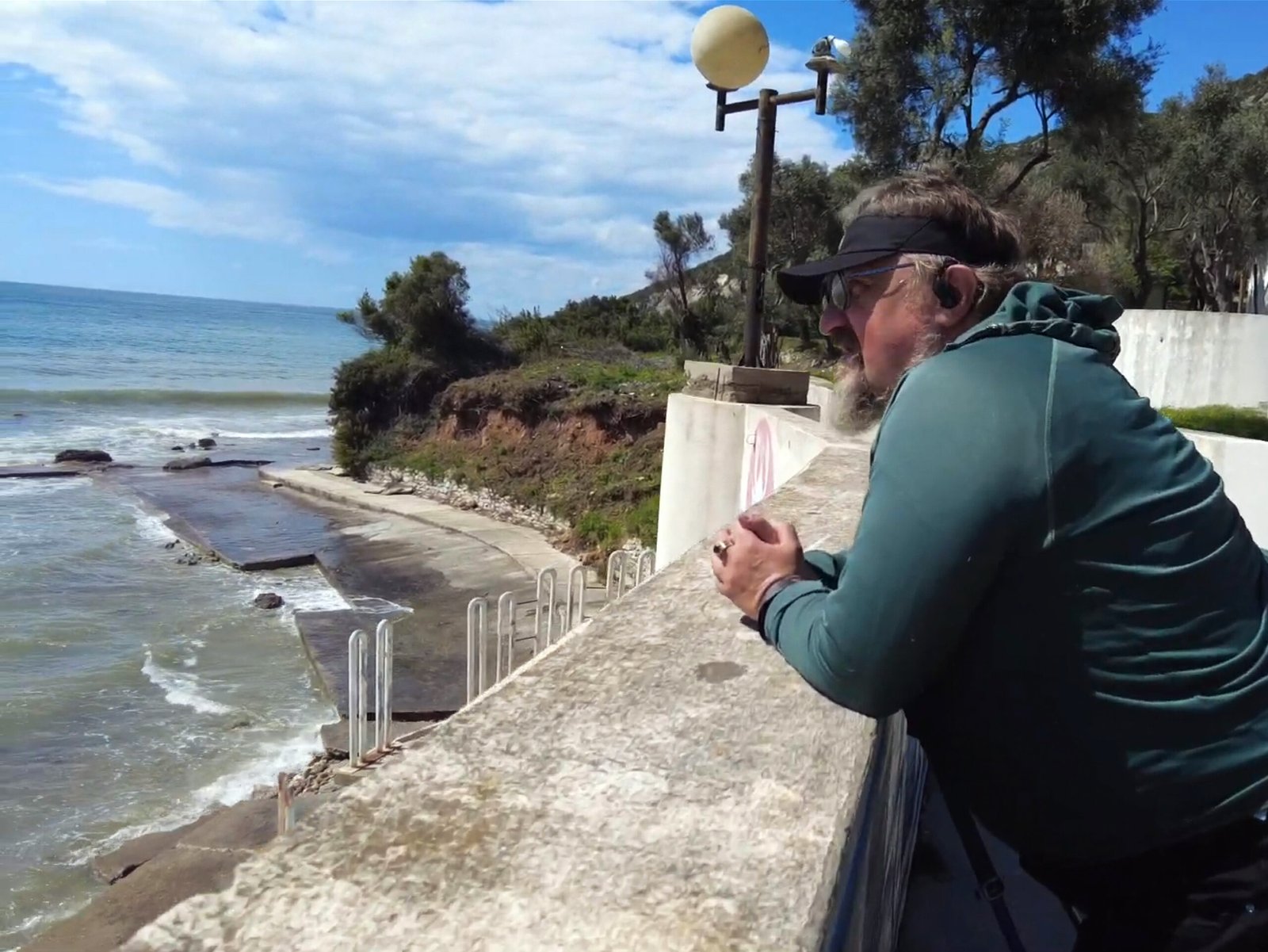
When he was released, Rudnev left Russia almost immediately. He no longer spoke publicly, no longer taught, no longer criticized the government. He wanted to be near nature again, to walk in forests, to breathe mountain air, to reclaim the solitude that had been denied to him for more than a decade. Montenegro offered this refuge. Its mountains and lakes reminded him of the landscapes he had loved in Siberia, and he spent long stretches riding quad bikes through the wilderness, sleeping outdoors, living in a way closer to a monastic retreat than to anything resembling organized activity.
Yet even there, the past followed him. When local authorities discovered his name, they turned to the internet for information, and what they found were the duplicate recycled headlines that had circulated in Russia years earlier. They did not find evidence; they found a narrative. And that narrative—the image of an “evil cult leader” constructed by Russian media and amplified by talk shows and sensationalist reporting—was enough to trigger a new wave of scrutiny.
Montenegrin police raided the hotel where he was staying, interrogated him and others, and briefly detained him. Nothing came of it. There were no charges, no evidence, no victims. But the headlines reappeared, now in Montenegrin, copied almost word-for-word from Russian sources, complete with the same photographs taken fifteen years earlier. The transnational replication of stigma had begun. He left Montenegro voluntarily, with valid documents and no restrictions, but the experience confirmed that the Russian narrative had become portable, capable of resurfacing wherever he went.
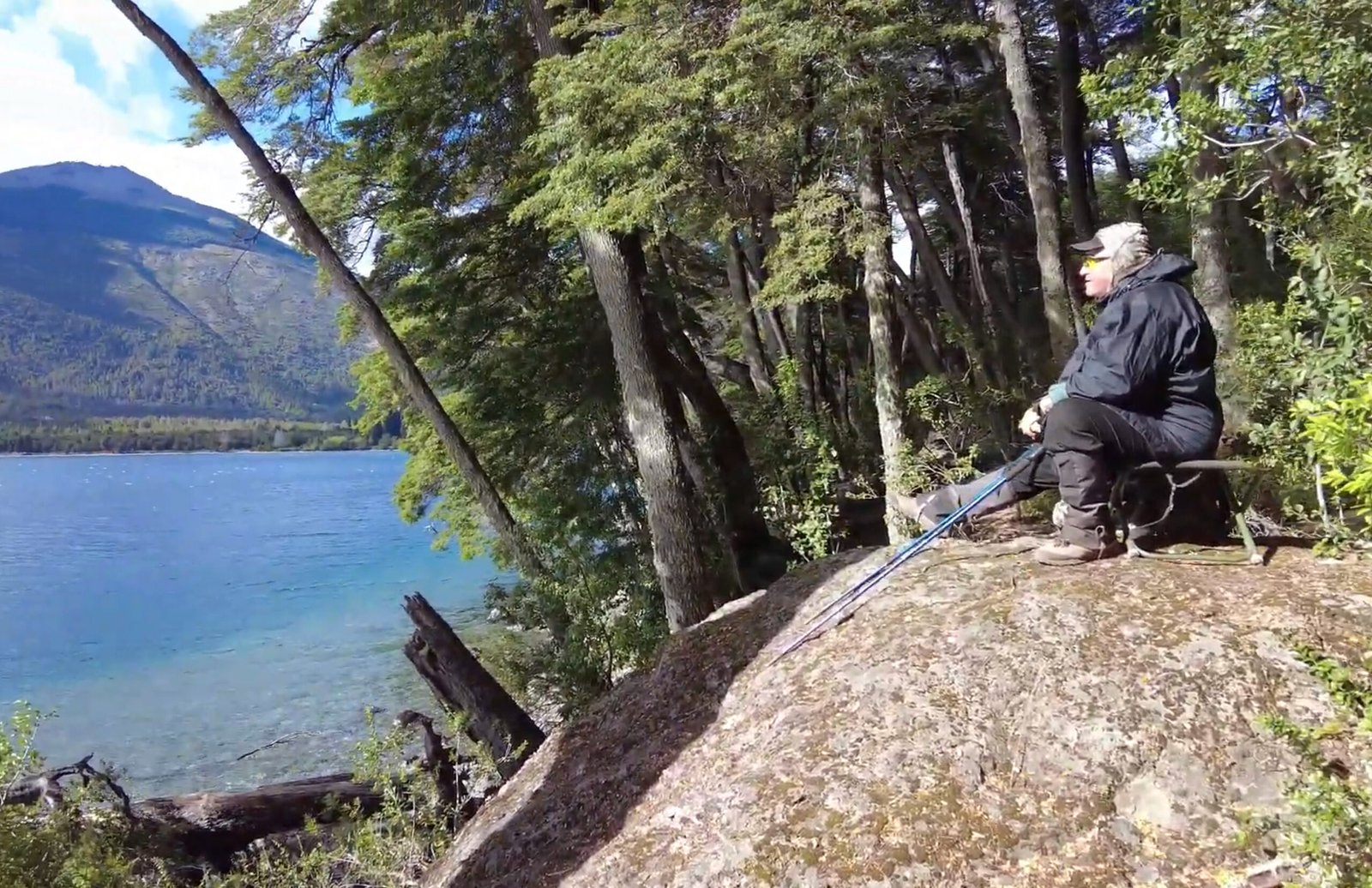
Argentina seemed, at first, like a place where he could disappear into nature again. He chose Bariloche for the same reason he had chosen Durmitor in Montenegro: mountains, forests, lakes, the sense of vastness that had always grounded him. Argentina had long been welcoming to Russians, offering visa-free entry and, for many women, the possibility of giving birth in a country that granted citizenship to their children. A sizeable Russian community had formed there, and he had acquaintances with whom he occasionally socialized. But he did not teach, did not organize, did not form any group. He walked, rested, meditated, and lived quietly.
The events that would eventually lead to his arrest began not with him but with E., a young Russian woman who traveled to Argentina while pregnant, seeking safety and recovery. In a personal interview with one of us (Vardé), E. explained that she came to Bariloche fleeing a toxic and violent relationship, hoping to rebuild herself emotionally and physically before giving birth. Nadezhda Belyakova, a close family friend, accompanied her at the request of E.’s mother, who wanted a secure environment for her daughter and future grandchild away from an abusive, alcohol-dependent partner.
When E. went into labor and was admitted to the hospital in Bariloche, the medical staff became suspicious. They interpreted her reliance on Nadezhda and another woman, Svetlana Komkova —and her limited ability to communicate—as “submission” and as evidence that others were preventing her from speaking freely. Yet E. spoke neither Spanish nor English and, by multiple accounts, communication with hospital staff and police depended on improvised translation tools and ad hoc interpreters—conditions that created an obvious structural risk of misunderstanding from the start.
Against this backdrop, conjectures hardened into “evidence.” A nurse decided E. “looked too young” to be twenty-two, as stated in her passport, and concluded she must be a minor and therefore a surrogate mother. The situation escalated further when E. handed the nurse a white rose—a simple gesture later framed as a coded plea for help. Meanwhile, one of the women assisting with interpretation later reported an especially alarming episode: the same nurse allegedly attempted to induce labor with medication without E.’s consent. As implausible as parts of this chain may sound, these elements—misread gestures, age assumptions, and narrative leaps—appear in the case file and became foundational to the investigation’s origin story: conjecture treated as fact.
The hospital called the police. E. was detained, separated from her newborn, and the investigators constructed a theory in which she became the central victim of a supposed human-trafficking network linked to Rudnev, a man she had never met.
The Argentine anti-trafficking statute is notoriously broad, encompassing everything from forced labor to sexual exploitation to document irregularities. Prosecutors with a strong anti-cult bias have used it repeatedly in cases involving spiritual groups, real or imagined. In this instance, the statute served as the scaffolding for a narrative with little factual basis but immense rhetorical power. E.’s companions were accused of attempting to falsify the newborn’s documentation by adding Rudnev’s surname. E. and Svetlana—who was present and assisting with interpretation—recall that a nurse repeatedly insisted that E. register the baby under a father’s surname, warning that the hospital would not release the newborn without a named father—an assertion the nurse later confirmed in her testimony before the court. E., however, insisted on using her own surname. In the paperwork, the child’s surname was initially written in the feminine form, and E. repeatedly asked staff to correct it to the proper masculine form, as Russian surnames commonly change their endings by grammatical gender. According to Svetlana, who was present and assisting with interpretation, the physician reacted angrily during this exchange and tore up the document. Prosecutors later reframed this episode as evidence tampering, accusing Svetlana of destroying the paper and attempting to violate the integrity of an official public record.
The hospital kept threatening E., claiming she would not be allowed to return home unless she provided a document about the father, a request she later realized was not legitimate. E.’s landlady knew Rudnev and was assisting him in obtaining a residence permit in Argentina. Thus, a copy of Rudnev’s passport was found in E.’s home. In desperation, E. gave it to the hospital as the child’s father’s passport. This, she reports, and her friend and the landlady have confirmed, was the only indirect connection between E. and Rudnev. E. claims she never met Rudnev in person and was certainly not part of any spiritual school or “cult.” However, when Rudnev’s name surfaced through the passport and became part of the file the hospital sent to the authorities investigating a possible trafficking of pregnant women, it was linked to his past as a “cult leader” in Russia and triggered speculation that he was reforming the “cult” in Argentina.
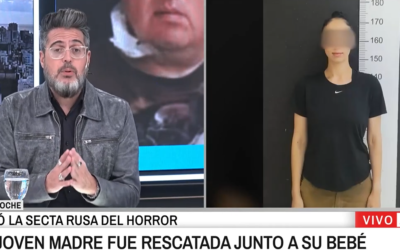
The case was initially handled by Federal Judge of Guarantees Gustavo Villanueva in the Court of San Carlos de Bariloche, and at that stage, it named as defendants one Mexican woman and five Russian women—with no mention of Rudnev—and was swiftly dismissed for lack of evidence of any crime. Rather than narrowing the inquiry after the dismissal, the investigation widened under a new judge and a new court. Days later, in March 2025, police conducted a sweeping operation at the Bariloche airport, detaining fifteen more Russians—most of them women. Headlines erupted across Argentina, proclaiming the discovery of a “Russian cult” led by an international fugitive. The articles were, once again, direct reproductions of Russian and Montenegrin reporting, complete with the same outdated photographs and the same allegations. Prosecutors declared they had captured a dangerous criminal leader. They had, in reality, arrested a group of tourists, most of whom did not know each other and had no connection to Rudnev or his teachings. They had never even heard his name before their detention. Even E. testified before prosecutors and judges that she had never met him, never communicated with him, and did not consider herself his victim. She later recorded a video stating that if she was a victim at all, it was of the Argentine authorities who had detained her, isolated her, and pressured her for months.
Across interviews from many of the detained women collected for this report, the same sequence repeats: they all describe being seized in public spaces by officers who did not identify themselves, subjected to shouting and physical violence, and taken away without a warrant or an intelligible explanation. They report no interpreter and the immediate confiscation of phones and passports. Several detainees also describe being aggressively pressured—sometimes for extended periods—to “confirm” they were victims of trafficking and to implicate people they did not know, as if victim status were a procedural shortcut rather than a factual determination. One woman reports being asked to sign blank protocols.
The accusations expanded rapidly. One woman was charged with carrying 131 cocaine tablets, a claim undermined by toxicological analysis showing the pills were ordinary over-the-counter sleep aids—yet, to date, the charge has not been corrected. Another was accused of being malnourished due to “cultic” control, though she suffered from congenital alopecia. Several women described being kept for prolonged periods in police facilities under conditions that read less like detention than degradation: hours and even days without adequate food or water, without mattresses or blankets, in cold cells, sometimes forced to remain standing while handcuffed. Some report being denied basic hygiene and medical attention even when they had visible injuries or apparent physical distress. Others describe humiliating searches and intimidation that they experienced as threats to their physical or sexual safety, including being left naked, mocked, or placed in situations they perceived as deliberately frightening. In one account, a police officer threw a piece of bread onto the cell floor “as if feeding animals.” Taken together, these testimonies suggest that the mere insinuation of a “cult” can operate as an unofficial warrant for exceptional—and exceptionally abusive—measures.
Only one person remained in custody after the initial detentions: Rudnev. He was arrested at the airport while preparing to travel to Buenos Aires and then to Brazil to visit the waterfalls. No warrant was shown to him, no charges were read, and no explanation was given at the time of arrest. He was provided with neither an interpreter nor the opportunity to contact anyone. He was strip-searched, placed in solitary confinement, and fed food he could not digest; for the first ten days, he survived on bread and tap water. Hearings stretched from morning until after midnight in a language he did not understand, with an interpreter who translated only fragments. He lost around 30 kilograms in nine months. Prison doctors, misreading his chronically high blood pressure, forced him to take three powerful antihypertensive pills daily, checking his mouth to ensure he swallowed them; the medication caused severe weakness and fainting spells, yet when he collapsed in the medical unit, staff recorded the incident and dismissed it as unrelated to treatment. They called him a malingerer even as he tried to explain his spinal hernia, a condition linked to years of restricted movement in Russian prisons.
Sanitary conditions were equally dire. Prisoners were required to drink from a single shared cup, regardless of illness. He was denied painkillers, antibiotics, and any food compatible with his dietary needs. Eventually, he refused all treatment, signing daily forms stating he declined medical care—a refusal interpreted by some guards as rebellion. However, he remained calm, polite, and, according to other inmates, radiated a kind of quiet benevolence that made mistreatment difficult even for those who did not understand him. He spoke no Spanish or English and spent most of his time in prayer or meditation, isolated not only physically but linguistically.
So far, neither Rudnev nor his wife says they have been clearly informed of the specific facts underlying the accusation; as they understand it, the case has proceeded on a vague and unsubstantiated hypothesis rather than a clearly articulated set of charges. In a personal interview for this report, his wife described Argentina as the refuge they sought after years of persecution. She insisted they had done nothing wrong—only hoped Konstantin’s health might improve in the nature he loves. She now fears she may lose him, warning that his life is in grave danger.
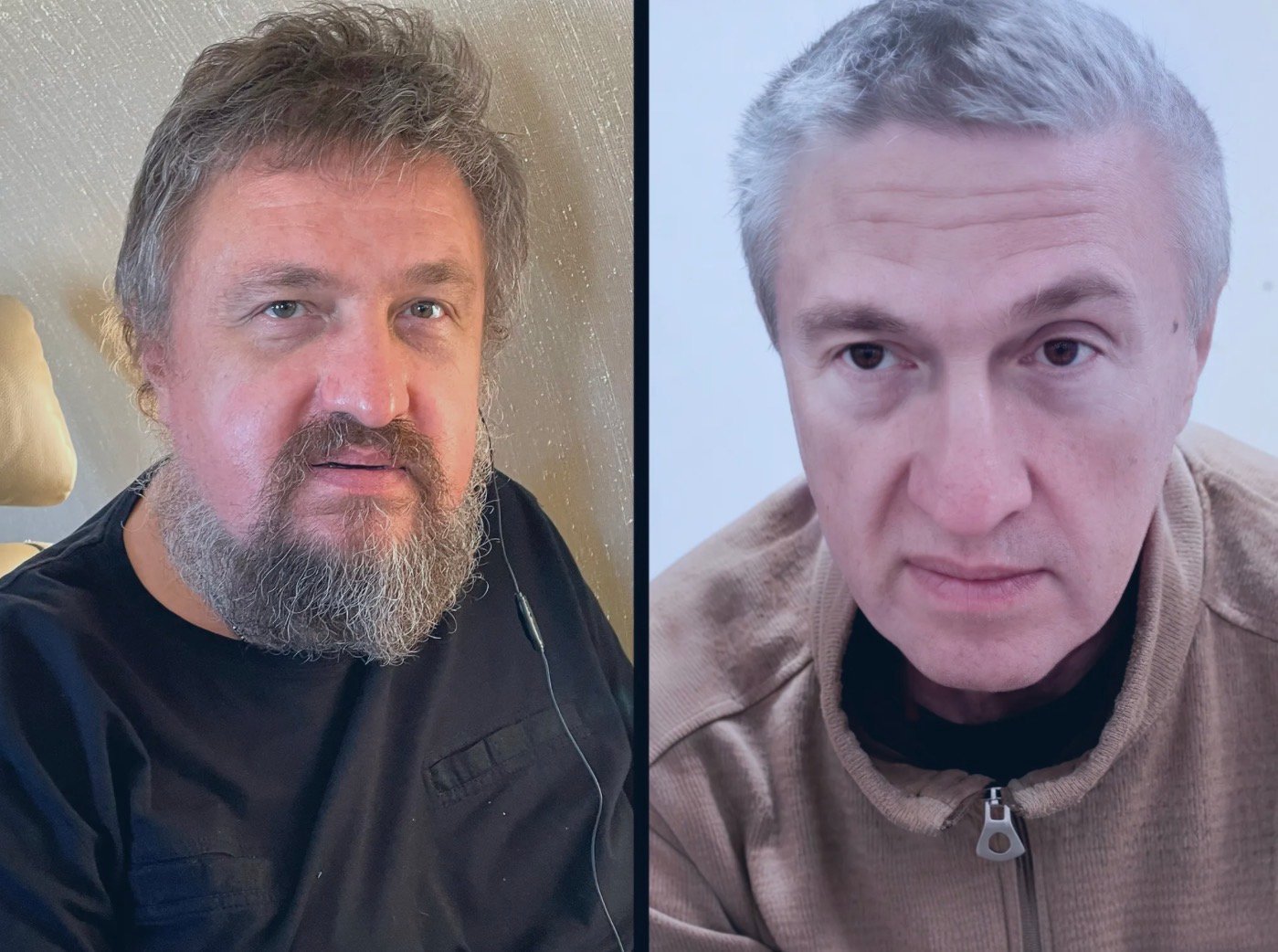
The case against him, meanwhile, unraveled. The supposed primary victim denied knowing him. The women detained with him denied being part of any movement. Many insisted they had not even heard of him before their arrest. The pills were not drugs. The birth-certificate theory collapsed. The trafficking narrative dissolved. Prosecutors admitted they had no concrete evidence but argued that the case was “complex” due to its international nature. They requested—and received—a full year of pretrial detention, until March 2026, citing the need to examine the seized phones and computers. The devices belonged not only to him but to all the Russians detained in the sweep. Most of the material was in Russian, and investigators were translating it using automated tools, a practice that is legally invalid but used to justify continued delays.
In effect, he remains imprisoned not for anything he did in Argentina but because of an imported mythology: a narrative forged in Russia, replicated in Montenegro, and absorbed into Argentine prosecutorial assumptions. The image of the “international cult leader” has proven more durable than the factual record—outliving the collapse of specific allegations, persisting despite the supposed victim’s testimony, and enduring in the absence of accomplices or any demonstrable organized group. In the eyes of the authorities, he has become the embodiment of a story they inherited rather than discovered, and releasing him would mean acknowledging that the case was built on mistranslations, assumptions, and the inertia of international stigma—rather than evidence.
For now, he remains in a cell in Rawson, awaiting a process that drifts forward less because of proof than because the system is reluctant to admit error. His health deteriorates as his file grows, and a story that began decades ago—shaped by media, politics, and the power of repetition—continues to determine his fate in the country where he sought a quiet life. As this continues without a coherent charge, the calls from Argentine and international human rights voices insisting on due process over mythology and on human dignity over prosecutorial momentum are becoming harder to dismiss. Their demand is simple and increasingly urgent: that Argentina finally hear them and allow Konstantin Rudnev to walk free before the injustice becomes irreversible.

Massimo Introvigne (born June 14, 1955 in Rome) is an Italian sociologist of religions. He is the founder and managing director of the Center for Studies on New Religions (CESNUR), an international network of scholars who study new religious movements. Introvigne is the author of some 70 books and more than 100 articles in the field of sociology of religion. He was the main author of the Enciclopedia delle religioni in Italia (Encyclopedia of Religions in Italy). He is a member of the editorial board for the Interdisciplinary Journal of Research on Religion and of the executive board of University of Pennsylvania Press’ Nova Religio. From January 5 to December 31, 2011, he has served as the “Representative on combating racism, xenophobia and discrimination, with a special focus on discrimination against Christians and members of other religions” of the Organization for Security and Co-operation in Europe (OSCE). From 2012 to 2015 he served as chairperson of the Observatory of Religious Liberty, instituted by the Italian Ministry of Foreign Affairs in order to monitor problems of religious liberty on a worldwide scale.