MEPs adopted by a large majority a recommendation denouncing Beijing’s assimilation law, its support for Moscow’s war, and its pressure on Taiwan.
by Abdurehim Gheni Uyghur

“The world is in greater peril from those who tolerate or encourage evil than from those who actually commit it.”
—Albert Einstein
On October 7, 2026, the European Parliament cast a vote of great significance for international politics. A new report on EU-China political relations, prepared by Belgian Member of the European Parliament Hilde Vautmans, was adopted by an overwhelming majority, with 454 votes in favor, 86 against, and 110 abstentions. The report, formally a recommendation to the Council, the Commission, and the EU High Representative, is an explicit and decisive response to the Chinese government’s domestic and foreign policies, particularly its ongoing genocide against the Uyghur people.
To fully understand the political value of this text, one must look at the European Union’s past trajectory. On June 9, 2022, the European Parliament passed a historic resolution stating that China’s internment camps, forced sterilization, and campaign to erase Uyghur national identity amounted to crimes against humanity and represented a serious risk of genocide.
Four years later, on July 1, 2026, China’s so-called “Law on Promoting Ethnic Unity and Progress” entered into force, after the National People’s Congress had adopted it on March 12. The report expresses deep concern that this “Unity Law” may further institutionalize assimilation. In fact, it is a systematic assimilation law designed to eradicate the distinct ethnic identities of Uyghurs, Tibetans, and other nations. Furthermore, Article 63 of the law targets Uyghur, Tibetan, Hong Kong, and Chinese dissident activists operating within democratic nations. As the report notes, this provision violates international law and the sovereign jurisdiction of EU member states.
Hilde Vautmans’ report exposes China’s grave human rights abuses as well as the broader challenges it poses to the international rules-based order. On East Turkistan (Ch. Xinjiang), Tibet, and forced labor, the report asks the European Union to strengthen its pressure on Beijing over the repression in East Turkistan and Tibet, to fully enforce the ban on goods made with forced labor, and to demand the unconditional release of political prisoners.
Concerning the Russia-Ukraine war, the report explicitly identifies Beijing as a “decisive enabler” of Russia’s war of aggression. It condemns China’s role as a supplier of dual-use technology, components, and high-tech equipment to Russia, and expresses deep concern over verified reports that the Chinese military has trained Russian military personnel to fight in Ukraine.
On the Taiwan Strait, the report opposes any unilateral change to the status quo by force or coercion and recommends closer security coordination with democratic partners in the region, including a continuous naval presence and joint exercises.
In the field of economic de-risking, the report describes China’s electric vehicle industry as a serious threat, both economically and in terms of security, and calls on Europe to reduce its strategic dependencies on China in sectors including critical raw materials, critical medicines, and semiconductors.
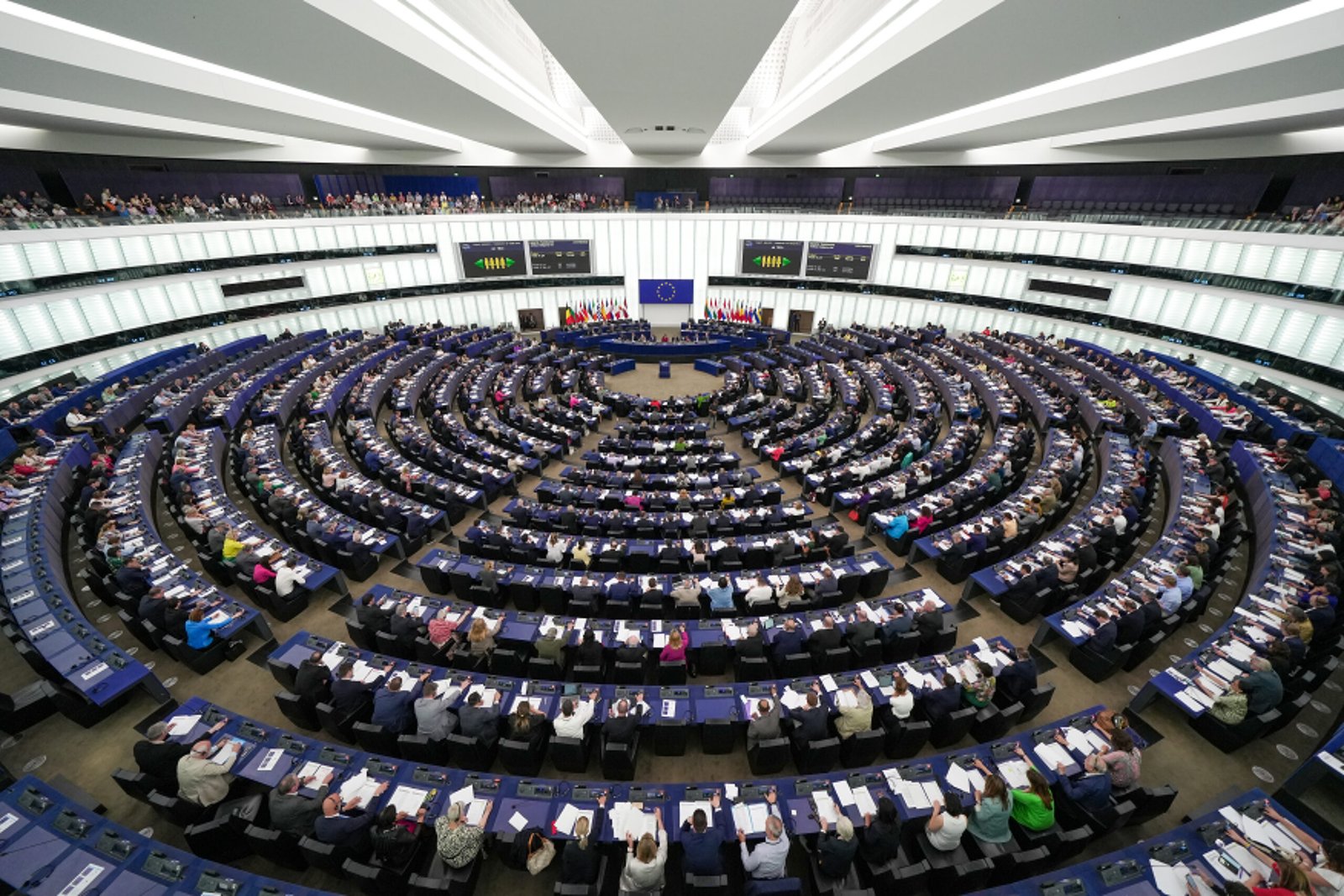
The rapporteur, Hilde Vautmans, commented that “Today’s majority marks a turning point in Europe’s China policy.” Yet a crucial and urgent issue demands serious reflection. European policymakers must not consider their moral and conscientious duty fulfilled simply by passing resolutions and releasing statements that lack practical execution. Resolutions that remain words without action will only embolden Beijing’s aggressive ambitions, posing an even greater threat to the world. Although this recommendation carries no legally binding force, it provides a strong political framework for the European Commission and EU member states.
Historically, a China that was economically and militarily weak appeared receptive to international calls and adopted a softer diplomatic posture. Years of Western negligence, and the prioritization of short-term trade interests over principles, allowed it to grow into a global superpower. Today, China threatens the nations under its occupation, such as Uyghurs, Tibetans, Southern Mongolians, Cantonese, and Hong Kongers, and poses a severe danger to the global democratic order and to European security.
EU authorities must enforce concrete legal sanctions and punitive measures against the “Assimilation Law” in force since July 1, against China’s cross-border operations targeting Uyghur, Tibetan, Hong Kong, and Chinese dissidents through transnational repression, and against its use of forced labor.
In conclusion, the recommendation adopted on October 7, 2026, is a powerful follow-up to the previous European Parliament resolution of April 30 condemning the Ethnic Unity Law. However, unless the European Union implements enforceable legal sanctions against China’s assimilation laws, extraterritorial repression, and state-sponsored forced labor, these words on paper will once again prove meaningless under the test of history. The only way to counter the threat posed by Beijing is to move beyond declarations and take firm, binding, and decisive action.
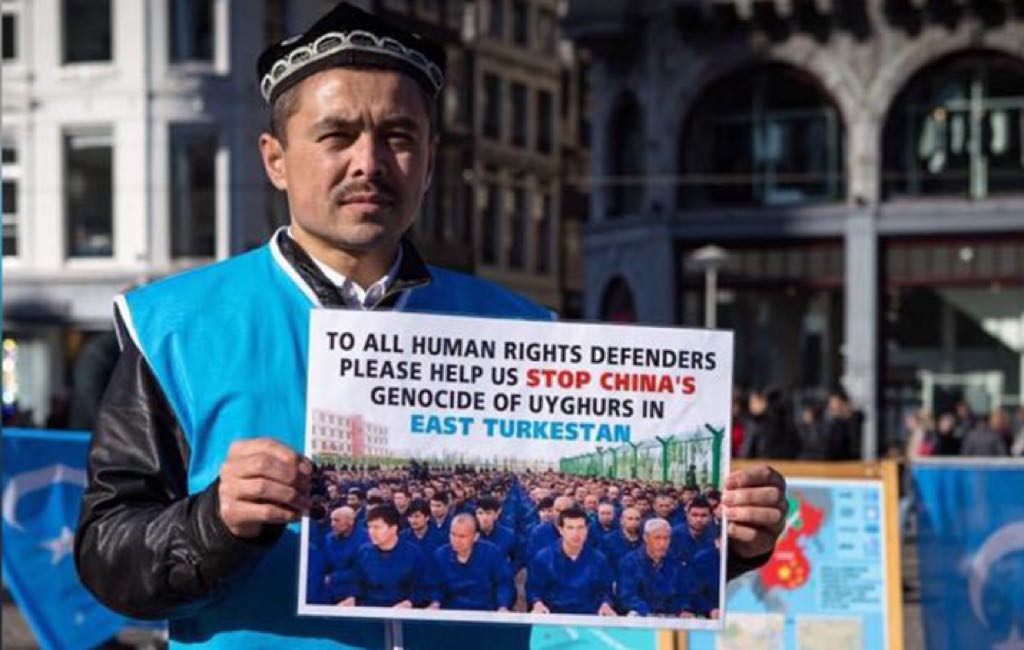
Abdurehim Gheni is a Uyghur activist living in the Netherlands who became famous for his solo protests in Dam Square in Amsterdam. He also educates tourists to the reality of the Uyghur genocide.