A Beijing training course shows once more that Sinicization means Party control, not Chinese culture.
by He Yuyan
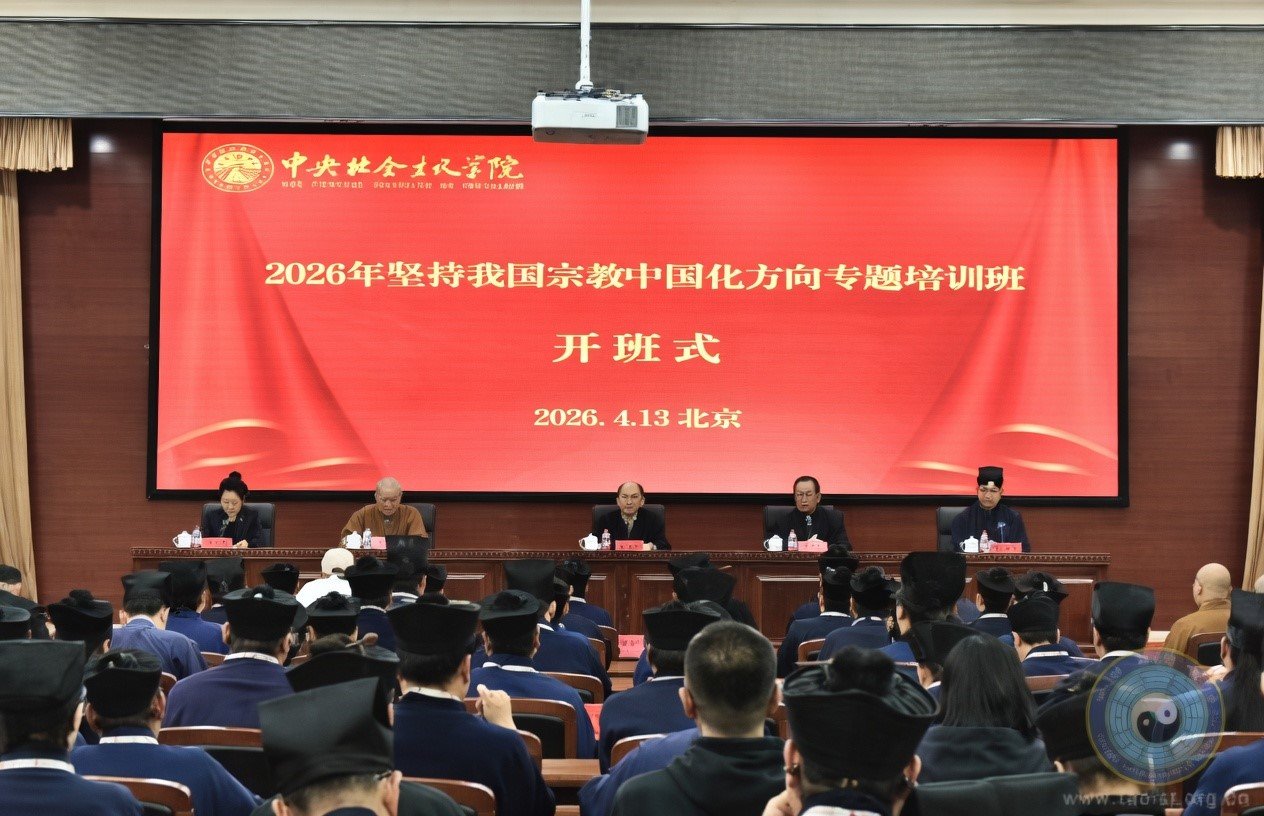
The latest “Special training course on the Sinicization of religion,” organized on April 12–18 in Beijing by the China Taoist Association and the Central Institute of Socialism, reminds us what “Sinicization” really means in today’s China. If the term meant “adapting religion to Chinese culture,” Taoism—the only major religion that originated in China—would hardly need to be “Sinicized.” Taoism “is” Chinese culture. The fact that it does need “Sinicization”—and urgently, according to official statements—shows the true meaning of the word: not cultural adaptation, but political control. In other words, “Sinicize” means “make it obedient to the Communist Party,” and the rest is just a cover-up.
The event followed a familiar routine. Fifty-seven Taoist representatives from across the country came to Beijing for a week of ideological training, guided by experts from the CCP and United Front institutions whose ties to Taoist spirituality are, to say the least, weak. They received instructions to “strengthen political guidance,” “improve legal awareness,” and “deeply foster cultural confidence,” all while attending lectures on Xi Jinping’s key remarks on religious work, the management of online religious affairs, and the need for Taoism to align with socialism. One can imagine Laozi responding in confusion to the suggestion that the Dao, which famously “does nothing and yet leaves nothing undone,” now requires a seven-day course on political discipline.
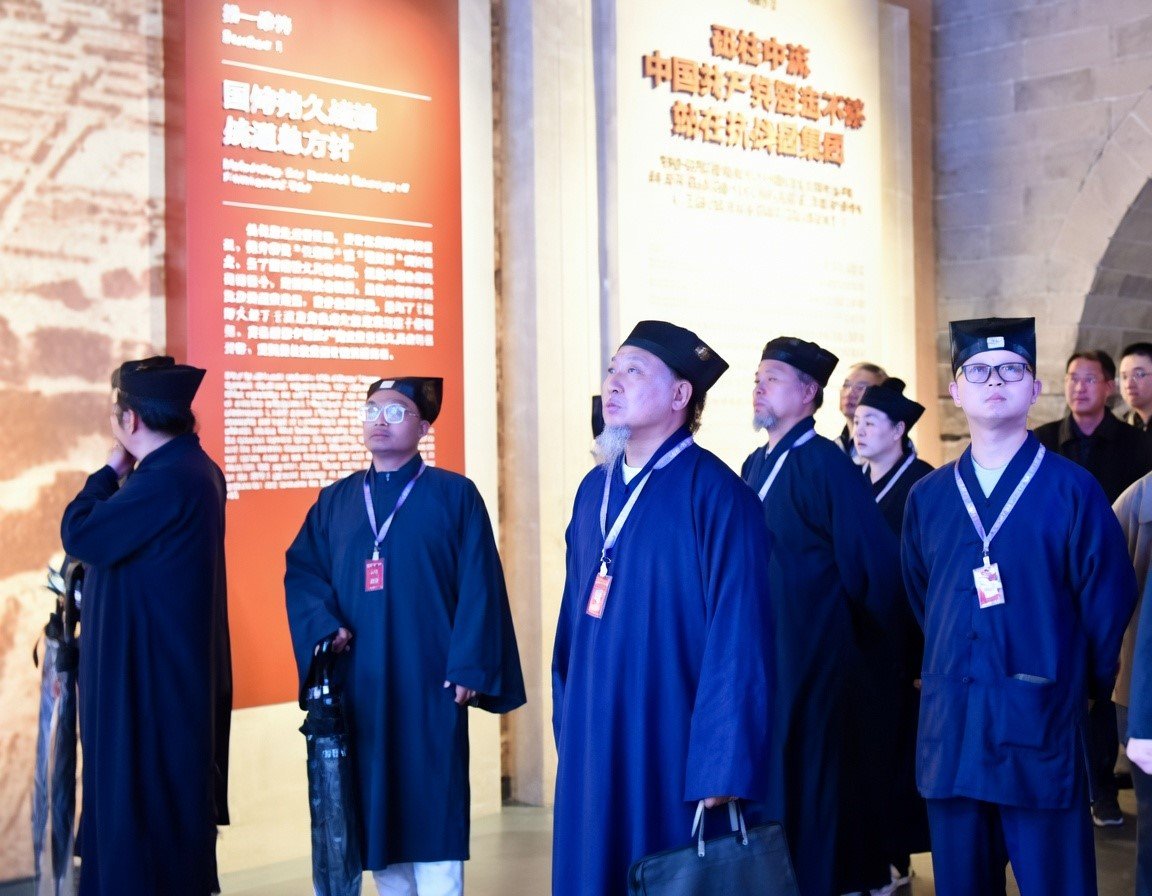
The organizers also planned a field trip to the Museum of the War of Resistance Against Japan, a stop that has become a required part of nearly every religious training program. Patriotism—defined strictly as loyalty to the Party—is presented as the foundation for legitimate religious practice. The participants dutifully “measured history with their footsteps” and “experienced the spirit of resistance with their hearts,” phrases so often found in official reports that one wonders if they were generated by a machine long before AI became popular.
Such events are becoming routine. Each year brings new training sessions, new slogans, new calls to “strictly control religion,” and reminders that religious leaders must first and foremost be politically reliable. Leaders of the Taoist Association praised the course as a way to “build a talent base for Taoist Sinicization,” a phrase that could be funny if it weren’t so revealing. Taoism, which has influenced Chinese philosophy, medicine, literature, and aesthetics for two thousand years, apparently lacks the cultural legitimacy to be considered authentically Chinese unless it passes through the Party’s ideological filter.
Participants ended the course by stating that they now have a “clearer understanding” of Sinicization and are ready to put their learning into practice. One can only hope that, behind the polite applause and the group photos, at least a few of them recognized the contradiction: a religion that embodies Chinese culture is being told it must be redesigned to fit it. The only way to resolve this conflict is to acknowledge what the policy really demands—political conformity. And that, more than any lecture or museum visit, is the actual lesson of the week.

Uses a pseudonym for security reasons.