A growing constitutional conversation now surrounds the case, extending far beyond the fate of a single spiritual community.
by Massimo Introvigne
“Bitter Winter” has followed the OneTaste prosecution with great interest, reporting on the criminal charges, the media narratives, and the role of anti-cult activists. Earlier articles examined how the false label “sex cult” shaped public perception and how the Government’s theory of forced labor relied on interpretations of spiritual pressure, communal life, and unpaid volunteer spiritual service. The case has now attracted the attention of several leading constitutional scholars, who see it as a test of fundamental principles of religious liberty.
Interest in the appeal has grown because the Government’s theory of “spiritual coercion” raises questions that reach far beyond OneTaste. The idea that religious teachings, communal expectations, and voluntary religious labor may be reinterpreted as criminal coercion has implications for monasteries, convents, missionary communities, and many other religious environments. Scholars have started to examine how prosecutors and courts handle unconventional doctrines and practices, and how far criminal law may go in treating spiritual influence as a form of harm.
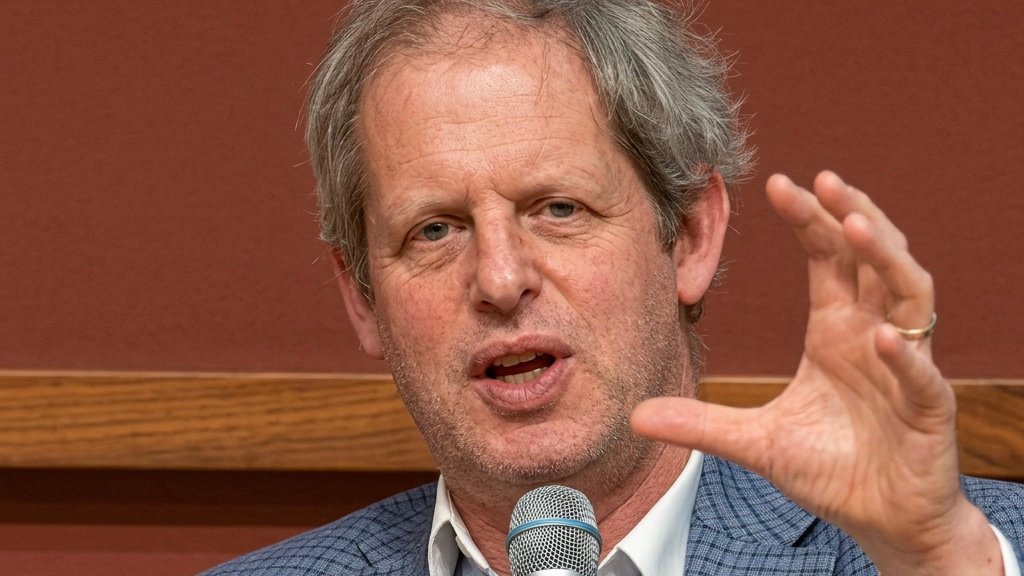
Among these prominent scholars, UCLA’s Professor Eugene Volokh has now submitted an amicus curiae brief. His unimpeachable credentials as a leading constitutional scholar, his long engagement with the First Amendment, and his defense of “Employment Division v. Smith” give his intervention particular weight. The brief does not attempt to evaluate OneTaste’s ideas and practices. It focuses on the constitutional danger created by a theory that transforms spiritual indoctrination, communal living, and voluntary service into elements of a felony prosecution.
Volokh opens with a warning that reaches into the heart of religious life. He writes that under the Government’s theory, “people who at one point believed that volunteering for a religious organization is the path to enlightenment or salvation, but who later become disillusioned with their former beliefs, can be found to have been retroactively ‘coerced’ into providing that labor.” This reasoning, he explains, does not stop with OneTaste. It extends to nuns who devote their lives to teaching or nursing, monks who work in agriculture to support their monastery, and adherents of any religious order where work is part of a vocation. In his words, “Any religious organization that runs a monastery, convent, or any other institution where adherents are expected to work as part of their religious vocation could likewise face felony prosecutions.”
The brief argues that the Free Exercise Clause prohibits this approach because enforcing a neutral statute may become non‑neutral when it targets religious conduct precisely because of its spiritual nature. Volokh recalls “Church of Lukumi Babalu Aye” and “Fowler v. Rhode Island” to show that neutrality concerns both legislation and enforcement. In the OneTaste case, liability “turned precisely on the religious nature of the allegedly coercive conduct, and was imposed in the absence of any secular coercion such as violence or the threat of violence.” The alleged victims testified that they joined voluntarily and left voluntarily. The Government’s theory relied on “indoctrination” and “teachings,” which are ordinary features of spiritual life.
Volokh reconstructs OneTaste’s self‑understanding from the record. He cites testimony such as “We believed that … your path to God was through your orgasm.” He notes that adherents described a distinction between a “third dimension” of concrete reality and a “fourth dimension” of higher spiritual experience. Rituals, ceremonies, and communal practices were presented as ways to achieve transcendence. Orgasmic Meditation (OM0 was described as “a mindfulness practice, a ‘meditation on sensation without a goal.’” The Government itself emphasized this spiritual dimension in its closing arguments, stating that “the defendants indoctrinated the victims to believe that Nicole Daedone was a guru and that her teachings were the path to enlightenment and spiritual growth,” and complaining that “Nicole Daedone taught that orgasm was God.”
Volokh argues that the First Amendment typically protects this kind of spiritual content. He recalls “West Virginia v. Barnette” and “United States v. Ballard” to show that secular authorities may not judge the legitimacy of religious doctrines. Specialized vocabulary such as “TurnON,” “muggles,” “matrix,” “tumescence,” “third dimension,” and “fourth dimension” may sound strange to outsiders. Yet, many religions use language that appears incomprehensible to those who do not share the faith. That strangeness does not remove constitutional protection. Importantly, as María Vardé and I have discussed in a previous study, the spiritual practices in OneTaste have direct ties to the Budhhist and Hindu tantric traditions.

The brief also examines the trial’s conduct. Volokh points to the prosecutor’s repeated use of the expression “sex cult” and to arguments that OneTaste connected its core sexual awareness practice, called “OMing,” to spirituality “for legal protection.” He recalls a passage where the Government told the jury: “It is not okay to teach your employees that their spiritual purpose is to fuck the war out of men and that if they stray from the [path] set by OneTaste and by Nicole Daedone, they will be spiritually ruined.” This is presented as an example of the Government inviting jurors to condemn spiritual teachings. The District Court refused to instruct the jury that alleged pressure might be covered by the First Amendment and warned defense counsel against approaching First Amendment arguments. A motion for mistrial based on the Government “ask[ing] the jury to hold their spiritual beliefs against them” was denied.
Volokh acknowledges that religious groups may be prosecuted under neutral laws regulating commercial sexual practices or physical coercion. He notes that organizations selling sexual services for money may be prosecuted under prostitution statutes, and that employers demanding sexual services may face civil or criminal liability. In the OneTaste case, however, the Government did not rely on such laws. The labor at issue was “ordinary, non-sexual administrative work entailed in running a religious organization that features events and communal living.” There was no evidence that money was exchanged for sexual activity. Instead, the Government used the forced labor statute and built its theory around spiritual dependence, communal isolation, and unpaid volunteer work.
This is where Volokh’s broader concern emerges. Many religions encourage communal living, discourage close association with non‑adherents, and invite members to donate time, money, and services. Some preach eternal consequences for those who abandon the faith. Others promise enlightenment or salvation for those who remain faithful. Citing his own previous research, Volokh writes that a common technique among many religions is to “slowly lur[e] people into a community and a belief system that they may eventually find emotionally hard to leave, even if they feel some desire to leave.” If such patterns are reinterpreted as “threats of serious harm,” monastic traditions and intense congregational life become potential targets for criminal prosecution.
The brief concludes that “these criminal convictions cannot withstand Free Exercise Clause scrutiny” because the Government’s theory relied on “indoctrination” and threats of excommunication from a spiritual community. Volokh asks the Court of Appeals to vacate the convictions or to remand for a new trial with instructions “to prohibit any reference to activity which is protected by the Free Exercise Clause.”
From the perspective of scholars who have studied OneTaste, this intervention matters greatly. Our reporting on OneTaste has always focused on the principle that minority spiritual movements should not be criminalized because their doctrines and practices appear unconventional. Volokh’s brief expresses, with constitutional precision, concerns that we have documented through interviews, trial coverage, and analysis. The use of “spiritual coercion” as a legal category, reminiscent of the discredited theory of “brainwashing,” the transformation of voluntary religious labor into forced labor, and the rhetorical denigration of a group as a “sex cult” create risks for many religious communities.
I agree with Professor Volokh’s analysis and with his warning that the Government’s theory endangers monasteries, convents, and other environments where work, communal life, and spiritual dependence form part of a vocation. I hope that the Court of Appeals will take his arguments seriously and will ensure that criminal law is not used to punish religious teachings, communal commitments, and voluntary service to a spiritual community under the dubious label of “spiritual coercion.”
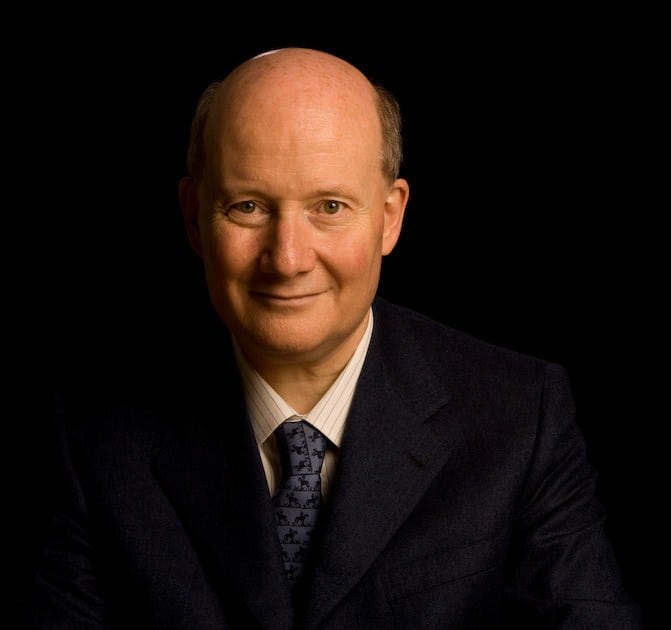
Massimo Introvigne (born June 14, 1955 in Rome) is an Italian sociologist of religions. He is the founder and managing director of the Center for Studies on New Religions (CESNUR), an international network of scholars who study new religious movements. Introvigne is the author of some 70 books and more than 100 articles in the field of sociology of religion. He was the main author of the Enciclopedia delle religioni in Italia (Encyclopedia of Religions in Italy). He is a member of the editorial board for the Interdisciplinary Journal of Research on Religion and of the executive board of University of Pennsylvania Press’ Nova Religio. From January 5 to December 31, 2011, he has served as the “Representative on combating racism, xenophobia and discrimination, with a special focus on discrimination against Christians and members of other religions” of the Organization for Security and Co-operation in Europe (OSCE). From 2012 to 2015 he served as chairperson of the Observatory of Religious Liberty, instituted by the Italian Ministry of Foreign Affairs in order to monitor problems of religious liberty on a worldwide scale.