Kongoji Temple’s Chief Priest warns that the dissolution is reshaping Japan’s treatment of religion in ways that threaten every faith community.
by Massimo Introvigne
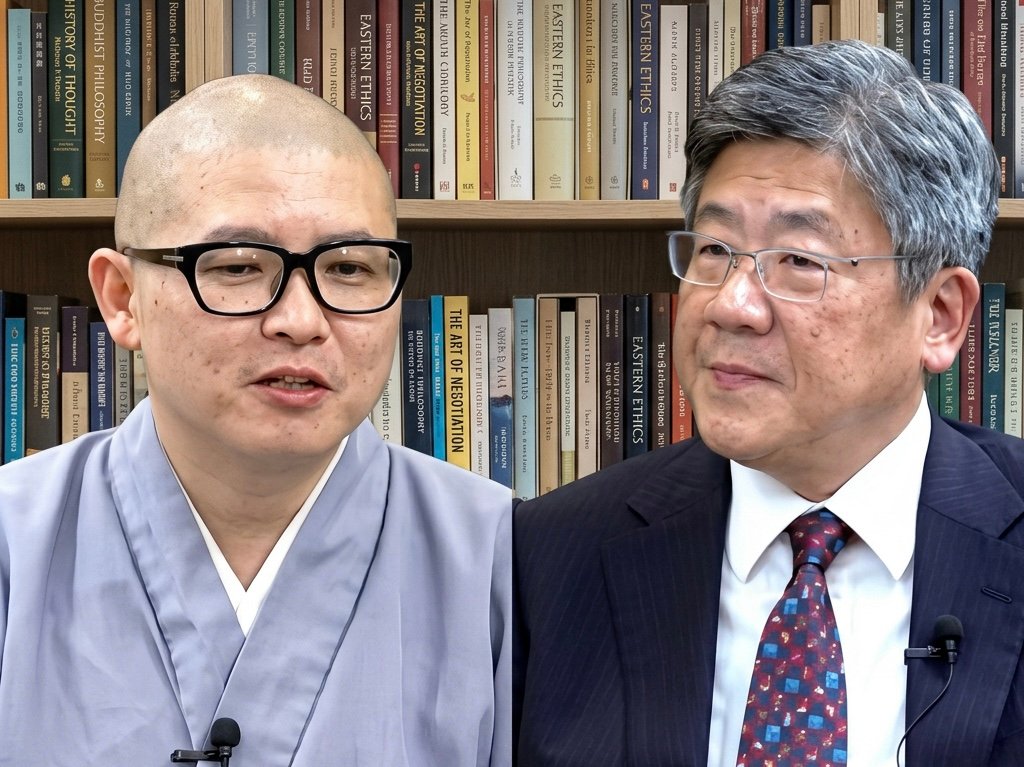
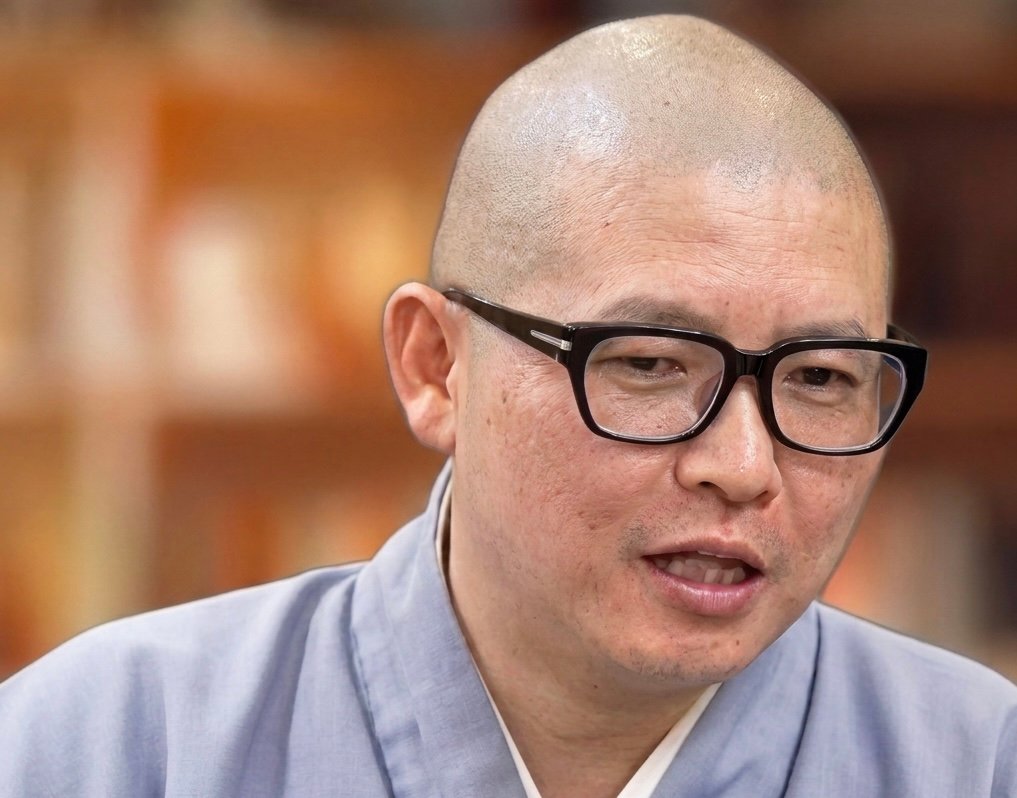
In a video-recorded conversation with literary critic Eitaro Ogawa, Chief Priest Shindo Mizuta of Kongoji Temple offered one of the most unusual and thoughtful religious responses to the dissolution order against the Unification Church, now called the Family Federation for World Peace and Unification.
Mizuta’s background is far from typical. Before entering monastic training at Zuiganji, the National Treasure in Matsushima, he completed a master’s degree in engineering and was preparing for an academic career. His father urged him to return to the temple, and after two years of rigorous practice, he became a Buddhist priest.
Mizuta explained that the dissolution order compelled him to speak because Buddhist principles oblige religious leaders to respond when state power intrudes on spiritual life.
Mizuta began by describing a core Buddhist teaching through a comparison with science. Both Buddhism and science seek truths that remain unchanged under all conditions. In Buddhism, the purpose of knowing the truth is to reduce suffering. One essential method for doing so is to refrain from dividing reality according to subjective judgments. He illustrated this with everyday examples. People offer different amounts of money at shrines on New Year’s Day. Whether an amount appears generous or excessive depends entirely on personal circumstances. A third party cannot impose a universal standard.
He extended this reasoning to the Family Federation. The widespread habit of declaring the movement evil is an act of subjective discrimination. It reflects personal impressions rather than an objective criterion.
He explained that Buddhism does not define good and evil as social conventions do. An action is good when it moves a person toward truth. An action is evil when it moves a person toward ignorance. He recalled that the Buddha left his wife, child, and kingdom to pursue liberation. Social norms would condemn such behavior, yet the Buddha acted from a profound desire to understand the nature of suffering. Mizuta argued that this example shows how easily society confuses moral judgment with spiritual insight.
He then examined the main accusations directed at the Family Federation. The first is the claim of large donations. Mizuta responded that the size of a donation cannot be judged without knowing the donor’s situation. A sum that appears enormous to one person may be reasonable to another. He warned that imposing a single standard is a form of discrimination.
The second accusation is the use of terms such as “cult” and “mind control.” He described these words as dangerous because they lack scientific definition. He compared them to negative ions, a term used in Japanese marketing without any established meaning in physics. When undefined labels are used to attack or exclude a group, the result is discrimination. He emphasized that discrimination increases suffering and therefore contradicts the purpose of Buddhism.
The third accusation concerns the Family Federation’s alleged closeness to the Liberal Democratic Party. Mizuta pointed to an accident off Henoko involving protest boats. One captain was a pastor of the United Church of Christ in Japan. Another had previously run as a candidate for the Japanese Communist Party. If proximity between religion and politics is inherently wrong, then the criticism should apply to all such cases. Singling out only one group reveals a double standard. Mizuta expressed concern that some Buddhist priests repeat these accusations without examining their meaning. He said that doing so distances them from the essence of Buddhism.
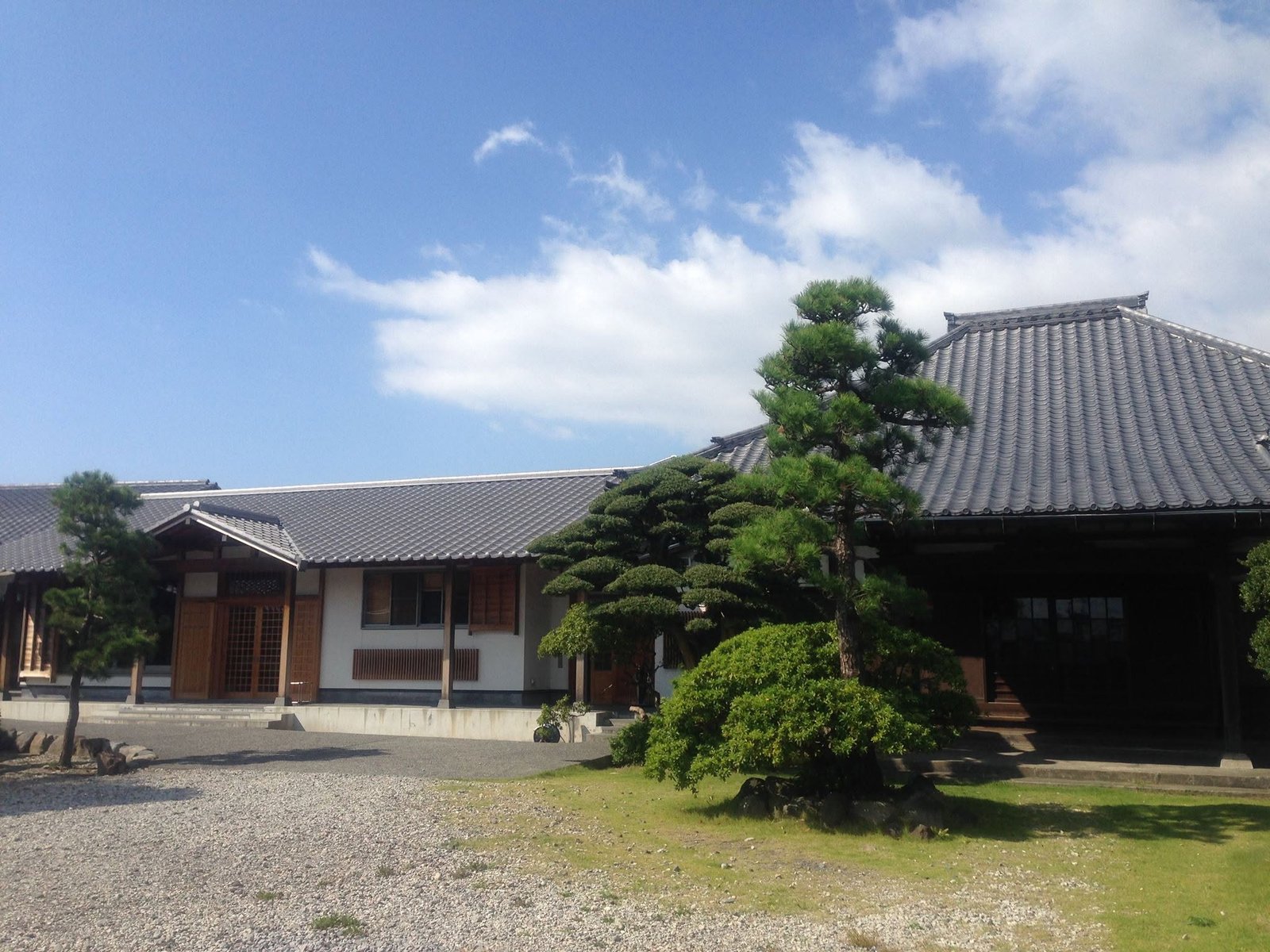
The conversation then turned to the practical consequences of a dissolution order. Mizuta described what would happen if such an order were issued against his own temple. A court-appointed liquidator could enter Kongoji and take control of all assets. This would include buildings, land, bank accounts, ritual garments, and ceremonial implements. Those living at the temple could be required to leave immediately. Since many temples also serve as the priest’s family home, the priest and his family could lose their residence. Mizuta explained that more than eighty percent of Kongoji’s activities involve wakes and funerals held in the main hall. If the premises were placed under restriction, these ceremonies could no longer be conducted. He could lose his position as chief priest and become unable to perform funerals for the community. The temple would cease to function.
He compared the present situation to the Purple Robe Incident of the Edo period, when the shogunate intervened in the Imperial Court’s religious authority. He called the dissolution order against the Family Federation the Purple Robe Incident of the present (Reiwa) era. He recalled how Zen master Takuan and others protested the shogunate’s actions. He questioned why so many religious leaders remain silent today.
Ogawa agreed. He argued that there is no legal basis for a liquidator to restrict the freedom to hold funerals. He described the situation as religious repression on a national scale. He noted that if events from forty years ago can be used as grounds for action, consistency would require authorities to examine the conduct of the warrior monks of Mount Hiei eight centuries ago. He said this illustrates the weakness of the logic being applied.
Ogawa also criticized what he called information magic. Media amplify the voices of some who identify themselves as victims while obscuring the many believers who remain satisfied with their community.
Mizuta and Ogawa both condemned the silence of religious leaders who have not spoken out. They described this silence as a sign of moral decline. They concluded that religious leaders must return to the essence of religion, recognize that the dissolution order is a threat to all faiths, stand together, and act.
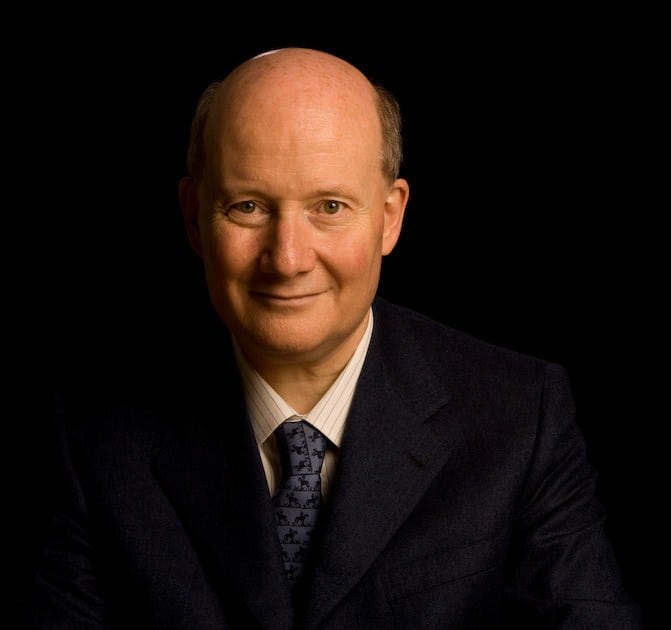
Massimo Introvigne (born June 14, 1955 in Rome) is an Italian sociologist of religions. He is the founder and managing director of the Center for Studies on New Religions (CESNUR), an international network of scholars who study new religious movements. Introvigne is the author of some 70 books and more than 100 articles in the field of sociology of religion. He was the main author of the Enciclopedia delle religioni in Italia (Encyclopedia of Religions in Italy). He is a member of the editorial board for the Interdisciplinary Journal of Research on Religion and of the executive board of University of Pennsylvania Press’ Nova Religio. From January 5 to December 31, 2011, he has served as the “Representative on combating racism, xenophobia and discrimination, with a special focus on discrimination against Christians and members of other religions” of the Organization for Security and Co-operation in Europe (OSCE). From 2012 to 2015 he served as chairperson of the Observatory of Religious Liberty, instituted by the Italian Ministry of Foreign Affairs in order to monitor problems of religious liberty on a worldwide scale.