How did the Ukrainian Orthodox Church (UOC) react to the progressive stranglehold from 2022 to 2024?
by Willy Fautré
Article 2 of 3. Read article 1.
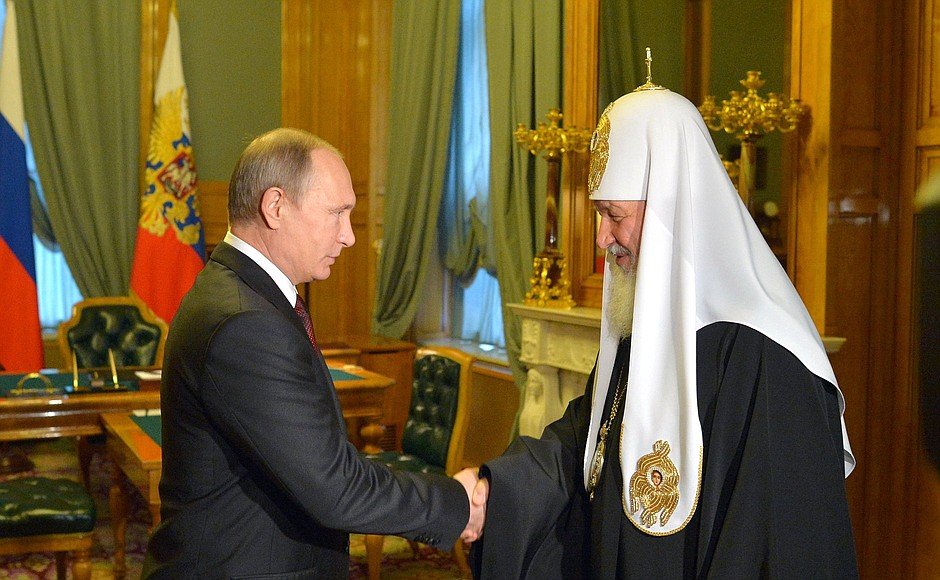
Eight years after the annexation of Crimea and the takeover of the Donbas by Russia, the Russian Orthodox Church (ROC) began to forcefully annex the dioceses of the Ukrainian Orthodox Church (UOC) in Crimea and in the occupied territories of Eastern Ukraine. 27 May 2022 triggered the annexation.
27 May 2022: The Council of the Ukrainian Orthodox Church (UOC)
This Council opened the way for major changes to its Charter and a clear distancing from Moscow’s tutelage. Additions and amendments to the existing Charter laid the foundations for its “complete autonomy and independence” from the Russian Orthodox Church.
On this occasion, a 10‑point declaration was issued, stating in §1: “The Council condemns the war as a violation of God’s commandment ‘You do not kill!’ (Exodus 20:13).” In §3, the UOC expressed its “disagreement with the position of Patriarch Kirill of Moscow and All Russia regarding the war in Ukraine.” Kirill was supporting and blessing Russia’s war on Ukraine.
7 June 2022: The Holy Synod of the Russian Orthodox Church
The Russian Orthodox Church reacted immediately. On 7 June 2022, it deprived the Ukrainian Orthodox Church (UOC) of its jurisdiction over, and ownership of, its 334 places of worship, 15 monasteries, and other religious buildings in occupied Crimea.
On that day, according to the ROC’s official website, a regular session of the Holy Synod of the Russian Orthodox Church took place at the Patriarchal and Synodal residence at Danilov Monastery in Moscow.
At this meeting, the fate of the Orthodox churches of the Ukrainian Orthodox Church on the Crimean Peninsula was decided.
This was the most significant break in the shared history of the UOC in Kyiv and the ROC in Moscow.
Representatives of the Russian Orthodox Church did not recognize the self‑proclaimed “complete autonomy and independence” of the UOC, pointing out that “the decision to change the status of the Ukrainian Orthodox Church could only be made within the framework of the canonical procedure, including the resolution of the Local Council of the Russian Orthodox Church.”
They also emphasized that arbitrary actions to change the status of the Ukrainian Orthodox Church could lead to schism.
From the UOC leadership’s point of view, the Council’s decisions consolidated the Church’s independence in governance.
Different interpretations of the conclusions of the Council of 27 May 2022 became the main factor in further disagreements over church governance in the occupied territories.
The Russian Orthodox Church did not recognize the UOC’s separation and, against its will, continued to consider it part of the Moscow Patriarchate. This created what many researchers call “canonical uncertainty.”
From the viewpoint of the UOC itself:
1. All Ukrainian dioceses, including those located in the occupied territories, remain dioceses of the UOC.
2. No church‑wide body of the UOC has decided on their transfer to the ROC.
31 October 2024: Relations between the two Churches turning quite sour
On 31 October 2024, 17 Metropolitans and 15 Archbishops of the UOC signed a public statement on the actions of the Synod of the Russian Orthodox Church regarding UOC dioceses in the occupied territories of Ukraine. They condemned the removal of the leaders of the UOC dioceses by the Russian Orthodox Church without the consent of the UOC and the annexation of the dioceses. In Crimea, the situation was different. There, the heads of the dioceses, previously appointed by the UOC, asked to be taken under the direct subordination of the ROC.
They also condemned the decisions of another Holy Synod of the Russian Orthodox Church held on 24 October 2024, which dismissed Metropolitan Hilarion of Donetsk and Mariupol from the administration of the UOC Donetsk diocese and sent him into retirement. They also condemned earlier decisions dismissing bishops of other UOC dioceses in territories occupied by Russia.
The UOC bishops considered these decisions illegal because they were made unilaterally, without agreement with the Ukrainian Orthodox Church, which is canonically independent under the Tomos (Charter) of Patriarch Alexy II of 27 October 1990.
The UOC bishops also referred to the Second Canon of the Second Ecumenical Council, which emphasizes respecting jurisdictional boundaries and warns against any attempt by one Church to seize another’s territory.
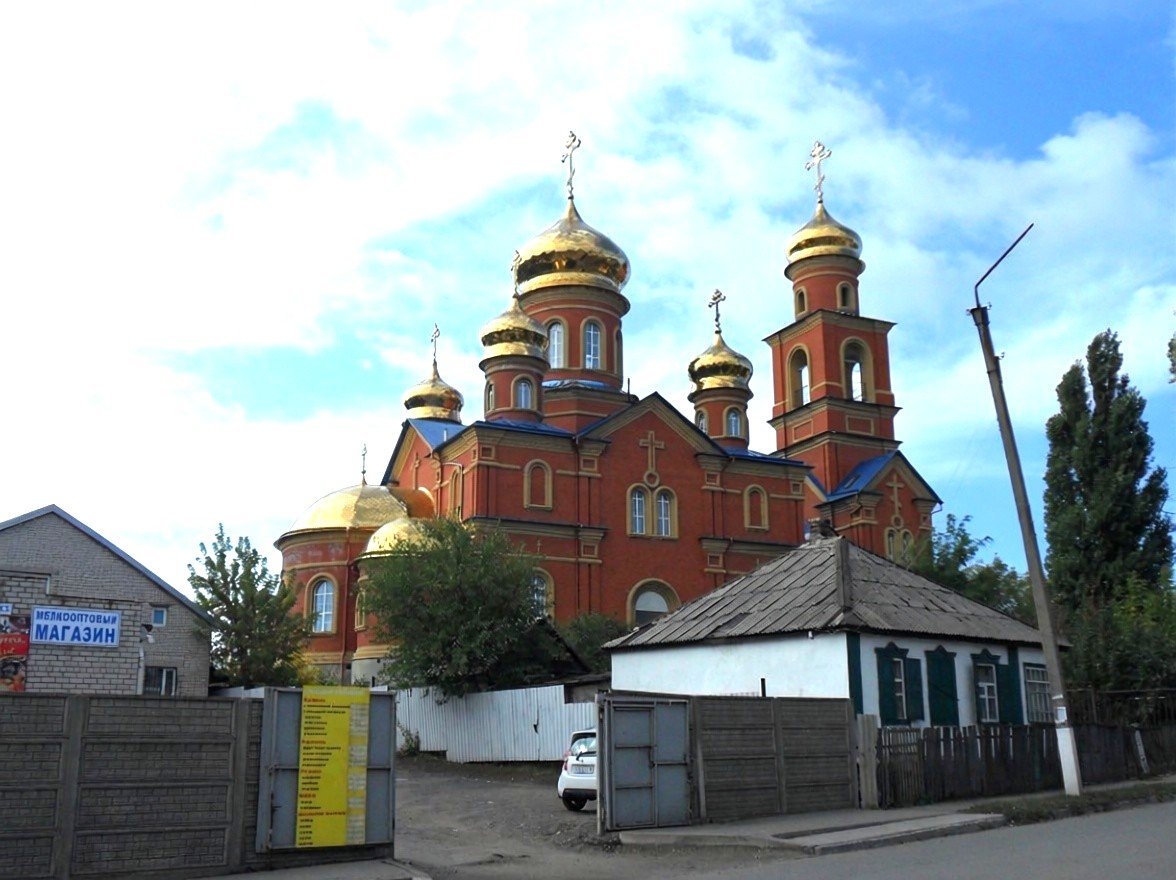
State of play of the annexation as of August 2026
[Note: We use the Ukrainian rather than the Russian names of the cities in occupied territories].
- Rovenky Diocese
The Rovenky diocese is divided into 9 church (deanery) districts, including two cathedrals and 95 churches (parishes):
1. Antratsyt Church District – Cathedral and 11 churches;
2. Dolzhansk Church District – Cathedral and 13 churches;
3. Krasnodon Church District – 12 churches;
4. Krasnoluch Church District – no information;
5. Lutuhyne Church District – the Three Hierarchs Cathedral and 13 churches;
6. Mikhailova Church District – 10 churches;
7. Novosvitlivka Church District – 8 churches;
8. Petrovsky Church District – no information;
9. Rovenky Church District – no information.
- Berdiansk Diocese
According to the official website of the Berdiansk diocese of the Russian Orthodox Church, as of 2026, the Berdiansk diocese includes 5 church districts (deaneries), the Cathedral, and 14 churches and parishes.
1. Berdiansk deanery – Cathedral and 5 churches;
2. Prymorsk deanery – 2 churches and parishes in the settlements of the Prymorsk District;
3. Melitopol deanery – 2 churches, a detachment of the Brotherhood of Orthodox Pathfinders named after Savva the Consecrated, and parishes of rural settlements of the Melitopol district;
4. Tokmak deanery – 2 churches and parishes of rural settlements of Tokmak district;
5. Energodar deanery – 2 churches.
- Diocese of Zaporizhzhia and Melitopol
After the occupation of part of the Zaporizhzhia region, the situation of Orthodox communities became especially difficult.
According to the official website of the Russian Orthodox Church, the Holy Synod of the Russian Orthodox Church (Journal No. 7) unilaterally decided on 12 March 2024 to transfer all structural subdivisions, churches, and monasteries of the Zaporizhzhia and Melitopol Eparchy of the UOC located in territories controlled by the Russian Federation to the administrator of the Berdiansk Eparchy, with their subsequent state registration under Russian law as assigned to the Berdiansk Eparchy of the Russian Orthodox Church.
No statistics are available in open sources.
- Donetsk Diocese
The Donetsk diocese includes 22 church districts, including 6 Councils and 239 churches, 5 monasteries, namely:
- Preobrazhensky District of the city of Donetsk – the Cathedral and 23 churches;
- Nikolaevsky District of the city of Donetsk – the Cathedral and 14 churches;
- Georgievsky District of the city of Donetsk: 14 churches;
- Georgievsky District of the city of Makiivka – the Cathedral and 12 churches;
- Kazan District of the city of Makiivka – 9 churches;
- Nikolaevsky District of the city of Mariupol – the Cathedral and 9 churches;
- Mikhailovsky District of the city of Mariupol – the Cathedral and 10 churches;
- Vvedensky District of the city of Makiivka – 10 churches;
- Volnovakha District – 14 churches;
- Yasynuvata District – 10 churches;
- Dokuchaievsk District – 6 churches;
- the Trinity (Troitsky) District of the city of Donetsk – the Cathedral and 14 churches;
- Novotroitsk District – 9 churches;
- Khartsyzsk District – 11 churches;
- Torez District – 12 churches;
- Volodarsk District – 9 churches;
- Novoazovsk District – 9 churches;
- Amvrosiivka District – 11 churches;
- Mangush District – 7 churches;
- Donskoy District – 8 churches;
- Starobesheve District – 10 churches;
- Selydove District – 7 churches.
- Diocese of Luhansk and Alchevsk
The Luhansk diocese includes 3 Cathedrals, 3 monasteries, 2 Orthodox educational institutions, 11 church districts, 58 churches, namely:
- Luhansk Central Deanery District – 11 churches;
- Luhansk First Deanery District – 5 churches;
- Luhansk Second Deanery District – 15 churches;
- Alchevsk Deanery District – Cathedral and 2 churches;
- Alexandrovsk Deanery District – 6 churches;
- Perevalsk Deanery District – 5 churches;
- Stanytsia Luhanska Deanery – 3 churches;
- Bilovodsk Deanery District – 4 churches;
- Novoaidar Deanery District – 1 church;
- Markove Deanery District – 1 church;
- Milove Deanery District – 4 churches.
- Horlivka Diocese
The Horlivka diocese includes 3 monasteries, 12 church districts, including 6 Councils and 232 churches:
- Nikolaev Deanery District in Horlivka – the Cathedral and 14 churches;
- Epiphany Deanery District in Horlivka – the Cathedral and 12 churches;
- Alexander Nevsky Deanery District in Sloviansk – the Cathedral and 19 churches;
- Alexandrovsky Deanery District – 14 churches;
- Bakhmut Deanery District – 20 churches;
- Dobropillia Deanery District – 18 churches;
- Druzhkivka Deanery District – 8 churches;
- Yenakiieve Deanery District – Cathedral and 17 churches;
- St. Job-Pochaiv Deanery District in Konstantinovka – 12 churches;
- Kramatorsk Deanery District – Cathedral, 12 churches, 4 prayer rooms;
- Lyman Deanery District – Cathedral and 30 churches;
- Myrnohrad Deanery District – 8 churches;
- Nikolaevsky District in Konstantinovka – 10 churches;
- Soledar District – 10 churches;
- Toretsk District – 9 churches;
- Shakhtarsk District – 15 churches.
- Severodonetsk Diocese
According to Russian registers, on 10 December 2024, the diocese was re-registered under Russian law as the Religious Organization “Severodonetsk Diocese of the Russian Orthodox Church (Moscow Patriarchate).”
The Severodonetsk diocese includes 14 church districts, 3 monasteries, the Cathedral, the Starobilsk Theological School, and 25 churches:
- Bilokurakyne Deanery District – 1 church;
- Kreminna Deanery District – 2 churches;
- Lysychansk Deanery District – 4 churches;
- Milove Deanery District – no information;
- Novopskov Deanery District – 1 church;
- Pervomaisk Deanery District – 1 church;
- Popasna Deanery District – no information;
- Rubizhne Deanery District – 4 churches;
- Svatove Deanery – no information;
- Severodonetsk Deanery – 3 churches;
- Starobilsk Deanery District – no information;
- Kadiivka (Rus.: Stakhanov) Deanery District – 5 churches;
- Trinity (Troitsky) Deanery District – 2 churches.
- Skadovsk Diocese in the occupied part of Kherson
According to official sources of the Russian Orthodox Church, the Skadovsk diocese has 81 churches, and 70 are active. The diocese has 50 clergy.

Willy Fautré, former chargé de mission at the Cabinet of the Belgian Ministry of Education and at the Belgian Parliament. He is the director of Human Rights Without Frontiers, an NGO based in Brussels that he founded in 1988. His organization defends human rights in general but also the rights of persons belonging to historical religions, non-traditional and new religious movements. It is apolitical and independent from any religion.
He has carried out fact-finding missions on human rights and religious freedom in more than 25 countries He is a lecturer in universities in the field of religious freedom and human rights. He has published many articles in university journals about relations between state and religions. He organizes conferences at the European Parliament, including on freedom of religion or belief in China. For years, he has developed religious freedom advocacy in European institutions, at the OSCE and at the UN.