A rapid and thinly reasoned verdict closes the case but leaves profound concerns about neutrality, due process, and the future of religious freedom in Japan.
by Massimo Introvigne
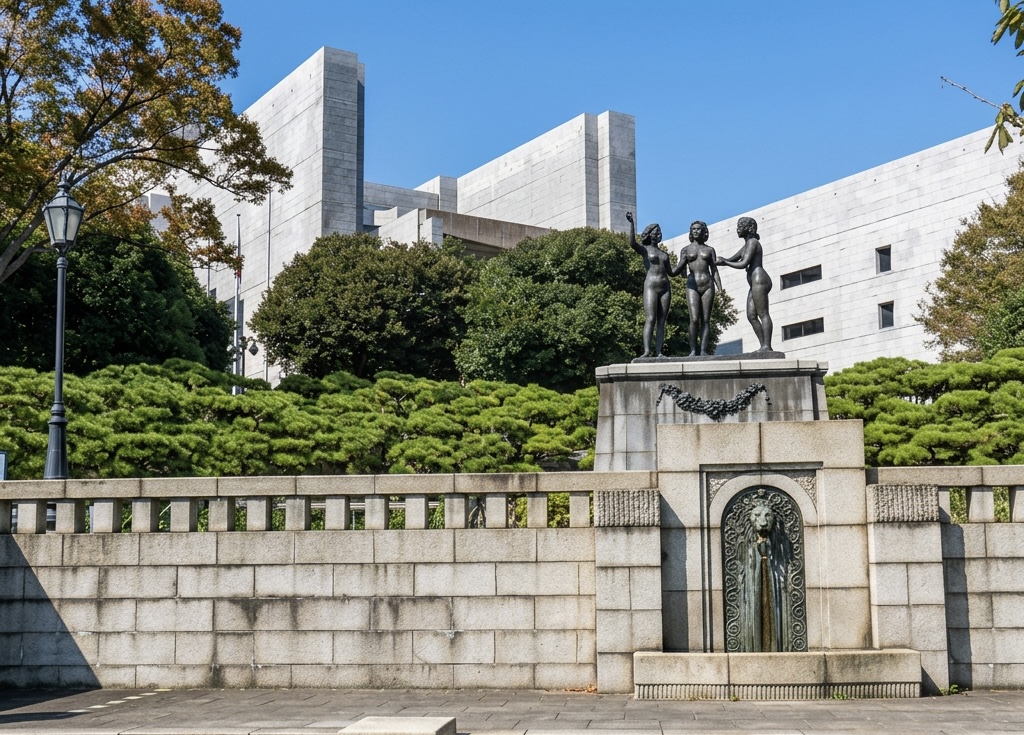
The Supreme Court of Japan confirmed on June 23 the Tokyo High Court’s 2026 decision ordering the dissolution of the Unification Church (now called the Family Federation for World Peace and Unification). The ruling arrived with unusual speed and with reasoning that raises more questions than it answers. It brings to an end the judicial phase of a process that began after the assassination of former Prime Minister Shinzo Abe and unfolded in a climate shaped by political pressure, media hostility, and a reinterpretation of the Religious Corporations Act that opened the door to a result once considered legally impossible.
The High Court decision, which “Bitter Winter” analyzed in detail, relied on decades‑old civil cases, and adopted an expansive reading of Article 81 of the Religious Corporations Act. It treated tortious conduct by individual believers as grounds for dissolving an entire religious corporation, even when the acts in question were neither criminal nor recent. The ruling also embraced the idea that a religious organization may be dissolved when its internal culture or doctrinal emphases create a risk of future harm, a standard so elastic that it could be applied to almost any faith.
The Supreme Court has now endorsed that reasoning. Its decision, released in a brief document, dismisses the appeal and affirms the High Court’s conclusions with little additional analysis. The essential part of the ruling repeats the High Court’s findings, accepts its factual determinations without scrutiny, and adopts its legal framework without addressing the concerns raised by scholars, human rights experts, and international observers. The Court states that the dissolution order does not violate constitutional protections of religious freedom because it affects only the corporation’s legal personality and not the believers’ ability to practice their faith. It acknowledges that liquidation has led to the disposal of places of worship and other assets used for religious activities. Yet, it characterizes this as an “indirect” consequence rather than a restriction on religious life.
This reasoning mirrors the High Court’s approach and avoids engaging with the deeper issue: the loss of legal personality for a religious corporation in Japan has profound practical consequences for the believers. It affects the ability to own property, manage finances, employ staff, and maintain stable religious operations. The Supreme Court’s insistence that these effects are merely incidental does not reflect the reality of how religious communities function.
The speed of the decision has also drawn attention. The Court moved with a pace rarely seen in cases involving constitutional rights and the dissolution of a long‑established religious body. The brevity of the reasoning stands in contrast to the gravity of the outcome. Observers expected the appeal to be dismissed, given the Supreme Court’s prior bias on the matter. Yet, many anticipated a more substantial engagement with the constitutional and international law questions raised by the case. Instead, the Court delivered a ruling that is more procedural confirmation than substantive examination.
This outcome cannot be separated from the Court’s earlier role in reshaping the legal landscape. In 2025, the Supreme Court issued a decision that reinterpreted the Religious Corporations Act in a way that expanded the meaning of “acts in violation of laws and regulations” to include torts under the Civil Code. That reinterpretation created the doctrinal foundation for the dissolution of the Unification Church. The same Court that opened the door to dissolution has now walked through it, completing a process that it helped initiate.
Concerns about neutrality also remain unresolved. As “Bitter Winter” reported, the Unification Church filed a motion to recuse Justice Masami Okino after it emerged that she had participated in a seminar where speakers denounced the Church, promoted the theory of mental manipulation, and described its activities as malicious. The motion detailed statements attributed to her that suggested a preconceived view of the Church’s nature and practices. The Supreme Court rejected the recusal request in a two‑line order without explanation. Although Justice Okino did not sign the decision, and it is unclear whether she participated in drafting it, the fact that the recusal motion was rejected casts a shadow over the legitimacy of the final ruling. But, since the motion was rejected, why did she not sign the verdict?
The Supreme Court’s decision closes the judicial chapter of the dissolution process, yet leaves unresolved a series of issues. The ruling does not address the concerns raised by four United Nations Special Rapporteurs, who warned that Japan’s approach to the Unification Church relied on vague concepts of public welfare incompatible with Article 18 of the ICCPR. It continues to rely on theories of “psychological harm” based on discredited ideas about “brainwashing” and on a standard of what is “socially acceptable” incompatible with international law. It does not engage with the danger of using civil torts as a basis for dissolving religious corporations. It does not consider the precedent this sets for other minority faiths. It does not confront the implications of allowing political pressure and media campaigns to shape the interpretation of religious freedom protections.
Believers will continue to practice their faith, yet they will do so without places of worship, without assets, without the legal protections and organizational stability that religious corporations in Japan have long relied upon. The Supreme Court’s assertion that this is merely an indirect effect does not capture the magnitude of the transformation.
Japan has long presented itself as a democracy committed to pluralism and the rule of law. The handling of this case raises questions about the resilience of those commitments when a religious minority becomes the target of political controversy. The Supreme Court had an opportunity to reaffirm constitutional protections and restore balance to a process marked by irregularities. Instead, it delivered a decision that confirms the path chosen by the government and the lower courts, without addressing the deeper concerns that have emerged along the way.
The verdict has been rendered. The consequences for religious freedom in Japan will unfold in the years to come.

Massimo Introvigne (born June 14, 1955 in Rome) is an Italian sociologist of religions. He is the founder and managing director of the Center for Studies on New Religions (CESNUR), an international network of scholars who study new religious movements. Introvigne is the author of some 70 books and more than 100 articles in the field of sociology of religion. He was the main author of the Enciclopedia delle religioni in Italia (Encyclopedia of Religions in Italy). He is a member of the editorial board for the Interdisciplinary Journal of Research on Religion and of the executive board of University of Pennsylvania Press’ Nova Religio. From January 5 to December 31, 2011, he has served as the “Representative on combating racism, xenophobia and discrimination, with a special focus on discrimination against Christians and members of other religions” of the Organization for Security and Co-operation in Europe (OSCE). From 2012 to 2015 he served as chairperson of the Observatory of Religious Liberty, instituted by the Italian Ministry of Foreign Affairs in order to monitor problems of religious liberty on a worldwide scale.