Uyghurs celebrated their skullcap this month. It is much more than a headpiece.
by Abdurehim Gheni Uyghur
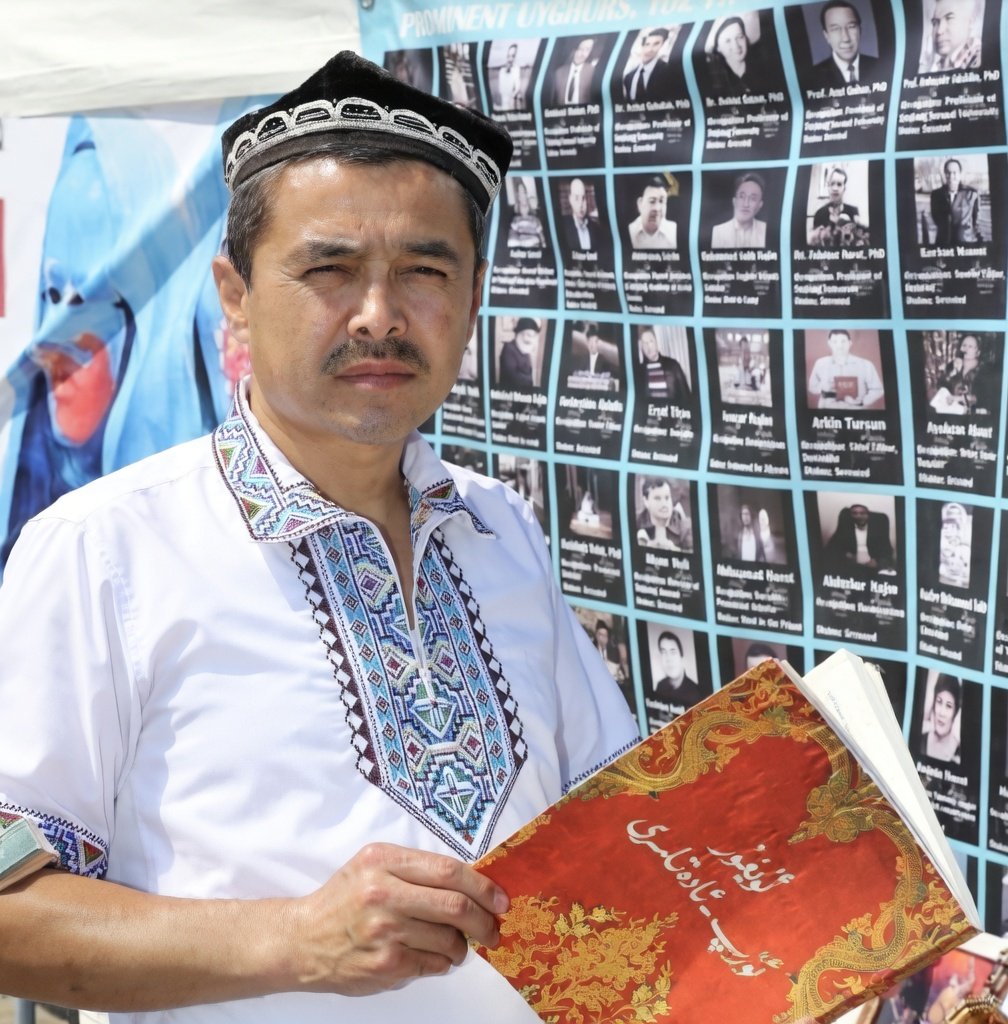
May 5 was “Uyghur Doppa Day.” It is not merely a celebration of a traditional dress culture; it is a day dedicated to preserving the very existence of a nation whose identity is being pushed toward erasure under the occupation of Chinese invaders. It is a day to inherit the spirit of our ancestors and to stand in silent defiance against tyranny.
Among the Uyghur people, there is a saying: “As long as the head is safe, a Doppa will be found” (Bash aman bolsa, doppa tépilidu). Yet in today’s world, the Doppa has become far more than a headpiece. It has become the most powerful symbol of Uyghur national identity. It is a small masterpiece of art that embodies the spirit of Uyghur craftsmanship and embroidery. Its diverse styles, unique patterns, and vibrant colors reflect the aesthetic values, worldview, and millennia-old historical roots of the Uyghur people.
Every region of East Turkestan has its own distinct Doppa style, a diversity that testifies to the richness of Uyghur culture. Kashgar’s “Chimen” Doppa is radiant and majestic; Hotan’s floral Doppas are exquisite and delicate; Ili’s rounded Doppas are simple and elegant; Turpan’s “Badam” (Almond) Doppas are passionate and brilliant. These Doppas are living proof that we carry our territorial integrity and national unity upon our heads with unshakable pride.
Today, however, wearing a Doppa in East Turkestan has become a highly sensitive act in the eyes of the Chinese occupying authorities. In their attempt to assimilate Uyghurs and forcibly dissolve them into the chauvinistic ideology of a “Chinese National” (Zhonghua) identity, the government has declared war on every symbol of our national existence. Our language, our faith, our traditions—and our Doppa—are being systematically banned. In schools, government offices, and all areas of social life, wearing a Doppa is branded as “backwardness,” “religious extremism,” or “separatism.” Those who wear one are accused of having “strong nationalistic tendencies” and are thrown into concentration camps. The invaders know well that a Uyghur with a Doppa on his head will never forget who he is. And a nation that remembers its identity can never be enslaved.
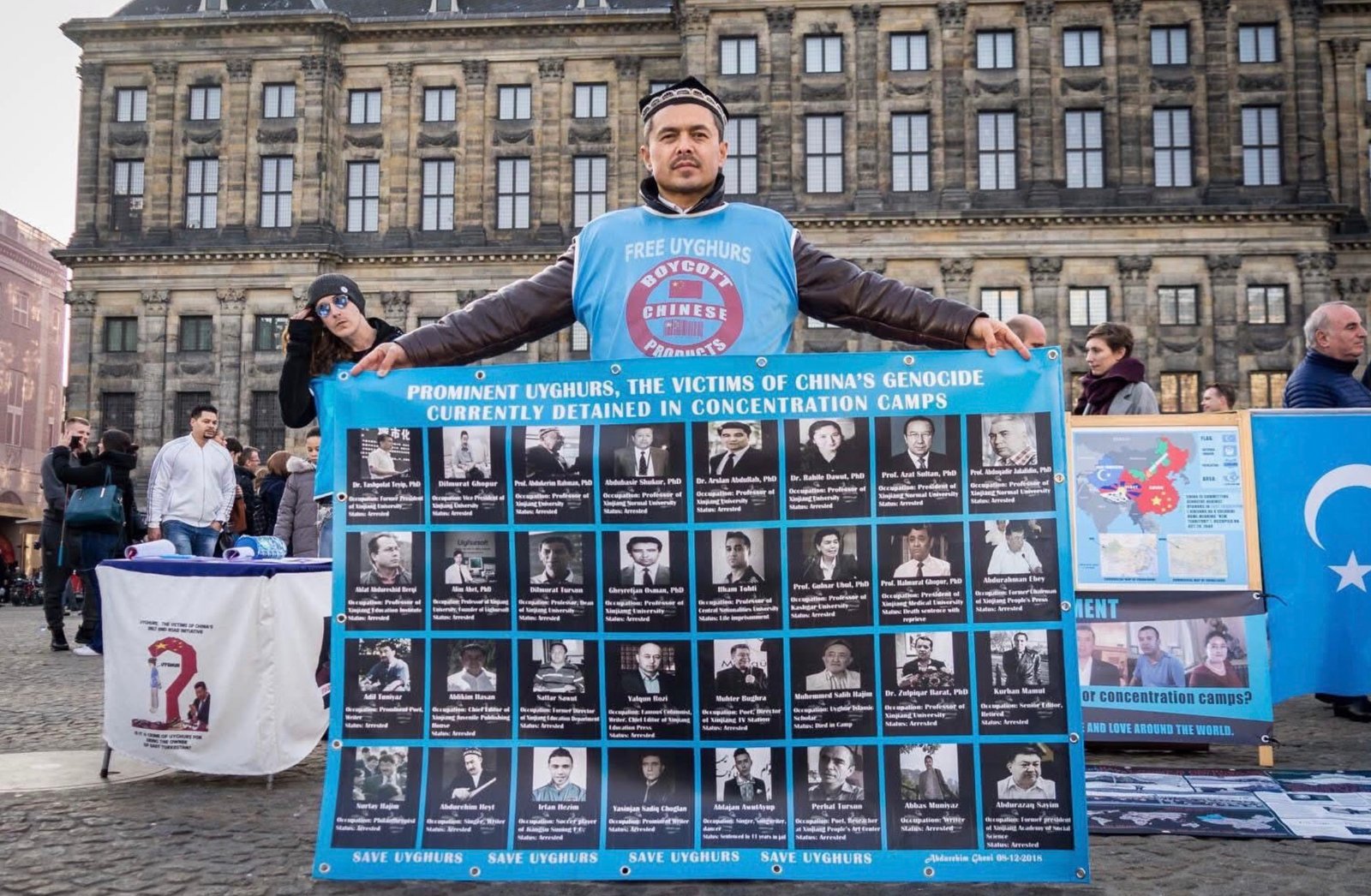
Although I now live in Western countries, I wear my Doppa with immense pride in the streets of the free world. Since 2018, during my peaceful protests at Amsterdam’s Dam Square against the Chinese occupation and genocide in East Turkestan, my Doppa has never left my head. Tourists from around the world instantly recognize my Uyghur identity through it. When they approach and see the photographs documenting the genocide, they express sympathy and support for the Uyghur cause. Those who do not yet know the Uyghurs become curious, engage in heartfelt conversations, and take commemorative photos.
This proves that the Doppa on my head is not just a piece of clothing. It is the voice of millions of my brothers and sisters in our homeland whose Doppas have been forcibly removed. It is a declaration of defiance against China’s genocide. It is the manifestation of the immortal Uyghur spirit. The Doppa has become a cultural ambassador between me and the world, and a powerful tool for speaking the truth.
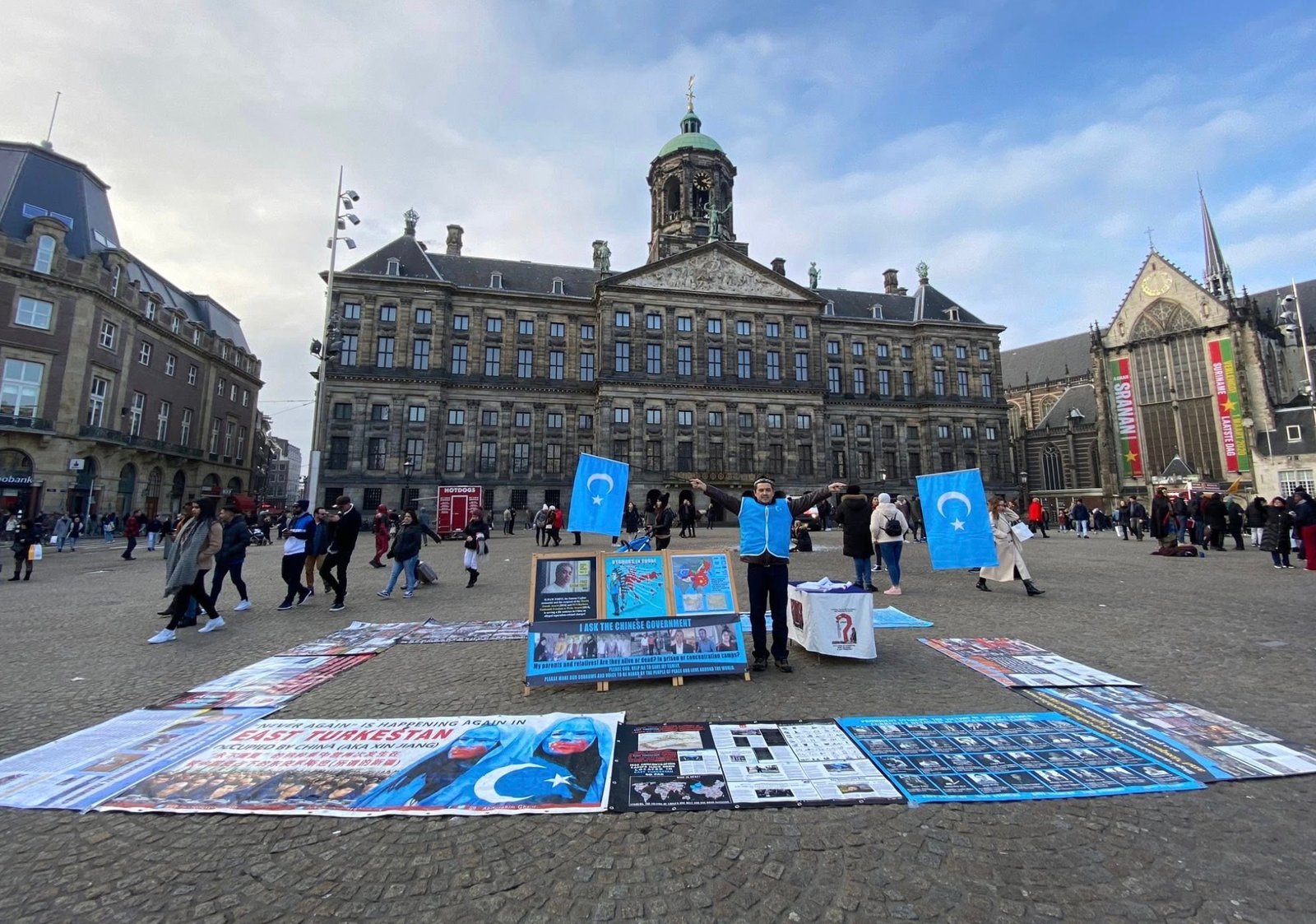
The Chinese invaders are trying to separate us from our Doppas, our homeland, and our freedom. But I say to the occupying government: the Uyghur Doppa is not merely stitched onto our heads; it is engraved upon our hearts. In every protest and every event, I will continue to wear my Doppa with pride in my national identity. Until East Turkestan is liberated, and until millions of my compatriots can wear their Doppas freely in their own neighborhoods, this Doppa will remain my battle flag.
Happy Doppa Day to my dear compatriots. Uyghur culture shall not die. The Uyghur nation shall not perish.
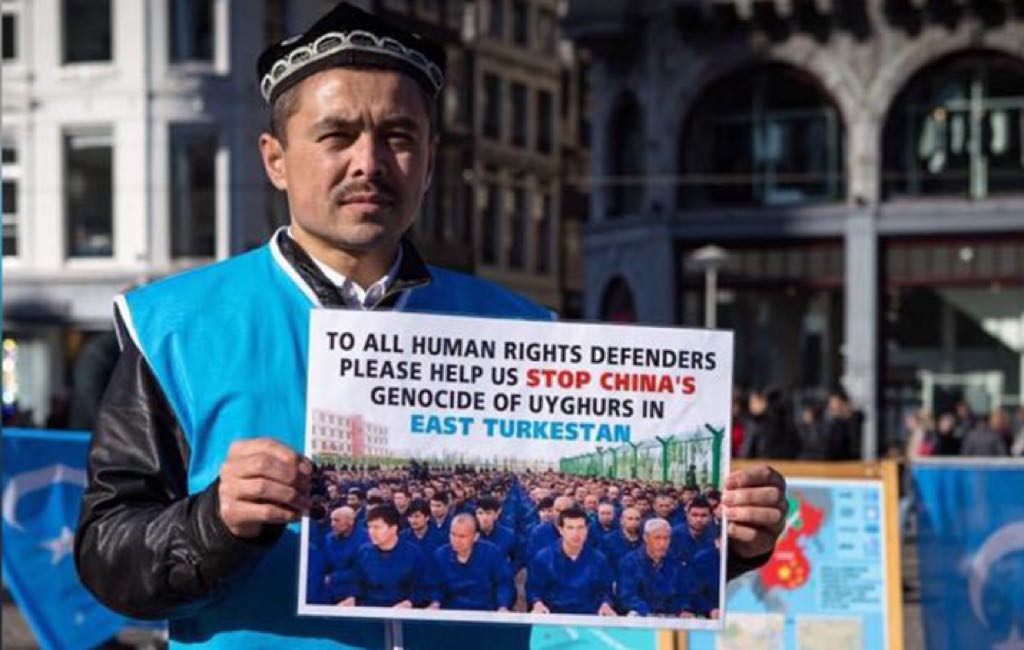
Abdurehim Gheni is a Uyghur activist living in the Netherlands who became famous for his solo protests in Dam Square in Amsterdam. He also educates tourists to the reality of the Uyghur genocide.