Daniel Beaulieu carried his anti‑cult legacy into a rogue Masonic lodge that evolved into a covert structure that offered contract killer services to its clients.
by Massimo Introvigne
A senior intelligence officer once celebrated for defending republican values against alleged “cultic deviances” created a clandestine structure in the shape of a deviant Masonic lodge, “Athanor,” which operated through manipulation, clandestine influence, and violent missions, revealing a story that unsettles the foundations of France’s anti‑cult narrative.
The story started four years ago. A summer evening in Créteil in July 2020 brought an unexpected scene to the attention of a man who noticed a black Renault Clio parked near his home. Two men sat inside, wearing gloves despite the heat, their faces partly hidden under caps. The detail of the gloves in July created suspicion, and the police arrived quickly. They discovered two military knives and a handgun inside the vehicle, which turned out to be stolen. The two men, Carl Esnault and Pierre Bourdin, claimed they were acting for the DGSE (Direction Générale de la Sécurité Extérieure, which is the French external intelligence service and the local equivalent of the CIA in the United States) and were engaged in a mission called “homo,” a term they believed referred to a clandestine homicide operation targeting a woman named Marie‑Hélène Dini. They had been told that the woman was an agent of the Israeli Mossad and needed to be eliminated. Dini had already survived a violent assault in October 2019, and nine months later these two men waited outside her home with a loaded revolver. She later described living under alarm systems, with an SOS device next to her bed, and a constant sense of danger in the street.
The DGSE confirmed that Esnault and Bourdin were indeed part of its personnel, but were not authorized for clandestine missions. Their frustration with routine duties had made them receptive to stories of secret operations. Their phones revealed exchanges with Sébastien Leroy, a private security agent who initially denied knowing them. Under pressure, Bourdin admitted that Leroy had been introduced to him by Yannick Pham, a former DGSE operative and expert in false documents who had later created an IT company. Pham acknowledged having supplied a GPS tracker found on Dini’s car, although he denied knowing the purpose of the operation.
Leroy eventually confessed to participating in the surveillance of Dini and to involvement in the assassination project. He explained that an older friend from the intelligence world had given him the contract valued at 70,000 euros. The investigators traced his communications to Daniel Beaulieu, a retired police officer who had spent his career in the intelligence services. In custody, he spoke freely and introduced a new element: a Masonic lodge in the Hauts‑de‑Seine called Athanor.
Athanor belonged to the Grande Loge de l’Alliance Maçonnique Française (GLAMF), an obedience founded in 2012 by Alain Juillet, former director of intelligence at the DGSE. GLAMF is distinct from the mainline Grand Orient de France, which is not implicated in the case. Athanor was located in Puteaux, and Beaulieu had joined it five or six years before the events. He saw it as a place where he might obtain contracts for his economic intelligence company, which struggled financially. His wife described clients who asked for advice without paying for it.
Inside Athanor, Beaulieu met Frédéric Vaglio, a businessman with influence in the lodge. Vaglio knew Beaulieu’s background in intelligence and began requesting services. The earliest known operation dates to 2013, involving surveillance of a political figure in Saint‑Maur‑des‑Fossés. The mission evolved into intimidation. Other intimidation operations followed after 2016, with physical assaults carried out by members of the group. Several assassination projects were discussed.
According to the prosecutors, in November 2018, Beaulieu coordinated the killing of racing driver Laurent Pasquali, allegedly over an unpaid debt. However, the 2026 verdict did not find enough evidence about the motivations and the material executors of this crime (Leroy confessed he was part of it).
Another project targeted a union representative considered troublesome by his employer. Leroy was paid 13,000 euros for that contract, which was later abandoned.
The attempt on Dini’s life originated from a rivalry in the coaching sector. Jean‑Luc B., a competitor and member of Athanor, asked Vaglio to arrange her elimination. To motivate the operatives, Dini was falsely described as a Mossad agent. Beaulieu presented the missions as official intelligence operations, although he knew they were not. He later suggested that Vaglio influenced him, both through business relations and through hierarchy inside the lodge, where Vaglio held a higher rank

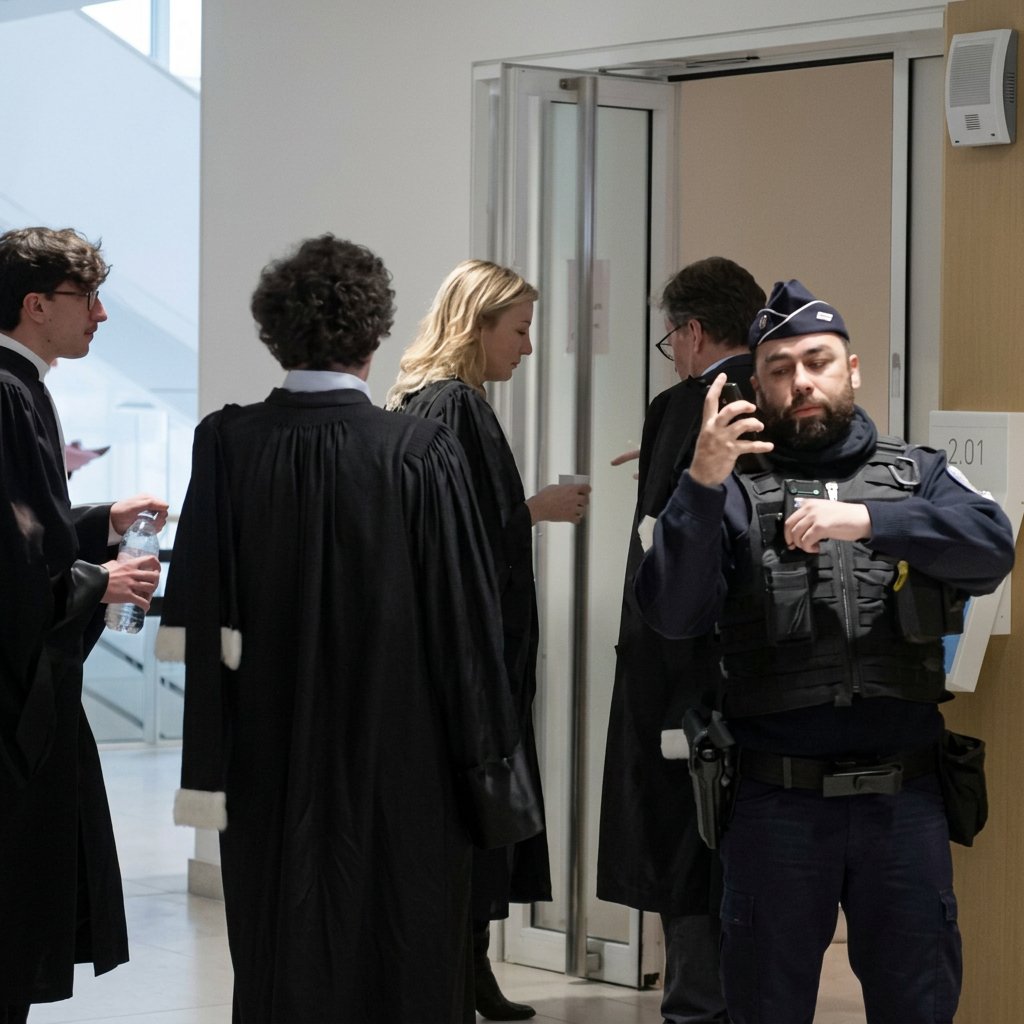
The investigation revealed a network involving former intelligence officers, private security agents, business people, and rogue Freemasons. The trial opened in Paris on March 30, 2026, with twenty‑two defendants aged between thirty and seventy‑three. They included six business leaders, four DGSE military personnel, three police or former intelligence officers, security agents, a doctor, and an engineer. The charges covered murder, attempted murder, aggravated violence, and criminal association. The court examined eight criminal projects, including the Pasquali killing and the attempt on Dini. The DGSE appeared repeatedly in the testimonies, and the judges questioned the extent to which its personnel had been manipulated or had acted without supervision. Certain responses from the DGSE during the investigation were described as incomplete or insufficient, and the court sought clarification of the roles played by individuals connected to the service.
The verdict arrived in mid‑July 2026. Beaulieu received a thirty‑year sentence. Other defendants received heavy penalties proportionate to their involvement. Some defendants have appealed, and the presumption of innocence applies until the final decision is rendered. The presiding judge described Beaulieu as “the key character without whom nothing would have been possible.”
Beaulieu had spent years inside the Renseignements généraux (RG) as the head of the “Cultes et sectes” (Cults and sects) unit, producing confidential notes that shaped the national approach to minority religions. His reports circulated among ministries, police, and anti‑cult associations, and they contributed to the climate that justified surveillance of groups ranging from Scientology to the Jehovah’s Witnesses and many others. The RG collected personal information about believers, contacted employers, and shared names with journalists. Beaulieu’s work fed the creation of the official anti-cult agency MILS and later the MIVILUDES, giving France a system that claimed to protect citizens from manipulation.
The Athanor case revealed that Beaulieu used the same techniques inside the milieus of fringe Freemasonry. Investigators uncovered a network of former intelligence officers, police, private security operatives, and businessmen involved in assaults, arson, and contract killings. Beaulieu skillfully convinced certain operatives that they were carrying out missions under the protection of the State, and he relied on psychological influence and clandestine organization to maintain control.
During the trial, Beaulieu explained his methods with a sentence that echoed through the courtroom: “In my profession, one often advances masked. One lies, one manipulates.” The man who once judged which religious groups were dangerous described his own professional identity through the vocabulary of deception. The irony did not escape observers, and the Athanor affair became a mirror reflecting the contradictions of the anti‑cult system he helped build.
After the court sentenced him to thirty years of imprisonment, Beaulieu’s final words included an apology addressed to France and to the victims for what he did, accepted to do, and allowed to happen. The apology closed a chapter that forces a reconsideration of the foundations of French anti‑cult policy. A system that claimed to defend citizens from manipulation relied on intelligence produced by a man who later used manipulation to run a criminal structure. The Athanor affair raises questions about the reliability of the narratives that shaped public perception of minority religions and about the methods used to justify surveillance.
Athanor operated through secrecy, psychological influence, obedience to a leader, and violent actions. These are the very criteria often used by French institutions to describe “dérives sectaires” (cultic deviances). The case shows that the techniques associated with the fight against alleged “cults” (“sectes” in French) can be repurposed inside networks that claim legitimacy through republican language. The collapse of Beaulieu’s public image invites reflection on the boundaries between surveillance, ideology, and personal ambition, and on the consequences of granting moral authority to individuals whose methods rely on manipulation.
The Athanor affair demonstrates that structures built to monitor others can develop internal dynamics that resemble the dangers they claim to prevent. France’s anti‑cult system emerged from a specific historical moment, and the revelations about Beaulieu’s activities suggest that certain foundations deserve renewed scrutiny. The story of a man who fought “cults” and later created one shows how easily moral narratives can be reversed, and how important it is to examine the origins of policies that affect religious minorities.

Massimo Introvigne (born June 14, 1955 in Rome) is an Italian sociologist of religions. He is the founder and managing director of the Center for Studies on New Religions (CESNUR), an international network of scholars who study new religious movements. Introvigne is the author of some 70 books and more than 100 articles in the field of sociology of religion. He was the main author of the Enciclopedia delle religioni in Italia (Encyclopedia of Religions in Italy). He is a member of the editorial board for the Interdisciplinary Journal of Research on Religion and of the executive board of University of Pennsylvania Press’ Nova Religio. From January 5 to December 31, 2011, he has served as the “Representative on combating racism, xenophobia and discrimination, with a special focus on discrimination against Christians and members of other religions” of the Organization for Security and Co-operation in Europe (OSCE). From 2012 to 2015 he served as chairperson of the Observatory of Religious Liberty, instituted by the Italian Ministry of Foreign Affairs in order to monitor problems of religious liberty on a worldwide scale.