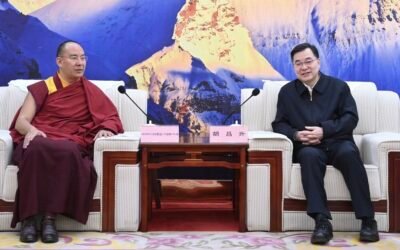
United Front chief Li Ganjie’s visit to historically Tibetan areas in Gansu and Sichuan was aimed at regulating the religion of Tibetans—and local Hui Islam—strictly according to Party standards.
by Tashi Dhargey
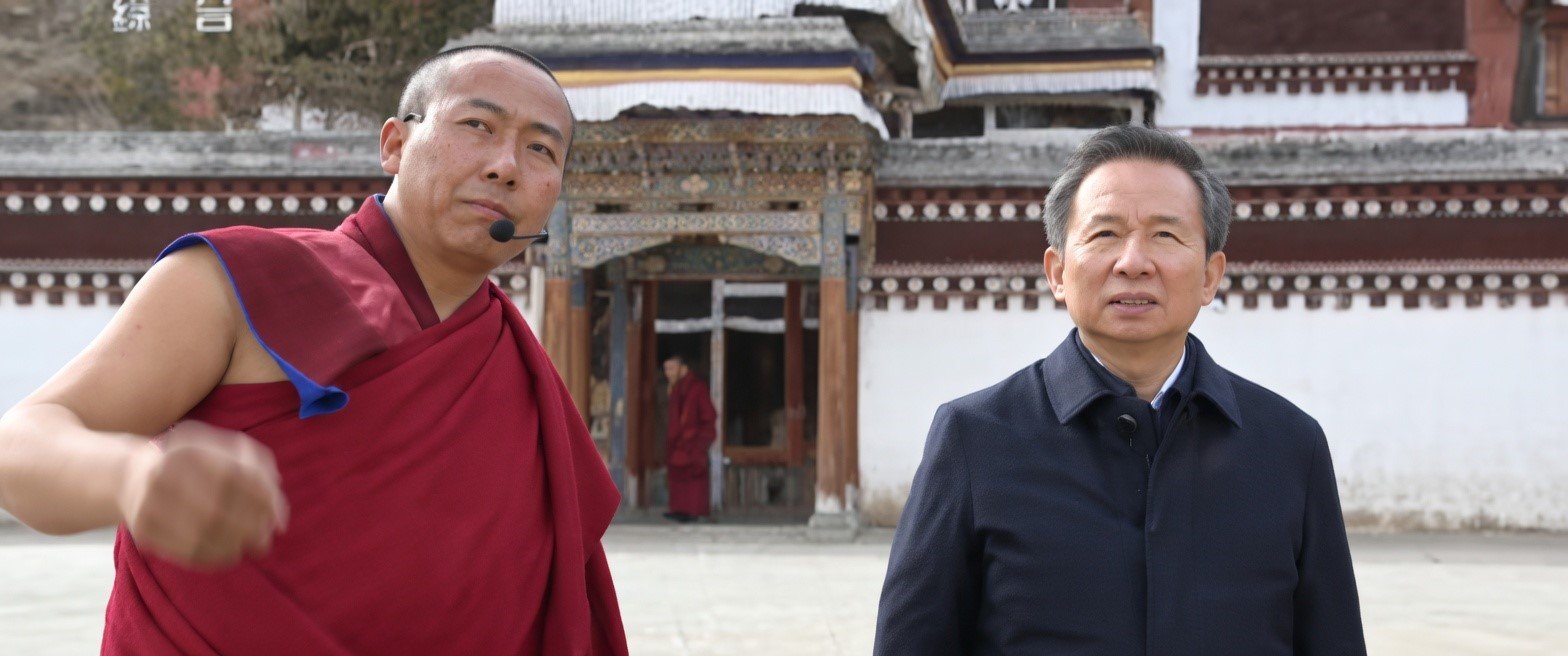
When the head of the Chinese Communist Party’s United Front Work Department travels to Tibetan regions, the official press releases always sound the same: long sentences, heavy slogans, and the obligatory invocation of “Xi Jinping Thought.” Yet behind the bureaucratic fog, Li Ganjie’s April tour of Gansu’s Gannan Tibetan Autonomous Prefecture and Sichuan’s Aba Tibetan and Qiang Autonomous Prefecture was anything but routine. It was a carefully choreographed inspection of how far the “Sinicization” of Tibetan Buddhism has progressed—not in the sense of adapting to Chinese culture, but to the CCP’s political demands.
Li visited monasteries, Buddhist academies, and Tibetan studies institutes, ostensibly to “understand standardized management” and “promote harmony.” In practice, this means ensuring that monks, teachers, and students internalize the Party’s priorities: loyalty to the state, gratitude to the Party, and the willingness to “follow the Party” in all matters. The press release makes this explicit. Tibetan Buddhism must be guided to “adapt to socialist society,” a phrase that in CCP usage means aligning doctrine, leadership, and daily practice with the political line. Monasteries are to be governed “according to law,” which in this context means according to regulations written by the Party itself.
The visit also highlighted the Party’s ambition to reshape religious education. Li called for strengthening “religious colleges,” cultivating politically reliable monks, and expanding Tibetan studies institutions that operate under state supervision. The goal is more ideological discipline: a Tibetan Buddhism that praises national unity, supports state policies, and avoids any hint of independent authority.
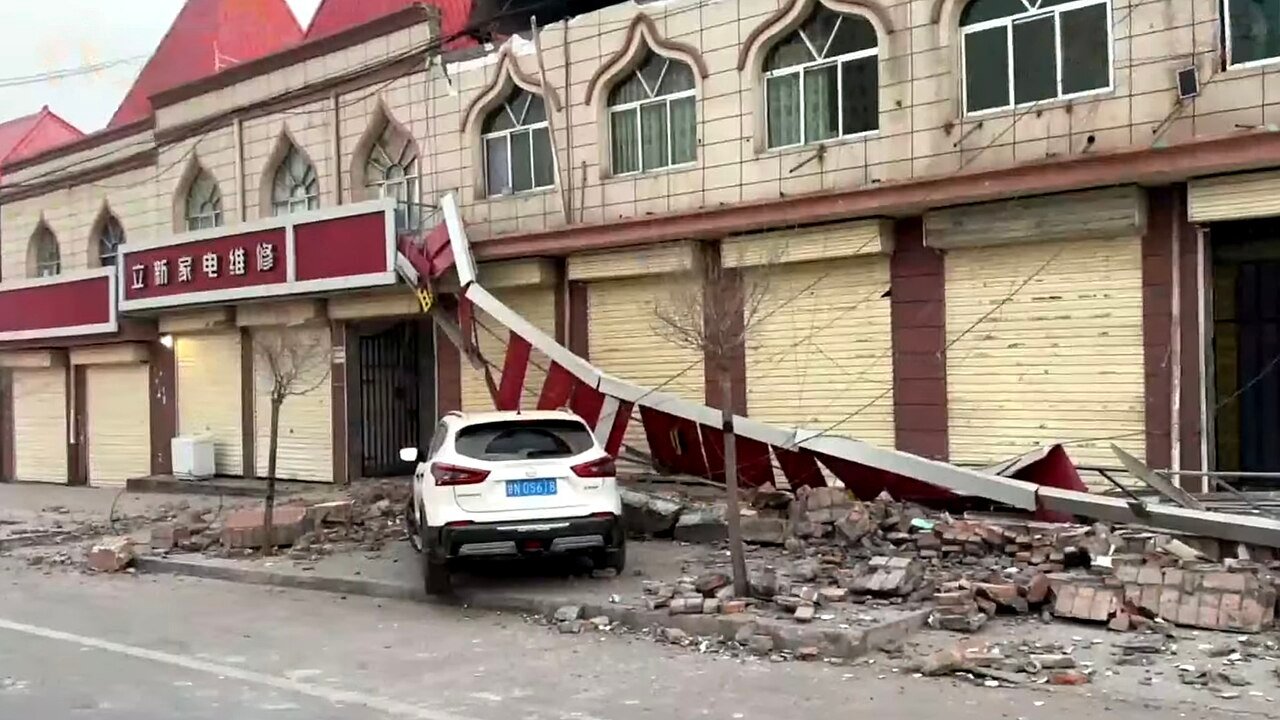
While in the region, Li also inspected the “Sinicization” of local Hui Muslims, particularly in areas affected by the 2023 earthquake in Jishishan. The official narrative frames this as concern for reconstruction and ethnic unity. In fact, the same ideological template applied to Tibetan Buddhism—political loyalty, cultural reshaping, and the promotion of a “correct” national identity—is now being applied to Hui communities as well. The Party’s preferred model of “embedded communities,” where ethnic and religious identities are diluted within a broader state-defined framework, is being promoted as the future.
Li’s tour, like many before it, was wrapped in the language of harmony, stability, and long-term peace. But the message to local religious communities was that the Party leads, religion follows. Tibetan Buddhism and Hui Islam may retain their names, their buildings, and some of their rituals, but their internal life must be re-engineered to fit the ideological mold. “Sinicization,” in this sense, is not cultural adaptation but political domestication.
The United Front chief’s journey through these historically Tibetan regions—outside the Tibetan Autonomous Region but culturally inseparable from it—shows how the CCP’s religious policy now operates: not through dramatic crackdowns, but through continuous supervision, ideological training, and the steady replacement of traditional authority with Party-approved structures. It is a quieter process than the world sees in Xinjiang, but no less transformative.
The official press release ends with the usual exhortations about “strengthening political consensus” and “consolidating the foundation for unity.” In practice, this means ensuring that Tibetan monks, Hui Muslims, and all other religious groups understand the new rule of the game: their future depends on how well they can be reshaped into instruments of Party policy.

Uses a pseudonym for security reasons.