New legal tools expand against routine church activity. Kaili City remains a center of anti-Christian repression.
by Wu Guoxuan
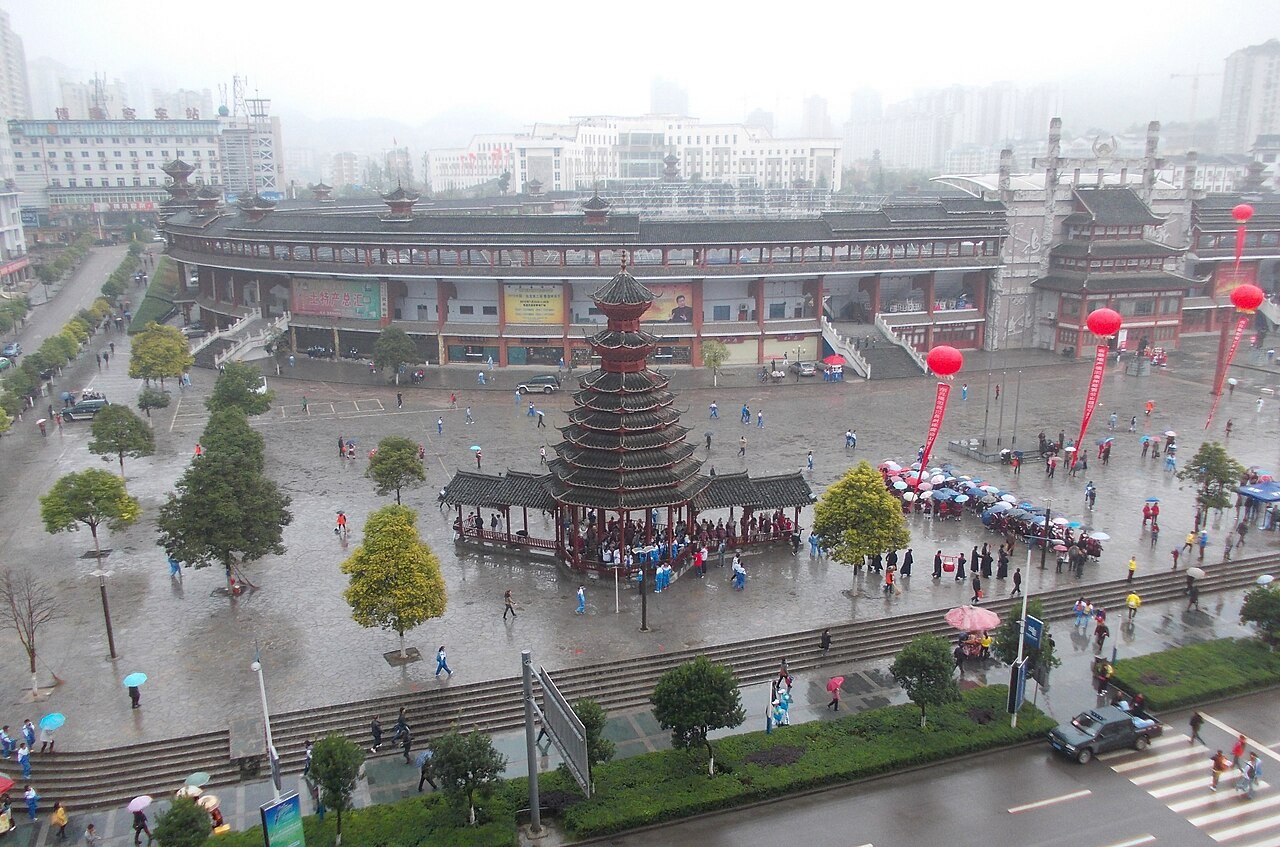
Earlier this month, news emerged from Kaili City, in Guizhou’s Qiandongnan Prefecture, that six Christians had been formally arrested on charges of fraud and of “organizing minors to carry out activities disrupting public order.” The detainees, according to the human rights advocacy organization Weiquanwang, are identified as Wei Yongqiang, He Jinbao, Quan Xiaolong, Long Jian, Cheng Yongbing, and Zhou Guixia. According to local sources, the accusation involving minors rests entirely on ordinary church life: sharing the Gospel with children, holding Sunday school, and allowing families to participate in worship together.
The case has drawn attention because of its legal novelty. The charge of “organizing minors to disrupt public order” has traditionally been applied only when minors are incited to fight, steal, or engage in conduct that genuinely threatens public safety. Although minors are prohibited from entering churches in China, children attending religious activities with their parents is a basic expression of family life and freedom of belief, and does not fall within the scope of the offense. Yet prosecutors proceeded with the arrest decision without hearing any of the legal opinions submitted by the lawyers retained by the families.
The situation in Kaili follows a pattern that has been developing since a local court in the same city in 2021, as reported by “Bitter Winter,” handed down a twelveyear sentence to an Adventist preacher surnamed Zhang, accusing him of fraud because tithes and offerings constituted “illegal income.” That ruling, unprecedented at the time, opened the way for similar prosecutions across China, where pastors and lay leaders have increasingly been charged with fraud for receiving voluntary donations. The new use of the publicorder provision involving minors now appears to be another first at the national level.
The arrests also come in the context of the recently revised Public Security Administrative Punishments Law. The amendments, adopted without a public consultation process, place socalled “illegal religious activities” on the same level as participation in a xie jiao (“organization spreading heterodox teachings,” sometimes translated as “cult”). Since the revision, preachers in several provinces have already been subjected to administrative detention. In some areas, local authorities have further expanded the scope of enforcement, intensifying tensions between religious communities and the state.
Families of the six Christians continue to seek legal remedies, but the decision to approve all arrests at once suggests that the authorities intend to pursue the case aggressively. For many observers, the charges illustrate how legal categories originally designed to protect public safety are being stretched to criminalize peaceful religious practice, particularly when minors are present. The development has heightened concern among unregistered Protestant communities, who fear that ordinary activities involving children may now be treated as criminal conduct.

Uses a pseudonym for security reasons.