When folk festivals become political karaoke, even the mountains of Guangxi can’t help but hum along.
by Liang Changpu
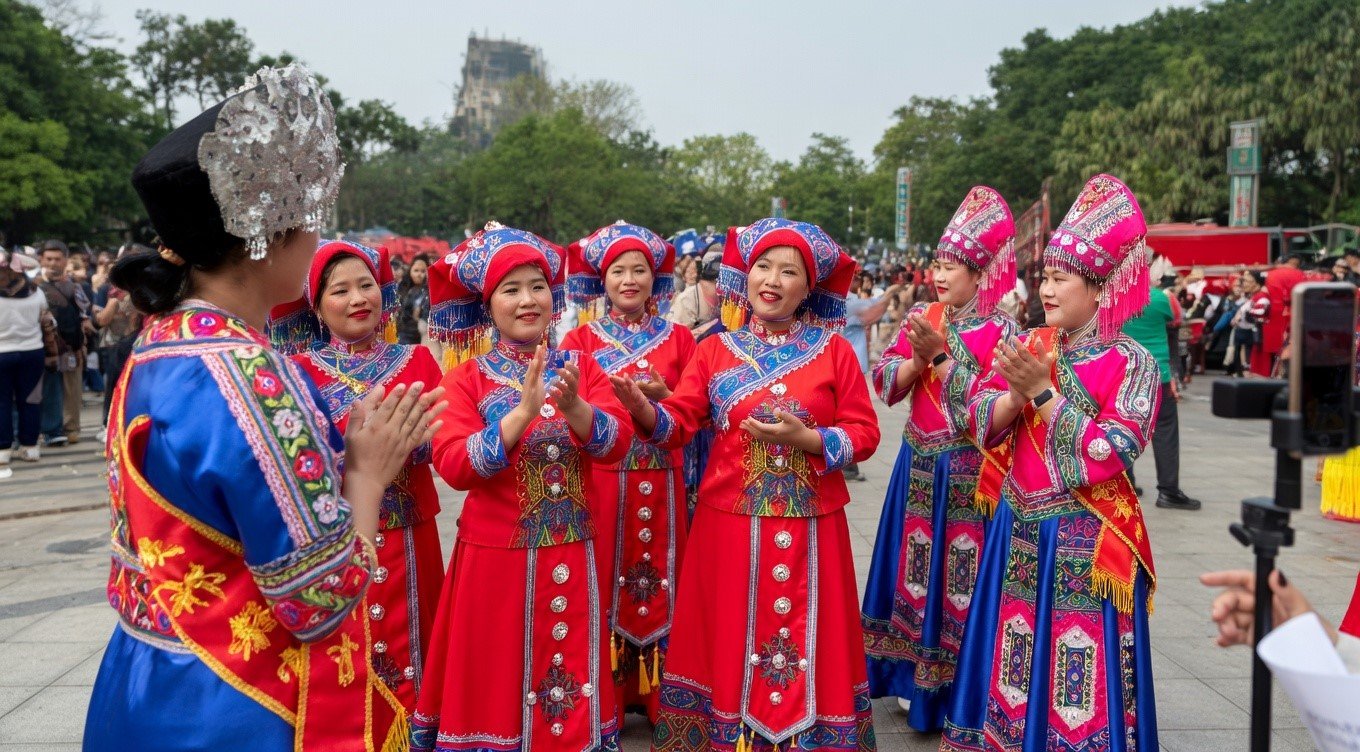
Every spring, Guangxi’s well-known mountain-song festivals bring in crowds eager to hear traditional Zhuang melodies, admire local talent, and enjoy a rare moment of cultural spontaneity. This year, however, the audience was in for a surprise. Along with the usual love duets and improvised lyrical battles, they experienced a full anti-xie jiao propaganda concert. Nothing captures “folk authenticity” like a government-approved chorus warning against joining an unregistered church.
Last month, the 2026 “Song Immortal Liu Sanjie” Mountain Song King Competition in Liuzhou was meant to celebrate the region’s culture. Forty-eight singers from six provinces gathered to compete, and over 70,000 spectators filled Yufeng Park. But the real highlight of the show wasn’t the music; it was the political messaging. The local Political and Legal Affairs Committees, not known for their musical tastes, seized the chance to turn the event into a public-security lecture. They came equipped with banners, pamphlets, and volunteers wearing sashes.
The slogan of the day—“Use songs to transmit the voice, reject xie jiao, preserve the people’s original heart”—was displayed prominently to ensure everyone got the message. For those unfamiliar with the term, “xie jiao” is often misinterpreted as “evil cults,” but it literally means “organizations spreading heterodox teachings.” Which teachings are deemed heterodox is determined by the Chinese Communist Party. Lately, the label has been applied not only to new religious movements Beijing dislikes but also to Protestant house churches whose only “heresy” is their refusal to join the government-controlled Three-Self Church. In effect, “xie jiao” now includes everything from Falun Gong to dissenting Christians.
Back to the music. As singers passionately proclaimed lines like “Don’t believe xie jiao rumors, punishing xie jiao depends on all of us,” the crowd clapped along. Some spectators even praised the format: “The songs are good, and the reasoning is right,” one local auntie told reporters, showing that propaganda works best when paired with a catchy tune.
Meanwhile, anti-xie jiao volunteers distributed brochures, eco-friendly bags printed with slogans, and other souvenirs promoting ideological hygiene. Visitors from outside Guangxi were encouraged to take these materials home, likely to share political orthodoxy with their unsuspecting relatives.
The event was also streamed live on the “Guangxi Anti-Xie-Jiao” video channel, attracting over 60,000 viewers. The comment section was filled with likes and patriotic comments as police officers explained how to identify “xie jiao disguises” and report suspicious neighbors. Nothing unites a community quite like a bit of online denunciation.
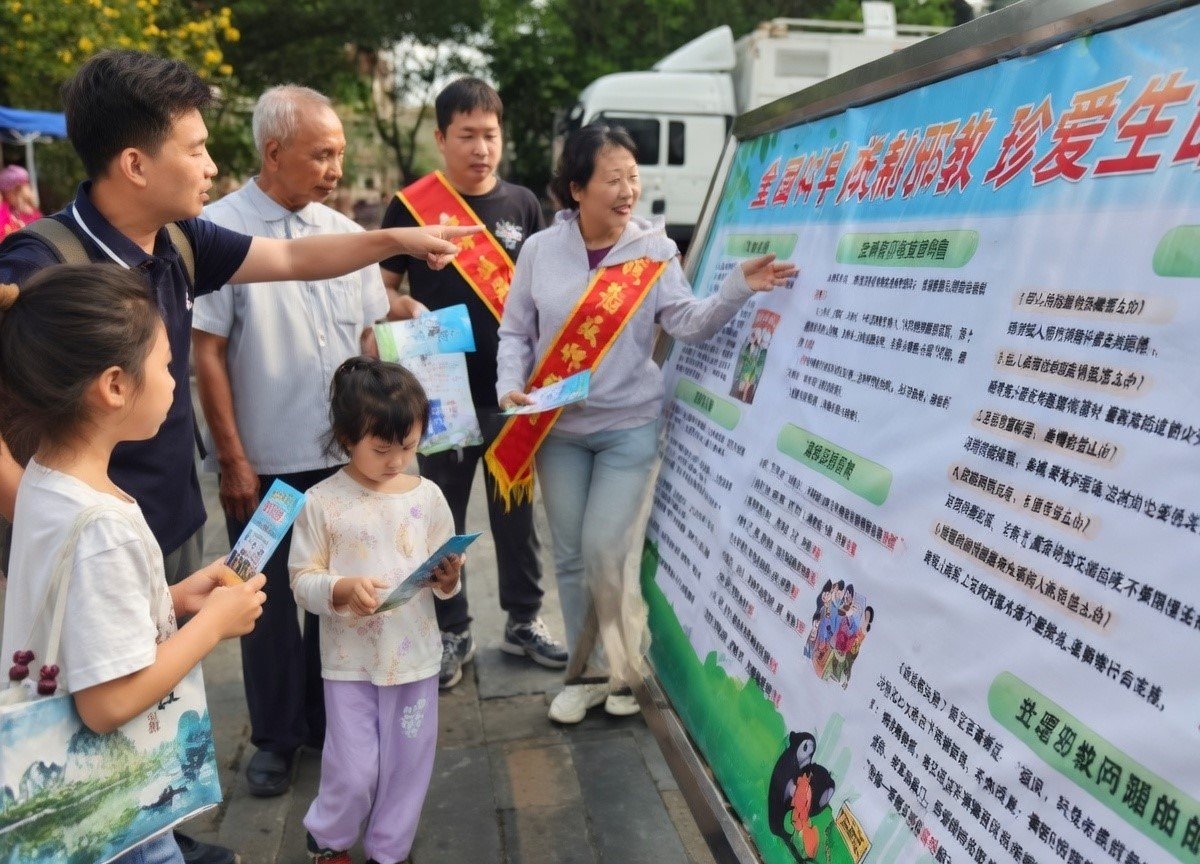
Local authorities praised the initiative as a creative example of “grassroots social governance.” By turning a beloved folk festival into a mass political education session, they claimed to have created a “down-to-earth anti-xie jiao classroom.” One can only wonder what Liu Sanjie—the legendary folk heroine recognized for her defiance against oppressive landlords—would think of her name being used to advocate for ideological conformity.
But, in today’s China, no cultural space is too sacred, too traditional, or too joyful to escape the anti-xie jiao campaign. Whether you are singing on a mountaintop, dancing in a village square, or just trying to enjoy a festival, the Party will ensure you learn that “heterodox teachings” are dangerous, unapproved religion is illegal, and the correct political tune must always be sung in perfect harmony.
And if you don’t sing along? Don’t worry; there will soon be another festival, and the chorus will be louder.

Uses a pseudonym for security reasons.