Protecting women and children is essential, but changes to Christian personal law must also respect Scripture, theology, religious freedom, and the voice of the Church.
by Sajid Sandhu
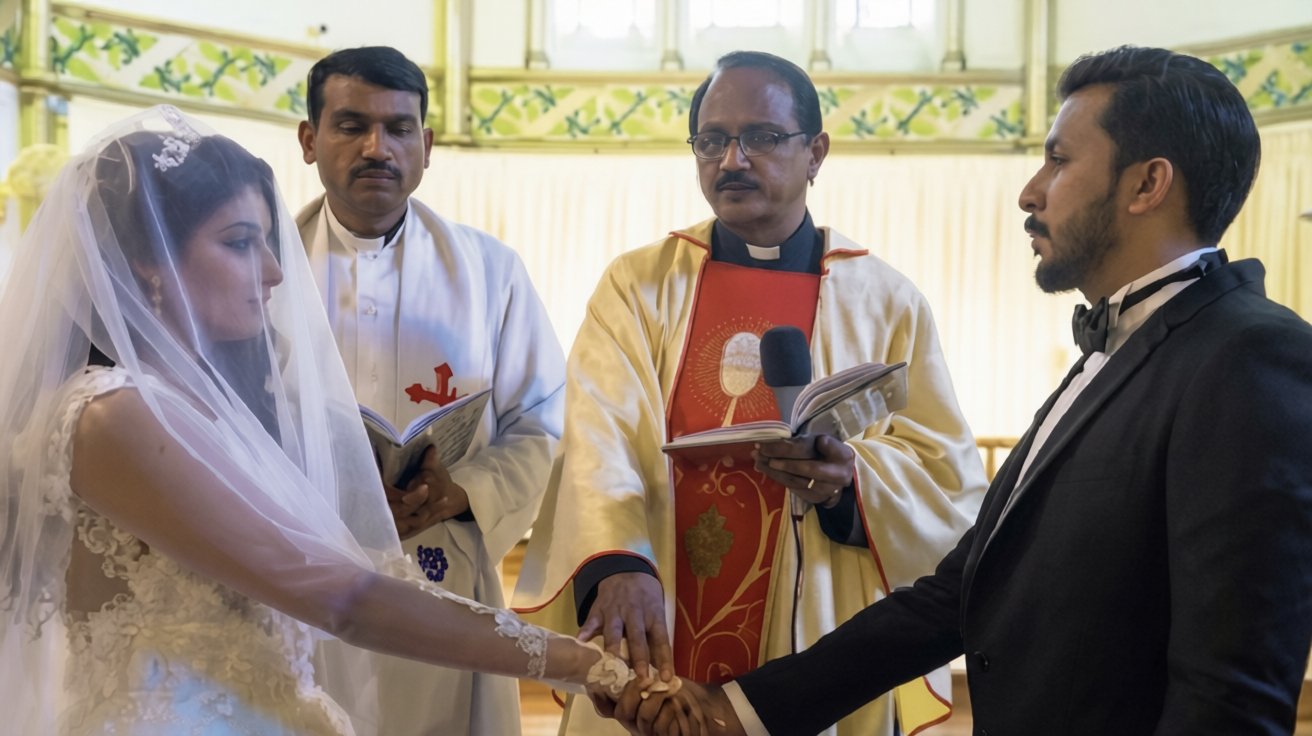
Pakistan’s Christian community is facing an important debate over proposed changes to Christian marriage and family laws in the provinces of Punjab and Sindh. The issue raises a fundamental question: how can Pakistan reform laws inherited from the colonial era and protect individual rights without undermining the religious identity and theological convictions of its Christian citizens?
There are legitimate reasons to review the existing legal framework. Christian citizens, particularly women and children, deserve proper marriage registration, protection against forced and underage marriage, due process, and effective remedies against abuse and injustice.
For Christians, however, marriage is much more than a civil contract. God instituted it as a sacred covenant, rooted in Scripture and central to Christian theology and family life. As Jesus Christ said, “What therefore God has joined together, let not man separate” (Matthew 19:6). This is why the current legislative debate requires exceptional care.
The proposed Punjab Christian Marriage Bill 2026 seeks to replace the Christian Marriage Act of 1872. According to reports, it would establish 18 as the minimum marriage age for both men and women, require both parties to be Christian, make mandatory registration with the relevant Union Council (the lowest and basic level unit of Pakistani local government) and the National Database & Registration Authority (NADRA)—Pakistan’s national authority responsible for registering citizens and establishing their legal—regulate who may solemnize Christian marriages, require witnesses and documentation, and remove some outdated procedural restrictions.
Several of these provisions address genuine problems. Proper registration, documentation, minimum-age requirements, and safeguards against forced marriage can strengthen legal protection for Christian families.
The proposed Sindh Christian Family Laws Bill 2026, however, is considerably broader. Besides marriage registration and minimum age, it reportedly covers divorce, judicial separation, maintenance, remarriage, family property, child custody, education, and welfare. The proposed grounds for dissolution of marriage reportedly include adultery, cruelty or violence, another marriage, and abandonment. This is where administrative reform enters the sensitive territory of Christian doctrine on marriage, divorce, and remarriage.
On September 30, the Punjab bill was unanimously approved by the Punjab Assembly’s Standing Committee on Human Rights and Minority Affairs, and it now awaits a vote by the full Assembly. In Sindh, Deputy Speaker Anthony Naveed has introduced his proposal as a private member’s bill. Both remain legislative proposals and should not be described as existing law.
Article 20 of Pakistan’s Constitution guarantees every citizen the right to profess, practice, and propagate their religion, and recognizes the right of every religious denomination to establish, maintain, and manage its religious institutions. This protection should have practical meaning when legislation directly touches religious belief and practice.
Christian personal law exists partly because Christian marriage has a religious character distinct from the personal-law traditions of other religious communities in Pakistan. If the state recognizes this distinctiveness, any review of Christian family law should involve serious engagement with the churches whose beliefs the law is meant to accommodate.
This does not mean that religious freedom can justify forced marriage, child marriage, domestic violence, exploitation, or the denial of legal protection. The state has a legitimate responsibility to protect its citizens. The Church, however, also has a legitimate responsibility to articulate Christian doctrine and biblical theology. Neither responsibility should cancel the other.
NGOs and civil society organizations can make valuable contributions on human rights, the protection of women and children, access to justice, and legal safeguards. Working for the rights of Christians does not, however, give an organization ecclesiastical authority to define Christian doctrine. Asking what legal protection a Christian woman needs is different from asking what Christianity teaches about marriage and divorce. The first question appropriately involves legislators, lawyers, women, human rights advocates, and civil society. The second necessarily requires the meaningful participation of bishops, pastors, theologians, biblical scholars, denominations, and other recognized Christian leaders. On matters of faith and doctrine, civil society should therefore complement the Church, without replacing it.

The concerns raised by the proposals in Punjab and Sindh show why genuine consultation matters. Inviting church representatives to a meeting should not automatically be presented as the Church’s endorsement of the proposed legislation. Meaningful consultation requires sufficient time to study the draft provisions, examine their legal and theological implications, record objections, and propose alternatives. Lawmakers also need time to consider these concerns before the legislation is finalized.
Pakistan’s Christian community is diverse. Baptists, Catholics, the Church of Pakistan, Presbyterians, the Salvation Army, Pentecostals, evangelicals, and other traditions may not interpret every question of marriage and divorce in the same way. This diversity makes broad consultation even more important.
The greatest theological sensitivity concerns divorce and remarriage. Christian traditions differ in how they interpret and apply some biblical passages, but the teachings of Jesus cannot be treated as incidental when drafting Christian personal law. Matthew 19:3–9, among other passages, is foundational to Christian reflection on marriage and divorce.
Victims of cruelty, abandonment, violence, or exploitation unquestionably deserve protection.
The challenge is how civil law can provide protection and justice while respecting the theological understanding of marriage held by Christian communities.
This requires careful theological and legal consideration rather than hurried legislation. Pakistan does not have to choose between protecting human rights and respecting the Christian faith. It can protect women and children, prevent forced and underage marriages, improve registration and documentation, provide maintenance and custody protections, and strengthen access to justice without needlessly redefining Christian doctrine.
The present debate should therefore not turn into a contest of government against Church, Church against civil society, or one Christian denomination against another. As Chairman of the International Religious Freedom–Peace Builders Forum Pakistan & South Asia, I believe the right path is one of dialogue, theological seriousness, legal competence, transparency, and consensus-building.
Before Punjab, Sindh, or any other province finalizes legislation on Christian marriage or family law, recognized churches, theologians, biblical scholars, legal experts, women, and community representatives should have meaningful opportunities to examine its implications. Christian marriage is more than a registration certificate. For Christians, it is an institution ordained by God.
The objective should be a legal framework that protects human dignity and justice, respects Article 20, preserves the distinctive Christian character of Christian personal law, remains faithful to biblical principles, and strengthens rather than divides Pakistan’s Christian community.

Sajid Sandhu, a Christian, is a development practitioner, interfaith leader, and advocate for religious freedom and social justice. He serves as Chairperson of the International Religious Freedom–Peace Builders Forum Pakistan & South Asia, advancing interfaith peace, equal citizenship, and human dignity.