Whether the historical place of worship was destroyed by a natural event or by a malicious human hand has become a bone of contention between India and Pakistan.
by A. Sahara Alexander
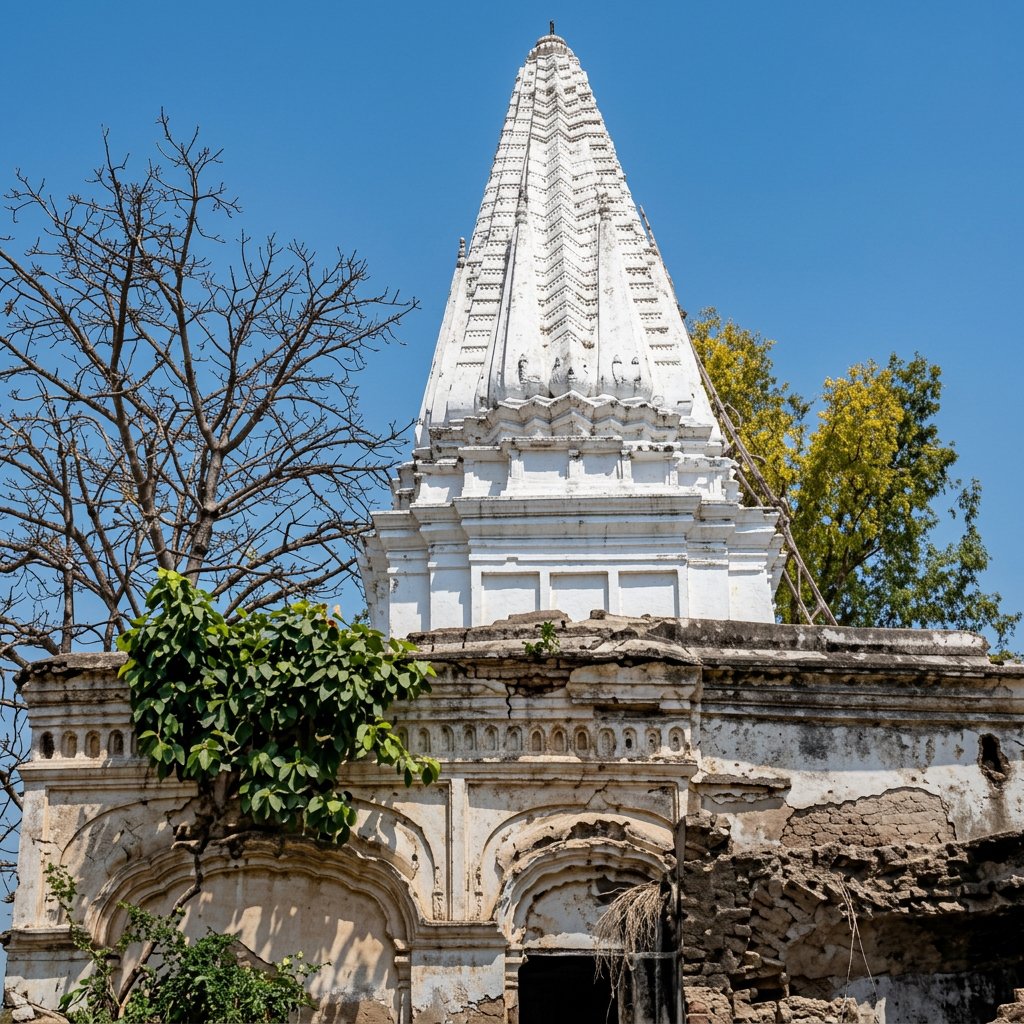
The collapse of an over‑a‑century‑old Hindu temple in Narowal, Punjab, Pakistan, has opened a new chapter of uncertainty for Pakistan’s minority communities. The structure in Siraj village fell on August 21, and the circumstances surrounding its destruction remain disputed. A minority rights group, the Pakistan Masiha Millat Party, claims that the temple was deliberately demolished to clear space for the expansion of an adjoining madrasa. Pakistan’s Evacuee Trust Property Board, which manages Hindu and Sikh properties left behind by those who migrated to India after the Partition, rejects this version and maintains that the building collapsed during recent torrential rains. The Punjab government has endorsed the ETPB’s account, stating that a portion of the temple fell due to weather damage and will be restored.
PMMP Chairman Aslam Parvez Sahotra says he and several locals met the Punjab additional home secretary on August 28 to submit a written application demanding action against those responsible for the demolition and against officials accused of failing to protect the site. He cites a revenue department report identifying individuals who illegally occupied parts of the temple’s quarters and adjoining land. He also refers to an order issued on January 29, 2026, by the ETPB deputy administrator in Sialkot, canceling the madrasa’s lease and directing the eviction of illegal occupants and the sealing of the property. According to him, the order was never implemented.
The PMMP alleges that the structure was dismantled piece by piece, with bricks, metal fittings from the dome, and other materials removed. They argue that the collapse narrative does not explain the disappearance of these elements. They demand that the temple be reconstructed in its original form and that the Punjab government strengthen protection for Hindu temples, Sikh gurdwaras, and Christian churches.
Pakistan’s Foreign Office (FO) has also intervened, rejecting claims made by India’s Ministry of External Affairs about the temple as false and politically motivated. The FO spokesperson says the temple’s structure was damaged on July 21 by heavy rains and that local authorities have already surveyed the site and begun restoration work. The Hindu Mandir Management Committee has issued a statement supporting the government. However, the Committee works under the ETPB, and its independence from the government is questioned.
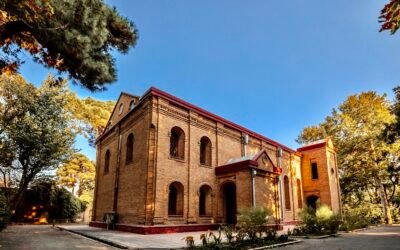
The conflicting accounts have revived concerns among minority communities, who point to earlier incidents where heritage sites suffered damage under disputed circumstances. In June, portions of the 125‑year‑old Gurdwara Sri Guru Singh Sabha Sahib in Farooqabad were reduced to rubble after a local businessman allegedly carried out demolition work without legal clearance or a court order. Sikh residents protested in the streets, and only then did authorities acknowledge the incident. A report described the night of June 24 as the moment machinery tore into a building that generations had treated as sacred. Officials later admitted that the department failed to take notice until the Sikh community raised its voice and promised reconstruction.
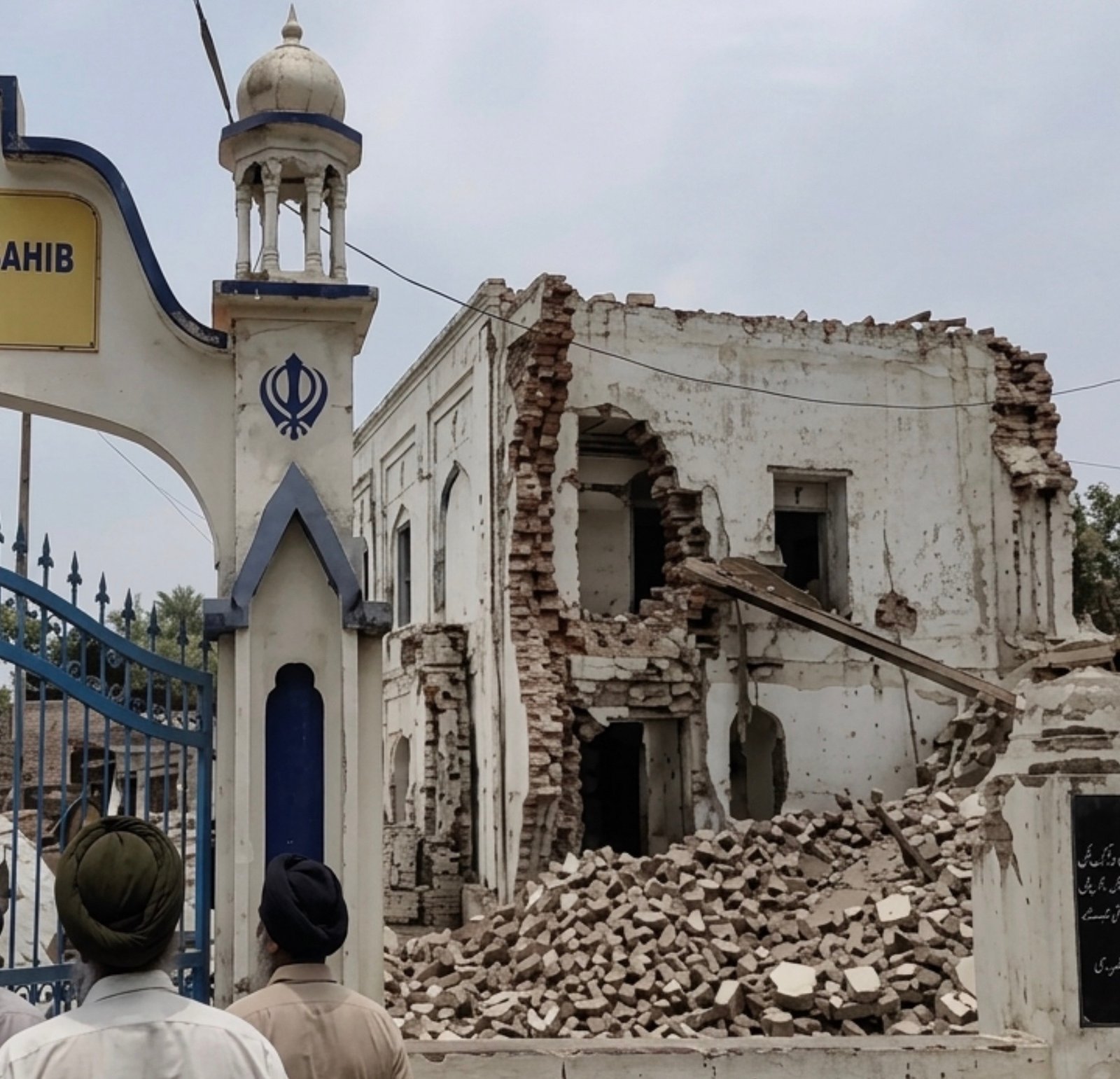
For many observers, the Farooqabad precedent has become part of the context in which the Narowal temple’s collapse is being interpreted. The pattern described by minority groups involves old religious structures falling into neglect, adjoining lands becoming contested, and sudden destruction occurring under circumstances that remain disputed. The absence of timely official intervention in earlier cases has contributed to doubts about the present one.
The situation in Siraj village remains unresolved. The lack of clarity about the implementation of earlier eviction orders, the presence of illegal occupants, and the disappearance of structural materials have all become part of the debate and make the official version look suspicious. The temple’s age, estimated at more than 100 to 125 years, adds to the sense of loss felt by those who had hoped it would be preserved.
Questions remain open. The restoration promised by authorities, if it happens, may address the physical damage, yet underlying concerns about protecting minority heritage sites continue to surface whenever such incidents occur.

Uses a pseudonym for security reasons.