Qur’anic principles on authority and religious freedom suggest that administrative classification can never replace a genuine understanding of a spiritual community.
by Davide Suleyman Amore*
*A paper presented at the session “New Perspectives on the Tai Ji Men Case” of the CESNUR 2026 conference, Taichung, Taiwan, October 12, 2026.
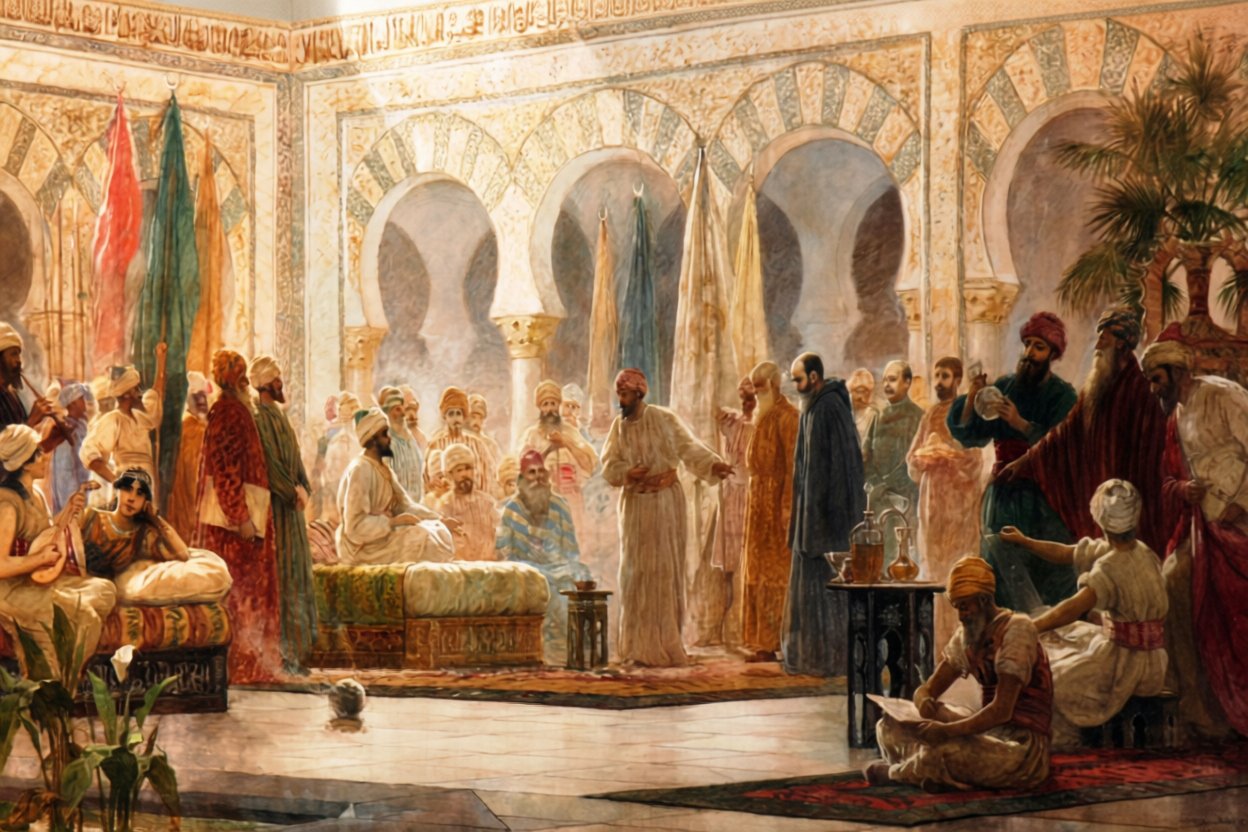
A question lies at the heart of the study of religion and society: what happens when the state encounters a religious or spiritual reality that it does not fully understand?
Modern states must necessarily classify. They classify organizations, properties, financial transactions, educational activities, donations, and social institutions, and such classifications are indispensable for administration. Yet spirituality frequently presents realities that administrative categories alone cannot adequately capture. A donation may be, at the same time, a financial transaction and an expression of spiritual commitment. A piece of land may be property, but it may also have a spiritual, symbolic, or communal significance. A spiritual organization may possess an institutional structure, while its primary purpose is neither economic nor political. The problem begins when administrative categories cease to describe reality and start redefining it.
From this point, I would like to examine the Tai Ji Men case through an Islamic ethical and juridical perspective. I am not proposing that Islamic law can be applied, as a foreign legal system, to a Taiwanese dispute. Nor am I suggesting that an Islamic perspective automatically establishes the correctness of every claim made by a spiritual movement. My question is more fundamental: what can Islamic concepts of justice, religious freedom, and limits on governmental power contribute to our understanding of what happens when the state misrecognizes a spiritual community?
The first concept I need to introduce is “ʿadl,” usually translated as justice, which occupies a central position in the Qur’anic conception of a legitimate social order. The Qur’an states:
﴿إِنَّ ٱللَّهَ يَأْمُرُكُمْ أَن تُؤَدُّوا۟ ٱلْأَمَـٰنَـٰتِ إِلَىٰٓ أَهْلِهَا وَإِذَا حَكَمْتُم بَيْنَ ٱلنَّاسِ أَن تَحْكُمُوا۟ بِٱلْعَدْلِ ۚ إِنَّ ٱللَّهَ نِعِمَّا يَعِظُكُم بِهِۦٓ ۗ إِنَّ ٱللَّهَ كَانَ سَمِيعًۢا بَصِيرًا﴾
“Allah commands you to return to their owners the things you hold in trust and, when you judge between people, to judge with justice. How excellent is what Allah exhorts you to do! Allah is All-Hearing, All-Seeing” (Qur’an 4:58).
This verse matters because it links justice to the exercise of authority. Governmental power does not justify itself morally. The state may have the institutional authority to make decisions, impose taxes, regulate property, and enforce laws. In Islamic thought, however, possessing power does not mean possessing an unlimited moral right to exercise it in whatever manner is administratively convenient. Authority is a trust, and a trust creates an obligation.
Qur’an 5:8 develops the same idea: “Be steadfast in justice… and do not let the hatred of a people cause you to depart from justice.” The principle is remarkably demanding. Justice cannot depend on whether the authority sympathizes with the person or community before it. Indeed, justice matters most precisely where the state deals with people it considers problematic, unfamiliar, or potentially threatening.
This leads to the complementary Islamic concept of “ẓulm.” Commonly translated as oppression or injustice, the word has a broader semantic field, which includes wrongdoing, transgression, and the violation of what is due to another. In this perspective, injustice does not necessarily require spectacular violence. It can also occur through misclassification, disproportionate intervention, arbitrary treatment, or the denial of legitimate rights. This matters for understanding modern controversies about spiritual movements. A state does not need to persecute a spiritual community openly to produce injustice, since it may do so through apparently neutral administrative mechanisms.
Here the problem of bureaucratic categorization emerges. Modern administration tends to ask what a property, a payment, an organization, or an activity is, and whether it is commercial, educational, charitable, or taxable. These questions are legitimate, yet spirituality frequently answers them differently. The spiritual meaning of an action cannot always be reduced to its economic or administrative form. A contribution to a spiritual community may mean something like an offering, a charitable donation, a devotional act, or an expression of belonging. A spiritual institution may also perform educational, social, and economic functions without becoming, in its essential identity, a commercial enterprise.
This is where the distinction between form and meaning becomes crucial. The state sees an administrative object, while the believer may see a sacred relationship. Once these two perspectives collide, the question goes beyond which bureaucratic category applies. The deeper question is whether the administrative category adequately represents the reality it claims to regulate. If it does not, the consequences may be serious. A misunderstanding can become a financial assessment, the assessment a legal dispute, and the dispute the basis for sanctions or seizure. Eventually, what began as a classification problem can become a question of religious freedom and human dignity.
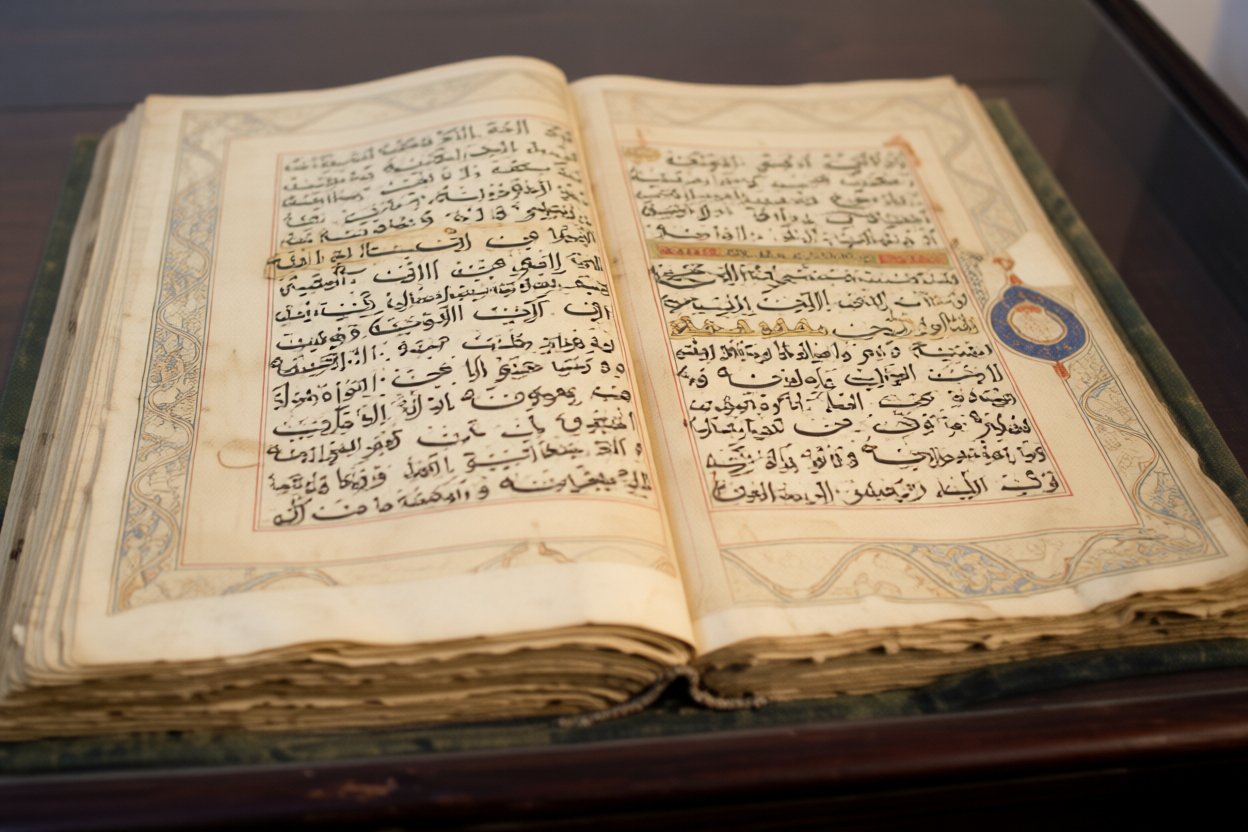
The second major Islamic principle concerns religious freedom. Perhaps its most famous Qur’anic formulation is found in Qur’an 2:256: “There is no compulsion in religion.” The verse has generated extensive classical and modern discussion. Still, whatever the complexities of its interpretation, it establishes an important principle: commitment to religion or belief cannot simply be manufactured through coercion.
The Qur’an also contains a broader principle on protecting religious communities. Qur’an 22:40 speaks of the protection of “monasteries, churches, synagogues, and mosques in which the name of God is much mentioned.” This passage is of special interest for contemporary religious studies, because the Qur’an does not limit the protection of the sacred to Islamic places of worship. It presents the protection of religious institutions as a matter of social and political responsibility.
The implication is far-reaching. Freedom of religion or belief includes the private right to believe something internally, and it also requires protecting the institutional and material conditions that make religious life possible. Spiritual communities need buildings, associations, property, schools, and charitable structures, as well as the ability to gather and transmit their traditions. Consequently, interference with these material conditions can affect freedom of religion or belief even if the state never explicitly prohibits belief. This perspective is especially useful for studying new religious and spiritual movements.
The Tai Ji Men case offers a contemporary context in which these questions become visible. Without attempting to reconstruct every detail of a complex legal and political controversy, we can identify the issue that matters for my argument: the interpretation by state authorities of the activities, financial contributions, and property associated with Tai Ji Men, and the consequences that followed. Whether a particular tax assessment was legally correct is a question for the relevant legal and administrative institutions. I want to ask a broader one: what happens if the state’s interpretation of a spiritual activity fails to correspond to the community’s own spiritual reality?
Here the Islamic framework provides a useful analytical instrument. Its first requirement would be “ʿadl,” or impartiality; the second, “amānah,” the responsible exercise of entrusted authority; the third, the avoidance of “ẓulm,” meaning arbitrary or disproportionate interference; and the fourth, respect for the religious dimension of communal life. From this perspective, the state should not automatically accept a spiritual movement’s self-description, and critical examination is legitimate. Equally, the state should not automatically reduce a spiritual reality to the category most convenient for administration. Justice requires careful investigation, proportionality, and contextual recognition. In other words, the state must ask what a transaction looks like administratively, and also what that action means within the spiritual community that performs it. The distinction may appear subtle, but its consequences can be enormous.
Classical Islamic political thought offers another contribution. Muslim thinkers did not generally conceive of legitimate government as an institution with unlimited discretionary power. For al-Māwardī, political authority is connected with the preservation of religion and worldly order. For al-Ghazālī, it is inseparable from the preservation of social welfare and justice. In Ibn Khaldūn’s historical and sociological analysis, the stability of political authority depends on social bonds and on the relationship between power, justice, and social cohesion. One need not accept the institutional forms of medieval Islamic government to appreciate the underlying principle: political authority exists for a purpose, and that purpose places moral limits on its exercise. Power without justice eventually destroys the social order it was supposed to protect.
This is especially relevant for minority religions and new religious or spiritual movements. A spiritual community unfamiliar to the majority may easily become suspect. Its vocabulary may sound strange, its rituals may be misunderstood, its internal organization may appear opaque, and its financial practices may be interpreted through categories developed for ordinary commercial activity. Precisely because the community is unfamiliar, the state has an even greater obligation to exercise caution. What is unfamiliar is not necessarily fraudulent, what is unconventional is not necessarily commercial, and what is spiritually unusual is not necessarily socially dangerous.
This brings me to the central proposition of this paper. Formal legality is necessary, but it is not always sufficient for justice. An administrative decision can be procedurally regular and nevertheless produce substantive injustice. The argument is familiar to jurisprudence in general and is by no means exclusively Islamic, yet Islamic thought provides a particularly strong vocabulary to express it. The state must act with “ʿadl” and avoid “ẓulm.” It must treat its authority as an “amānah,” a trust, and recognize that spiritual life possesses a dignity that cannot always be translated into fiscal or bureaucratic categories.
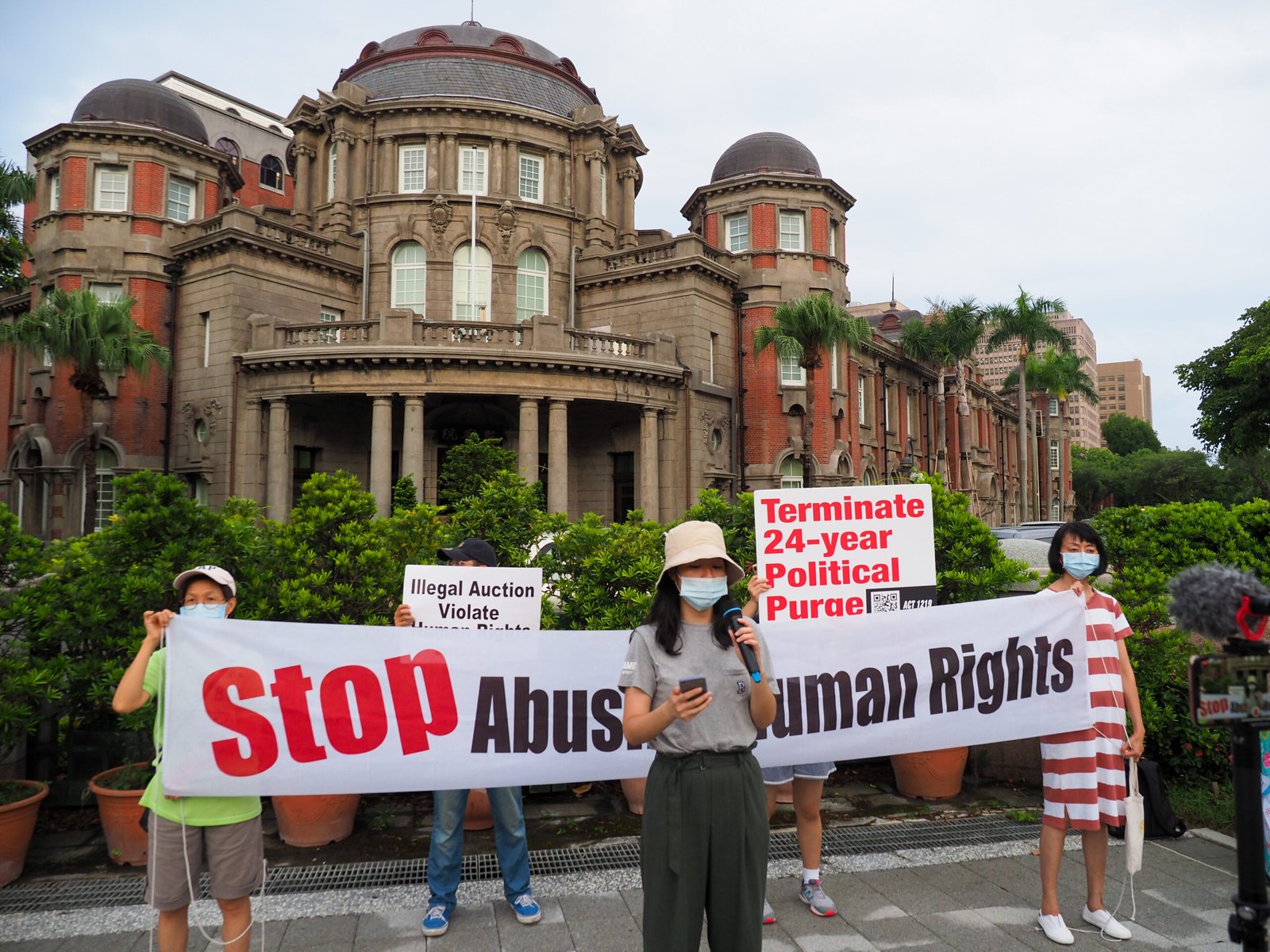
The Tai Ji Men case therefore invites us to reconsider a fundamental assumption of modern governance: that classifying something administratively means understanding its essential nature. The assumption is dangerous when applied to religion and spirituality. They have organizational forms, as well as meaning, memory, identity, ritual, and community. Above all, for believers, they have a relationship with the sacred.
Let me conclude with a broader observation. The importance of the Tai Ji Men controversy extends beyond its particular legal history, since it raises a question that applies to religious and spiritual communities across different societies: what happens if the state has the legal power to classify something, but lacks the conceptual tools to understand what it is? An Islamic perspective would answer that governmental authority cannot be judged solely by its legal competence. It must also be judged by its justice. The Qur’anic imperative asks rulers to exercise power justly. Justice requires more than procedure: it requires proportion, impartiality, respect for rights, and, in matters concerning religion and spirituality, an awareness that the sacred cannot always be reduced to the categories of the administrative state.
The lesson, therefore, does not place religious and spiritual communities above the law, nor does it ask states to abandon taxation, regulation, or administrative oversight. It is more modest, and perhaps more important: the state must regulate spiritual communities without first misunderstanding them. Once misunderstanding produces material consequences, justice demands that the state be willing to reconsider its categories, correct its errors, and restore what has been unjustly taken. From an Islamic perspective, this is more than good administration. It is an ethical obligation, because the legitimacy of authority is ultimately measured by its willingness to decide justly, even more than by its power to decide.