The ruling on the “notarized document case” confirms biases against “cults” and the Family Federation by courts that ignore international law.
by Massimo Introvigne
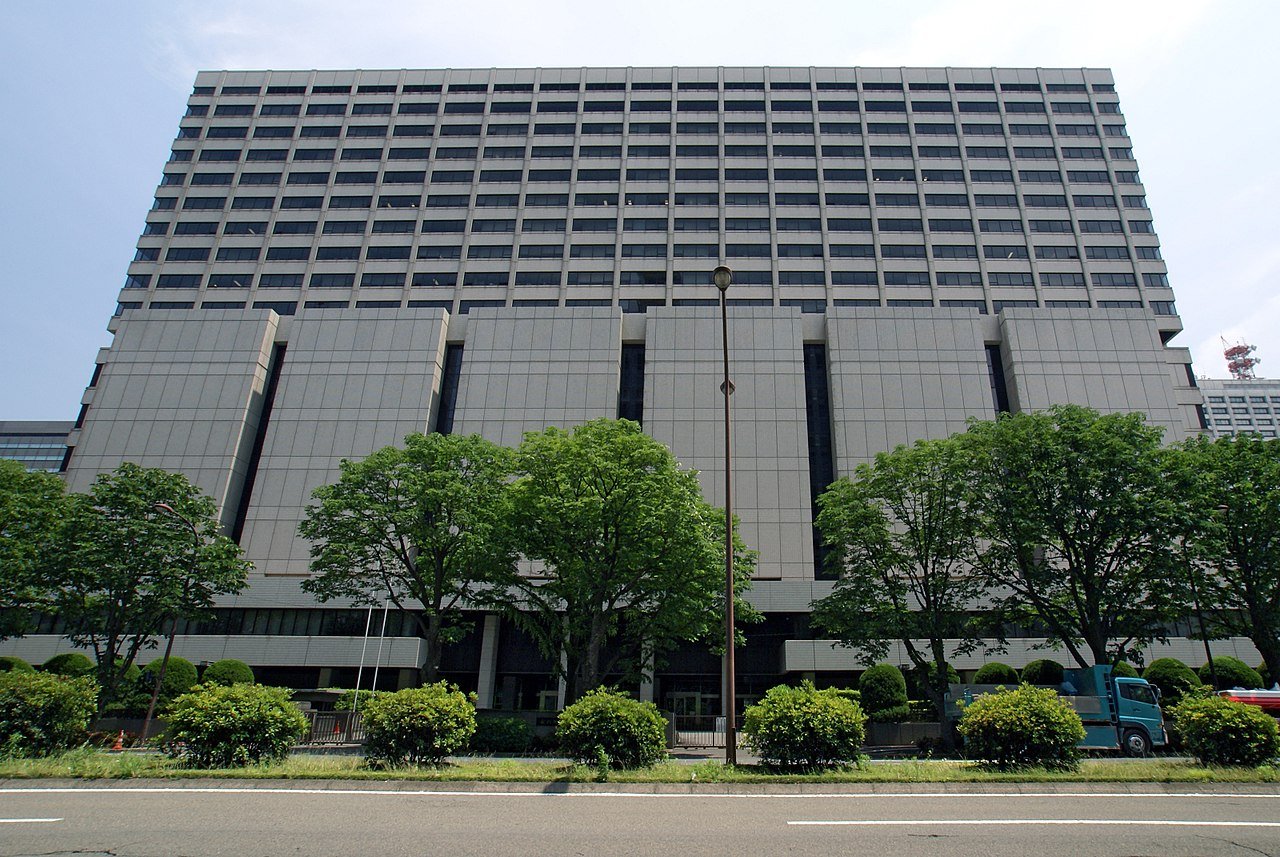
The Tokyo High Court has handed down its latest ruling in the long-running “Notarized Document Case,” and opponents of the Unification Church (now called the Family Federation for World Peace and Unification) are already popping champagne. They call it a “defeat” for the supporters of the Unification Church. In reality, the ruling is something far more revealing—and far more troubling. It is a judicial confession, delivered in black robes, of what independent observers have warned for years. In Japan, certain religious minorities do not enter the courtroom as equal citizens. They enter as defendants in a morality play whose ending was written long before the curtain rose.
A woman with three daughters joins the Unification Church. She donates money—voluntarily—and, anticipating family drama, signs a notarized document explicitly waiving any right to demand refunds. The eldest daughter, opposed to her mother’s faith, isolates her, cuts off contact with the younger daughter who introduced the mother to the church, obtains guardianship, and sues the church on her mother’s behalf.
Before the Abe assassination, both the Tokyo District Court and the Tokyo High Court dismissed the claims. Then came the political earthquake of 2022, the anti-UC frenzy, and the Supreme Court’s sudden decision to revise the standard for “illegality” and send the case back down. The High Court has now returned with a dramatically different conclusion: the UC should pay roughly 60 million yen in damages.
The court held that the mother’s ability to make “appropriate judgments” was impaired—because she was elderly, possibly emotionally unstable, influenced by religious doctrine, and continued donating even when it affected her living expenses. In other words: she believed, she gave, and she kept giving. For the High Court, this was enough to declare the solicitation outside the scope of “social appropriateness.”
Opponents of the UC may be cheering, but in fact, the ruling does not contradict what defenders of religious liberty have been saying for several years. It confirms it.
Award-winning journalist Masumi Fukuda reported in 2023 that attorney Yoshiro Ito—himself once part of the anti-cult legal network—openly acknowledged an “unwritten rule” in Japanese civil litigation: “if the defendants are labeled a cult, they lose.” Claims that would be laughed out of court in any other context suddenly become plausible, even compelling, once the magic word “cult” is uttered.
This case is a textbook example. A notarized document is declared irrelevant. The donor’s explicit intention is overridden. The daughter’s isolation of her mother and seizure of guardianship is not regarded as a problem. The only fact that truly matters was the “cult” label attached to the defendant.
The court didn’t even bother to hide it. The standard of “illegality” was stretched like mochi to accommodate whatever conclusion the judges needed to reach. The mother’s faith itself became evidence of impaired judgment. Her religious commitment was treated not as a protected right but as a symptom.
Japan is a signatory to the International Covenant on Civil and Political Rights. Article 18 is crystal clear: freedom of religion may be restricted on a limited number of grounds, which do not include “social appropriateness.” The UN Human Rights Committee has been telling Japan this since 1980—repeatedly, politely, but in increasingly exasperated tones, to no avail.
The High Court’s ruling doubles down on the very logic the UN has condemned for forty-five years. The court treats “social appropriateness” as a magic wand that can transform any religious practice into a tort.
International law says this is impermissible. Japanese courts shrug and do it anyway.
The decision is sad. But it is not surprising. It is not even new. It is simply the latest confirmation of a pattern “Bitter Winter” has documented again and again. Religious minorities labeled as “cults” are not judged by the same standards as everyone else. Japanese courts continue to rely on legal concepts that international law explicitly rejects. Political winds, not legal principles, determine outcomes in cases involving unpopular religions.
The ruling does not weaken the arguments we have made about the dire situation of the rule of law in Japan when groups labeled as “cults” are involved. It strengthens them, proves them, and puts them on the record.
And that, ironically, is the one honest thing to come out of this entire case.

Massimo Introvigne (born June 14, 1955 in Rome) is an Italian sociologist of religions. He is the founder and managing director of the Center for Studies on New Religions (CESNUR), an international network of scholars who study new religious movements. Introvigne is the author of some 70 books and more than 100 articles in the field of sociology of religion. He was the main author of the Enciclopedia delle religioni in Italia (Encyclopedia of Religions in Italy). He is a member of the editorial board for the Interdisciplinary Journal of Research on Religion and of the executive board of University of California Press’ Nova Religio. From January 5 to December 31, 2011, he has served as the “Representative on combating racism, xenophobia and discrimination, with a special focus on discrimination against Christians and members of other religions” of the Organization for Security and Co-operation in Europe (OSCE). From 2012 to 2015 he served as chairperson of the Observatory of Religious Liberty, instituted by the Italian Ministry of Foreign Affairs in order to monitor problems of religious liberty on a worldwide scale.