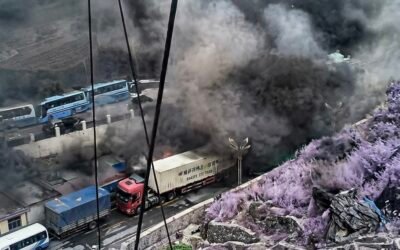
The Chinese Communist Party is using dams, solar farms and power lines to fortify its Himalayan frontier, threatening its neighbors.
by Marco Respinti*
* In writing this article, the author drew on technical information provided by specialists in the field, whom he wishes to thank.
Article 2 in a series of 2. Read article 1.
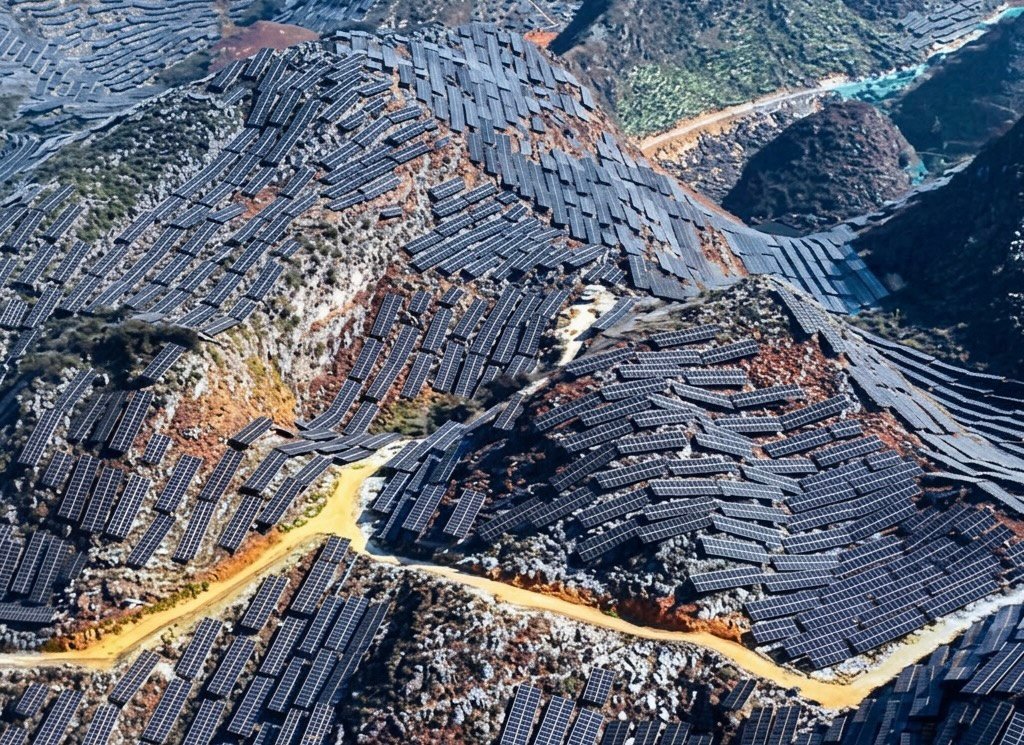
In the mindset, patterns, and actions of the People’s Republic of China (PRC), nothing happens by accident, nothing is quite what it seems, and not even the initiatives that appear most useful and beneficial are truly what they purport to be. Everything is subordinated to the ideology of the regime in power, which for decades has repeatedly demonstrated its disregard for the lives of its own citizens, for human rights, and for the rights of ethnic and religious minorities. Least of all does technological progress—including developments ostensibly aimed at improving energy efficiency and meeting ecological standards—genuinely seek to improve the lives of the Chinese people. In reality, new facilities, upgrades, and technological developments serve a strategy of power that tightens the regime’s grip, expands its capacity for control, and projects an increasingly menacing presence toward neighboring countries.
For example, the PRC portrays the Tibetan Autonomous Region (TAR) as a “world‑class” clean‑energy frontier. Still, the rapid build‑out of hydropower, solar, wind, and ultra‑high‑voltage (UHV) transmission across the plateau is also creating a solid web of dual‑use infrastructure that can buttress long‑term military presence near the India–China border. Reliable power, roads and communications now knit together border villages, logistics hubs and outposts in ways that serve both civilian development and the PRC’S military structure, the People’s Liberation Army (PLA), turning Tibet into what one geospatial study calls China’s “high‑altitude power base.”
From “clean energy base” to power fortress
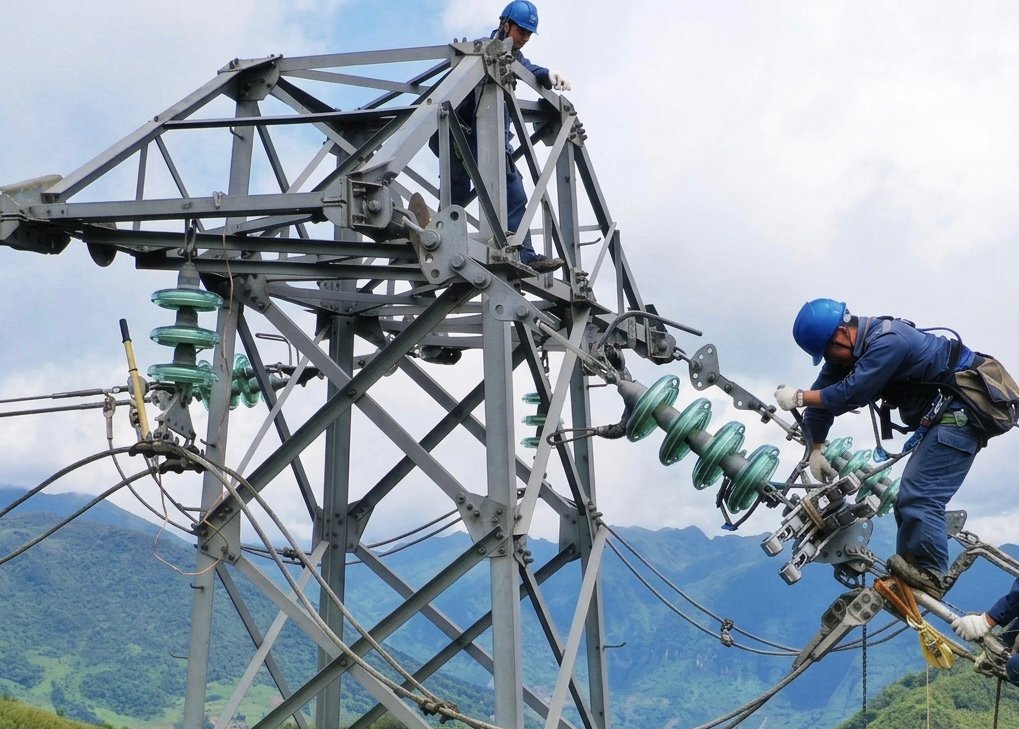
Officially, Beijing presents Tibet as a national green demonstration zone, anchored in two main frameworks: first, the 14th Five‑Year Plan (officially the “14th Five-Year Plan for Economic and Social Development and Long-range Objectives Through the Year 2035 of the People’s Republic of China”), that, drafted during the fifth plenum of the 19th Central Committee of the Chinese Communist Party (CCP) in October 2020, sets the goal for the country’s economic development between 2021 and 2025; secondly, the sectoral strategies that call for multi‑gigawatt hydropower and solar bases on major rivers and high plains. The PRC’s National Energy Administration notes that the Tibet grid has been upgraded into a unified 500 kilovolt (kV) network tied by ±400 kV direct‑current links to Qinghai and 500 kV lines to Sichuan, explicitly to support large‑scale “clean energy base” development and long‑distance export.
By 2024, more than 99 percent of TAR’s electricity was already generated from clean sources, while “Tibet power export” campaigns had shipped nearly 18 billion kilowatt-hours (kWh) to eastern China since 2015, with plans for at least ten UHV export corridors by 2050. New flagship projects include the Jinshang–Hubei ±800 kV line—TAR’s first operating UHV export project—and the Tibet–Guangdong ±800 kV UHV line, each capable of delivering around 400–430 billion kWh annually to central and coastal provinces. These assets are celebrated as symbols of the PRC’s 2060 carbon‑neutrality drive; however, their location on the plateau also ensures abundant power near strategic valleys and passes facing India.
Dams near the border, roads for rapid deployment
Nothing exemplifies the dual‑use character more starkly than the planned cascade of mega‑dams on the Yarlung Tsangpo—known downstream as the Siang and Brahmaputra in India, and as the Jamuna in Bangladesh—near Medog, only a few dozen kilometers from the “Line of Actual Control” (LAC) with India’s bordering state of Arunachal Pradesh. It should be remembered that the LAC, which separates the PRC’s Xinjiang Uygur Autonomous Region (XUAR) and Tibet Autonomous Region (TAR) in the north from India’s Ladakh union territory and the states of Uttarakhand, Himachal Pradesh, Sikkim, and Arunachal Pradesh in the south along the Himalayas, is a totally informal border designed as a de facto compromise following the cease-fire that froze the Sino-Indian War of 1962. In 1993, the PRC and India agreed to respect it, yet there are neither official maps nor clear demarcations of territory, and all remains subject to continuous disputes.
A widely read Chinese commentary on the Medog project calls it a “[…] comprehensive national strategic project” with five dimensions: energy security, regional development, ecological management, national defense and geopolitics. That article notes an estimated investment of 1.2 trillion yuan. It explicitly highlights “战备公路,” or “strategic roads,” associated with the dam that could cut the PLA’s heavy‑equipment deployment time in the area by 70 percent. It adds that the power station has been designed to switch rapidly into a military power‑supply hub for border-defense networks, and that the project will push for the construction of five new border towns forming a 30‑kilometre‑deep defensive belt. In the same breath, it touts the “[…] ‘Tibetan Electricity South’ project,” which plans to export inexpensive electricity to Nepal and Bangladesh, underscoring how one hydropower complex is expected to reshape both local force posture and regional influence.
“Strong border” doctrine and electrified villages
At the political level, these projects are embedded in PRC President Xi Jinping’s Tibet policy, captured in phrases such as the political slogan specifically apt for TAR “治国必治边,治边先稳藏,” that is to say “To govern the country, one must govern the borderlands; to govern the borderlands, one must first stabilize Tibet.” Party and government documents recurrently highlight the four pillars of “Tibet work”: stability, development, ecology, and “强边,” meaning “strong borders,” with frontier construction described as the “first line of the national security shield.”
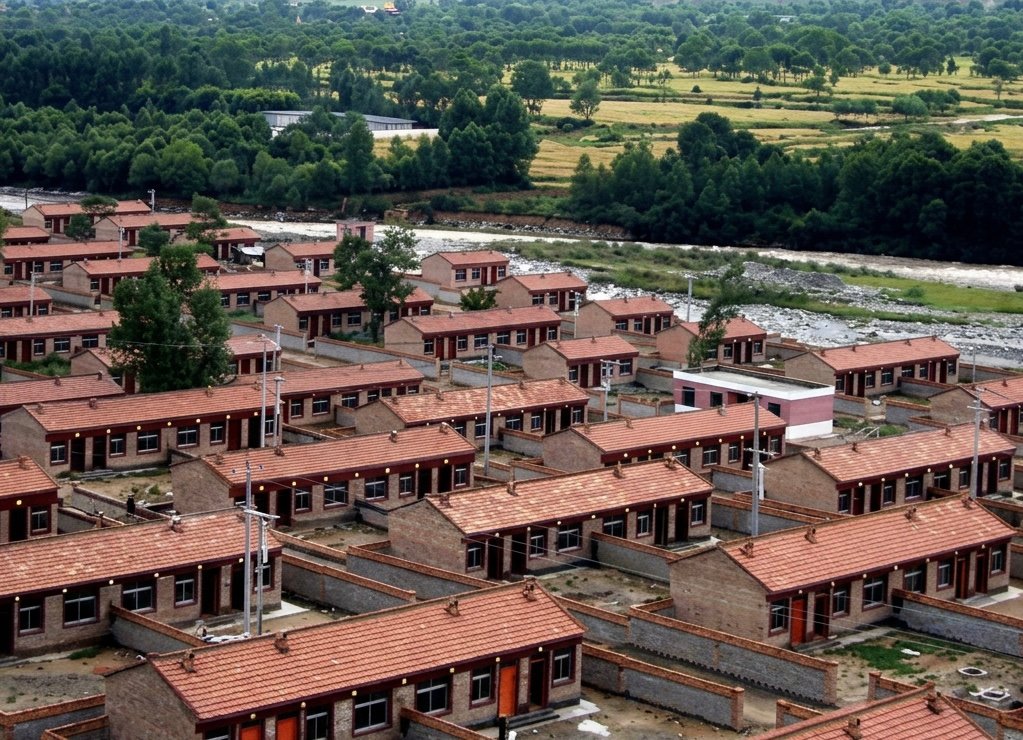
Since 2012, this has been framed as a rigorous program of “border well‑off villages” (“边境小康村,” “xiaokang villages”) and a national “consolidate and enrich the border, benefit the people” action, overtly coupling infrastructure with population control at the frontier. By 2025–26, official statistics report the completion of 624 border xiaokang villages, road access to all border counties and townships, extension of the main grid to every border township, and broadband plus 4G coverage at or near 100 percent along Tibet’s roughly 4,000‑kilometre border.
Chinese state media reports from Tibetan villages such as Pangda in Yadong and Yumai in Shannan illustrate how new 10 kV lines, asphalt roads and modern homes have replaced isolation, allowing residents to enjoy steady electricity, heating and communications while engaging in tourism, trade and specialized agriculture. Officials openly correlate these upgrades to stronger border defense, emphasizing that “border prosperity sustains border stability, and border people’s wealth consolidates border defense.”
Microgrids and “green garrisons”
Beyond the big dams and long‑distance lines, a silent revolution is under way in high‑altitude microgrids that directly support far-flung settlements and outposts. In 2024, the Tibet state investment group built a “光储微电网,” or “solar‑and-storage microgrid,” in Zhada county’s Diyà township in Ngari prefecture—a border region opposite north India’s state of Uttarakhand—plainly described as a “固边兴边强边的创造性实践,” or “innovative practice of consolidating, developing, and strengthening the frontier.”
The project combines photovoltaic generation, battery storage, transmission, and household distribution to deliver 24‑hour continuous power to residents despite extreme cold, altitude, and snowbound roads, overcoming constraints that previously left villages facing chronic outages. Similar high‑altitude solar‑storage projects in Shannan’s Caipeng area and Ali’s Gaize county are projected not only as solutions to “weak grid” conditions but also as ways to ensure reliable winter power for tens of thousands of households across central TAR.
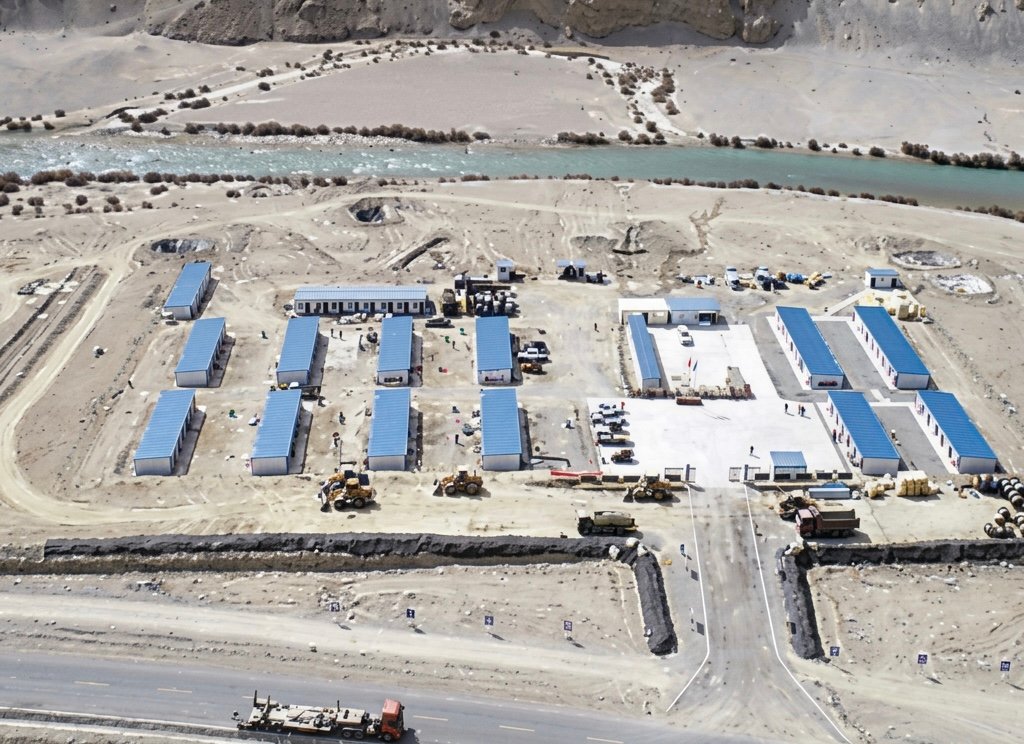
In parallel, the PLA has been rolling out its own energy initiatives for years. A “PLA Daily”‑linked report cited by international media notes that by early 2024 more than 700 border posts—including in Xaidulla near Aksai Chin and Ngari prefecture—had been connected to the national grid and supplied with renewable electricity, drastically improving access to water, heating, bathing and oxygen while enabling the use of power‑hungry weapons and equipment. Another PLA‑focused article, published as early as 2019, noted: “The first national demonstration project of renewable energy local area network in the
whole army was launched in August 2018, and power generation in advance in December is benefiting from this period of time.” Microgrids using solar, wind, hydropower and storage are said to provide genuine “24‑hour long‑bright electricity” to previously diesel‑dependent frontier posts.
PRC’s military analysts, as synthesized in a recent study on the “greening of the PLA,” explicitly argue that renewables are being used to build a “secure, efficient, and sustainable modern military energy system” to overcome bottlenecks in war‑preparedness energy support. Taken together, these changes suggest a thoughtful effort to hard‑wire frontier garrisons into resilient, low‑maintenance energy networks that can sustain long‑duration operations at altitude.
Solar farms, sensors and the India factor
Independent geospatial work has started to map how civilian energy projects intersect with military footprints. The Indian independent think tank Takshashila Institution’s “Geospatial Bulletin” shows that between 2013 and 2025, Tibet added several gigawatts of renewable capacity, with sharp jumps of 700 megawatts (MW) in 2023, 860 MW in 2024, and an estimated 2,600 MW in 2025, driven by just two large projects. Its analysis highlights solar farms near Shigatse, including in proximity to airport infrastructure and urban edges, and installations in Gar County whose location and grid links suggest a growing “energy‑security nexus” between solar plants and nearby military facilities.
In a related seminar sponsored by Delhi’s Institute of Chinese Studies, the same program notes Tibet as a “high‑altitude power base” where dense solar arrays, new hydropower and UHV lines sit close to key corridors and bases, providing dependable energy for sensors, logistics and sustained PLA operations in harsh conditions. A broader report by the Center for Strategic and International Studies (CSIS), based in Washington, D.C., in the US, describes Beijing’s approach as a “gray‑zone infrastructure strategy” on the Tibetan Plateau, using dams, roads, rail and digital systems to gain coercive leverage over neighbors like India and Nepal short of open conflict.
From an Indian perspective, this conjunction is troubling. As “Bitter Winter” has illustrated before, hydropower on transboundary rivers like the Yarlung Tsangpo raises familiar concerns about downstream water flows and the potential use of dams as “water bombs,” while the transformation of the plateau into a vast energy‑industrial zone risks altering regional climate patterns and accelerating glacial melt. At the same time, the electrification of border villages, microgrids, and garrisons enables permanent settlements, all‑weather surveillance, and rapid mobilization across sectors facing India’s Arunachal Pradesh, Sikkim, and Ladakh, even if the infrastructure is outwardly labeled “green development” by the PRC.
Green power, hard realities
Beijing’s renewable push in TAR is not a simple story of environmental shift; it is a coated strategy that fuses energy security, frontier consolidation and military logistics on one of the world’s most sensitive plateaus. Hydropower dams, solar farms, microgrids and UHV lines can legitimately light homes, power schools and lift incomes along the border—but they also supply the electricity for radars, communications, drones and barracks that anchor Beijing’s presence opposite India. The benefits that development brings thus become opportunities for further wrongdoings.
For New Delhi, Kathmandu, Thimphu and Dhaka, the challenge is to recognize that what Beijing sells as a “clean energy miracle” in Tibet is simultaneously a long‑term hard‑power investment on the Himalayan crest line. Understanding the dual‑use character of these projects—through sustained satellite monitoring, open‑source analysis, and dialogue on transboundary river risks—will be crucial if India and South Asian countries are to craft a response that balances its own clean‑energy ambitions with the imperative of border security.

Marco Respinti is an Italian professional journalist, member of the International Federation of Journalists (IFJ), author, translator, and lecturer. He has contributed and contributes to several journals and magazines both in print and online, both in Italy and abroad. Author of books and chapter in books, he has translated and/or edited works by, among others, Edmund Burke, Charles Dickens, T.S. Eliot, Russell Kirk, J.R.R. Tolkien, Régine Pernoud and Gustave Thibon. A Senior fellow at the Russell Kirk Center for Cultural Renewal (a non-partisan, non-profit U.S. educational organization based in Mecosta, Michigan), he is also a founding member as well as a member of the Advisory Council of the Center for European Renewal (a non-profit, non-partisan pan-European educational organization based in The Hague, The Netherlands). A member of the Advisory Council of the European Federation for Freedom of Belief, in December 2022, the Universal Peace Federation bestowed on him, among others, the title of Ambassador of Peace. From February 2018 to December 2022, he has been the Editor-in-Chief of International Family News. He serves as Director-in-Charge of the academic publication The Journal of CESNUR and Bitter Winter: A Magazine on Religious Liberty and Human Rights.