A Chinese Christian reports on the anxiety under local systems that pay for denouncing illegal religious activity.
by Vivian Ren
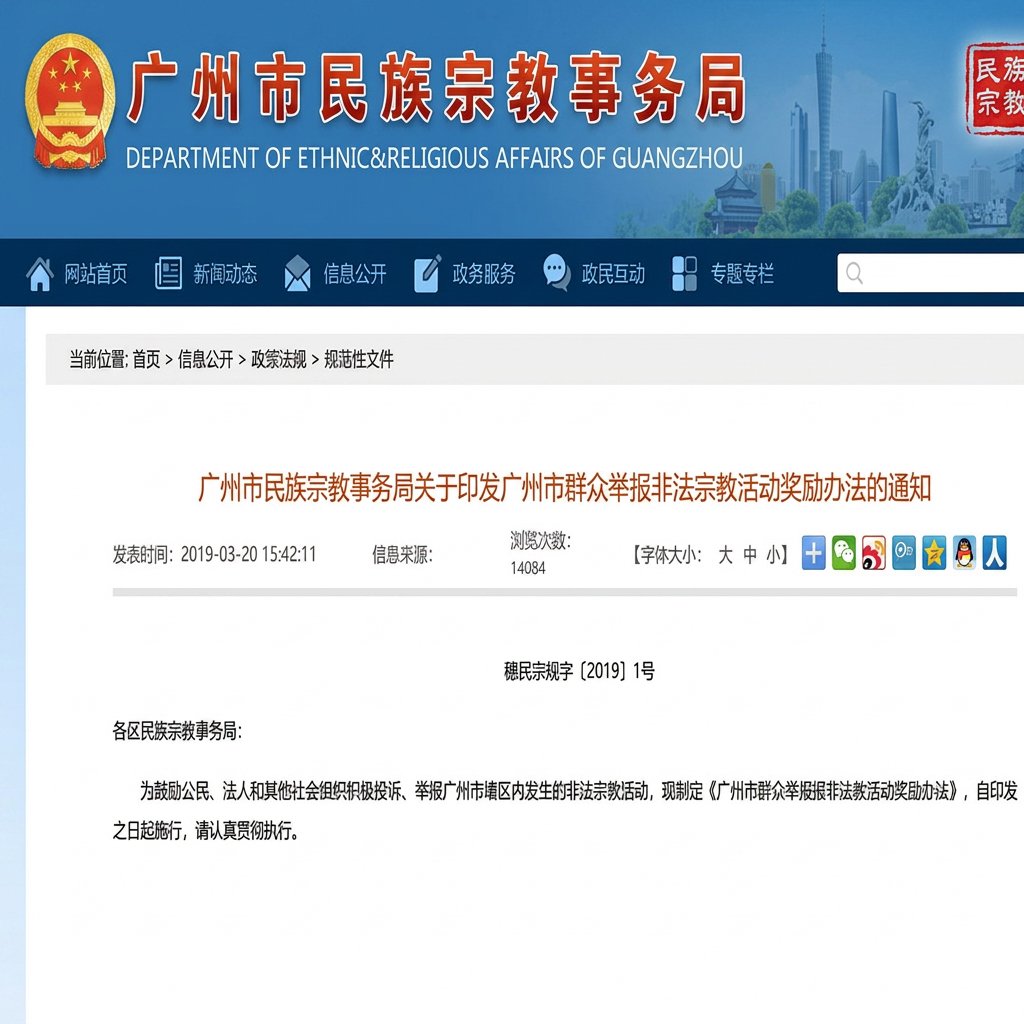
In everyday life, a “reward” is usually understood as recognition for good deeds or positive civic behavior. It affirms those who act responsibly and encourages others to follow their example, helping society move toward a more civilized direction. Yet there is one kind of “reward” that leaves countless Chinese believers uneasy and conflicted: the “Measures for Rewarding the Public for Reporting Illegal Religious Activities,” issued by Ethnic and Religious Affairs Bureaus in multiple regions.
In recent years, Guangzhou, Nanchang, Chengdu, Honghe, and other localities have issued or renewed such notices. They define “illegal religious activities” as violations of the Overseas NGO Management Law and the Regulations on Religious Affairs, including organizing unapproved religious gatherings, promoting religion, accepting religious donations, establishing venues without authorization, or providing clues related to overseas religious training, conferences, or pilgrimages. The personal information of informants is kept strictly confidential, and once a report is verified, a cash reward is issued.
The system is divided into four tiers: ordinary clues earn between 100 and 1,000 yuan (about USD 14–140); assistance in cracking down on illegal religious groups or personnel yields 1,000 to 3,000 yuan (about USD 140–420); cases involving overseas religious organizations are rewarded with 3,000 to 5,000 yuan (about USD 420–700); and identifying key overseas figures and clarifying their domestic networks can bring 5,000 to 10,000 yuan (about USD 700–1,400).
Officials claim the purpose is to protect “normal and lawful religious activities,” curb illegal behavior, prevent religious extremism and foreign infiltration, and safeguard national security, social order, and ethnic unity. The Henan Provincial Ethnic and Religious Affairs Commission has even issued a draft opinion requiring all religious venues to register with grassroots authorities; unregistered venues may not legally operate, and serious violations may lead to deregistration. In an interview with “Christian Times,” Professor Ying Fuk-tsang, Dean of the Divinity School of Chung Chi College at the Chinese University of Hong Kong, commented on the context. Radio France International also quoted his opinion that incorporating religious venues into grassroots social governance reflects the direction of future control.
For many ordinary believers, however, these measures bring not safety but a persistent sense of anxiety. Shandong, Zhengzhou, and Puyang previously implemented reporting mechanisms without monetary rewards, later adding registration requirements. Combined with the spread of reward-based systems nationwide, many Christians fear a return to the Cultural Revolution’s culture of denunciation. Professor Ying also observed that while it is too early to say the country is fully reverting to that era, such reward schemes undeniably encourage “the masses to police the masses.”
Most believers are law-abiding citizens whose gatherings, worship, Bible reading, prayers, and hymns are peaceful expressions of faith. Yet these ordinary acts may now be interrupted at any moment by a single decision from someone around them. This atmosphere leaves many spiritually unsettled, worried that their daily religious life could be disrupted without warning, and that they or their families could be placed at risk. Religious freedom is a universally recognized human right. It should never become a source of fear, but rather a refuge for the soul.
We call on society to pay closer attention to these devout men and women who simply wish to live out their faith. We hope that, in practice, relevant policies will truly distinguish lawful religious life from unlawful conduct, preserving a space of peace and dignity for believers and allowing them to practice their faith securely while respecting the law. This concerns not only the freedom of individual conscience but also the measure of a society’s real inclusiveness and progress.

Uses a pseudonym for security reasons.