A new report reveals how Beijing’s political machinery blends with criminal networks across the region.
by Massimo Introvigne

The Global Initiative Against Transnational Organized Crime has released a study with a somewhat academic title, yet its contents describe a world that reads like a crime novel. “Beyond Boundaries: The Chinese Party-State and Geocriminality in Southeast Asia” traces how China’s sprawling United Front System has seeped into the political and criminal ecosystems of Thailand, the Philippines, Malaysia, and Indonesia. The picture that emerges is one of a vast network that stretches across borders and social layers, shaping events in ways that governments struggle to understand, let alone control.
The United Front System was once a political tool for managing relations with overseas Chinese communities. Under Xi Jinping, it has grown into a global apparatus with new resources and ambitions. It influences business associations, diaspora groups, churches, and civil society organizations, and it also creates a climate that encourages criminal actors to align with Beijing’s strategic interests. The report calls this phenomenon “systemic geocriminality,” a term that captures how influence and illegality blend into one another without formal coordination.
The case studies show how this works in practice. In Thailand, Chinese-linked networks have embedded themselves in online scams, drug trafficking, and money laundering. Organizations that present themselves as cultural or economic associations often serve as bridges between local elites and Chinese actors whose activities range from legitimate business to organized crime. These networks thrive in environments where corruption is widespread and law enforcement is easily compromised.
The Philippines offers an even more vivid example. Figures such as Michael Yang move through political and criminal circles with remarkable ease, surrounded by organizations connected to the United Front. The report describes a system in which individuals with access to Chinese influence structures pursue their own agendas, allowing Beijing’s interests and criminal ventures to advance along parallel tracks.
The incentives are powerful, and the boundaries between influence and illegality blur.
Malaysia and Indonesia present different challenges. Malaysia’s entrenched elite networks are difficult for outsiders to penetrate. Yet, scandals such as 1MDB reveal how Chinese-linked actors can still find opportunities when local power brokers are willing to cooperate. Indonesia faces a more diffuse pattern in which Chinese criminal networks operate through business fronts and diaspora connections, exploiting weak oversight and limited institutional capacity.
Across the region, governments face serious vulnerabilities. Corruption, resource shortages, and political constraints leave law enforcement agencies exposed. In Thailand, police officers have been documented cultivating relationships with Chinese criminal figures. In the Philippines and Malaysia, investigative journalists and civil society groups have played a crucial role in exposing these networks, showing that public scrutiny remains one of the few effective defenses.
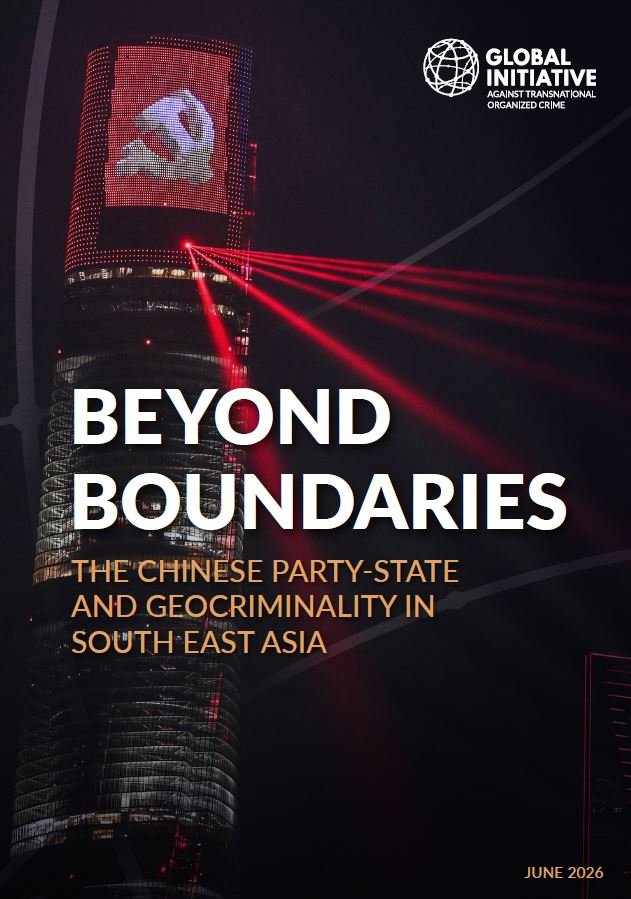
The report describes a regional environment where influence operations and criminal enterprises grow together. The United Front’s global expansion has created a permissive ecosystem that allows illicit networks to flourish under the cover of cultural diplomacy, business cooperation, and diaspora engagement. Social media, business associations, and cross-border networks amplify this influence, making it increasingly difficult to distinguish between legitimate outreach and covert operations.
When these networks are exposed, scandals erupt, governments react, and Beijing’s influence efforts suffer setbacks. The Philippines has already experienced such cycles, with public outrage forcing authorities to act against criminal actors who had operated with impunity. These episodes reveal the fragile equilibrium that Beijing attempts to maintain as it expands its reach.
“Beyond Boundaries” concludes that Southeast Asia is entering a new phase in which Chinese influence is intertwined with criminality in ways that challenge traditional security frameworks. The Chinese Communist Party has a long tradition of cooperation with organized crime, and these alliances are expanding to new countries.
The authors call for stronger institutions, a more vigilant civil society, and greater regional cooperation. The report warns that the forces shaping this landscape operate quietly, through relationships and incentives that cross borders and legal categories. Understanding these hidden linkages is essential for any country that hopes to protect its sovereignty in an era when influence and illegality travel together.

Massimo Introvigne (born June 14, 1955 in Rome) is an Italian sociologist of religions. He is the founder and managing director of the Center for Studies on New Religions (CESNUR), an international network of scholars who study new religious movements. Introvigne is the author of some 70 books and more than 100 articles in the field of sociology of religion. He was the main author of the Enciclopedia delle religioni in Italia (Encyclopedia of Religions in Italy). He is a member of the editorial board for the Interdisciplinary Journal of Research on Religion and of the executive board of University of Pennsylvania Press’ Nova Religio. From January 5 to December 31, 2011, he has served as the “Representative on combating racism, xenophobia and discrimination, with a special focus on discrimination against Christians and members of other religions” of the Organization for Security and Co-operation in Europe (OSCE). From 2012 to 2015 he served as chairperson of the Observatory of Religious Liberty, instituted by the Italian Ministry of Foreign Affairs in order to monitor problems of religious liberty on a worldwide scale.