A new report exposes how vocational programs have turned minors into expendable labor under the guise of “training,” revealing a system where exploitation thrives behind censorship.
by Massimo Introvigne
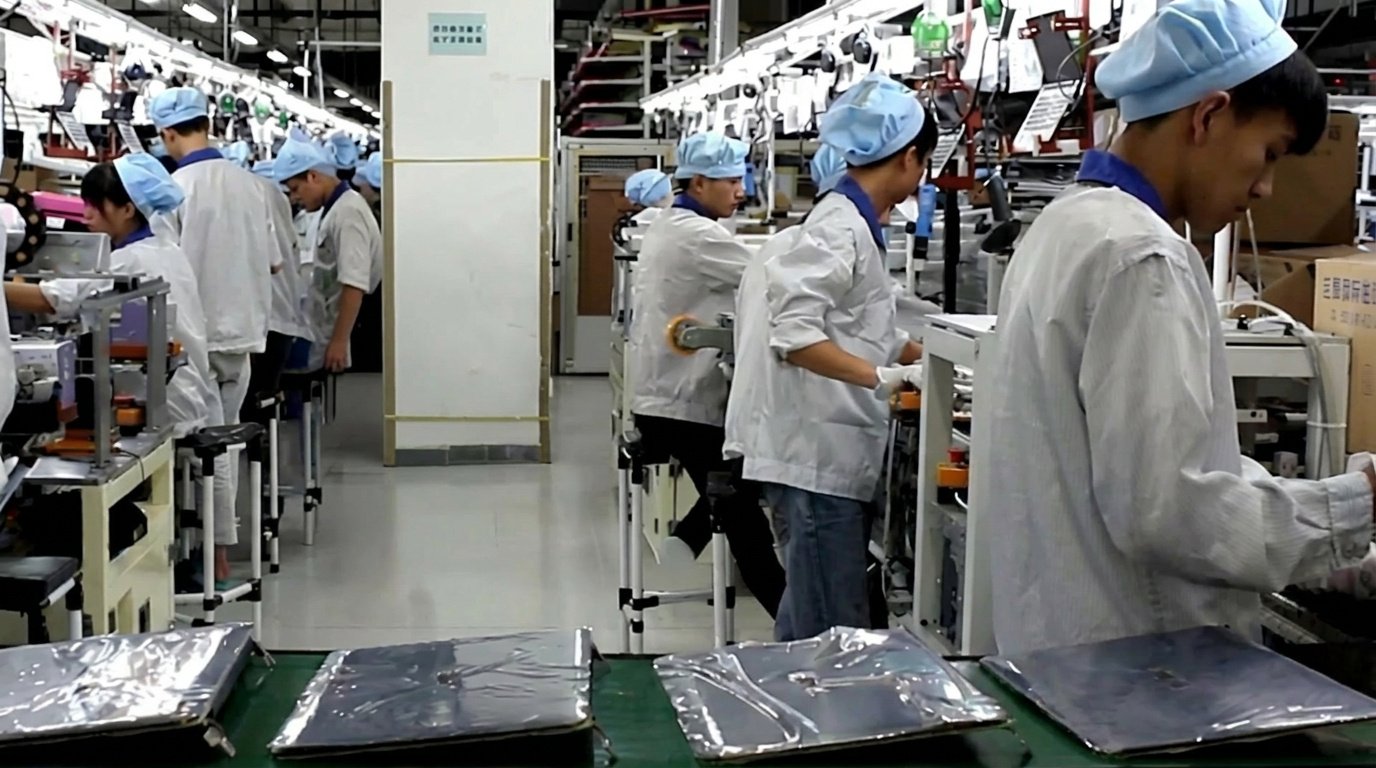
The latest report from the Network of Chinese Human Rights Defenders (CHRD) is one of those documents that forces readers to pause, breathe, and ask themselves how a country that claims to protect minors can simultaneously run an educational system that feeds children into factories. China has ratified international conventions, passed laws, and issued regulations meant to shield minors from hazardous work. Yet the CHRD report shows that, in practice, these protections are often little more than decorative language. Behind them lies a machinery that treats children as a cheap, compliant workforce.
The scale alone is staggering. Out of roughly 41 million secondary school students, some 12 million are enrolled in vocational programs. These programs, in theory, are supposed to prepare students for skilled employment. In reality, the report documents that between 2019 and 2025, at least eleven provinces sent vocational students into dangerous workplaces, often for 10 to 12-hour shifts, including nights, and frequently in industries unrelated to their studies. Three student deaths between 2020 and 2022 stand as grim markers of a system that has normalized risk. One of them, a 17-year-old named Yang, was assigned to grueling shifts on a factory floor and denied proper medical care when he fell ill. His internship agreement even included a clause stating that if he engaged in “jumping from buildings, self-harm, or suicide,” responsibility would fall on him and his parents. It is difficult to imagine a clearer admission that the system anticipates harm and seeks only to avoid liability.
The abuses extend far beyond internships. Children as young as thirteen have been found working in manufacturing, entertainment, and service industries. In July 2024 alone, authorities in Dongguan issued fifty-nine penalty notices for child labor violations—an astonishing number for a single city in a single month. Yet even these figures tell only part of the story. The report notes that the Chinese government does not disclose comprehensive data on child labor enforcement, leaving the true scale hidden behind censorship and bureaucratic opacity. CHRD researchers, working under conditions of intimidation and information suppression, acknowledge the difficulty of documenting cases in a system designed to conceal them.
Students have suffered amputations, crush injuries, and severe falls due to unsafe machinery and inadequate supervision. Many receive wages below legal minimums, and intermediaries—labor brokers who should not be involved in student placements at all—extract commissions from their already meager pay. The report recounts cases where courts ordered companies to pay damages, yet the structural causes of the injuries remain untouched. Factories continue to receive interns; schools continue to send them.
Some assignments are wholly inappropriate. One female student was placed in a role that exposed her to potential sexual harassment, a placement that had no connection to her field of study. The report notes that such mismatches are common: internships are often little more than a pretext for companies to acquire cheap labor, with educational value nowhere in sight.
The legal framework, on paper, should prevent all this. China’s Regulations on the Management of Vocational School Student Internships require that internships be educational, supervised, and safe. Penalties for violations can reach one million RMB. But as the report dryly notes, there is no publicly available data on how often these penalties are actually imposed. Laws without enforcement are not protections.
The structural problems run deep. Local authorities censor information, intimidate sources, and restrict access to data. Labor dispatch agencies illegally broker interns, creating layers of subcontracting that obscure responsibility. Schools, under pressure to meet internship quotas, sometimes prioritize compliance over student safety. Companies, for their part, benefit from a steady stream of low-cost labor with minimal oversight.
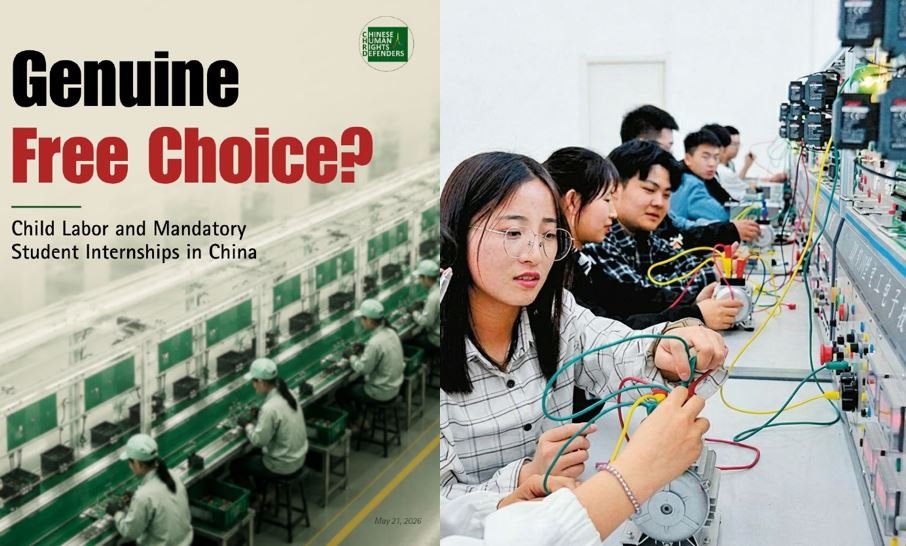
The CHRD report calls for the immediate suspension of mandatory internships until children’s rights can be guaranteed. It urges the government to release transparent data, strengthen enforcement, and establish independent reporting channels. It recommends that companies—Chinese and international—conduct and publish human rights due diligence, as required by the UN Guiding Principles on Business and Human Rights. And it calls for international oversight, including engagement with the UN Committee on the Rights of the Child and the International Labor Organization.
The report concludes that China’s vocational education system, as currently implemented, exposes minors to exploitation, danger, and abuse. The moral and legal obligations are clearly outlined. What remains uncertain is whether the Chinese government will acknowledge the problem, let alone act on it. Until then, millions of children remain at risk—hidden behind factory walls, buried in censored statistics, and treated as expendable components in an economic machine that values efficiency over human dignity.

Massimo Introvigne (born June 14, 1955 in Rome) is an Italian sociologist of religions. He is the founder and managing director of the Center for Studies on New Religions (CESNUR), an international network of scholars who study new religious movements. Introvigne is the author of some 70 books and more than 100 articles in the field of sociology of religion. He was the main author of the Enciclopedia delle religioni in Italia (Encyclopedia of Religions in Italy). He is a member of the editorial board for the Interdisciplinary Journal of Research on Religion and of the executive board of University of Pennsylvania Press’ Nova Religio. From January 5 to December 31, 2011, he has served as the “Representative on combating racism, xenophobia and discrimination, with a special focus on discrimination against Christians and members of other religions” of the Organization for Security and Co-operation in Europe (OSCE). From 2012 to 2015 he served as chairperson of the Observatory of Religious Liberty, instituted by the Italian Ministry of Foreign Affairs in order to monitor problems of religious liberty on a worldwide scale.