A respectful call to the highest authorities of Pakistan to uphold fundamental rights and the rule of law.
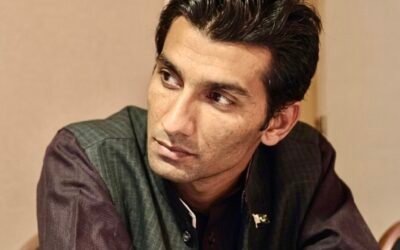
Pakistan’s Blasphemy Laws and the Sad Case of Junaid Hafeez: An Appeal
read more

A respectful call to the highest authorities of Pakistan to uphold fundamental rights and the rule of law.

Cases from the 1990s demonstrate how “cult” rhetoric destroyed reputations and led to false accusations in Argentina. The story repeats itself in the Rudnev case.

The Federal Constitutional Court’s ruling on “Rohani Khazayeen” confirms that restrictions on Ahmadi belief are now endorsed at the highest judicial level.

The European Court of Human Rights revisits a brutal assault on two Jehovah’s Witnesses evangelizing door to door—and teaches a lesson valid for all states.

Politicians were unable or unwilling to resist media pressure. Christians were conditioned by decades of left-wing propaganda.

A dialogue between two public intellectuals reveals how the dissolution order advanced without resistance from those entrusted with defending religious freedom.

A coordinated statement from multiple UN mandate‑holders intensifies scrutiny of Pakistan’s treatment of the Ahmadiyya Muslim Community.

A committed member of the Theosophical Society, whose quiet creativity shaped the spiritual vision of Salarrué and their three artist daughters

Black-and-white depictions are rarely accurate. However, the idea that, as a community, Muslims fought against the genocide has more than a kernel of truth.

Religious organizations played a less-than-commendable role in the 1994 tragedy. Muslims were somewhat different.