When reporting a neighbor’s religious activities can bring financial gain, believers inevitably begin to worry: Are the people around me still worthy of trust?
by Vivian Ren
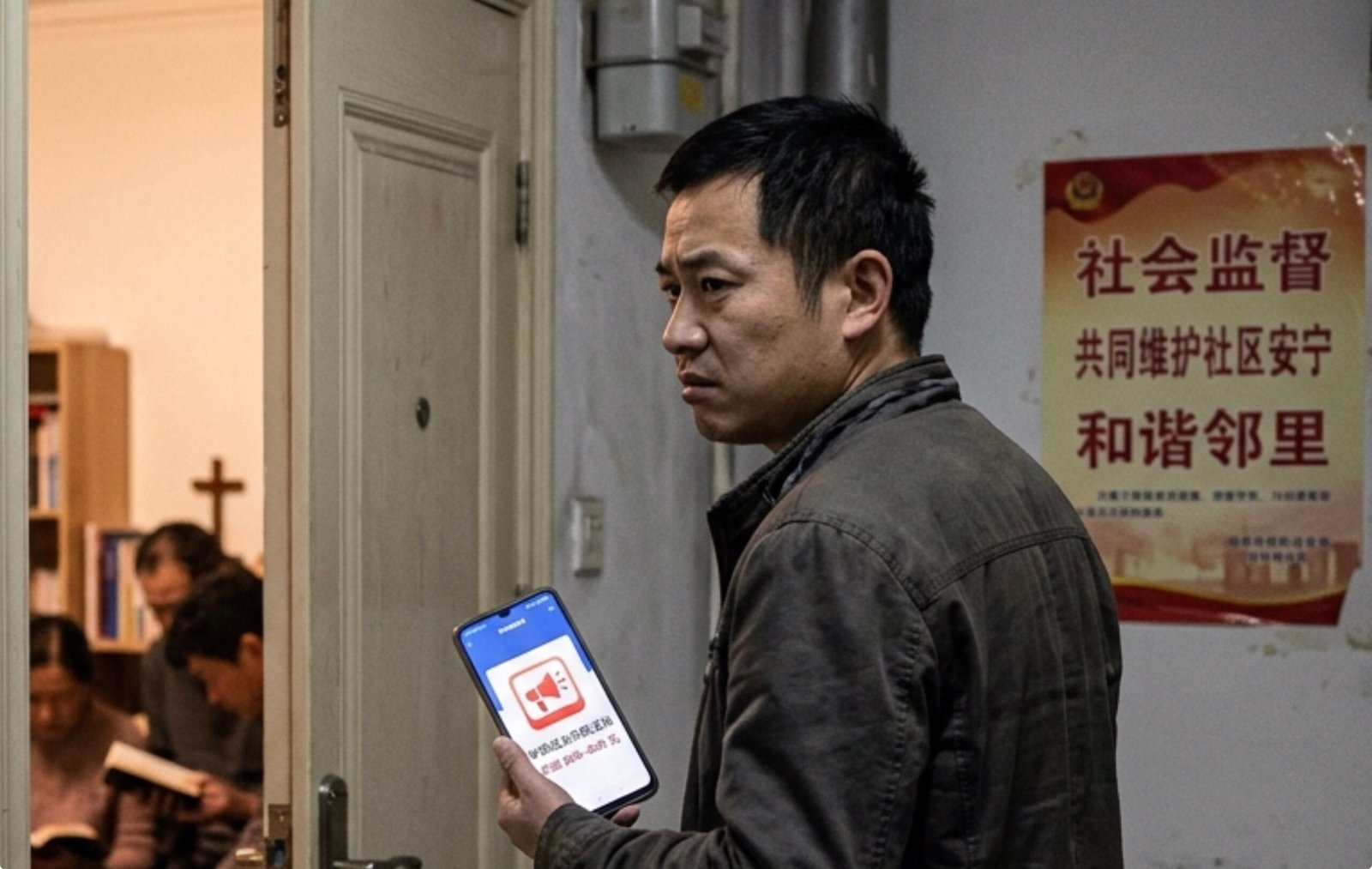
In most social contexts, reward mechanisms are designed to encourage positive behavior and transmit constructive energy. They can stimulate motivation, reinforce good habits, clarify direction, and satisfy the human need for recognition. In February 2026, the Chengdu Municipal Ethnic and Religious Affairs Bureau issued the “Measures for Reporting Illegal Religious Activities (Trial).” The document specifies that citizens, legal persons, or other organizations who submit verified real-name reports will receive rewards ranging from 200 to 800 yuan, depending on the circumstances.
The scope of reporting includes establishing religious activity venues without approval; nonreligious entities organizing religious activities or accepting religious donations; inviting foreigners to preach without authorization; organizing overseas religious training or pilgrimages without approval; and illegally providing religious information services online.
The measures list the postal address for submitting letters and the online reporting channels, along with economic incentives. Judging from the policy text, the stated goal is to regulate the discovery and handling of so-called “illegal religious activities.” Yet for many ordinary Christians, the simplest forms of daily religious practice—reading the Bible, listening to sermons, singing hymns, praying, and holding Sunday gatherings with fellow believers—once conducted in nonregistered venues or private homes, even when such activities in most cases do not involve any crime, may nonetheless fall within the scope of behavior that can be reported.
Introducing a reward mechanism may objectively alter the atmosphere of interpersonal interaction. When reporting a neighbor’s religious activities can bring financial gain, believers inevitably begin to worry: Are the people around me still worthy of trust? Will gatherings that belong to one’s personal spiritual life be interpreted as “illegal activities” that must be guarded against? This psychological pressure makes many law-abiding believers more cautious in practicing their faith and can even cause inner spiritual unease.
China’s Constitution stipulates that citizens enjoy freedom of religious belief (limited to “normal” religions), and international human rights instruments likewise emphasize protecting peaceful religious practice. Whatever considerations may have motivated Chengdu’s initiative and others around China, their actual effect may be to impose an additional burden on the religious life of ordinary Christian believers. Genuine religious freedom should allow people to read the Bible, sing hymns, pray, and gather without constantly fearing that those around them might report them. And does encouraging mutual reporting among acquaintances and ordinary citizens risk producing the frightening consequence of “the masses turning against the masses”? Could it damage the foundations of social trust? Could it lead to the tragic repetition of history?
In implementing such policies, greater attention is needed to distinguish normal expressions of faith from genuinely unlawful behavior, protect the legitimate rights of the vast majority of law-abiding believers, and ensure that faith remains a source of inner peace rather than risk and pressure.

Uses a pseudonym for security reasons.