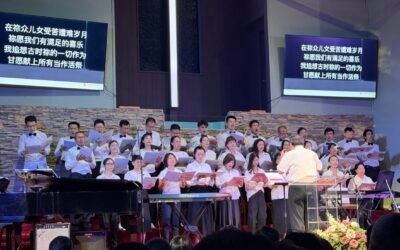
A persecution that continues in China is now extended through transnational campaigns of espionage, propaganda, and harassment.
by Mia Li*
*A paper presented at the European Academy of Religion’s Ninth Annual Conference, LUISS University of Rome, July 3, 2026.

I address you both as a Christian of The Church of Almighty God (CAG) and as a refugee who was compelled to leave China because of my religious beliefs. I want to share with you the reality of the Chinese Communist Party’s persecution of our Church.
My presentation will focus on three themes.
First, the Chinese Communist Party’s ongoing and systematic repression of The Church of Almighty God.
Second, the use of accusations of “brainwashing” as a political tool to suppress religious belief.
Third, the extension of this persecution beyond China’s borders, where it has evolved into forms of transnational repression targeting refugees and exiled Christians.
As a member of The Church of Almighty God, I would like to begin by describing the persecution our Church has endured at the hands of the Chinese Communist Party (CCP). Since the CCP came to power in 1949, its suppression of religious groups operating outside state control has never ceased. Driven by the need to maintain one-party rule and ideological dominance, the CCP has consistently persecuted religious believers. This repression is not the result of isolated actions by local officials. It is a nationwide campaign implemented through legal, administrative, and surveillance mechanisms under centralized direction.
In recent years, under the banner of the “Sinicization of religion,” the CCP has intensified its repression of House Church Christians, dissident Catholics, Tibetan Buddhists, Uyghur Muslims, and other religious communities through instruments such as the “Regulations on Religious Affairs” and Article 300 of the Criminal Law. Religious persecution has become an integral component of the Party’s broader strategy of social and ideological control.
The Church of Almighty God has long been one of the CCP’s primary targets. It has been subjected to organized, systematic, and nationwide repression. According to the “Annual Report on the CCP’s Persecution of The Church of Almighty God” (2025), although the figures are necessarily incomplete, from 1991 to 2025, at least 520,000 members of the Church were arrested, and 318 died as a result of persecution. In 2025 alone, at least 19,191 members were arrested, 8,996 were subjected to torture or violent “transformation through education,” 2,291 were sentenced to prison, and 23 died as a result of persecution.
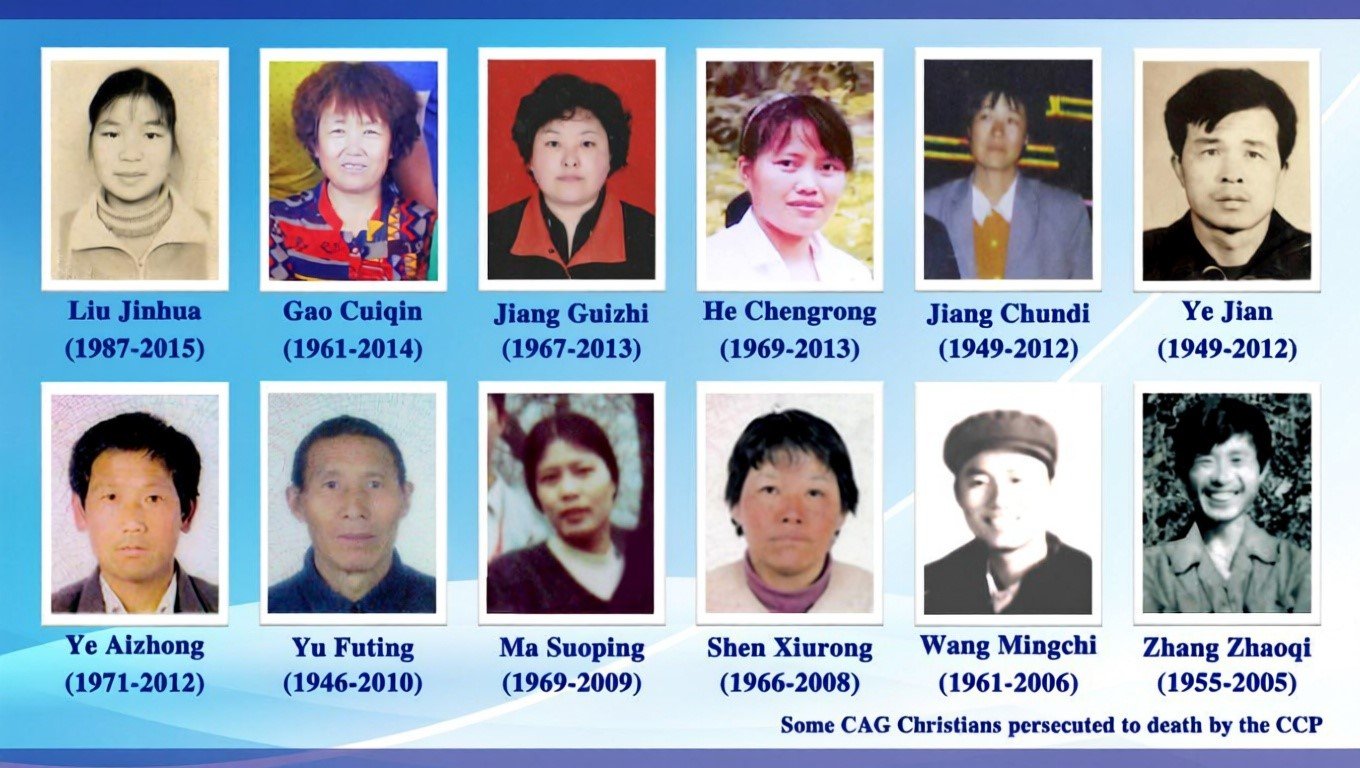
In China, simply attending religious gatherings, reading religious literature, or sharing one’s faith can lead to surveillance, arrest, and imprisonment. Faced with relentless repression, many members of The Church of Almighty God have been forced to leave their homes; some have fled abroad in search of protection and asylum. I am one of them.
I would now like to address one of the CCP’s principal methods of persecuting the Christians of The Church of Almighty God: the accusation of “brainwashing.”
The term “brainwashing,” which gained popularity in the West during the Cold War, has never been a rigorously defined scientific concept. For many years, the CCP has used allegations of “brainwashing” against The Church of Almighty God and other religious groups to delegitimize them and justify large-scale campaigns of repression and arrest.
At the same time, however, the CCP itself operates institutions such as “Transformation Through Education Centers,” “Legal Education Bases,” and “Care Centers,” where detained Christians are subjected to coercive ideological transformation. In these facilities, detainees are required to watch propaganda materials denouncing religious belief, undergo political indoctrination and “Party culture” education, and sign documents under coercion—statements renouncing their faith, letters of repentance, and declarations of separation from their religious communities.
Some detained Christians have reported prolonged interrogations, sleep deprivation, food restrictions, psychological pressure, and even injections of unidentified psychiatric drugs during these “transformation” programs. Those who refuse to renounce their faith often face extended detention or harsher punishment. Some have suffered permanent disabilities; others have died during the process.
Taken together, the objective of this system is not only to force individuals to abandon their beliefs but also to sever their ties with their faith communities, thereby securing ideological conformity and political control.
This reveals a striking paradox: the very state that uses coercive power to impose ideological transformation accuses religious groups of engaging in “brainwashing.” In this context, “brainwashing” functions not as an academic concept but as a political label used to stigmatize The Church of Almighty God and justify surveillance, detention, and forced ideological reeducation.
Let me now turn to the extension of this persecution beyond China’s borders.
To escape arrest and forced “transformation,” many Christians of The Church of Almighty God have fled abroad and sought asylum. Yet leaving China does not necessarily mean that the persecution ends. Even in democratic countries, many believers continue to experience pressure and intimidation linked to Chinese authorities. In recent years, international bodies—including the European Parliament, the United States Congress, the United Nations human rights bodies, and various research institutions—have increasingly focused on transnational repression.

Particular attention has been paid to the CCP’s transnational repression of dissidents, human rights lawyers, religious believers, and exile communities. These tactics include cross-border surveillance, digital monitoring, online harassment, intimidation, pressure on family members who remain in China, and attempts to identify and expose individuals seeking asylum or participating in religious activities overseas. Such practices create fear of retaliation and discourage people from exercising their rights freely. They undermine fundamental freedoms and pose a direct challenge to the credibility and effectiveness of the international asylum system. As a result, the principle that “asylum means safety” is increasingly weakened in practice.
One of the CCP’s most common tactics is to exert pressure on the family members in China of Christians of The Church of Almighty God who have sought refuge overseas. Many asylum applicants report that police repeatedly harass, threaten, or detain their relatives in an effort to force them to return. Some family members are threatened with the loss of social benefits; others are compelled to cooperate with the authorities by recording videos or publicly denouncing their own relatives. For many Church of Almighty God members in exile, the greatest source of suffering is not only concern for their own safety but the fear that their loved ones may suffer because of them.
A second tactic involves so-called “family search” campaigns. In several countries—particularly South Korea—campaigns have been organized under the banner of helping families locate allegedly “missing” relatives. Although presented as humanitarian initiatives, some participants have stated that they were mobilized under pressure from Chinese authorities. These campaigns are often accompanied by media coverage that reinforces narratives portraying members of The Church of Almighty God as “brainwashed” or “controlled.”
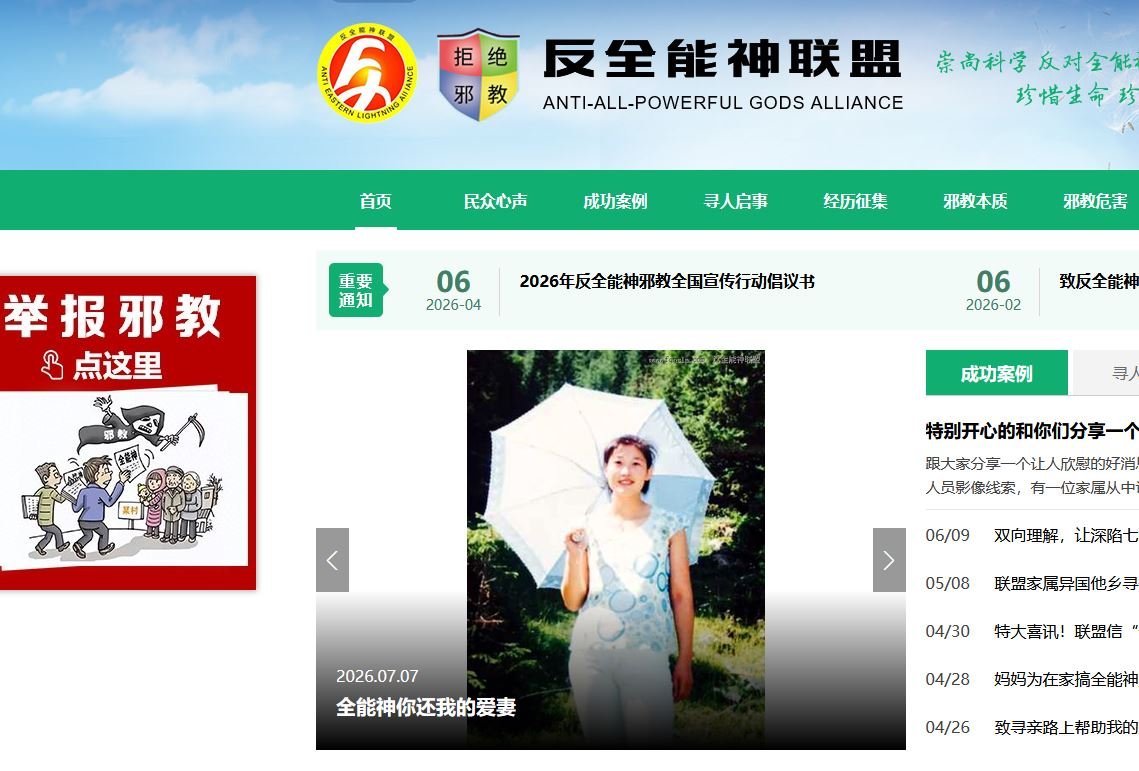
A third tactic is the use of overseas anti-cult networks and propaganda campaigns. In recent years, various organizations and media outlets have continued to circulate negative narratives about The Church of Almighty God, often repeating allegations of “brainwashing” and “mind control.” These narratives frequently mirror official Chinese propaganda and are disseminated through multiple channels. Their impact is significant: they shape public opinion and may influence asylum decisions, refugee protection policies, and broader societal attitudes toward religious minorities.
A fourth tactic is overseas surveillance and exposure of asylum seekers. The CCP engages in surveillance, information gathering, and intimidation abroad. In recent years, photographs, videos, and personal information of Church of Almighty God Christians participating in religious activities overseas have been published on websites aligned with official Chinese narratives. In Italy, for example, the names and photographs of asylum seekers have been publicly exposed. Such actions threaten not only the safety of the individuals concerned but also that of their family members in China. They send a clear message to exiled Church of Almighty God Christians: even after leaving China, they remain under surveillance and pressure.
Finally, there is the deeply concerning issue of return. Numerous reports indicate that some members of The Church of Almighty God who returned to China were arrested immediately upon arrival. Some received lengthy prison sentences; others were subjected to torture and forced ideological “transformation.” Still others disappeared without further information. For those who have already escaped persecution, this means that even far from their homeland, they continue to live with fear and uncertainty.
The persecution suffered by The Church of Almighty God is not an isolated case. It raises broader questions: What happens when state power seeks to control human thought and religious belief? What happens when labels such as “brainwashing” and “cult” become politicized? And what happens when authoritarian practices cross national borders, extending surveillance, intimidation, and fear into democratic societies?
These questions concern not only Christians in China’s house churches and other Chinese believers but also the future of religious freedom and human rights protections worldwide.
I stand here today because I hope to give a voice to those who still cannot speak freely: the Christians who remain imprisoned, the families torn apart, the refugees still waiting for protection, and those who have lost their freedom—or even their lives—because they remained faithful to their beliefs.
In closing, I would like to emphasize that freedom of religion or belief is a fundamental right affirmed by the Universal Declaration of Human Rights. No one should be imprisoned, tortured, or persecuted because of their faith, and no government should use “brainwashing” or “ideological transformation” as a justification for violating religious freedom. At a time when immigration and asylum policies in Europe and North America are becoming increasingly restrictive, it is especially important to pay attention to those who have genuinely fled religious persecution and who need international protection.
I sincerely hope that the international community will continue to monitor the state of religious freedom in China, pay attention to The Church of Almighty God and other persecuted religious communities, and ensure that asylum seekers receive fair, safe, and dignified protection.

Mia Li is a member of The Church of Almighty God who escaped China due to religious persecution and lives in Italy as a refugee.