How a “victim” no one wanted to hear may now change everything. Three motions for the prosecutors’ recusal.
by Marco Respinti

I have followed the Konstantin Rudnev case for several weeks, first for “The European Times” and now, with a certain sense of déjà vu, for “Bitter Winter.” I have watched it twist, stall, and reinvent itself with the stubbornness of a bad script. I have seen prosecutors cling to a theory long after the facts had packed their bags and left the room. And I have seen a young woman—E.—turned into a symbol she never asked to be, then ignored the moment she tried to speak. Now the story has entered a new phase, one that even the most imaginative prosecutor would struggle to spin: the prosecutors themselves are under scrutiny.
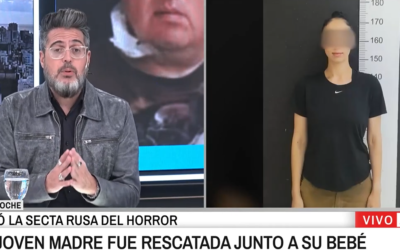
E.’s story, the one the prosecutors claim as the backbone of their case, is in fact the part they seem most determined not to hear. She didn’t come to Argentina as the pawn of a “cult”—she came running from a violent ex in Russia, pregnant and terrified, clinging to two women who helped her survive in a country where she couldn’t order a glass of water without translation. The real trouble began not with any trafficker but with a hospital staff ready to see a crime in every foreign accent. A nurse fed her false information and demanded the father’s identity. Cornered and afraid the hospital might keep her baby, her companions produced the only document they had—a stray copy of Rudnev’s passport left in their rented apartment by the landlady, who had helped him with immigration bureaucracy. That scrap of paper became, in the prosecutors’ imagination, the blueprint of an international conspiracy. What followed for E. was not rescue but a nightmare: isolation after surgery, questioning through mangled machine translations, separation from the only people she trusted, and confinement in a shelter where she was more prisoner than “protected person.” And when she finally managed to explain all this, the prosecutors simply didn’t show up. Her testimony contradicted their script, so they pretended it didn’t exist.
This brings us to the present moment and to the reason why the case has taken a dramatic turn. Three separate motions have now been filed requesting the recusal of the prosecutors: one by Rudnev’s defense, one by Rudnev’s ex-lawyer Carlos Broitman and his colleagues (who no longer represent him, but their motion stands and will be examined now), and one—most explosively—by E. herself. It is rare enough for a defendant to accuse the prosecution of losing its objectivity. It is extraordinary for the alleged victim to do so. And it is unprecedented for both to do it at the same time, for the same reasons, and with the same level of detail.
E.’s motion is the diary of a person trapped inside a system that had already decided what she was supposed to say. She describes pressure, manipulation, isolation, and a prosecutorial team more interested in sustaining the “cult” and trafficking narrative than in discovering the truth. She accuses them of ignoring her testimony, of validating irregularities by hospital staff, of separating her from the people she trusted, and of using her vulnerability to justify the arrest of people she had never met. She states plainly that she was never a victim of Rudnev or of any other Russian citizen in Bariloche. And she states just as plainly that the only people who treated her as an object to be used were the prosecutors themselves.
The defense motions add their own catalog of irregularities: attempts to block Rudnev’s transfer to house arrest, appeals filed without legal basis, hearings conducted in violation of the principles of publicity and equality of arms, and procedural conditions invented on the spot. They describe an accusatory strategy that has drifted so far from the evidence that it now depends on preventing the evidence from being heard. And they point out, with the dry precision of legal professionals, that the Code of Criminal Procedure allows—and indeed requires—the removal of prosecutors who have lost their objectivity.
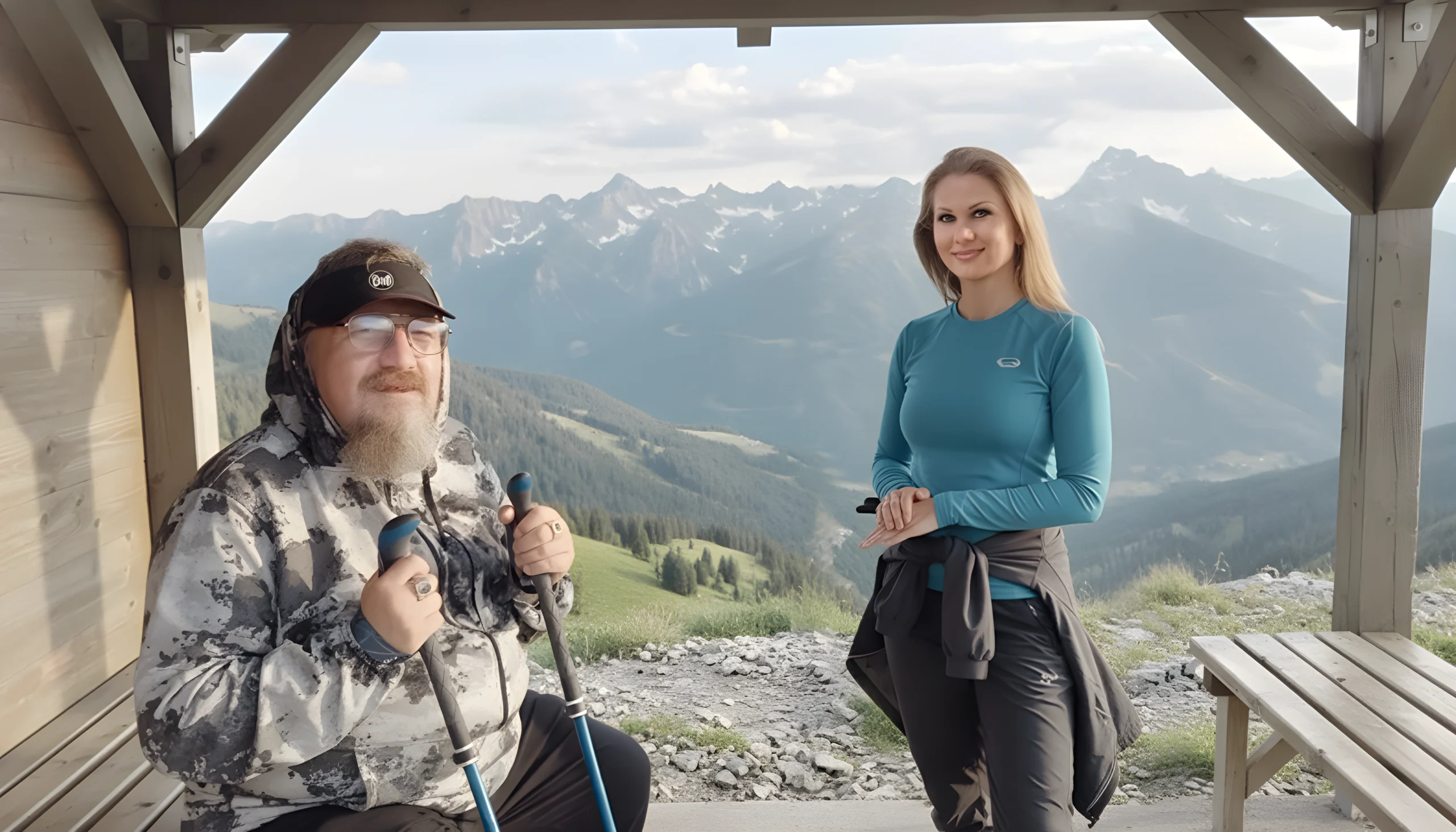
Meanwhile, Rudnev has finally been transferred to house arrest, a decision that judges had already ordered three times and that prosecutors had resisted with a tenacity usually reserved for matters of national security. It is a small victory, but it signals something larger: the judicial system is beginning to acknowledge that the case has gone off the rails.
What happens next will determine whether this story becomes a cautionary tale or a turning point. If the prosecutors remain in place, the case will continue to drift in the same direction it has followed from the beginning: away from the facts and toward the fabricated narrative. If they are removed, the proceedings may finally return to the only terrain where justice can exist: the evidence.
For now, the most striking fact is this: the woman whose protection was invoked to justify the entire case is now asking the court to remove the prosecutors. It is difficult to imagine a clearer indictment of how this investigation has been conducted. And it is difficult to imagine how the judicial system can ignore her any longer.
If the Rudnev case has taught us anything, it is that narratives built on fear, misunderstanding, and cultural prejudice can travel far—until they collide with the truth. E. has spoken that truth. The question now is whether anyone in authority is finally ready to hear it.

Marco Respinti is an Italian professional journalist, member of the International Federation of Journalists (IFJ), author, translator, and lecturer. He has contributed and contributes to several journals and magazines both in print and online, both in Italy and abroad. Author of books and chapter in books, he has translated and/or edited works by, among others, Edmund Burke, Charles Dickens, T.S. Eliot, Russell Kirk, J.R.R. Tolkien, Régine Pernoud and Gustave Thibon. A Senior fellow at the Russell Kirk Center for Cultural Renewal (a non-partisan, non-profit U.S. educational organization based in Mecosta, Michigan), he is also a founding member as well as a member of the Advisory Council of the Center for European Renewal (a non-profit, non-partisan pan-European educational organization based in The Hague, The Netherlands). A member of the Advisory Council of the European Federation for Freedom of Belief, in December 2022, the Universal Peace Federation bestowed on him, among others, the title of Ambassador of Peace. From February 2018 to December 2022, he has been the Editor-in-Chief of International Family News. He serves as Director-in-Charge of the academic publication The Journal of CESNUR and Bitter Winter: A Magazine on Religious Liberty and Human Rights.