The anti-cult journalist inflated the damage caused by the Family Federation. Only a few hundred claimants have come forward.
by Eitaro Ogawa
Article 1 of 3.
This series is adapted, with permission, from an article published in the December 2026 issue of the Japanese magazine “Monthly Hanada” as the second installment of the author’s series “The Grave Sins of Reporting on the Former Unification Church.”
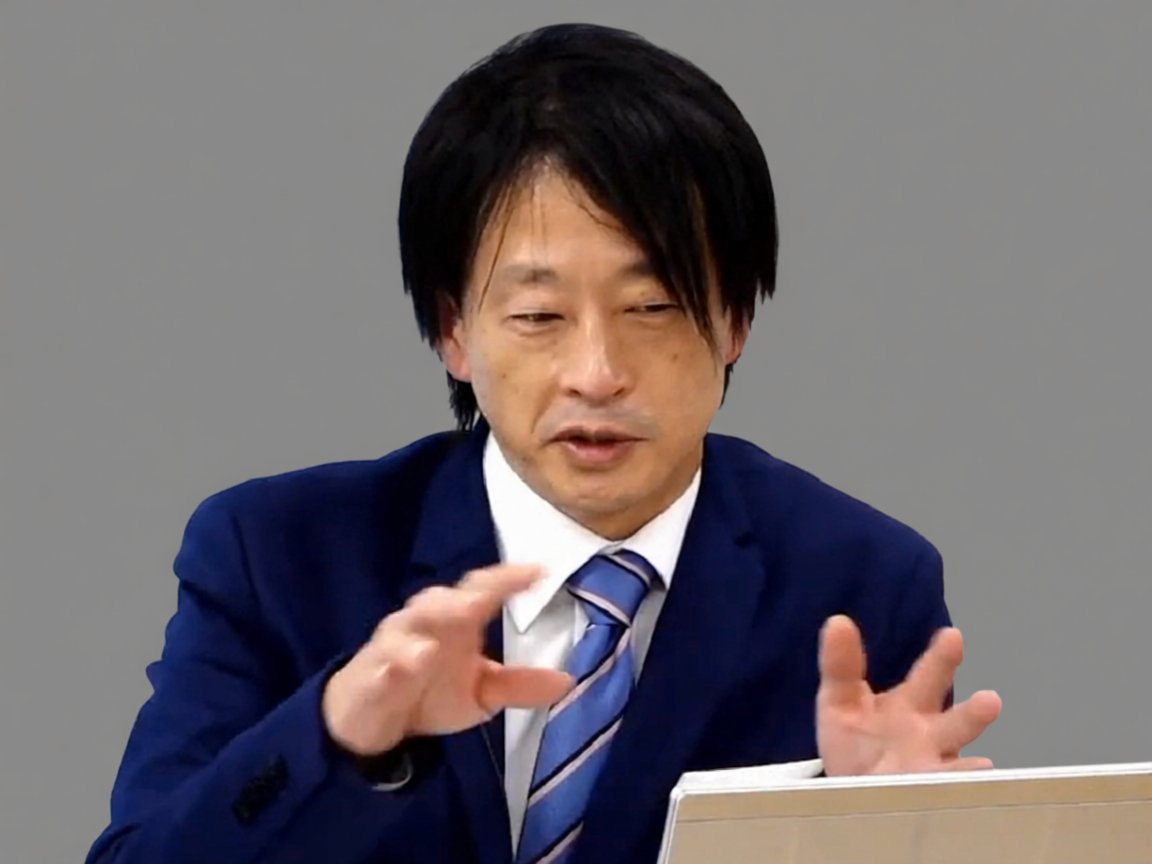
On October 2, “Information Live Miyane-ya,” the daytime news and talk show hosted by Seiji Miyane, went on the air for the last time, closing a run of about twenty years and two months. And who should appear in the final episode but our very own Eight (also spelled Eito) Suzuki, the journalist who has built his career on attacking the Family Federation for World Peace and Unification, formerly known as the Unification Church. As a sort of parting shot, he served viewers an outrageous falsehood about the financial damage supposedly caused by the large donations members made to the Family Federation.
“If you consider the potential damage to date,” Suzuki said, “and the fact that they were sending tens of billions of yen a year [to South Korea], the total really comes to nearly ¥1 trillion.”
“¥1 trillion?” Miyane asked.
“Really,” Suzuki replied. “And with amounts like that, you have to think of how many people suffered in silence without ever seeking redress.”
A total damage of ¥1 trillion…
Is the Family Federation Toyota? Or Elon Musk?
This, too, is one of Suzuki’s favorite tricks. He attaches the vague adjective “potential” to the damage amount, replaces the losses of alleged victims with the sums remitted to the organization’s headquarters, and multiplies the result by forty years. The ¥1 trillion figure is nothing more than sleight of hand.
How has Japanese television kept giving airtime to a man who calls himself a journalist while knowingly misleading the audience with tricks like these?
Even Miyane, who had always supported Suzuki’s claims, seemed taken aback this time. As he himself noted during that final broadcast, only 281 people had filed claims as of September 24 in the liquidation proceedings now administered by the court-appointed liquidator. The Tokyo District Court ordered the dissolution of the Family Federation in March 2025, and the Tokyo High Court confirmed the order in March 2026. What was dissolved is the “religious corporation,” the legal entity registered under Japanese law, and its assets are now being liquidated. The faith community as such continues to exist. Those 281 people are “claimants” in the technical sense of the liquidation procedure: they ask that a right to payment be recognized, and filing a claim does not by itself establish that the claim is valid or that the claimant was the victim of any wrongdoing. According to the liquidator’s sixth report, dated October 20, the number had grown to 337 as of October 19. These are still applicants, and not persons whose claims or alleged damage have been verified.
Miyane, too, expressed his surprise on air at how small the number was. Understandably so. If a religious organization with hundreds of thousands of members really were a cult that coerced its followers into making large donations and harmed society, then 281 claimants, more than four months after the claims process opened on May 20, would be an extraordinarily small number.
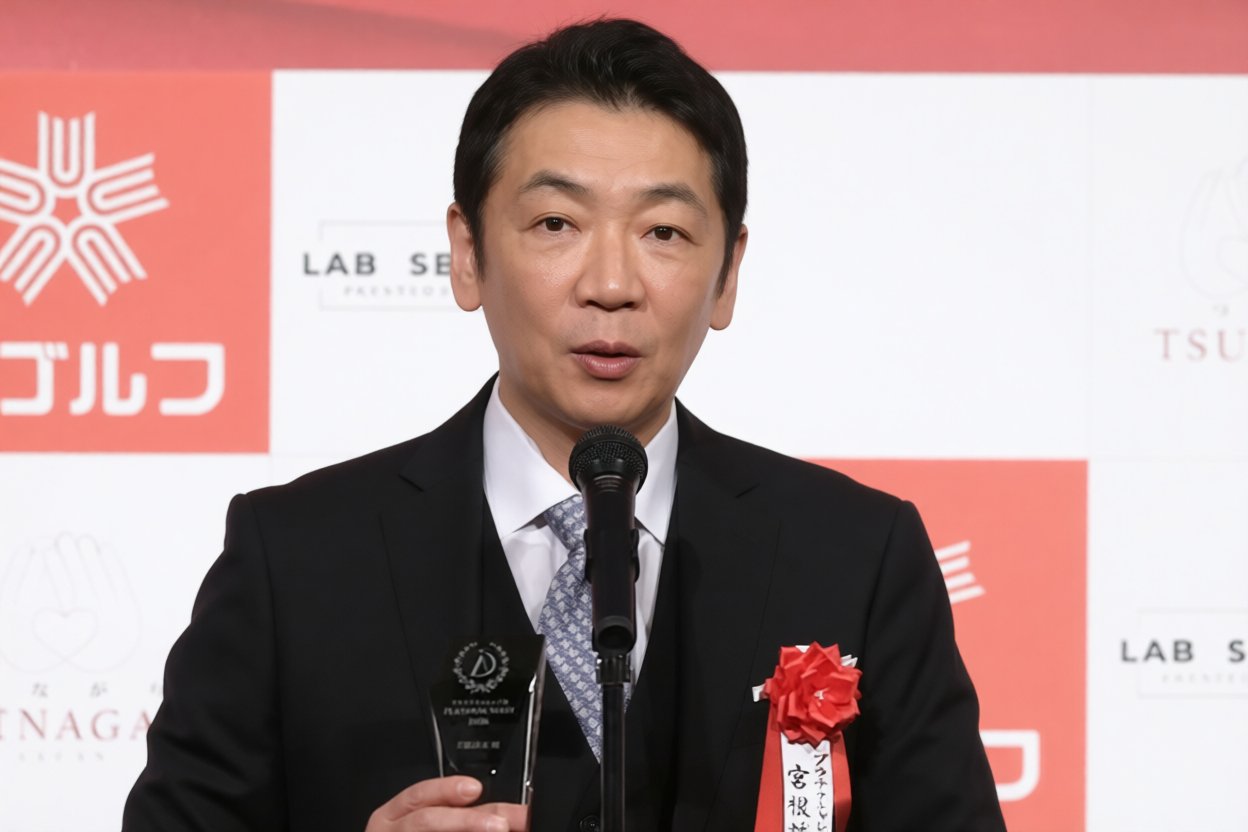
Indeed, it appears that the victims do not even reach 281. Toru Hashimoto, the lawyer and former mayor of Osaka, who also appeared on “Miyane-ya,” commented on a compensation committee in which lawyers of his firm had been involved. “The number of people who came forward at that time was roughly the same,” he said. “And quite a few of those submissions had no valid basis as claims at all.”
In other words, although 281 people have filed claims, only some of these claims will be accepted. Moreover, not all the 281 are seeking compensation for large donations. The figure includes all kinds of claims: repayment of loans made by staff members, payment for goods sold, and rent owed for church premises, among others. The liquidator’s report does not break down the claims by type. The number of claims concerning large donations must therefore be considerably lower.
The contrast with another recent Japanese scandal is instructive. A few years ago, the sexual abuse perpetrated by the late Johnny Kitagawa, founder of Johnny & Associates, the talent agency that trained and managed young male pop idols, became a major public issue. On September 13, 2023, the agency established a “Victim Relief Committee.” It opened a compensation claims service on September 15, and by November 20 of that year, 834 people had submitted claims. By September 15, 2026, the number had risen to 1,047.
Surely Johnny & Associates never had hundreds of thousands of aspiring performers on its books. Even at its peak, its young trainees seem to have numbered in the hundreds. Yet 1,047 people reported having been abused.
By contrast, a religious organization with hundreds of thousands of members, accused of causing damage for forty years, has 281 claimants, and only some of their claims will be upheld. Doesn’t the story we have been told fail to add up?
There is another point to consider. Once a compensation program is launched, people seeking redress normally rush forward at the very beginning, as happened in the Johnny & Associates case. This is only to be expected, since such programs are introduced precisely because victims have a deeply felt desire for redress.
In the Family Federation’s case, however, the number remains this low despite newspaper advertisements, repeated television commercials, and even a coordinated nationwide telephone consultation campaign. As I will discuss later in this series, the National Network of Lawyers Against Spiritual Sales is once again working to manufacture victims. “Spiritual sales,” in Japanese “reikan shōhō,” is the label used for practices that invoke spiritual or supernatural claims, such as warnings of misfortunes caused by ancestors, to persuade people to buy goods or services at high prices. Established in 1987, the network has spent decades assiduously leading efforts to persuade members to leave the Family Federation.
Let me warn readers from the start. If the number of “victims” is inflated from now on, we should regard the increase as artificially engineered. The public should remain vigilant, closely scrutinize the network’s activities, and publicly expose any suspicious conduct whenever it arises.
The state forcibly dissolved a religious corporation with hundreds of thousands of members on the ground, above all, that it was a “cult” that had deceived its followers into making large donations.
Searching online, I found an article in the “Mainichi Shimbun,” published on March 7, shortly after the Tokyo High Court issued its dissolution order, under the headline “Last Chance for Compensation: Lawyers’ Network Calls for Redress for All Victims of the Former Unification Church.” It reported that, on that day, the lawyers’ network had held a meeting in Tokyo and issued a statement demanding that “all victims” obtain redress through the liquidation. The network called on the liquidator to cooperate, pledging to “hold nothing back in sharing the materials, knowledge, and experience we have accumulated.” The newspaper added that the High Court had found that the organization had caused harm through improper donation practices for more than forty years, and that “the number of victims is expected to be enormous.” The statement urged all victims to come forward, including second- and third-generation members, i.e., the children and grandchildren of those who had joined the movement, and called for legislation to prevent further harm by any successor organization.
Six months later, the supposedly enormous number of victims has still not materialized.
Surely this cannot be because they are still hiding or still being deceived.
At the very least, we can only conclude that victims in the vast numbers imagined by the lawyers’ network and the courts never existed. This also means that the Tokyo High Court’s finding that the organization “had caused harm through improper donation practices for more than forty years” was itself mistaken.
In the May 2026 issue of “Monthly Hanada,” I examined in detail how the High Court’s dissolution order disregarded both facts and logic and was utterly untenable. To put it bluntly, had the judiciary, too, been “brainwashed” into accepting the unfounded assumption that “the number of victims is expected to be enormous”?
“Brainwashed” by whom? By the people I will turn to in the next article.

Eitaro Ogawa, born in 1967. Graduated from the Faculty of Letters at Osaka University and completed graduate studies at Saitama University. He is a well-known literary critic and the Chairman of the Japan Peace Studies Institute, and the recipient of the 18th Seiron New Wind Award. His major works include “The Promised Day: An Essay on Shinzo Abe” (Gentosha), “The Last Chance for Victory” (PHP Institute), “A Readable Showa History of War” (KK Bestsellers), “Twenty-One Chapters After Hideo Kobayashi” (Gentosha), “Chronicle of the Heisei Era” (Seirindo), and “The Value of a Writer” (by the publishers of the “Hanada” magazine).