Speakers from Tokyo and Kanazawa told how pastors, parents, and leftist lawyers joined forces, and what believers now face after the dissolution order.
by Massimo Introvigne
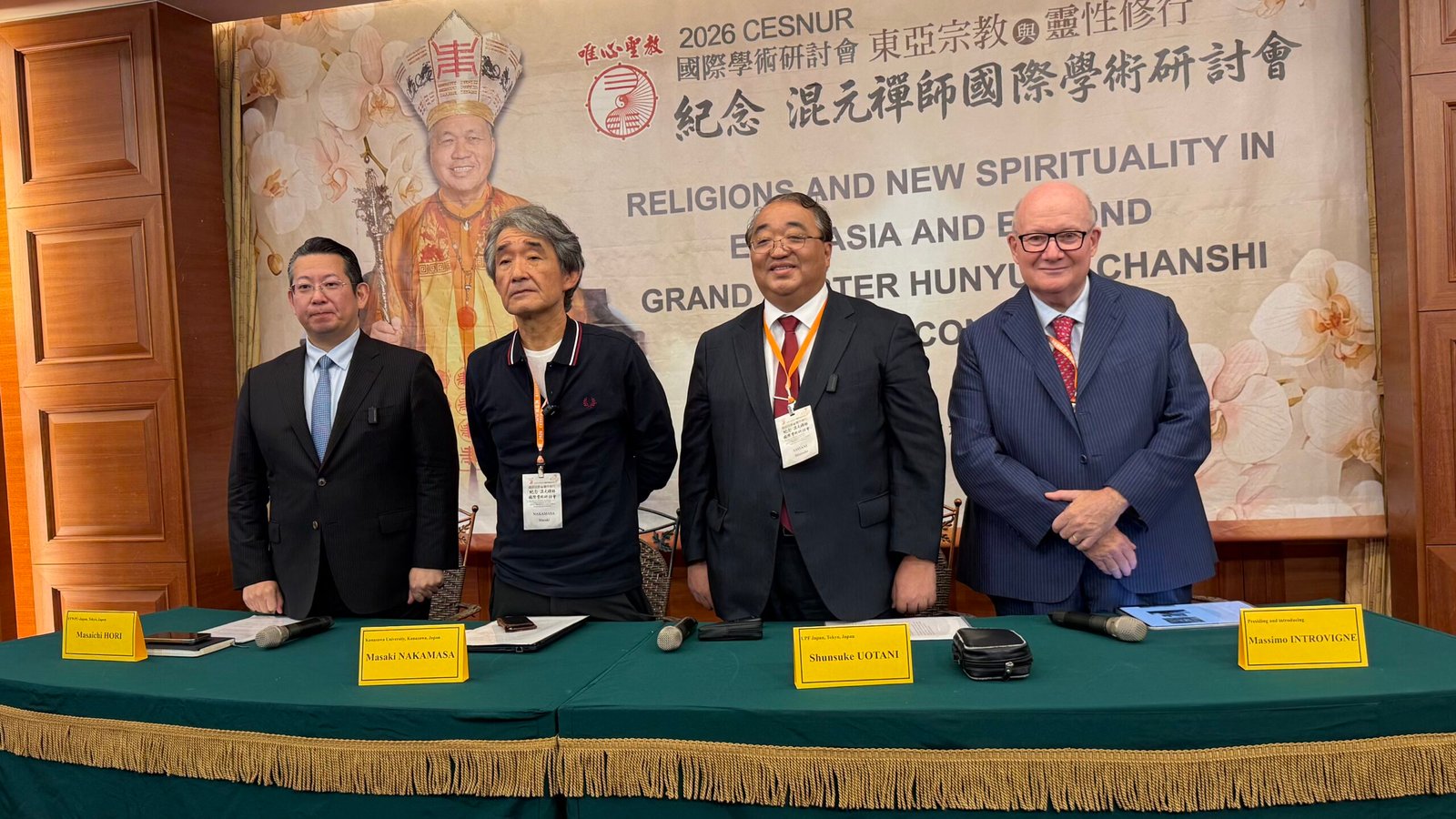
Some conference sessions need a map. The plenary session on “The Case of the Unification Church in Japan,” held on October 12 during the CESNUR 2026 international conference in Taiwan, needed something closer to a genealogical chart. Its speakers explained who wanted the church destroyed, which stories made the project plausible to the Japanese public, and what is happening to ordinary believers now that a court has ordered the dissolution of their religious corporation. I presided over the session and introduced the three speakers.
Shunsuke Uotani, secretary general of the Universal Peace Federation (UPF) in Japan, opened with the opposition’s history. In his reconstruction, the anti-Unification Church movement resembles a river fed by three tributaries, which flowed separately for years before merging in the early 1980s with a single destination: the destruction of the church. Christian pastors formed the first stream. Pastor Satoshi Moriyama of the Ogikubo Glory Church carried out in 1966 the earliest known “deprogramming” in Japan, a polite word for abducting believers and confining them until they renounced their faith. In 1976, he taught physical isolation methods at a seminar, after which such cases multiplied. Evangelical and more liberal pastors, who rarely agree on much, found common ground in this cause. In the 1980s, left-wing activists gained influence in the United Church of Christ in Japan, which issued an anti-Unification Church statement in 1988.
Parents made up the second stream. The Opposing Parents Association took shape partly in the wake of media coverage in 1967, and its members, persuaded that their adult children had been deceived or “brainwashed,” supported “rescue” operations involving confinement and professional deprogrammers. The third stream was political. Communist and Socialist activists resented the church’s anti-communist campaigns, conducted through the International Federation for Victory over Communism (VOC), which lobbied for an Anti-Espionage Law in Japan. Left-wing lawyers answered in 1987 by forming the National Network of Lawyers Against Spiritual Sales, which presented the so-called “spiritual sales” as a way of financing the anti-espionage campaign and used the issue as a weapon against both the church and its anti-communism.

The three streams soon learned to cooperate, in a division of labor any corporation might envy. Parents paid pastors for guidance, former members were steered toward left-wing lawyers whose lawsuits damaged the church’s reputation, and the media amplified the results. Uotani argued that the assassination of former Prime Minister Shinzo Abe in July 2022, by a man who blamed the church for his mother’s donations, changed the situation decisively. In his view, the legal grounds for dissolution were insufficient on their own, and political factors drove the process.
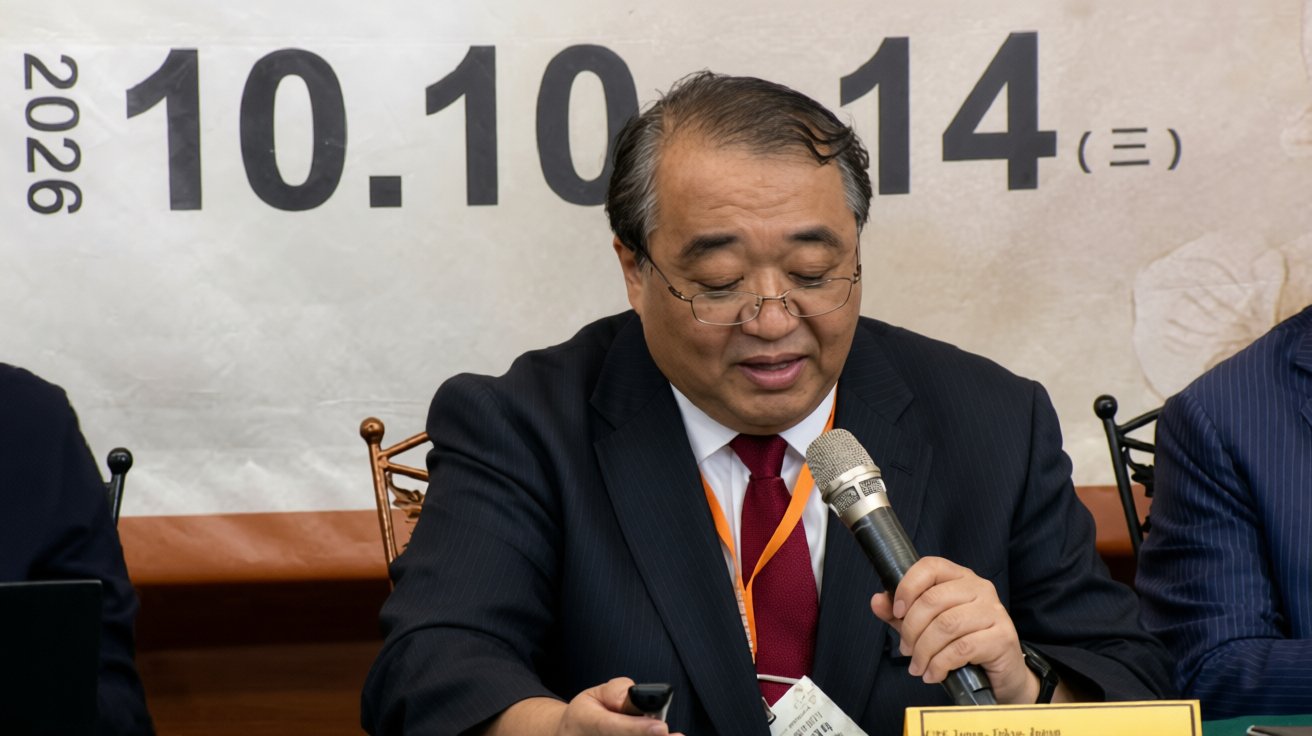
Masaki Nakamasa, a professor at Kanazawa University who was himself a member of the Unification Church from the early 1980s to 1992, examined the stories Japanese society has told about the church. He relied on the theory of narrative developed by philosopher Alasdair MacIntyre, who argued that people make sense of actions by placing them within stories. Unfamiliar phenomena, Nakamasa observed, tend to generate narratives resembling conspiracy theories, and the church has offered Japan plenty of raw material. During the Cold War, its anti-communism led critics to describe it as a political organization in religious disguise. The charges of “brainwashing” and “mind control” came next, and after the 1995 sarin gas attacks by Aum Shinrikyo, the negative image of that group was unjustly projected onto the church.
The post-Abe narratives focus on the alleged exploitation of second-generation believers and on collusion between politicians and “cults,” and they have cast the Unification Church as the “final boss.” Video game players know the “final boss” as the last and most powerful enemy, whose defeat ends the game and explains everything that came before. Japanese media, Nakamasa argued, have turned the church into something similar, the root of all evil, and stories of this kind crowd out nuance and narrow public debate.
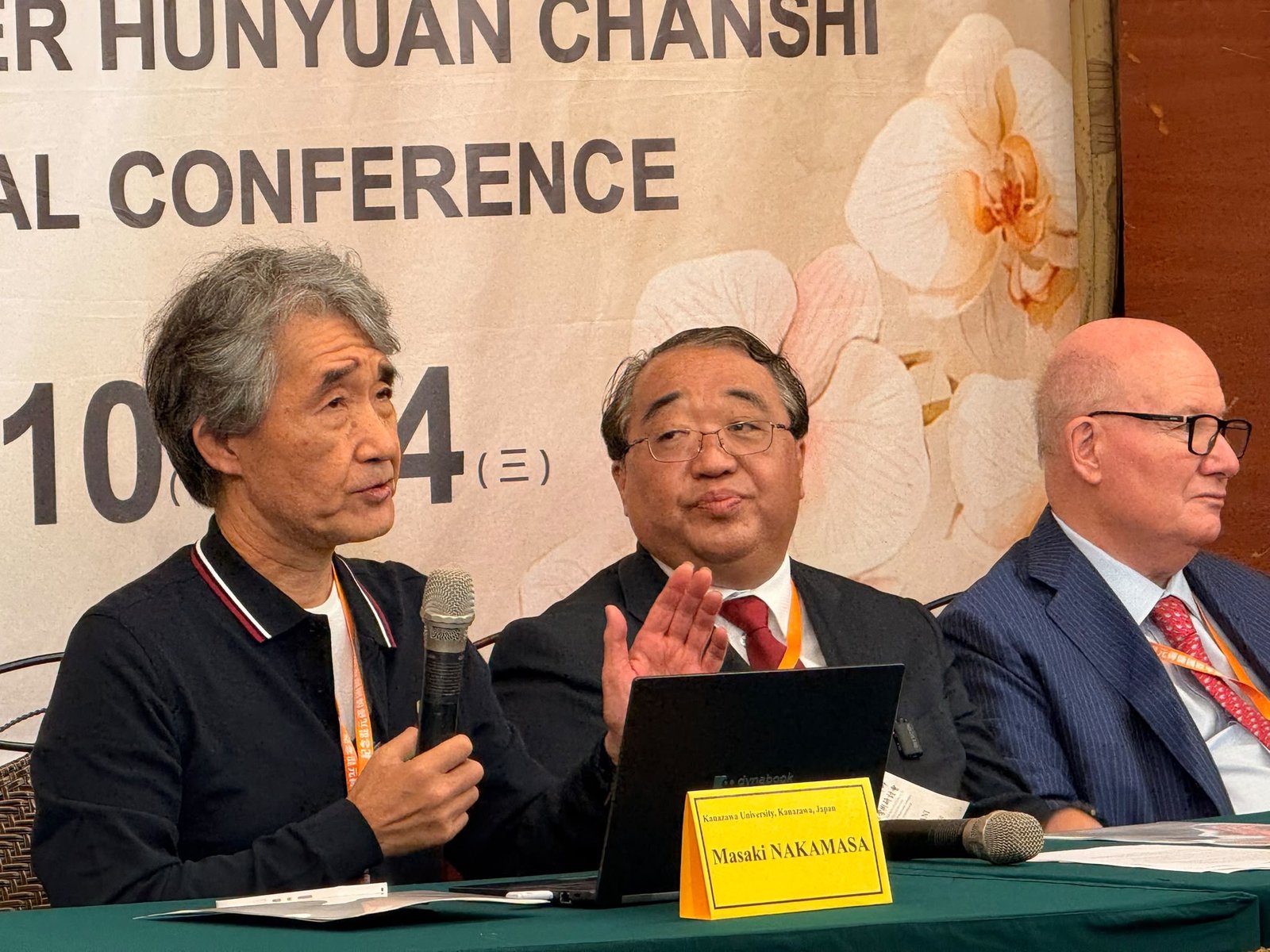
Masaichi Hori, president of the Family Federation for World Peace and Unification (the current name of the Unification Church) in Japan, described life after the dissolution order, which he said the assassination triggered and lawyers and the media amplified. Some claimed that the order would only remove tax privileges, leaving religious freedom intact. Hori’s list of what it removed in practice was considerably longer. Liquidation has restricted believers’ access to church properties, led to sales and terminated leases, and made collective worship difficult. A funeral at the Shinjuku church was restricted, and a church in Fukui has become unusable.
A survey conducted by the Family Federation, which collected 13,213 reports between mid-July and early October, found that 84.7% of respondents had experienced psychological distress. Thousands reported effects on their physical health and visits to psychiatrists or hospitals; more than 2,000 reported criticism or violence from family members, and many described difficulties at work or school. Behind the percentages are individual stories, including a woman thrown down the stairs by her brother and an elderly believer threatened with a knife to make her abandon her faith. In some medical and counseling settings, Hori added, continued belief was itself treated as the problem to be cured.
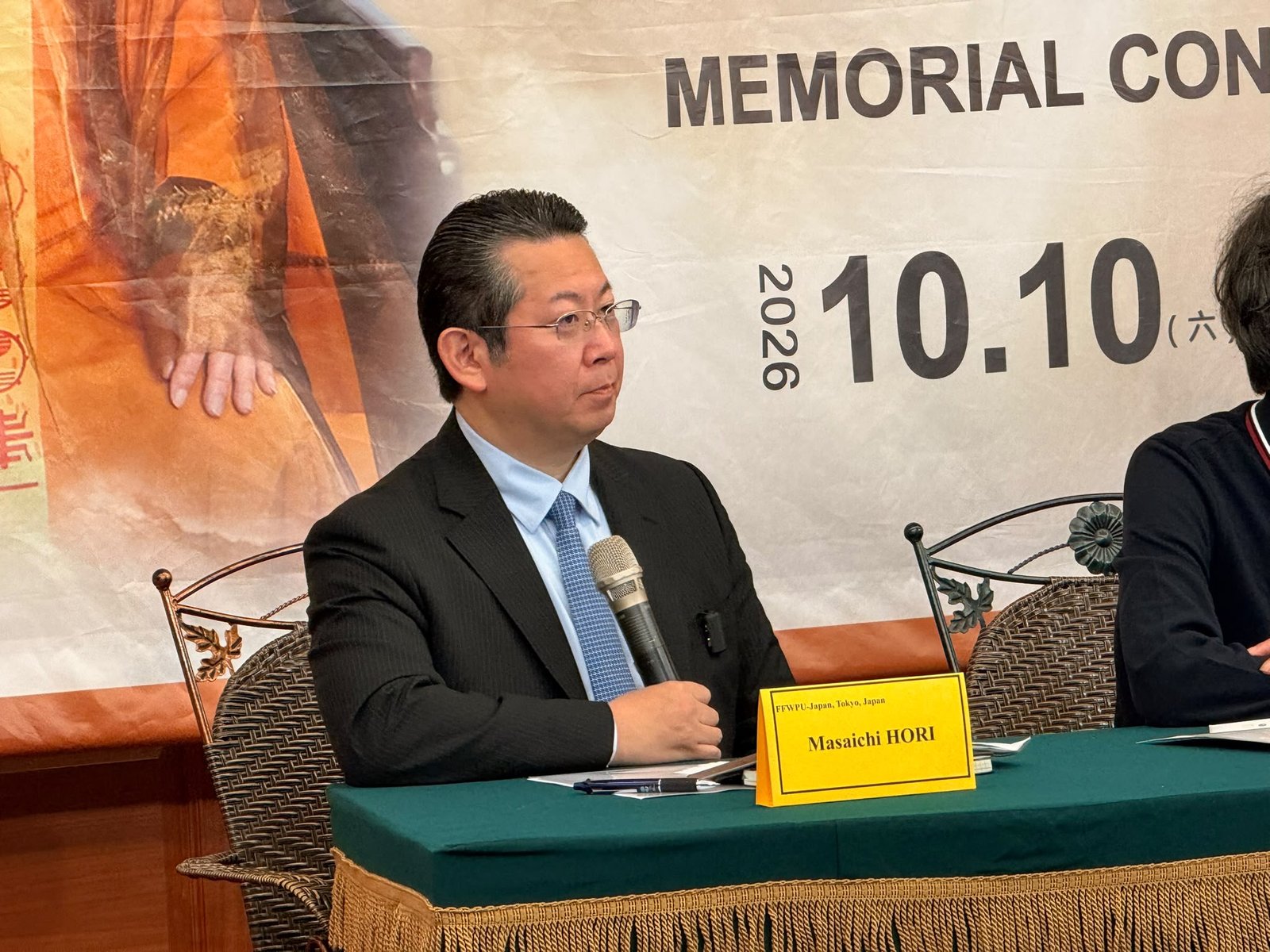
Hori concluded that the dissolution order has affected worship, family life, housing, employment, and health. He called the theory that losing corporate status leaves religious freedom untouched detached from reality and described the order as a license for discrimination that authorities have overlooked. Japanese officials had said that believers would lose only a tax status. Based on the reports Hori collected, the bill is much heavier, and believers are the ones being asked to pay it.
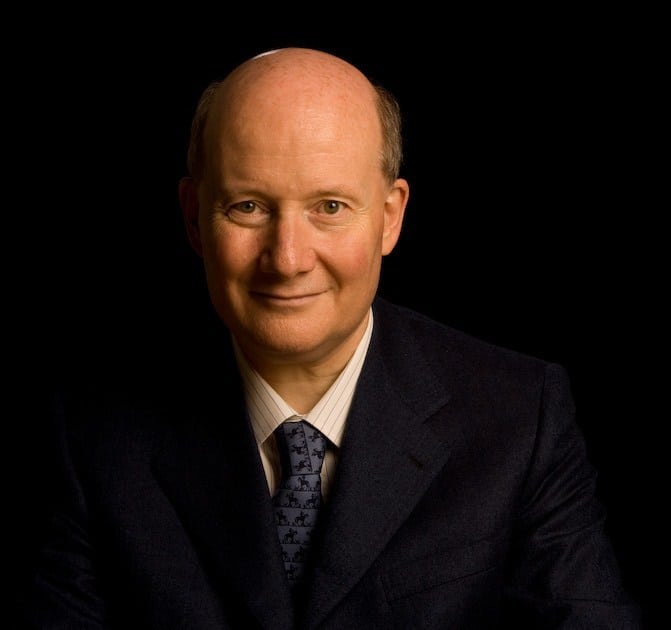
Massimo Introvigne (born June 14, 1955 in Rome) is an Italian sociologist of religions. He is the founder and managing director of the Center for Studies on New Religions (CESNUR), an international network of scholars who study new religious movements. Introvigne is the author of some 70 books and more than 100 articles in the field of sociology of religion. He was the main author of the Enciclopedia delle religioni in Italia (Encyclopedia of Religions in Italy). He is a member of the editorial board for the Interdisciplinary Journal of Research on Religion and of the executive board of University of Pennsylvania Press’ Nova Religio. From January 5 to December 31, 2011, he has served as the “Representative on combating racism, xenophobia and discrimination, with a special focus on discrimination against Christians and members of other religions” of the Organization for Security and Co-operation in Europe (OSCE). From 2012 to 2015 he served as chairperson of the Observatory of Religious Liberty, instituted by the Italian Ministry of Foreign Affairs in order to monitor problems of religious liberty on a worldwide scale.