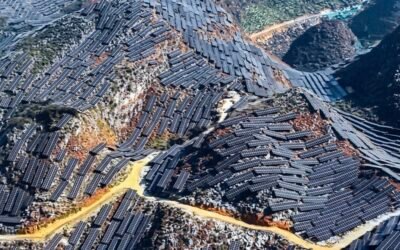
Challenging nature in such remote places is dangerous. Despite warnings, Beijing is doing just that, with no regard for human lives.
by Marco Respinti
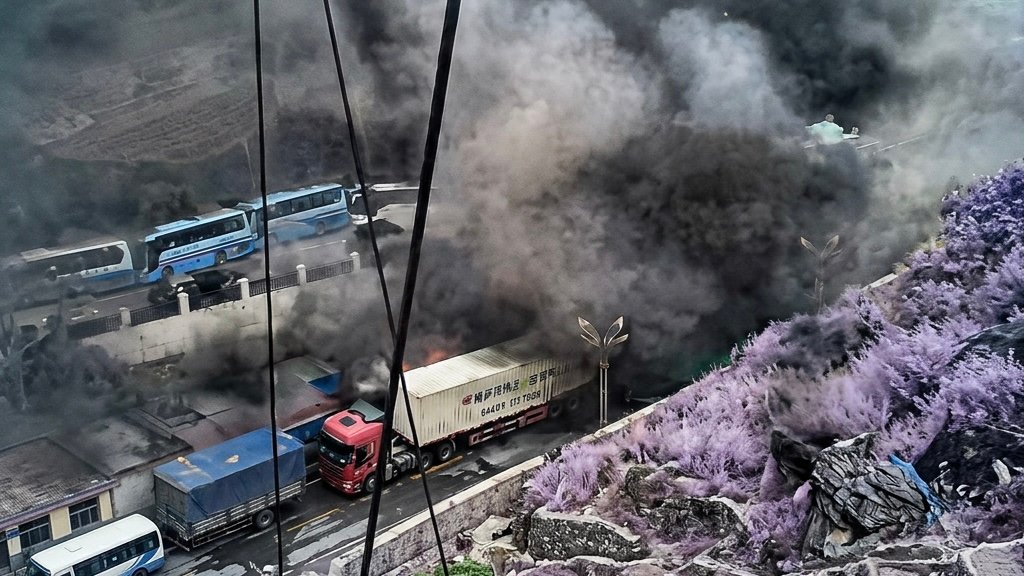
On August 26, 2026, one of the most tragic natural disasters in recent times struck the Tibet-Nepal border, near the town of Kyirong in Tibet. As everyone now knows, a massive glacial collapse on the Nepalese side triggered flash floods and tons of debris, erasing everything in its path, including the vital Kyirong Port, which served as the customs and immigration building between Nepal and Tibet. It is one of the two main land ports (the other is Zangmu in the East) between the two countries and the most-used route to Mount Kailash and Lake Manasarovar. Some 20,000 Indian pilgrims, or “yatris,” had already traveled this way in 2026.
Satellite imagery shows that a massive part of a glacier, at an altitude of 5,200 meters, broke off the mountain and crumbled down the valley for more than 100 kilometers, collecting rock, ice, mud, and sediment along the way. From there, the glacier reached Kyirong Port in seven minutes, then continued its destructive path downstream in Nepal.
The five-story Chinese customs and immigration complex was entirely flattened and buried under mud. Roads, some 12 hydropower projects, communication networks, and bridges (including the Friendship Bridge on the border) were destroyed.
Weeks have now passed since the tragedy, and it is time to reconsider the whole situation. One very interesting point is to note the difference in reactions in Nepal, a democracy, with information circulating freely, and the People’s Republic of China (PRC), where all information is monitored by the State, and put this in connection to what Beijing seems to hide to the whole world, as “Bitter Winter” noted before.
In fact, as the face of the tragedy, the PRC brought a large quantity of heavy equipment, such as excavators and trucks, in a brief time. But the lack of information from the Tibetan side did not improve rescue operations, even though Beijing could boast of reopening roads and restoring communication lines. Then, look at the number of casualties.
On the Nepali side, rescuers evacuated people trapped in mud and debris more than a week after the killer floods; more than 1,300 people have been declared dead, according to the official figures. At the same time, in the Tibetan Autonomous Region (TAR)—one of the parts of historical Tibet in which the PRC divided the country—the authorities speak of 43 dead only.
Why these huge discrepancies?
Many Western agencies have accused the PRC of faking the data to minimize the casualties. Beijing was not happy about these accusations, it also punished people accused of exaggerating numbers criticizing the official government’s version, but did not give any satisfactory explanation of this conflict of data.
But there is an even more cogent and urgent question behind this: can such a tragedy occur again in the near future?
Wang Pengling, a senior engineer at the National Climate Center, cited by “Tibet Online”, and then picked up by “China Daily”—both mouthpieces of the government—admits that the climate changes are altering the stability of the high-mountain environment and increasing the potential for cascading hazards. He believes that “these changes can affect the stability of the cryosphere in various ways, increasing the risk of hazards such as ice avalanches, glacial lake outburst floods, and glacier-related debris flows.”
According to the PRC’s figures (published in the China Climate Bulletin 2026), from 2004 to 2025, temperatures at the upper boundary of permafrost rose by an average of 0.34 C per decade: “Rising temperatures are also degrading permafrost, which can weaken frozen ground and rock, further undermining the stability of mountain slopes.”
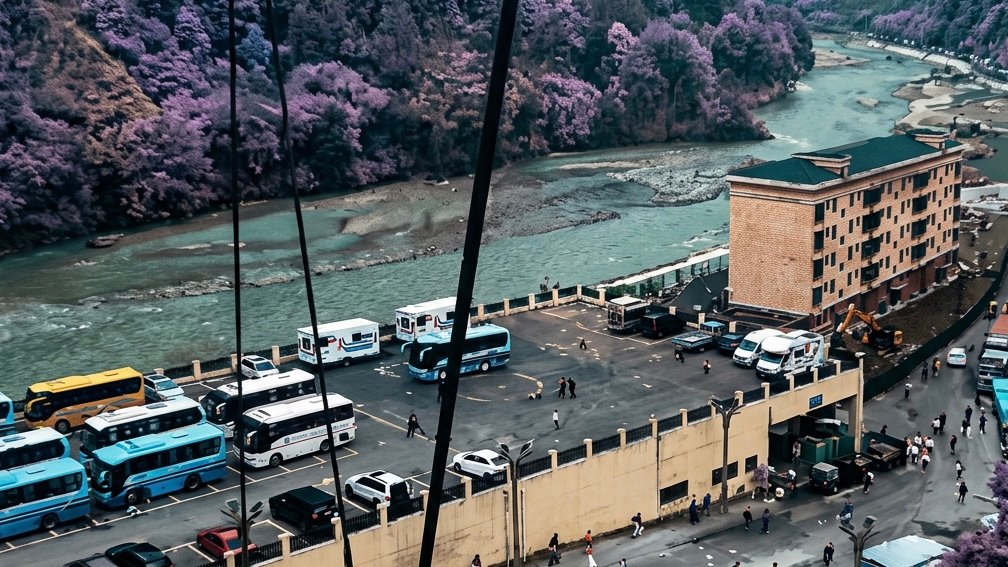
Practically, then, the recent tragedy in Tibet and Nepal is bound to recur elsewhere in the Himalaya as “climate change” is a fact that we have to live with and far more damaging projects are being undertaken, in particular the five hydropower plants in the vicinity of the Great Bend of the Yarlung Tsangpo River, at an estimated cost is $167.8 billion for a planned installed capacity of 60,000 to 70,000 megawatts—which lies in the most seismic region in Asia.
I already touched upon this important question, also quoting an article in the “South China Morning Post.” The fact that this article was given a lot of publicity probably means that many in the PRC do not agree with the mega project, which can only result one day in devastation in Pemakoe—and India downstream.
Systemiq, an advisory firm, just put out a new study together with the Integrated Mountain Initiative, the International Centre for Integrated Mountain Development, and India’s G.B. Pant National Institute of Himalayan Environment. It documents that the Himalaya are approaching a tipping point as glaciers melt faster than a decade ago, threatening water security as the region approaches “peak water” by mid-century. As glaciers retreat, they are leaving behind unstable glacial lakes held back by little more than loose rock and ice, above valleys where millions of people live, the study found.
To this mix, add the seismicity, and you have an explosive cocktail. In fact, the issue was touched upon in one of 140 articles of the Delhi Declaration released at the end of the recent held BRICS Summit. Article 82 says: “While acknowledging the growing complexity of disaster risks, including those related to climate change especially for the Global South, we reaffirm our commitment to BRICS cooperation to improve national disaster risk reduction systems and capacities to reduce disaster-related damage and protect infrastructure, human lives and livelihoods.”
The participants agreed “to share traditional, indigenous, local knowledge and community-based approaches, to ensure preparedness and self-reliance…” But will it be enough to prevent a new tragedy? More is needed to be done to avoid a greater catastrophe. The situation should be tackled on a war footing by the stakeholders, but a lack of transparency from the PRC’s side about its project in TAR does not augur well.

Marco Respinti is an Italian professional journalist, member of the International Federation of Journalists (IFJ), author, translator, and lecturer. He has contributed and contributes to several journals and magazines both in print and online, both in Italy and abroad. Author of books and chapter in books, he has translated and/or edited works by, among others, Edmund Burke, Charles Dickens, T.S. Eliot, Russell Kirk, J.R.R. Tolkien, Régine Pernoud and Gustave Thibon. A Senior fellow at the Russell Kirk Center for Cultural Renewal (a non-partisan, non-profit U.S. educational organization based in Mecosta, Michigan), he is also a founding member as well as a member of the Advisory Council of the Center for European Renewal (a non-profit, non-partisan pan-European educational organization based in The Hague, The Netherlands). A member of the Advisory Council of the European Federation for Freedom of Belief, in December 2022, the Universal Peace Federation bestowed on him, among others, the title of Ambassador of Peace. From February 2018 to December 2022, he has been the Editor-in-Chief of International Family News. He serves as Director-in-Charge of the academic publication The Journal of CESNUR and Bitter Winter: A Magazine on Religious Liberty and Human Rights.