Nepal counted its dead and opened its data; Tibet’s losses vanished behind China’s digital erasure.
by Lopsang Gurung
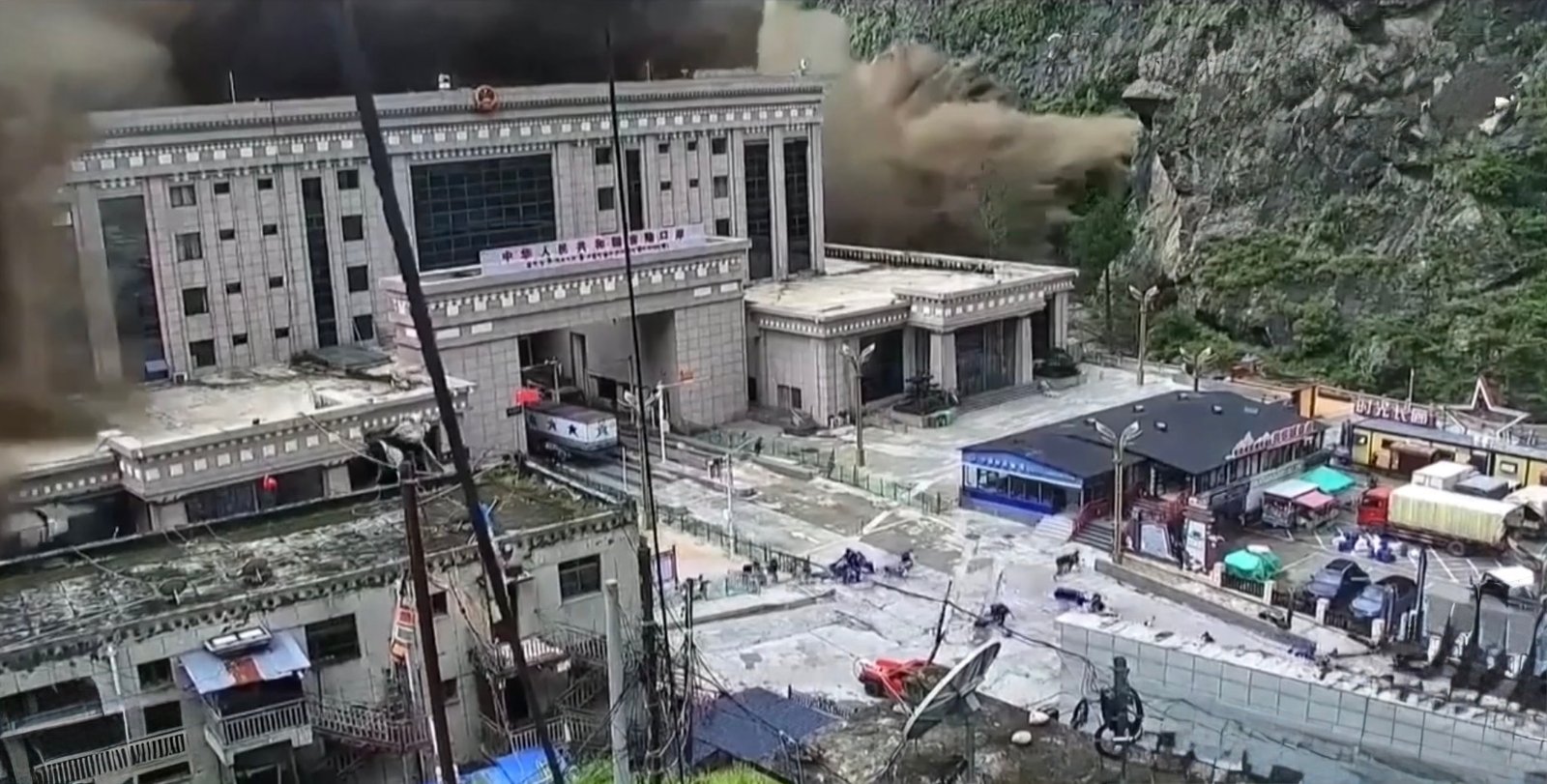
Natural disasters often reveal more than landscapes’ fragility. They expose the political systems that decide which tragedies are acknowledged, minimized, or erased. The recent floods along the Nepal–Tibet frontier—particularly in Rasuwagadhi and the surrounding border settlements—have become a stark illustration of how environmental catastrophe can be transformed into a contest of narratives.
In late August, torrential rains triggered landslides and sudden flooding across the high Himalayan corridor linking Nepal and the Tibetan Autonomous Region. Roads collapsed, bridges were swept away, and entire clusters of homes vanished under mud and water. Nepal’s Home Ministry later reported at least 903 confirmed deaths and over 4,200 people missing, a figure that continues to evolve as rescue teams reach previously inaccessible areas.
Yet the disaster did not unfold solely in Nepal. The same surge of water also struck Tibetan villagers living near the border. According to one Tibetan resident who managed to speak with relatives across the frontier, three Tibetans died in the initial wave, and dozens more were displaced. But these numbers remain uncertain—not because the situation is unclear, but because authorities are actively suppressing information.
Within hours of the flooding, videos filmed by residents of the border town on the Tibetan side began circulating on Chinese social media platforms. They showed submerged homes, collapsed infrastructure, and frantic attempts to rescue trapped villagers. The footage was widely shared on WeChat and other networks—until it abruptly disappeared.
Multiple Tibetan users reported that their posts were deleted, their accounts temporarily restricted, and they received warnings that sharing “unverified disaster information” violated platform regulations. Some were told that posting images of damage or casualties constituted “spreading rumors” and could lead to legal consequences.
When disasters occur in politically sensitive regions, the Chinese state often prioritizes narrative control over transparency. In this case, the censorship served two purposes: preventing public scrutiny of the scale of destruction inside Tibet and avoiding any implication that infrastructure failures or upstream water management contributed to the severity of the flooding downstream in Nepal.
Nepal’s authorities have been unusually forthright. Officials confirmed the casualty figures, acknowledged the scale of missing persons, and noted that foreign nationals from India, the United States, Europe, and Oceania were among those unaccounted for. They also said they received no early warning from the Chinese side, even though the flood originated upstream in Tibetan territory.
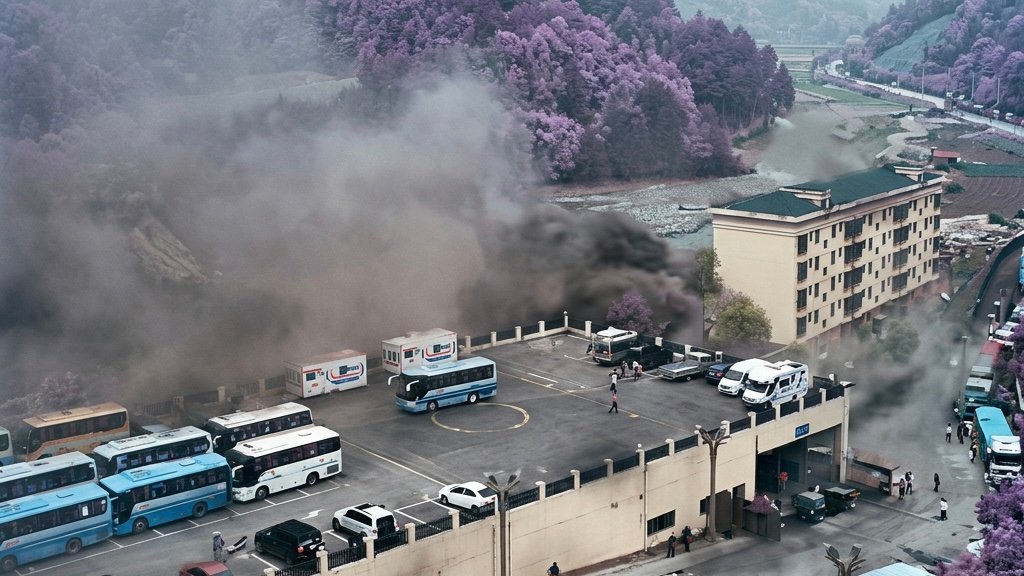
Madhav Prasad Chaulagain, a senior Nepalese forestry and environment official, was widely quoted on social media as publicly saying that Beijing issued no prior hydrological alerts, even though China and Nepal maintain formal disaster-information cooperation mechanisms. His statement was diplomatic but unmistakably pointed: Nepal expected notification, and none came.
Foreign journalists attempting to reach the border zone from the Tibetan side were repeatedly denied entry. Several international media outlets confirmed that their requests to visit the affected Tibetan settlements were rejected without explanation.
While governments debated responsibility, ordinary people acted. Tibetan communities inside Nepal mobilized quickly, raising funds and delivering supplies to the hardest-hit border villages. One Tibetan relief organizer reported that diaspora groups abroad contributed significant emergency donations—including a single contribution of seven million rupees from a Tibetan exile community.
These efforts highlight a truth political narratives cannot obscure: the border is porous in human relationships, even when it is rigid in state control. Families, trade networks, and cultural ties bind the two sides together. When disaster strikes, these connections become lifelines.
The tragedy at the Nepal–Tibet border is a reminder of how disasters can be made invisible through censorship, bureaucratic opacity, and geopolitical sensitivities. Nepal’s openness contrasts sharply with China’s insistence on controlling every image, every statistic, every sentence that emerges from Tibet.
This silence has consequences. Without accurate information, cross-border disaster preparedness becomes impossible. Without transparency, affected communities cannot advocate for safer infrastructure or better warning systems. And without visibility, the suffering of ordinary Tibetans—already marginalized within the PRC’s political framework—risks being erased.
The floods will recede. Roads will be rebuilt. But unless the underlying political dynamics change, the next disaster will unfold in the same way: with devastation on the ground and silence in the digital space where truth should be recorded.

Uses a pseudonym for security reasons.