The global map of religious persecution is disheartening. Challenging media narratives could begin by putting journalists, anti-cultists, and the groups they criticize in the same room.
by Marco Respinti*
*A paper delivered at the webinar “From Misunderstanding to Dialogue: Practical Strategies for Media Narratives of Religions,” hosted on September 3, 2026, by the Central Europe Forum for Freedom of Religion or Belief, conducted by Human Rights Without Frontiers, in collaboration with InterBelief Relief, FOREF-Europe, “Bitter Winter,” and the IRF Secretariat.
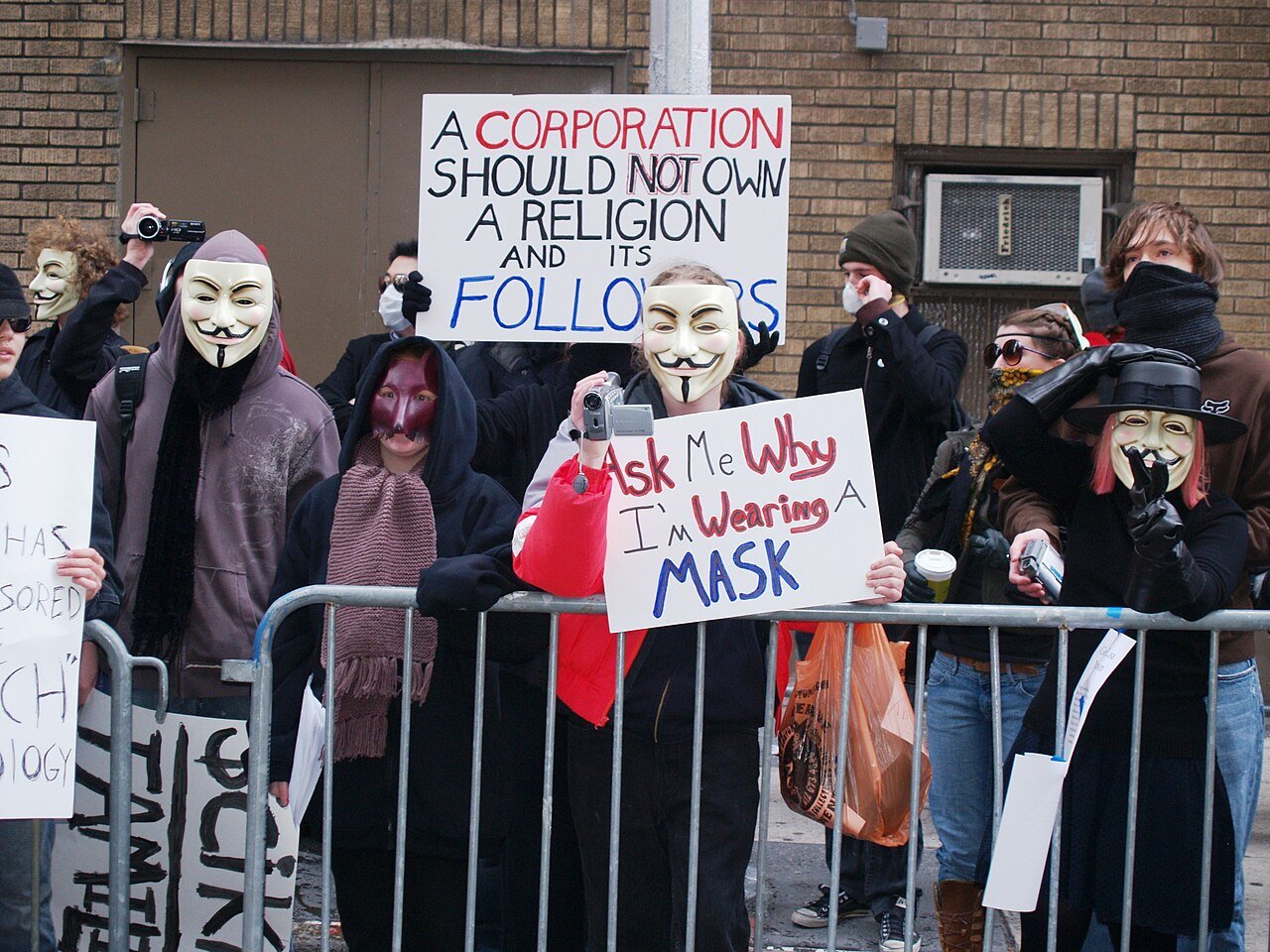
Once again, when it comes to religious freedom, the news is bad.
I will support this statement by briefly outlining the global situation and citing several significant examples—not because they are the only ones, but because their typical nature and, in some cases, their extraordinary character illustrate the issue at hand.
Published every two years, the report by the pontifical foundation Aid to the Church in Need reached its 27th edition in 2025 and examines 196 countries. It documents serious violations in 62 of them: 24 where persecution is open and violent, and 38 where religious belief is subject to discrimination. The overall picture is shocking: two-thirds of humanity—5.4 billion people—live in circumstances where professing a religious faith, and sometimes simply having one, exposes people to discrimination, violence, and even death.
The faces of religious persecution are many. The leading role belongs to despotic and totalitarian regimes, where communal expressions of faith, whatever the faith, are regarded as forms of social disorder to be eradicated and are often branded as terrorism. The People’s Republic of China is perhaps the clearest example. There, any form of “unauthorized” religion is still regarded as a dangerous alienation to be eliminated and a primary source of social subversion, and even “authorized” religions are limited and controlled.
Then there are countries where religion is politicized and ideologized until it becomes fused with political power and an instrument of oppression against other faiths. This is particularly evident in some Muslim-majority countries, where victims include both non-Muslims and Muslims deemed heretical by the religious majority. Consider the Hazara people in Afghanistan, who profess Shiite Islam and are violently opposed by the political authorities, and the Ahmadi community, which is singled out as heretical under Pakistani law and persecuted as such.
There is, finally, a third form of religious persecution: indirect persecution in what is still called the “free world,” through social marginalization, administrative harassment, and public stigma. Democratic societies are not immune.
Taiwan is a striking example. The Republic of China is a genuine democratic bastion in a region where democracy is a rare commodity, yet it has serious religious-freedom problems. Tai Ji Men, a spiritual Qigong menpai—roughly comparable to a school—was falsely accused of tax evasion and even black magic. Although the Taiwanese judiciary acquitted it at every level, including the Supreme Court, the movement’s properties regarded as sacred were nationalized. Some bureaucrats still claim the movement owes the state money, while some media outlets amplify these allegations and distort the facts.
I have called this persecution “indirect.” Unfortunately, in several cases, it is becoming increasingly direct, taking on features traditionally associated with violent persecution: the arrest of leaders and believers and unjustified pretrial detention.
The Path of YahRa is one example. Its founders have been detained in both the Philippines and the Czech Republic, and its followers have faced severe social stigma. Its teachings incorporate elements of sacred eroticism, drawing scrutiny from anti-cult activists, who often rely on former members’ testimony. The movement has also faced allegations of sexual misconduct; following a trial, its leader and several other members were convicted and sentenced to prison.
Another disturbing case involves the Ahmadi Religion of Peace and Light, a Shiite-derived group distinct from the Ahmadiyya Muslim Jama’at. It has faced harassment in several countries and has been repeatedly forced to relocate. Just a few months ago, 500 police officers raided its UK headquarters, home to numerous peaceful families. Its leaders were arrested, members were forced to relocate, and several parents were separated from their minor children.
A third example is Konstantin Rudnev, a Russian spiritual teacher deeply rooted in esoteric Tantra and an opponent of Vladimir Putin. Branded a “cult leader,” he was sentenced to several years in prison in Russia. After regaining his freedom, he moved to Montenegro and then Argentina, where he continued to face stereotypes and allegations. He now lives in dire circumstances in Argentina, still fighting the same prejudices and facing legal prosecution and detention.
In Asia, Japan has seen a major campaign against the Family Federation for World Peace and Unification, formerly known as the Unification Church. The complex case surrounding the assassination of former Prime Minister Shinzo Abe (1954–2022) had, in my view, the extraordinary effect of turning the victim into the accused. The Tokyo District Court subsequently ordered the dissolution of the Family Federation as a religious organization.
The controversy continues in South Korea, where Reverend Sun Myung Moon (1920–2012) founded the movement in 1954. His widow and current leader, Mrs. Hak Ja Han Moon, 83 and reportedly in poor health, was arrested on September 23, 2025, and, only a few days ago, sentenced to two years in prison.
South Korea is also targeting other religious groups deemed political enemies of the government, including Protestant churches such as Segero Church and its leader, Pastor Son Hyun-bo.
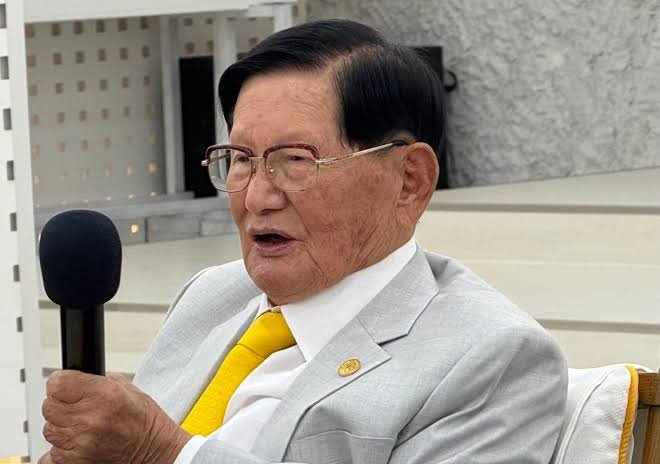
Nor should we forget Shincheonji, a new religious movement previously accused of violating COVID-19 health regulations and of contributing to the virus’s spread. Those accusations were later dropped. Yet its founder, Lee Man-hee, was arrested in June at age 95, accused of encouraging followers to support a political party hostile to the current government.
Across these cases, the accusations repeatedly center on moral or financial corruption, sexual harassment, and, increasingly, human trafficking. Yet in the cases I have cited, the evidence is strikingly absent. Too often, allegations become constructions of intent, amplified until the accusation itself substitutes for proof.
The seriousness of these examples should set off alarm bells. There is no entirely safe place for religion in today’s world. Some 5.4 billion believers are discriminated against, harassed, or persecuted, including many citizens of democratic countries that claim—both in their constitutions and official documents—to defend freedom and human rights.
That claim is not always true.
Everyone—above all, believers of every faith, but clearly not only believers—must remain vigilant. A dangerous convergence is underway among secularist ideology, professional anti-cult activism—with French organizations particularly prominent in this field and their networks extending into many countries—partisan political interests, and a form of journalism that dishonors the profession.
The cases of the Path of YahRa, the Ahmadi Religion of Peace and Light, and Konstantin Rudnev, to mention only the most striking examples, show how a single allegation can become an avalanche of mud once journalists cease to perform their proper task: to establish, honor, and convey the truth of the facts, rather than bend themselves to interests of another kind.
What, then, can be done? Certainly, dialogue with the media must always be pursued. Religious groups have a duty to remain open: to invite journalists in, to provide them with information, documents, and descriptions of their beliefs and practices, and, above all, the opportunity to see for themselves. But openness alone is often insufficient.
Too often, even the groups that are most transparent and willing to engage are eventually swept away by the same avalanche of mud. In my view, the problem lies upstream and is twofold. First, journalism too often lacks the courage to swim against the current when going with the current guarantees government benevolence, commercial success, higher circulation, clicks, or public approval. The second problem is deeper.
We still, to a considerable extent, live in the shadow of an Enlightenment mentality that regards religion—whether large or small, traditional or new—as inherently suspect, somehow carrying within itself the seeds of irrationality, distortion, and aberration. Overcoming this inheritance would require a truly monumental shift in perspective, a leap in civilization that is certainly beyond anything we can achieve on our own.
But we can do something. We can at least insist that journalists and media outlets remain faithful to reality. And I believe that, within the limits of what is possible, the most effective form of dialogue is often personal: meeting with journalists one by one, letting them encounter believers as people rather than as labels, and enabling them to touch reality before they write about it.
Professional anti-cultists repeatedly cite the stories of former members who leave religious groups and later become their fiercest critics. Yet there are also opposite cases: journalists who began with anti-cult assumptions, confronted the facts, surrendered to reality, and eventually became voices for a more truthful understanding. That is a good sign. Religious groups should therefore do everything in their power to ensure that journalists encounter the reality of their communities before they encounter the stereotypes surrounding them.
And let me conclude with one humble suggestion. Why not invite some critical voices—perhaps even the most critical ones—to the next conference and place them in direct dialogue with the groups they describe as “cults”? Every speaker, whether an anti-cult activist or a representative of a group labeled a “cult,” should be required to substantiate their claims and answer those who are directly concerned.
There are already talk shows and media platforms where prejudiced journalists can make their case. What is usually missing, however, is the other side of the argument—the genuine possibility of contradiction. Let us therefore create settings in which confrontation, dialogue, and rebuttal are not obstacles but precisely the method.
For too long, parts of the media have acted as though they could run the show without interference, setting the narrative and judging the accused without ever facing them. Perhaps it is time to change the rules: not by silencing criticism, but by answering criticism and allowing reality itself to have a voice.

Marco Respinti is an Italian professional journalist, member of the International Federation of Journalists (IFJ), author, translator, and lecturer. He has contributed and contributes to several journals and magazines both in print and online, both in Italy and abroad. Author of books and chapter in books, he has translated and/or edited works by, among others, Edmund Burke, Charles Dickens, T.S. Eliot, Russell Kirk, J.R.R. Tolkien, Régine Pernoud and Gustave Thibon. A Senior fellow at the Russell Kirk Center for Cultural Renewal (a non-partisan, non-profit U.S. educational organization based in Mecosta, Michigan), he is also a founding member as well as a member of the Advisory Council of the Center for European Renewal (a non-profit, non-partisan pan-European educational organization based in The Hague, The Netherlands). A member of the Advisory Council of the European Federation for Freedom of Belief, in December 2022, the Universal Peace Federation bestowed on him, among others, the title of Ambassador of Peace. From February 2018 to December 2022, he has been the Editor-in-Chief of International Family News. He serves as Director-in-Charge of the academic publication The Journal of CESNUR and Bitter Winter: A Magazine on Religious Liberty and Human Rights.