Official documents trace a policy chain from preschool language instruction and boarding schools to mainland classes, vocational training, and labor transfer.
by Asiye Uyghur
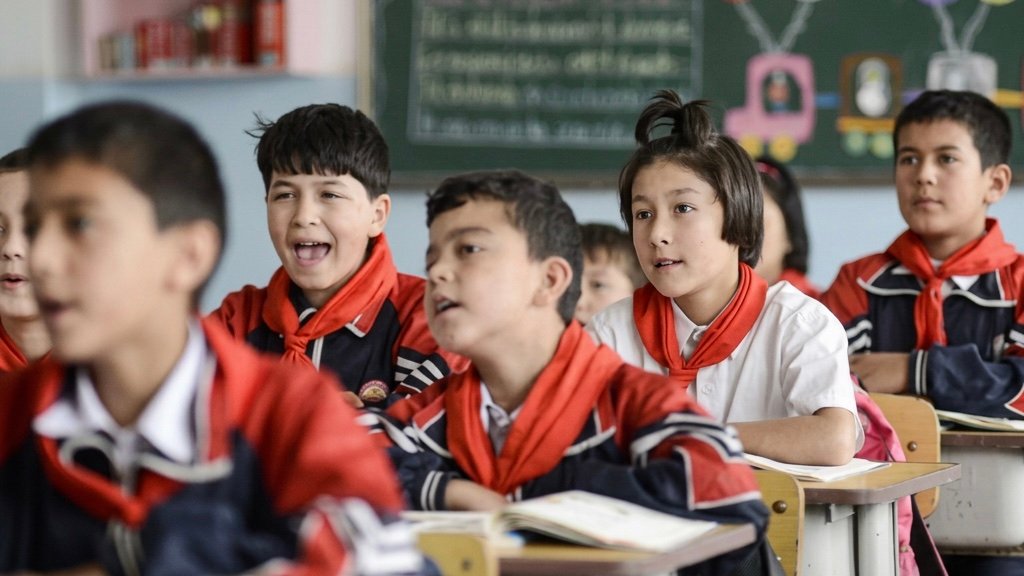
When seven-year-old Guliashar Juma traveled with her father for more than ten hours from their mountain village to Akto County, the trees in the town astonished her. A 2019 report published by the education authorities in the Uyghur region framed her journey as the start of a personal transformation: she left a remote “horseback school.” She entered a modern school in the county town.
The same official report also recorded what this transformation required. Beginning in 2014, Akto County merged or closed 63 teaching sites scattered across four remote mountain townships. By the time of the report, 3,181 children from farming and pastoral families boarded at the centralized school.
Beijing describes such policies as educational equality, poverty alleviation, and modernization. Read together, however, its own documents reveal a much larger project. From preschool language instruction to boarding schools, mainland classes, vocational education, and labor transfer, education was designed not only to teach children but also to reorganize their relationship with family, language, community, and future work.
The architecture did not suddenly appear with the mass repression that intensified after 2017. It was assembled over many years, in public policy documents, implementation plans, and celebratory state-media reports.
Rights on paper, a different direction in policy
China’s official account begins with autonomy. A State Council white paper on regional ethnic autonomy says autonomous areas have the right to use and develop local languages, manage education, and preserve culture and religion. Yet the same document defines autonomy as operating under the central state’s unified leadership. Local regulations and departures from national policy remain subject to approval from higher authorities.
An official white paper on the development and progress of the Uyghur region went further. It claimed that people with their own written languages received instruction in those languages, and that textbooks and university entrance examinations were available in Uyghur and several other languages.
But the paper also identified knowledge of Chinese as a political and developmental problem. It said that about 70 percent of the more than 10 million people officially classified as “ethnic minorities” in the region had not mastered Chinese, or did not understand it at all. It presented this as harmful to both the affected peoples and the region’s development. It then praised the expansion of so-called bilingual education from 2004 onward.
This contradiction – formal recognition of mother-tongue rights alongside a policy that treats the continued dominance of indigenous languages as an obstacle – became the foundation for the next phase.
Education for “long-term stability”
The regional government’s 2010-2020 education plan made education’s political role explicit. Education, it declared, was a foundation for stabilizing and developing the region, enriching the people, consolidating the border, and achieving “long-term peace and stability.”
The plan set measurable language targets. By 2012, more than 85 percent of preschool-aged children whom the government classified as ethnic minorities were to receive two years of bilingual preschool education. By 2015, bilingual education was to cover about 75 percent of primary and secondary students in those communities; by 2020, 90 percent. High-school graduates were expected to be proficient in the national common language, meaning Mandarin Chinese.
The plan formally said local-language teaching should be respected. Its operational direction nevertheless placed Mandarin at the center of advancement. Children who had attended bilingual preschool were to continue bilingual education from the first year of primary school. More subjects and teaching hours were to be delivered in Mandarin. Apart from language and literature majors, universities were encouraged to teach professional courses in Mandarin, while vocational students were to move directly into Mandarin-medium education without a preparatory year.
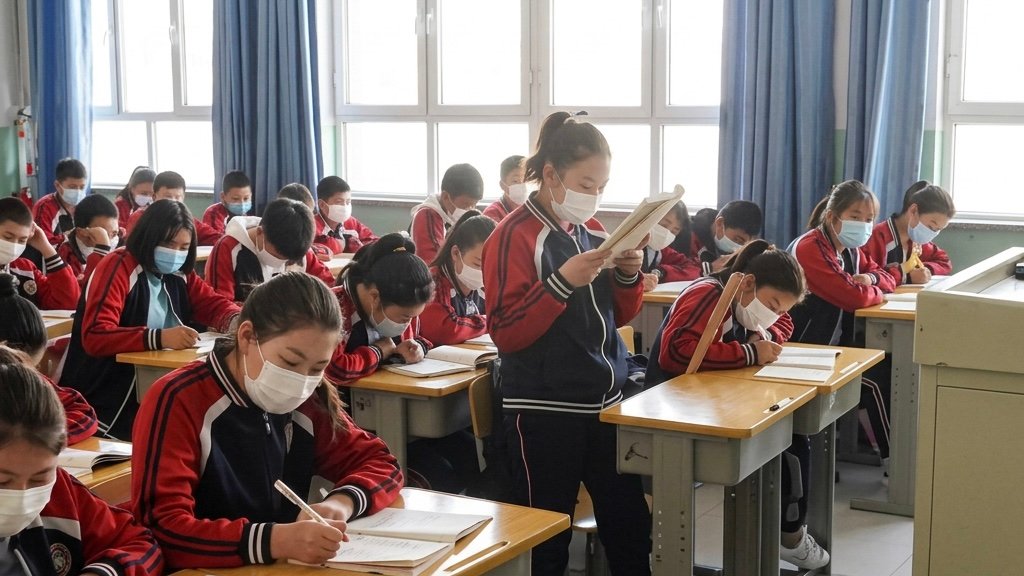
Language policy was inseparable from political education. The plan required the Party to maintain leadership over schools and ordered its ethnic-policy doctrines to enter textbooks, classrooms, and minds. The “Three Inseparables” taught that the Chinese majority and officially classified minority peoples could not be separated from one another. The “Four Identifications” demanded identification with the motherland, the Chinese nation, Chinese culture, and the socialist path with Chinese characteristics. The Marxist “Five Views” supplied the Party-approved framework for understanding the state, nationality, religion, history, and culture.
The plan also ordered atheist education and the cultivation of state, legal, and Chinese national consciousness. In this context, atheist education did not simply mean a secular curriculum. It placed children’s understanding of religion within an ideological program defined and supervised by the Party-state.
A separate implementation document shows this was not merely educational rhetoric. The Party’s organization and propaganda departments, education authorities, the United Front, religious and ethnic affairs agencies, public security bodies, the military, publishers, and the Communist Youth League shared responsibilities. A policy presented as schooling was built as a whole-of-government project.
Removing children from their linguistic environment
The education plan called for concentrated boarding schools in farming and pastoral areas, merging schools, mixed classes, and expanding both regional and mainland boarding programs. It set a goal of enrolling 10,000 students a year in mainland high-school classes and another 10,000 in junior-secondary classes inside the region by 2014. It also launched mainland vocational classes and expanded recruitment from the four southern prefectures, where Uyghurs form a large share of the population.
A 2016 China Daily article provides unusually revealing figures. By 2015, mainland high-school classes had admitted 80,200 students, with annual enrollment reaching 9,880. About 34,000 were studying in 93 schools across 45 cities. The regional junior-secondary boarding program had admitted more than 71,800 primary-school graduates; 29,200 were then enrolled in 30 schools across 16 cities.
The article framed these programs as instruments of ethnic unity, social stability, and long-term security. Students were to become “reliable successors” to the socialist system and, after returning home, encourage their communities to identify more closely with the Chinese state.
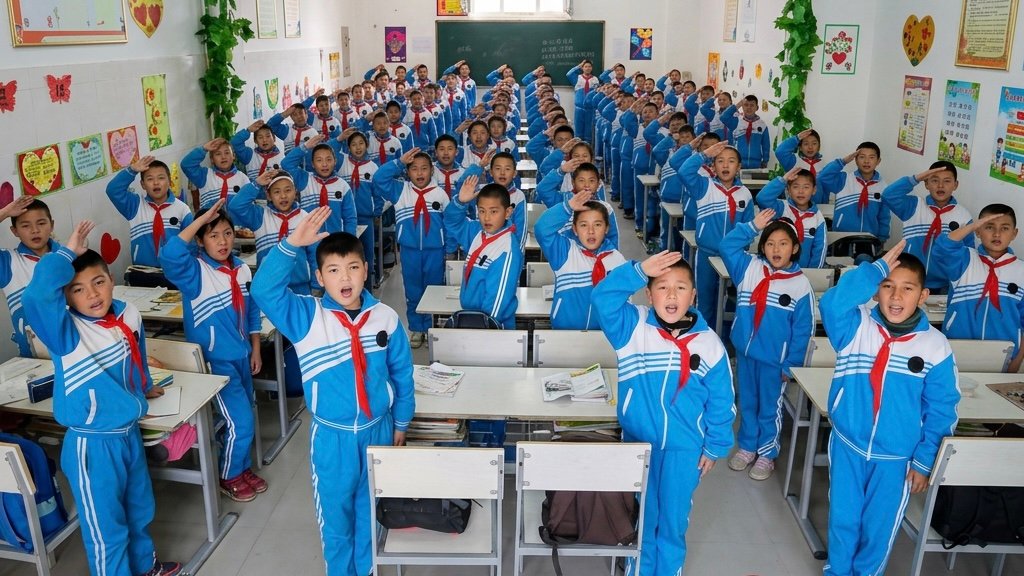
The management details matter. Regional junior classes mainly recruited children from farming and pastoral villages, poor counties, and border areas, and operated under closed, full-time residential management. At one Urumqi school, approximately 1,900 students from southern areas boarded for 330 days a year. The school controlled not only formal lessons but also Sunday activities, festivals, daily habits, political education, and language use.
The article’s examples from mainland schools likewise describe tightly managed contact and movement. In one school, students’ phones were collected and returned only once a week. At another, students could leave campus once every two weeks for two and a half hours. These examples do not establish that every school used identical rules, but they show how separation from home allowed the institution to manage the child’s entire social and linguistic environment.
From classroom to labor allocation
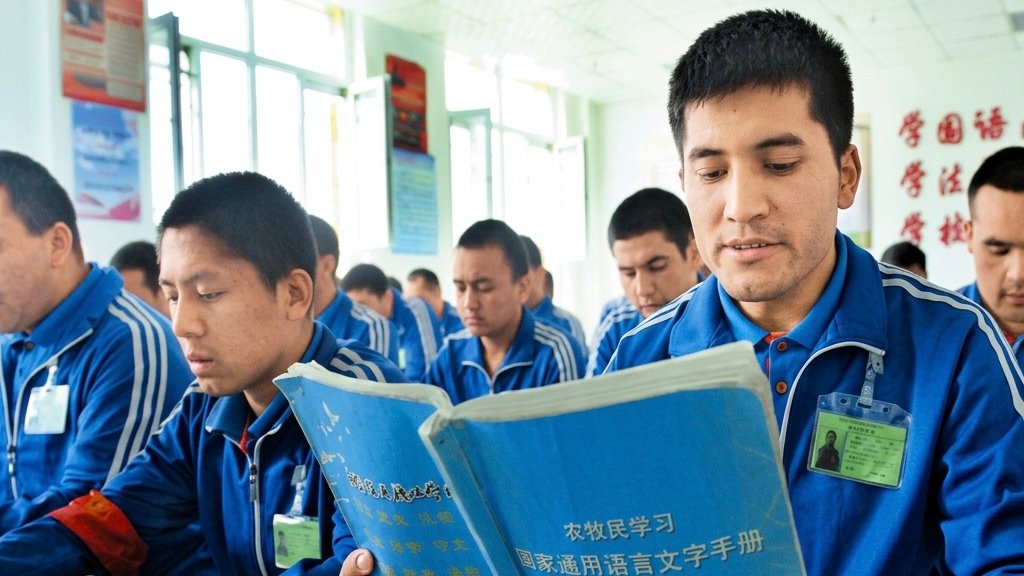
The same policy documents connect schooling to the labor system. The regional education plan ordered the creation of vocational training bases to transfer rural labor. It called for cooperation between schools and enterprises, job-specific training, and free training for new rural workers. Students who did not progress to upper-secondary or higher education were to be incorporated into vocational skills programs.
The national 13th Five-Year Poverty Alleviation Plan, issued in 2016, placed these measures within a broader state system. It promoted interprovincial labor cooperation, east-west joint enrollment, mainland vocational classes for students from the Uyghur and Tibetan regions, Mandarin training in indigenous communities, and assistance with job placement after vocational education. It also linked labor transfer to industrial parks, urbanization, and state-supported enterprises.
This national plan was not written only for the Uyghur region, and by itself it does not prove that every training or job placement was involuntary. It does establish the institutional chain: poor households were identified through state databases; young people were directed toward vocational training; local and receiving governments coordinated placements; and the state assessed employment-transfer performance.
Education was therefore not separate from labor policy. It prepared language, discipline, skills, and mobility for a state-coordinated transfer system.
Beijing’s own defense confirms the continuity
In September 2023, United Nations experts expressed grave concern over the expansion of state-run boarding schools in the Uyghur region. They cited allegations that mainly Uyghur and other indigenous children were being separated from their families, receiving little or no education in their mother tongue, and being pushed toward assimilation into the Mandarin language and Chinese cultural practices.
China rejected the allegations. Yet its formal response to the UN experts is revealing. To justify the current boarding-school system, Beijing cited the same 2010-2020 regional education plan that called for concentrated boarding institutions in farming and pastoral areas. It said students and parents “voluntarily choose whether or not to board” and described Uyghur-language instruction as a local course that families could elect to take. At the same time, comprehensive education in the national common language applied to all schools.
The response is meant as a denial, but it also confirms the policy’s continuity: the current system rests on the earlier architecture of centralized schooling, Mandarin-centered instruction, and the transfer of educational authority away from families and local communities.
Childhood as an instrument of governance
The question is not whether a boarding school can provide modern classrooms, meals, or access for a child living far from school. Beijing repeatedly points to those material benefits. But facilities and meals do not answer the central question raised by its own documents: why were language, residence, political identity, vocational direction, and social stability designed as parts of the same system?
The official record shows a consistent progression. Autonomy promised language rights. “Bilingual education” made Mandarin the language of mobility. School consolidation removed village alternatives. Boarding and mainland classes placed children in state-managed environments. Political education defined the identities they were expected to adopt. Vocational programs connected schooling to labor transfer and industrial policy.
Seen separately, each measure can be presented as a technical reform: a preschool language program, a school merger, a boarding place, a vocational course, or a job placement. Seen together, they form a governing architecture designed to restructure how a new generation speaks, belongs, and works.
When childhood is made an instrument of “long-term stability,” school ceases to be merely a place of learning. It becomes an institution through which the state seeks to rewrite a people’s future—one child at a time.
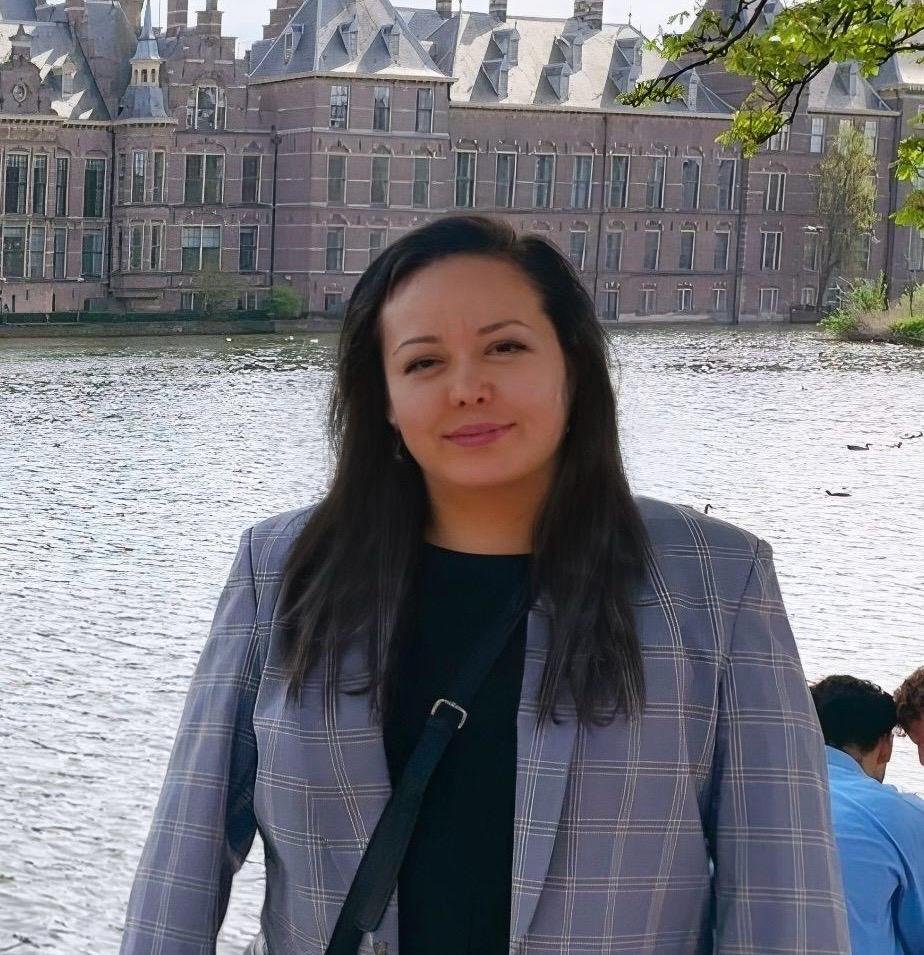
Asiye Uyghur is a Netherlands-based Uyghur writer and political commentator. Before the closure of Radio Free Asia’s Uyghur Service, she worked there as a political commentator. She currently publishes commentary and analysis in English, Dutch, and Chinese on Uyghur human rights, cultural repression, information control, and Chinese state policies related to Uyghurs through platforms including Global Voices, the Uyghur Human Rights Project (UHRP) as a guest contributor, and the Dutch publication “De Kanttekening.”