Only one “victim” is named in the Argentine case. She has now decided to tell her true story to “Bitter Winter” in her own voice.
by Elena Makarova
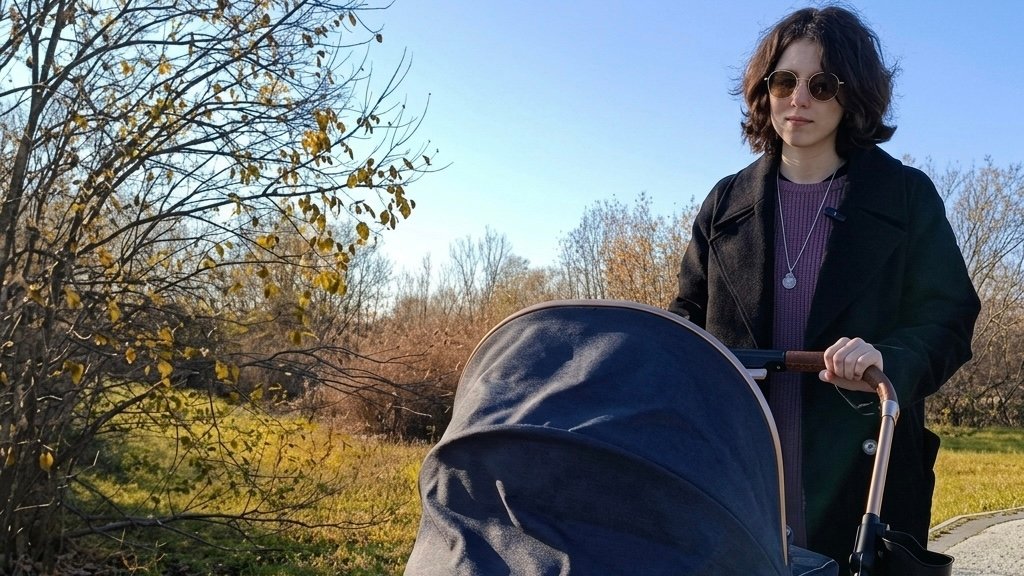
I, Elena Makarova, have been living in Russia with my wonderful baby, and my only desire is to live in peace and forget the traumatic experience I endured in Argentina. I returned home hoping that time, family, and motherhood would help me heal. Yet my name continues to be mentioned in the case against Konstantin Rudnev in Argentina, and the media has exposed it with little regard for my right to privacy. For this reason alone, I feel compelled to write an article to set the record straight, in my own words, without intermediaries, distortions, or mistranslations.
Before traveling to Argentina, I had no special interest in spirituality, esotericism, or anything like that. I had never heard of Konstantin Rudnev. Only after the incidents in Argentina did I become aware that Russian media had occasionally mentioned him in the past. Most of those articles, however, had been published when I was a child, and Rudnev was not a household name in Russia. I was never part of any group, movement, or “cult” associated with him.
My life before Argentina was ordinary, shaped by my pregnancy and by the difficult relationship with the father of my child, a man who drank, mistreated me, and made me fear for my safety. I became pregnant outside of marriage, without support from this man or his family, and by October 2024 I had finally managed to separate from him. I was depressed, frightened, and in need of a safe place to give birth.
For readers who may find it unusual that I chose Argentina, let me explain why it is not. When I began considering giving birth there—following suggestions from friends and relatives—I learned that in one year more than 10,000 pregnant Russian women traveled to Argentina for childbirth. The reason is simple: any child born in Argentina can obtain an Argentine passport, and the mother becomes eligible for Argentine citizenship after a few years. In the current international situation, having a non‑Russian passport from a Western country is highly desirable. I wanted safety, stability, and a future for my child. Argentina seemed to offer all of that.
When I decided to go, my mother learned that her friend Nadezhda Belyakova—known in Argentina as Angelina—was also planning to travel there. She asked Nadezhda to accompany me, because she was deeply worried about my pregnancy and the violence I had suffered. Nadezhda agreed, and we traveled together. She never mentioned Rudnev to me before we arrived in Argentina. I had no knowledge that they knew each other, and I doubt it.
When we arrived in Bariloche, Nadezhda and I discovered that the house where we had planned to stay was no longer available. Nadezhda then contacted Ksenia Tarakanova, who knew many in the Russian community in Bariloche. Nadezhda and I stayed in one of Tarakanova’s properties. I later learned—since she had no reason to discuss the matter with me before the hospital incident—that Tarakanova was a friend of Rudnev’s wife, and they had known each other since Russia.
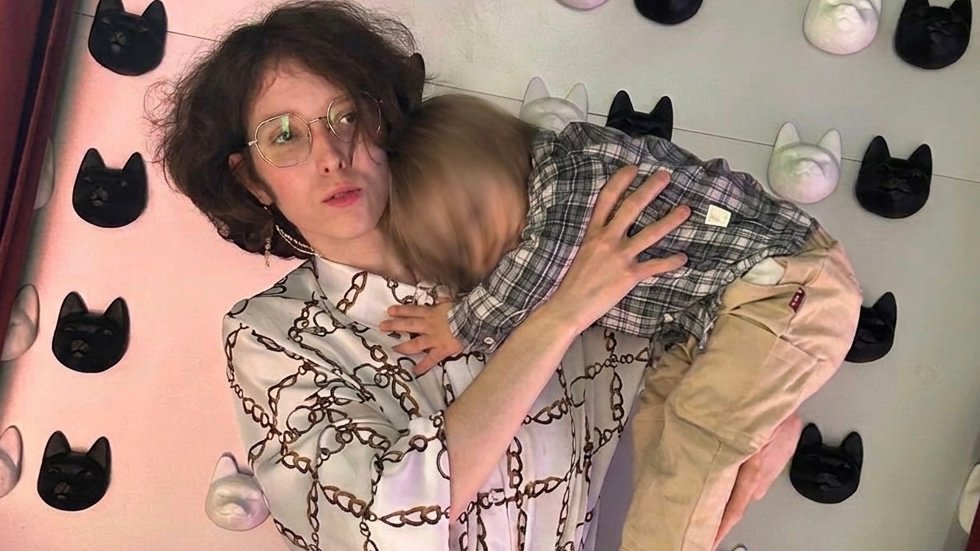
In Argentina, my pregnancy continued normally. I fell in love with Bariloche—its calm, its landscapes, the walks with Nadezhda. I knitted clothes for my baby, bought what he needed, and prepared myself emotionally for childbirth. I didn’t speak Spanish, so I relied on my interpreter, Svetlana Komkova, a fellow Russian I met in Bariloche. She translated my questions and the doctors’ instructions during hospital visits. I repeatedly expressed my desire for a natural birth and my fear of a cesarean section.
Everything changed in mid-March. Hospital personnel insisted on obtaining documentation from the child’s father, despite my clear request to register the baby under my surname and not to disclose the father’s identity. The nurse later acknowledged that paternal documentation was not legally required for discharge, but said she requested it to “obtain information about me.” Under pressure, and because the hospital insisted on paternal papers, Nadezhda produced a photocopy of Rudnev’s passport that she found among documents at the accommodation where we were staying, since Ksenia Tarakanova was assisting Rudnev and his wife with their immigration inquiries. I had never seen that passport before. I had never spoken with Rudnev. Yet that photocopy became the seed of a nightmare, as I started being investigated and pressured to admit I was a “victim” of Rudnev and his “cult.”
From the very beginning, I was subjected to extremely strong and constant pressure to make me admit that I was a victim. I was threatened and told that they could take my child away. I lived in constant fear that my son would be taken from me. I was told that if I refused to declare myself a victim and insisted on communicating with my mother, then my mother would also be made a defendant in the case and could be imprisoned as well. These threats were repeated so often that they became part of my daily reality, poisoning every moment of what should have been the happiest period of my life.
I was separated from the only people I trusted. I was subjected to obstetric violence: an unauthorized induction attempt, a cesarean section I did not consent to, and degrading treatment immediately after childbirth. I was forced to breastfeed in front of police officers, to shower under surveillance, to wash my baby’s clothes in a dirty sink, and to sleep in unsuitable conditions. My phone was confiscated. My documents were seized. I was interrogated repeatedly while still bleeding, unable to feel my legs, and barely conscious. I was told that I was a “victim,” yet treated as if I were a criminal. I was transferred to shelters where water ran out, mold stained the walls, food was insufficient, and communication with my family was restricted. They denied me access to a lawyer of my choosing for weeks. I was pressured to say that Rudnev was the father of my child, even though this was false, as DNA later proved. I was pressured to say that I had been “trafficked,” even though the idea that a woman in an advanced state of pregnancy was brought to Argentina for sexual or labor exploitation is both ludicrous and offensive.
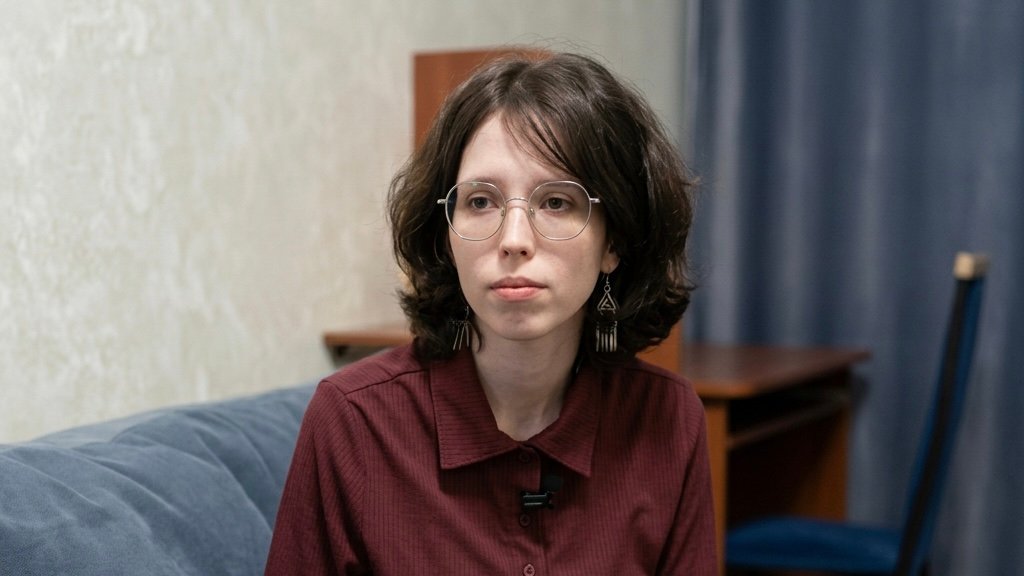
Since all of this was untrue, I understood from the very beginning that the prosecutor’s office had an order or a task to accuse Konstantin Rudnev at any cost and to pin some terrible crime on him. I found this deeply unjust, but while I was still in Argentina, I was afraid to testify against the prosecutor’s office. Only after returning to Russia did I decide to tell the truth. I even started a YouTube channel to share everything that had happened to me in Argentina, because silence would have meant accepting the false narrative imposed on me.
Later, my lawyer told me that a prosecutor named Fernando Arrigo played the key role in fabricating the case against Rudnev. It was he who gave all the orders to keep me in inhuman conditions. He ordered that I should be intimidated by any means necessary to extract statements against Rudnev from me. He organized this entire case. Subsequent events confirmed this. Arrigo even opened a criminal case against my lawyer and requested a search warrant and the seizure of his personal belongings and telephones. That is why I filed a complaint against him and the other prosecutors who committed all this lawlessness. I now want to challenge this falsified story.
I am aware that prosecutors insist they found in my seized cell phone one or more messages from a woman allegedly telling me to “lie” and deny I ever knew Rudnev or his “organization.” I have no idea what they mean. Either there is a problem with Russian translations—which would not be the first in my case—or I cannot explain how those messages landed on my phone. I live in a country where planting incriminating messages on phones is, unfortunately, a known police or intelligence strategy. I cannot rule out that something similar happened.
I am called a victim in the Argentine case, but I am not a victim of anybody except the Argentine prosecutors, against whom I have filed a complaint. They claim that if I deny being a victim, it is because I am “brainwashed” or under “coercive control” by Rudnev, who supposedly has been able to control me for several months from a high-security prison in Argentina while I am in Russia in my home with my child. This is absurd. It is also deeply disrespectful. Either I tell them what they want to hear—but it is not true—or I am treated as a “brainwashed zombie” or a criminal. I demand respect for my identity and agency as a free woman. I demand to be left alone to take care of my child.
I have written this article not because I want to relive the trauma, but because I want the truth to be known. I want my name to stop being used in narratives that have nothing to do with my life. I want to protect my son’s future. And above all, I want to reclaim my voice, which was taken from me in Argentina and which I now assert, clearly and unequivocally, from my home in Russia.
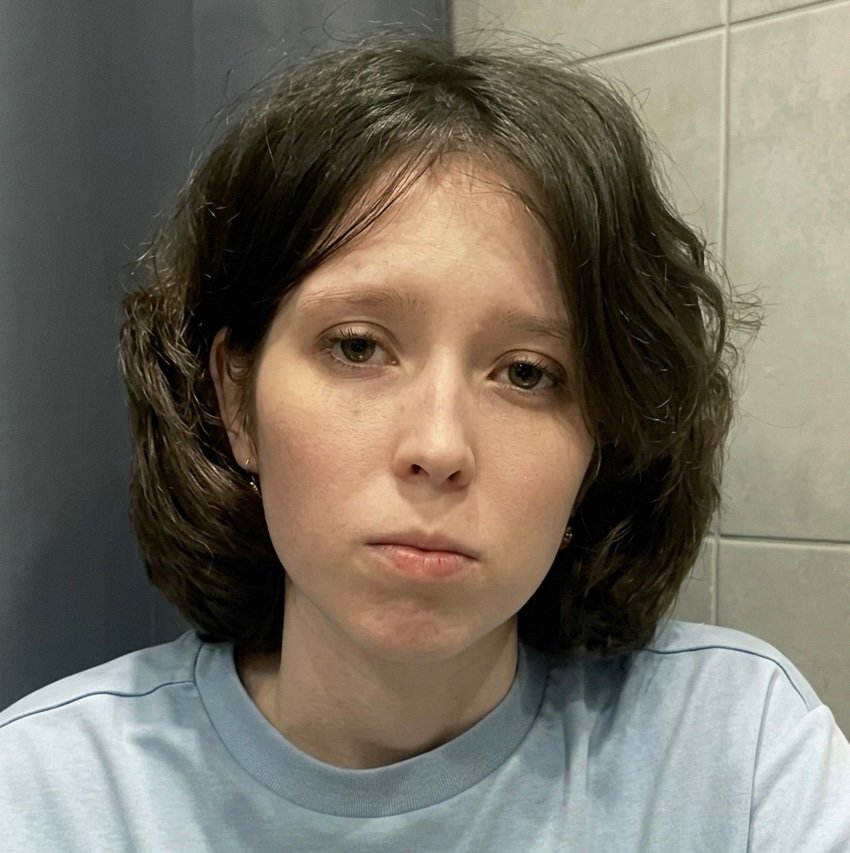
Elena Makarova is a Russian single mother who gave birth in Argentina. Several misunderstandings turned her experience there into a nightmare.