A Pentecostal woman killed her daughter. A minister used the tragedy as a pretext to crack down on local Pentecostals.
by Willy Fautré
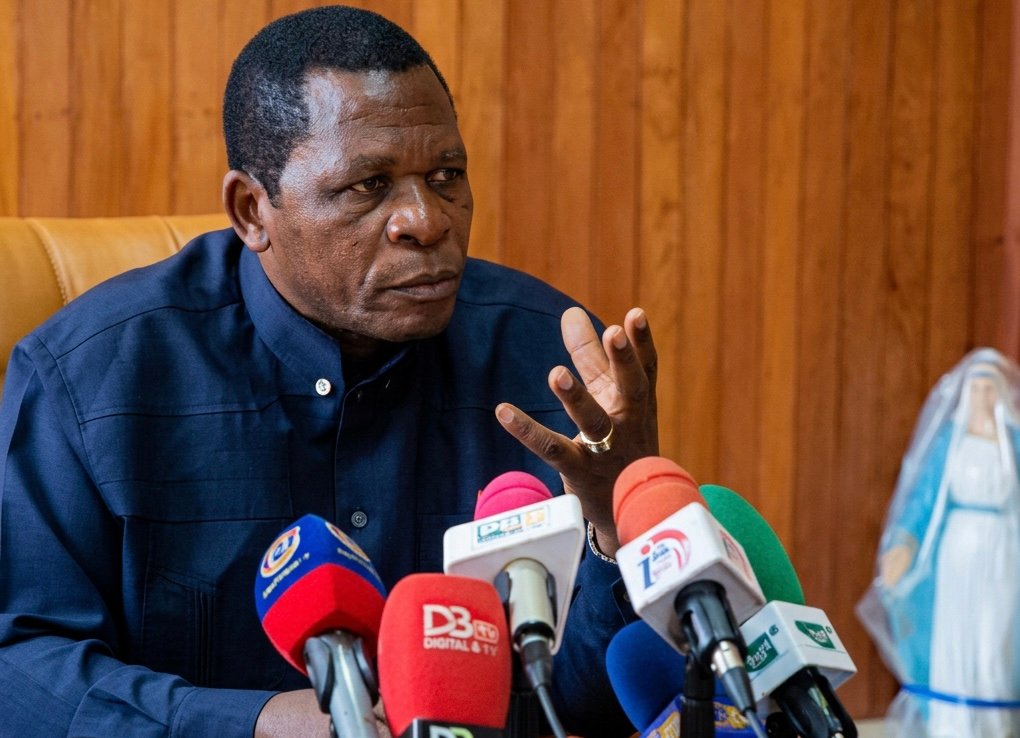
On July 8, Cameroon’s Minister of Territorial Administration, Paul Atanga Nji, announced a policy—already being implemented—to close 1,400 revivalist churches said to be operating illegally across the country.
The government is preparing a more structural reform affecting all religious communities: the creation of a national registry of religious congregations, the systematic identification of leaders, a requirement to submit an annual activity report, and the development of a common roadmap for all legally recognized organizations.
This announcement follows a tragedy that occurred in the Cameroonian capital on the night of June 27–28: the murder of an 11-year-old girl by her mother in Yaoundé.
According to forensic findings, she was stabbed 17 times by her mother.
The suspect, a member of a revivalist church, was taken into custody; she stated that she “acted under the influence of a religious leader from Vie et Paix au Cameroun (Life and Peace in Cameroon), who led her to believe that sacrificing her child would enable her to resolve her financial difficulties.”
Following this tragedy, the Minister of Territorial Administration met with leaders of the Vie et Paix au Cameroun church—to which the little girl’s mother belonged—reminding them that murder is prohibited by both the law and sacred texts.
In criminal cases, government officials should refrain from making hasty statements, allow the investigation to proceed independently, and—above all—determine the psychiatric state of the person who committed this infanticide, regardless of her own statements.
Cameroonian and foreign media (such as “France 24”) interviewed members of the public about this shocking case of infanticide. Yet the pastor of the congregation in question was not interviewed, nor were journalists seeking comments from members of the alleged perpetrator’s religious community.
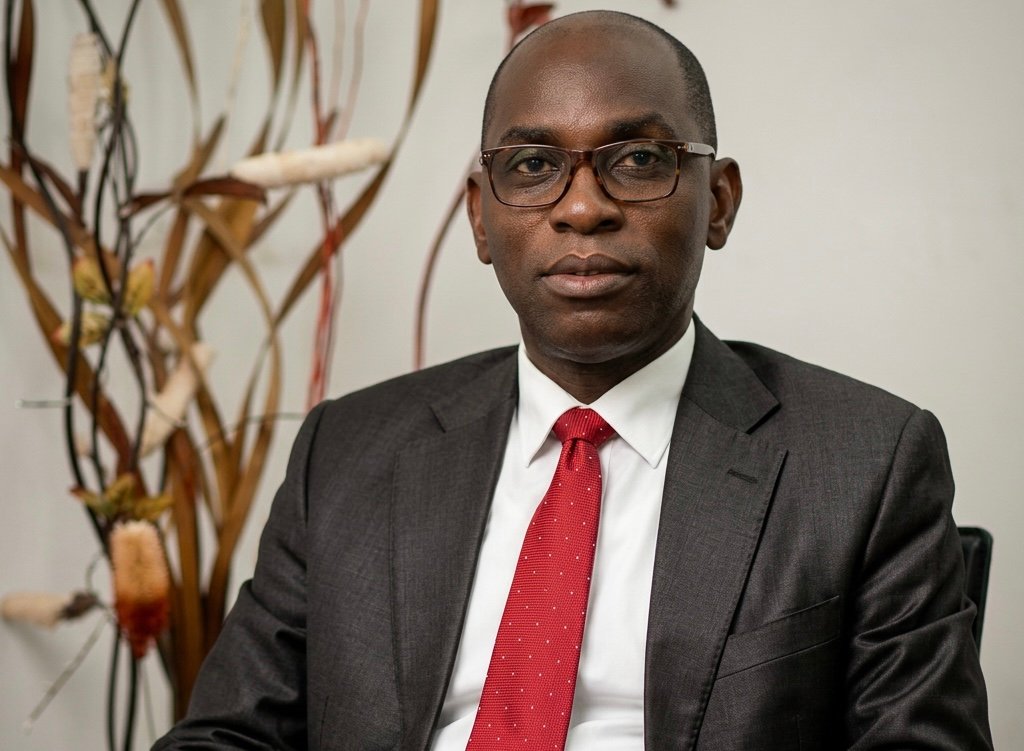
When these political and other statements were broadcast in the media, nothing was known about the alleged killer’s mental state, the evangelical pastor’s perspective, or the views of the congregants who knew her.
In recent years, evangelical revivalist churches have proliferated in Cameroon. The Catholic Church, the country’s dominant denomination, views this rising wave of churches with concern; like their counterparts in certain Latin American countries, these churches could one day play a political role as an opposition force.
Minister Paul Atanga Nji also recognized this potential threat to the country’s political-Catholic establishment.
Prudence would have dictated that he remain silent or speak neutrally about his meeting with the pastor of the evangelical community to which the alleged criminal claimed to belong. He chose not to do so.
Yves Plumey Bobo, a journalist with some expertise on Cameroon, took up the challenge of uncovering more about the case and conducted an investigation, the results of which he published in “Jeune Afrique“ (July 14, 2026) under the headline “Cameroon: Paul Atanga Nji, the Pious—Minister of State and of the Faith.”
In May 2025, dozens of heads of state and foreign delegations attended the inaugural Mass in Rome marking the pontificate of Leo XIV. Paul Atanga Nji officially represented Cameroon at the event, and on that occasion, the minister of this secular state had his rosary blessed by the Pope.
In July 2026, he was also among the dignitaries tasked with welcoming the Pope during his recent visit to Cameroon (April 15–18, 2026).
Atanga is an openly practicing Catholic and a benefactor of the Catholic Church in Cameroon, to which he has made significant donations on several occasions.
In 2021, the minister and his wife funded the construction of the Notre-Dame de l’Immaculée Conception (Our Lady of the Immaculate Conception) parish church in Efoulan, Mrs. Atanga Nji’s native village. Thanks to this private funding, the community now has a modern building capable of accommodating 250 worshippers.
Several officials attended the church’s consecration, including Samuel Mvondo Ayolo, Director of the Civil Cabinet of the Presidency of the Republic and personal representative of the Head of State.
Politicians have the right to practice the religion of their choice and to make donations, but not to associate a secular state with it in any form whatsoever.
Paul Atanga Nji was quick to seize upon the infanticide case to accuse certain revivalist churches of becoming instruments of manipulation and psychological control—concepts widely exploited in France’s policy in its fight against “cults.” This reflects the familiar rhetoric of France, which exports its anti-cult religious culture to Francophone countries and regions worldwide.
Minister Paul Atanga Nji is also known for repeatedly interfering in purely internal affairs of evangelical churches.
In November 2024, an administrative court suspended a decision in which he had recognized a contested leader—Pastor Abate François—as the head of the “True Church of God of Cameroon” (Vraie Église de Dieu du Cameroun), rather than Pastor Tchana Landry, who had been elected in accordance with the community’s statutes amidst a succession dispute following the founder’s death.
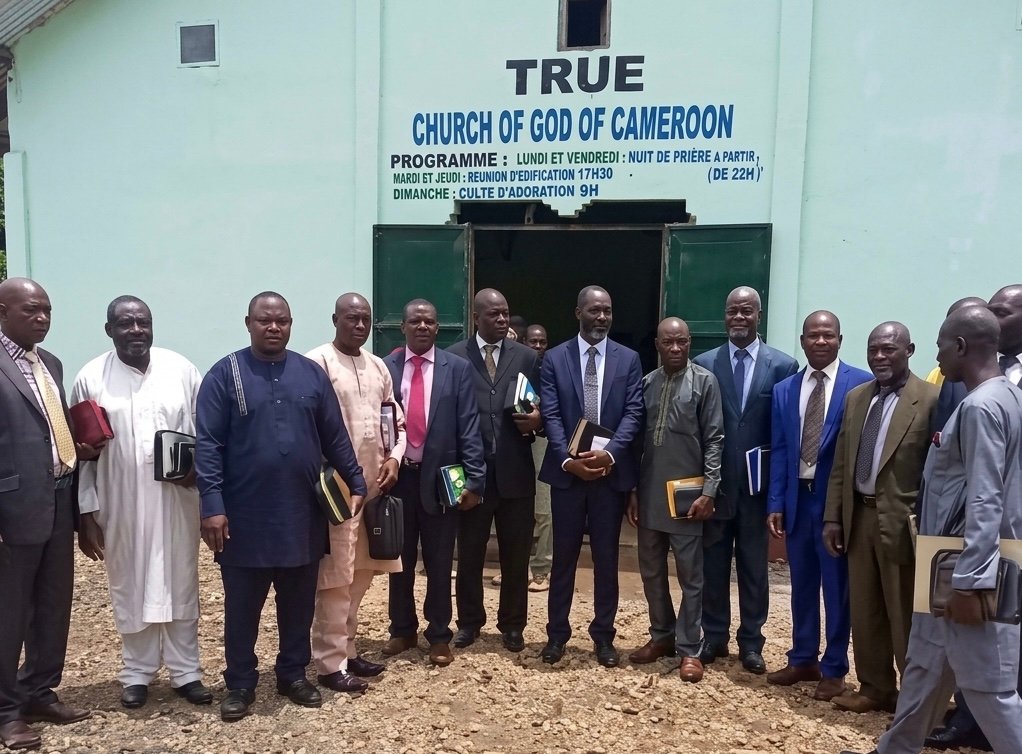
Upon reviewing the case, the court ordered the suspension of a controversial ministerial letter dated February 28, 2024, ruling that the administration had improperly intervened in an internal dispute within a religious organization.
In another instance in 2023, a crisis shaking the Evangelical Church of Cameroon (EEC) led to a high-profile clash between Paul Atanga Nji and Major General Esaïe Ngambou, an influential figure within the religious community. A few weeks later, the general was retired by presidential decree—a move many attributed to Paul Atanga Nji’s influence.
An article titled “Cameroon: Anne Féconde Noah highlights six alleged ‘lies’ about revivalist churches” appeared in the “Journal du Cameroun“ on July 13, 2026.
In her Op-Ed, Anne Féconde Noah—a corporate lawyer and First Vice-President of the Party for National Reconciliation (PCRN), among other roles—sharply rebuts accusations made by the Cameroonian government, and specifically by Paul Atanga Nji, dismissing them as baseless lies:
Lie No. 1: Revivalist churches encourage divorce.
Lie No. 2: The churches ruin families and plunder savings.
Lie No. 3: Demons are the exclusive domain of revivalist churches.
Lie No. 4: Revivalist churches lie to family members.
Lie No. 5: Revivalist churches tear households apart.
Lie No. 6: Revivalist churches kill.
In her argument, she deconstructs a rhetoric that closely mirrors anti-cult narratives in France. Among other things, she states:
No, revivalist churches do not cause divorces; rather, it is certain spouses who refuse to accept their partner’s conversion. The Pentecostal Church is the community that most strongly protects marriage. Some communities even forbid divorce, and divorced individuals are excommunicated.
No, churches do not ruin families. Offerings and tithes (10%) are for those who can afford them, and financial management is completely transparent. Marabouts, on the other hand, engage in this practice on a massive scale, she notes.
No, revivalist churches do not cause noise pollution—unlike bars.
No, demons are not the exclusive domain of revivalist churches. By whatever name they are known, they feature in most religions.
No, revivalist churches do not teach falsehoods.
No, revivalist churches do not tear families apart.
No, revivalist churches do not kill, and their teachings have nothing to do with infanticide—an issue exploited by Minister Paul Atanga Nji.
And she concludes: “It is far too easy to use a tragedy still under investigation to justify the persecution launched against revivalist churches. Has the investigation shown that a pastor instructed a person with a concerning psychiatric profile to commit such a crime? If that were the case, isn’t criminal liability individual in Cameroon? Do not seek pretexts to mask your true sentiments. Beyond a few isolated cases—amplified to tarnish the reputation of revivalist churches in Cameroon—this is how it really works.”

Willy Fautré, former chargé de mission at the Cabinet of the Belgian Ministry of Education and at the Belgian Parliament. He is the director of Human Rights Without Frontiers, an NGO based in Brussels that he founded in 1988. His organization defends human rights in general but also the rights of persons belonging to historical religions, non-traditional and new religious movements. It is apolitical and independent from any religion.
He has carried out fact-finding missions on human rights and religious freedom in more than 25 countries He is a lecturer in universities in the field of religious freedom and human rights. He has published many articles in university journals about relations between state and religions. He organizes conferences at the European Parliament, including on freedom of religion or belief in China. For years, he has developed religious freedom advocacy in European institutions, at the OSCE and at the UN.