A must-read scholarly book, criticized by Chinese propaganda, illuminates the early CCP with rare archival depth and uncompromising independence.
by Massimo Introvigne
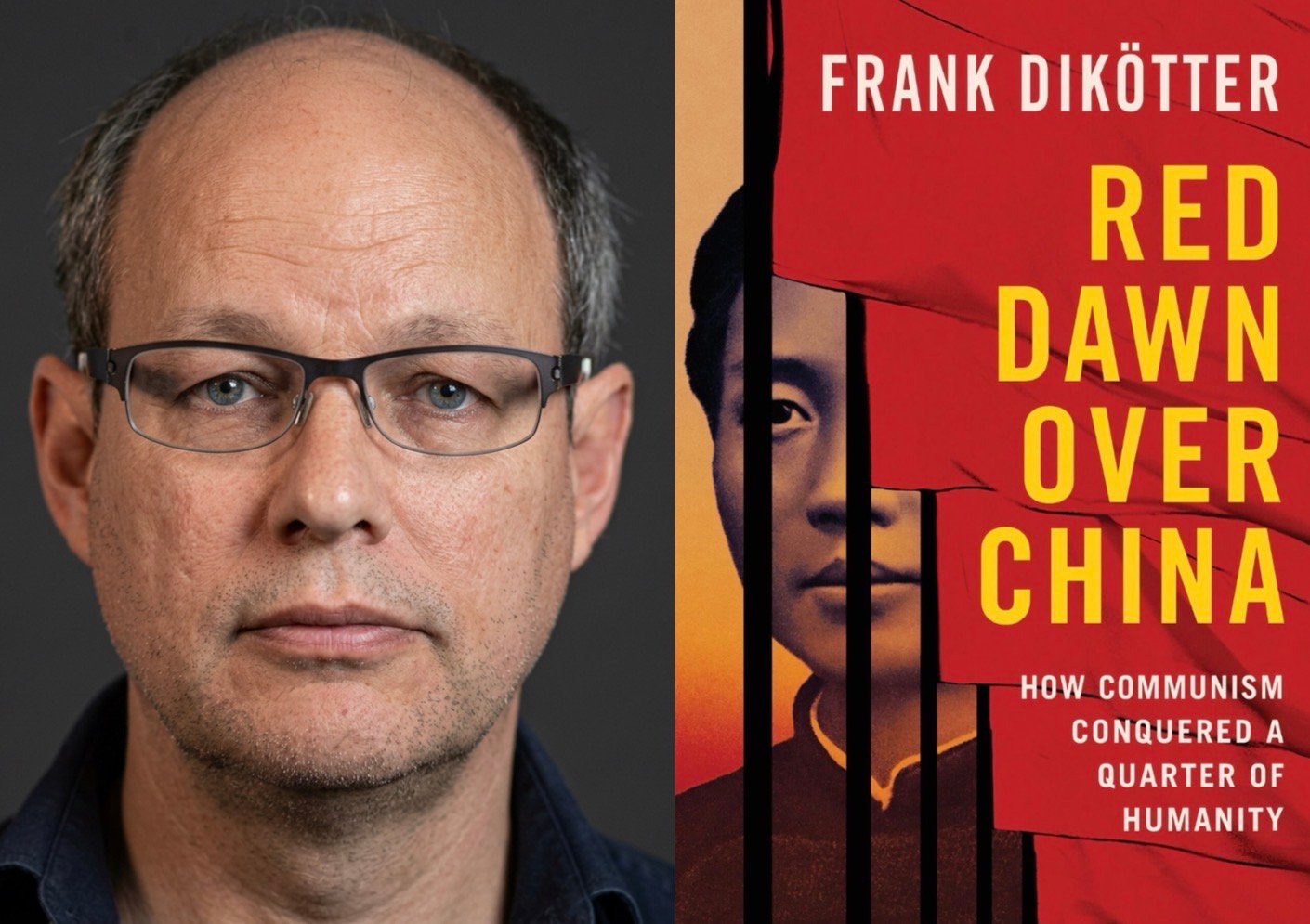
Dutch historian Frank Dikötter’s “Red Dawn Over China: How Communism Conquered a Quarter of Humanity” (London: Bloomsbury, 2026) offers a narrative of the Chinese Communist Party’s rise that stands out for the breadth of its documentation and the determination to reconstruct events through primary sources rather than through the official mythology that has shaped much of the public understanding of twentieth‑century China. The fact that the Beijing propaganda machine has already mobilized its fellow travelers (or useful idiots) to attack Dikötter as biased and “anti-Communist” is, if anything, a further reason to read his new book.
The book follows the Party from its modest origins in 1921 to its victory in 1949, presenting a portrait of an organization that survived repeated crises through a combination of external support, tactical adaptability and an unrelenting pursuit of power.
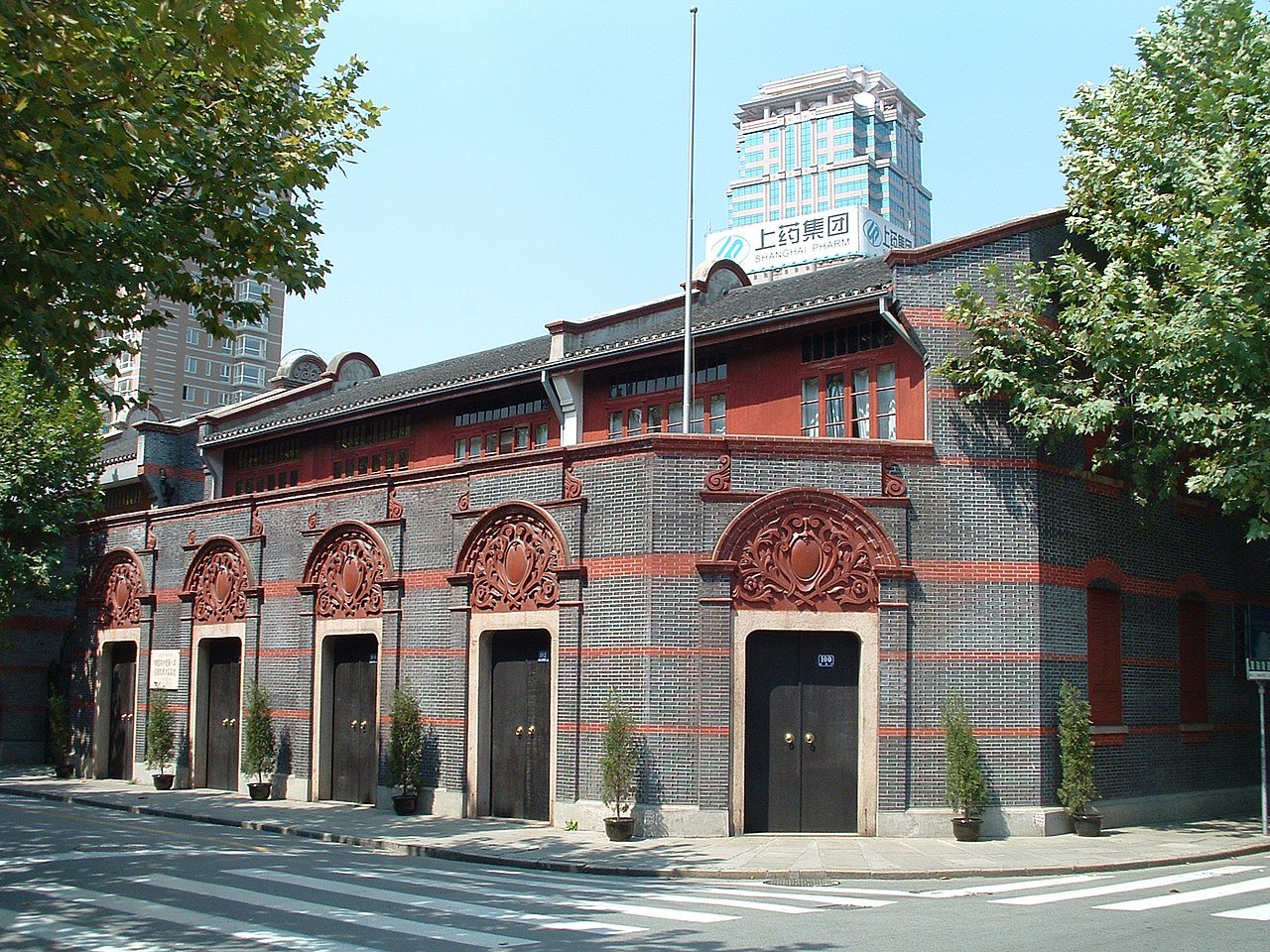
The story begins in a fragmented China where competing warlords, foreign powers, and new ideological currents created an unstable political landscape. Bolshevism entered this environment through the efforts of Comintern emissaries who cultivated contacts among intellectuals in Beijing. The First Party Congress of 1921 gathered only a handful of delegates, and the Party remained marginal for years. Dikötter’s research shows how small the organization was in the 1920s and early 1930s, with entire provinces counting only a few dozen members. Archival material from the Central Party Archives, provincial repositories and Comintern holdings reveals a movement that struggled to maintain cohesion, experimented with strategies and relied heavily on Soviet guidance and resources.
The First United Front between Nationalists and Communists, engineered by Moscow, created temporary cooperation but also deepened tensions. Soviet advisors influenced military organization, propaganda, and political agitation. The Northern Expedition launched by Chiang Kai‑shek in 1926 threatened Soviet plans, and the collapse of the United Front in 1927 forced the CCP into retreat.
The Party reinvented itself as a rural insurgency, establishing small bases in remote areas where leaders attempted to implement land redistribution. Dikötter’s reading of local documents suggests that these policies encountered resistance in villages where economic distinctions were subtle and where grain requisitioning created hardship. Episodes such as the Hailufeng Soviet illustrate the extreme violence that accompanied these experiments in revolutionary governance. Each Soviet member was asked to kill at least ten “counter-revolutionaries.” “But that is not enough… it is better to kill a thousand innocents than to let a single guilty one escape,” ordered Peng Pai, the Soviet’s leader. Estimates diverge, but probably in a few months the Soviet killed at least 10,000 real or imaginary opponents.
The Long March of 1934–1936 occupies a central place in CCP mythology. Dikötter’s account, grounded in missionary reports, Nationalist archives and internal Party documents, depicts a grueling escape marked by logistical chaos, desertions and punitive discipline. The famous crossing of the Luding Bridge appears in sources as a relatively unopposed passage rather than the dramatic battle celebrated in official narratives. By the time the surviving forces reached Shaanxi, Party membership had dwindled, and the movement resembled a small sect rather than a national force.
The turning point came with the international situation of the mid‑1930s. Stalin’s shift toward alliances against fascism encouraged the CCP to adopt a nationalist message and to enter a second United Front with the Nationalists. The Xi’an Incident of 1936, during which warlord Zhang Xueliang detained Chiang Kai‑shek, created the conditions for this alliance. The Japanese invasion of China in 1937 placed enormous pressure on the Nationalist government, while the CCP consolidated its position in the northwest. Edgar Snow’s “Red Star Over China,” published that same year, portrayed Mao Zedong and his comrades as idealistic fighters and helped shape a favorable international perception of the movement.
The civil war that followed World War II unfolded in a transformed strategic environment. The Soviet occupation of Manchuria in 1945 provided the CCP with territory, weapons, and training. Dikötter describes how this support allowed the Party to shift from guerrilla tactics to large‑scale operations. The siege of Changchun in 1948, during which more than 160,000 civilians died, exemplifies the harsh methods employed in the final phase of the conflict. By 1949, the Nationalists were weakened by inflation, administrative difficulties and the cumulative effects of war, while the CCP had developed a disciplined military structure and a political reflex shaped by years of existential struggle.
Dikötter’s book is an example of a commitment to reconstructing history through extensive documentation and reliance solely on primary sources. He emphasizes the value of the 300 volumes of CCP internal publications produced in the 1980s, which surfaced in Hong Kong and offer a rare window into local Party activities. He also highlights the importance of foreign consular reports, Nationalist archives in Taipei, and Comintern materials in Moscow. This foundation allows him to revisit familiar episodes with new evidence and to question narratives that have long dominated both official historiography and popular accounts.
The contribution is significant for several reasons. The book offers a detailed reconstruction of the early CCP based on sources that are difficult to access and often overlooked. It presents a portrait of a movement shaped by external alliances, internal discipline, and a readiness to use extreme measures. It also demonstrates how the Party’s early experiences created a political mentality that continues to influence its behavior. The work stands out for its independence. Dikötter’s long engagement with archives in Hong Kong and abroad reflects a scholarly path that does not depend on access to contemporary Chinese institutions or on accommodation with official expectations. This independence gives the book a particular value at a moment when research conditions in China have become increasingly restrictive.
“Red Dawn Over China” offers a substantial contribution to the study of modern Chinese history. It provides a narrative grounded in documentation, attentive to complexity and free from the constraints that shape research conducted under the supervision of the CCP. The result is a work that enriches our understanding of the Party’s early decades and offers readers a detailed account of how a small group of activists eventually came to rule a vast country.
Perhaps Beijing’s propaganda is correct, and the book is indeed “anti-Communist.” However, when free to speak without restrictions, history itself tends to be anti-Communist. Ultimately, anti-Communism is just another word for decency.

Massimo Introvigne (born June 14, 1955 in Rome) is an Italian sociologist of religions. He is the founder and managing director of the Center for Studies on New Religions (CESNUR), an international network of scholars who study new religious movements. Introvigne is the author of some 70 books and more than 100 articles in the field of sociology of religion. He was the main author of the Enciclopedia delle religioni in Italia (Encyclopedia of Religions in Italy). He is a member of the editorial board for the Interdisciplinary Journal of Research on Religion and of the executive board of University of Pennsylvania Press’ Nova Religio. From January 5 to December 31, 2011, he has served as the “Representative on combating racism, xenophobia and discrimination, with a special focus on discrimination against Christians and members of other religions” of the Organization for Security and Co-operation in Europe (OSCE). From 2012 to 2015 he served as chairperson of the Observatory of Religious Liberty, instituted by the Italian Ministry of Foreign Affairs in order to monitor problems of religious liberty on a worldwide scale.