The progress and colonial eradication of a significant spiritual phenomenon raises questions about the damage created by the suppression of African Indigenous Spirituality.
by Massimo Introvigne
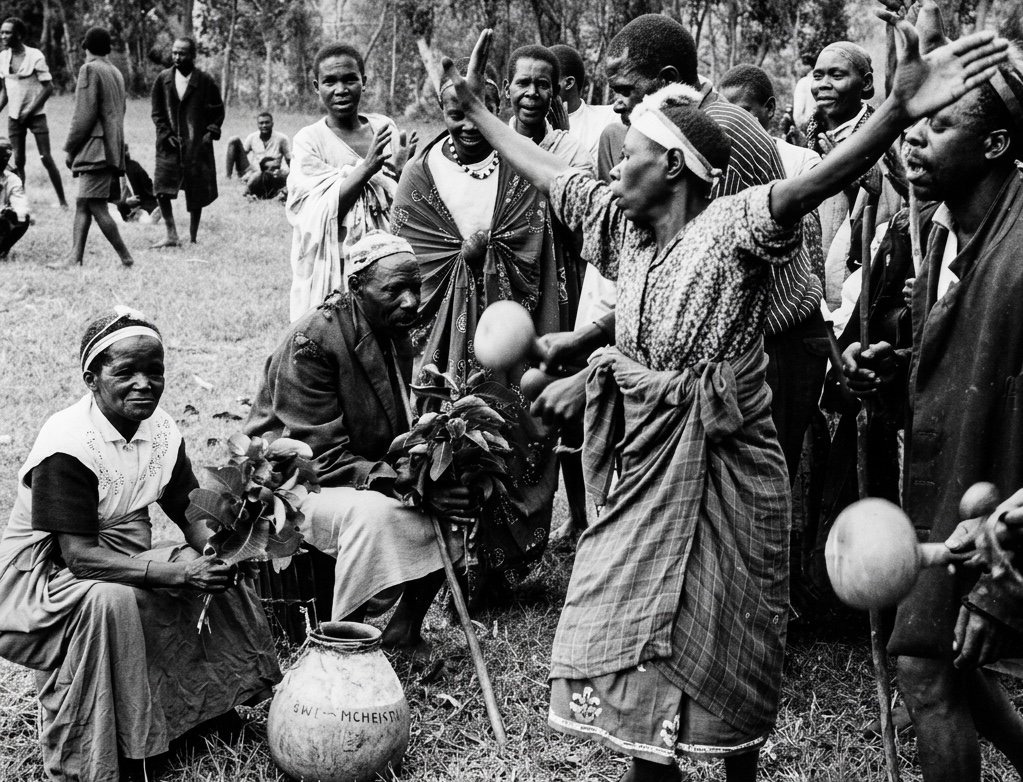
The Ryangombe, a significant religious phenomenon within Rwanda, remained largely obscure until 2018, when Simon Bizimana and Jean Baptiste Nkulikiyinka, scholars and initiates themselves, published “Le culte de Ryangombe au Rwanda: étude ethographique” (Tervuren: Musée royal de l’Afrique centrale), a comprehensive study that shed light on its origins, practices, and historical role. This publication marked a milestone in the understanding of African Indigenous Spirituality (AIS) in Rwanda, revealing a complex tradition intertwined with the social and political fabric of the area. The institution (a term that contemporary practitioners of the AIS recommend to substitute for the more colonial “movement”), which thrived for centuries, was deeply connected to the court, social hierarchy, and regional identities before suffering a systematic decline in the 20th and early 21st centuries under colonial and missionary interference. Its story offers critical insights into the resilience and, ultimately, the forced eradication of African Indigenous Spirituality in Rwanda—a process that also contextually relates to the broader history of colonialism and the tragic events culminating in the 1994 genocide.
A debated question concerns the mythic and historical origins of Ryangombe, the figure at the heart of this spiritual institution. According to century-old legends, Ryangombe was a hero and divine figure who met a tragic ending—he was encorned by a buffalo. He died in the branches of a sacred tree, which subsequently became an ancestral site and a central icon of the institution.
The institution’s origins are intertwined with the political and religious ideas of the early Rwandan kingdoms, particularly the Nyiginya monarchy. Ryangombe was reputedly associated with social and spiritual authority, often regarded as a savior figure extending protection and moral authority to the king and the people. The institution’s early history indicates that it was not merely popular spirituality but was integrated into the political and ceremonial life of the court, with kings and aristocrats publicly associating with the Ryangombe’s spiritual principles. When exactly the Ryangombe started is unknown, but it was certainly active in the 17th century.
A pantheon of spirits was connected with the institution, especially the approximately forty Imandwa or protective spirits, including Ryangombe himself. A precise spiritual hierarchy governed the institution’s cosmology. These spirits had specific roles: some served as protectors, others as guides, and some as punishers of evil. Ryangombe theology emphasized an egalitarian and humanistic outlook, asserting that all people, regardless of social status or gender, had access to divine protection and salvation through the intermediary spirits.
Significantly, Ryangombe was considered the chief among these spirits and was believed to be a beneficent king of spirits, whose death marked an important era of spiritual protection and moral authority.
The institution’s rituals traditionally involved invoking the spirits, especially Ryangombe, through ceremonies that combined dance, song, and offerings. However, the esoteric nature of these practices kept much of the institution’s spiritual knowledge secret, accessible only to initiated members.
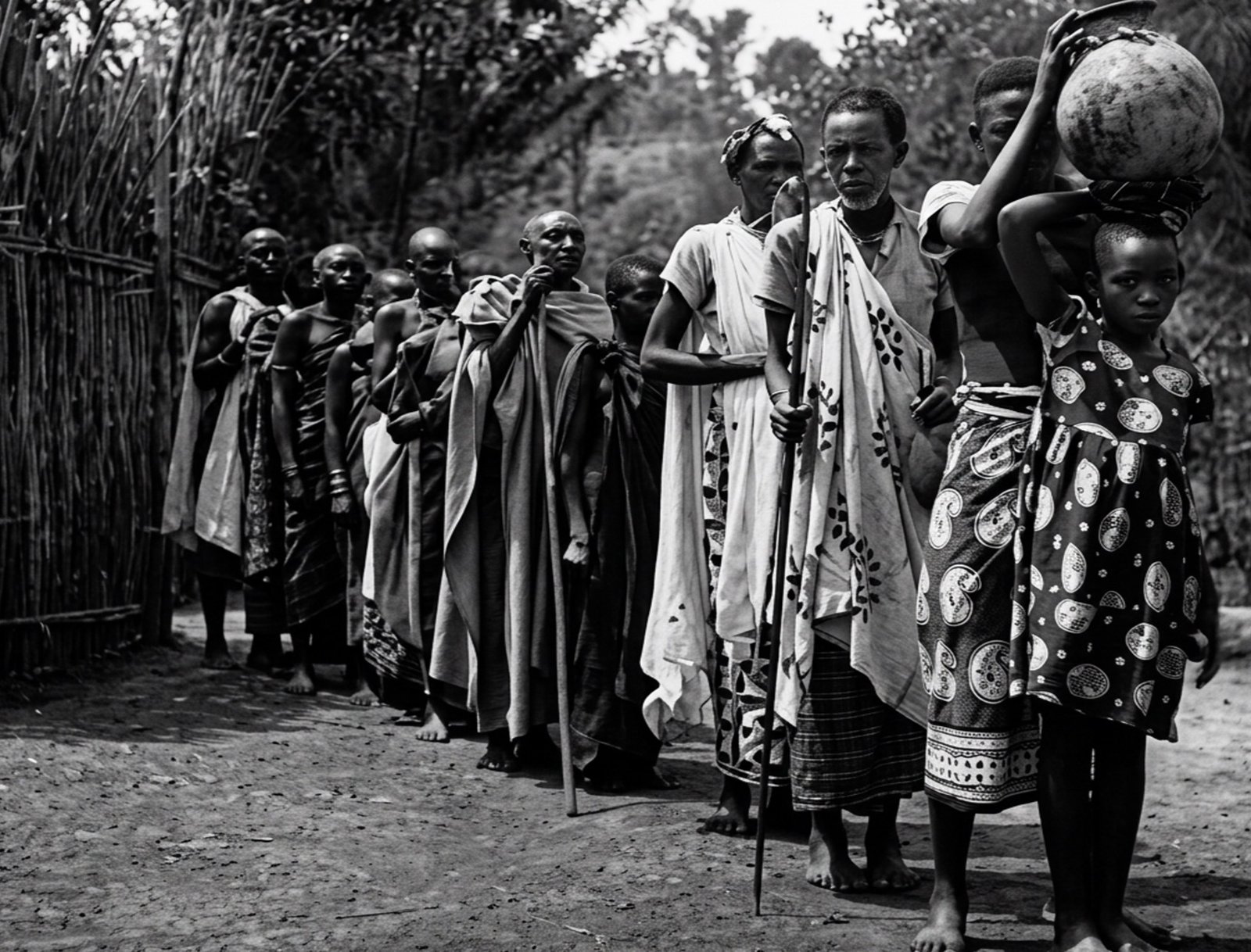
Ryangombe had a complex relation to the Rwandan monarchy. The institution’s theological framework justified kingship and authority: Ryangombe’s divine mandate was ostensibly reflected in the king’s status, reinforcing the idea of divine kingship. The institution thus played a crucial role in sustaining the legitimacy of the monarchy and, more broadly, fostering social cohesion among the elites. The title of king attributed to Ryangombe meant that the kings of Rwanda could not be initiated into the institution, as they were not allowed to recognize any royalty above themselves. However, they promoted and supported the institutions and took their leaders as advisors.
Rituals such as rites of passage, coronation ceremonies, and communal festivals were infused with the institution’s spiritual symbols. These events not only reaffirmed political authority but also reinforced a shared collective identity rooted in African Indigenous Spirituality. The Ryangombe’s infrastructure included sacred sites, symbols like the sacred trees, and ritual specialists—collectively emphasizing the ties between religious belief, political authority, and social stability.
The arrival of colonial powers, especially the Belgians (who followed the Germans), and of Christian missionaries, led to the systematic repression of the Ryangombe. As missionaries and colonial administrators viewed indigenous spiritualities as primitive and dangerous, campaigns to discredit and eradicate them intensified. Missionaries often depicted traditional practices as “pagan” black magic, leading to the destruction of sacred sites, suppression of rituals, and the persecution of initiates. The institution was labeled as “superstitious,” and overt efforts were made to assimilate or eliminate its practices.
By the early 20th century, the influence of Christianity and Western colonialism had rendered much of the original spiritual knowledge secretive or extinct. These suppressive efforts were not merely spiritual but also political—aiming to weaken the societal influence of indigenous authorities tied to the institution. As a result, by the mid-20th century, the Ryangombe’s visibility had diminished significantly. This forced eradication was part of a broader colonial project—aimed at reshaping African societies according to Eurocentric paradigms, often dismissing or obliterating indigenous spiritual systems.
While much of the institution’s spiritual doctrine was shrouded in secrecy, the main rituals and festivities that were once central to its practice are now known thanks to Bizimana and Nkulikiyinka. These included initiation ceremonies, offerings to spirits, rites of healing, and festivals at sacred trees or mountain sites. These activities fostered community cohesion and reaffirmed individual commitments to Ryangombe’s moral ideals.
The rituals often involved entering sacred spaces—particularly under the branches of the sacred trees, such as at the foot of the tree where Ryangombe is mythologically believed to have died. They included dance, song, and specific offerings meant to invoke spirits’ aid, particularly for protection, health, fertility, and justice.
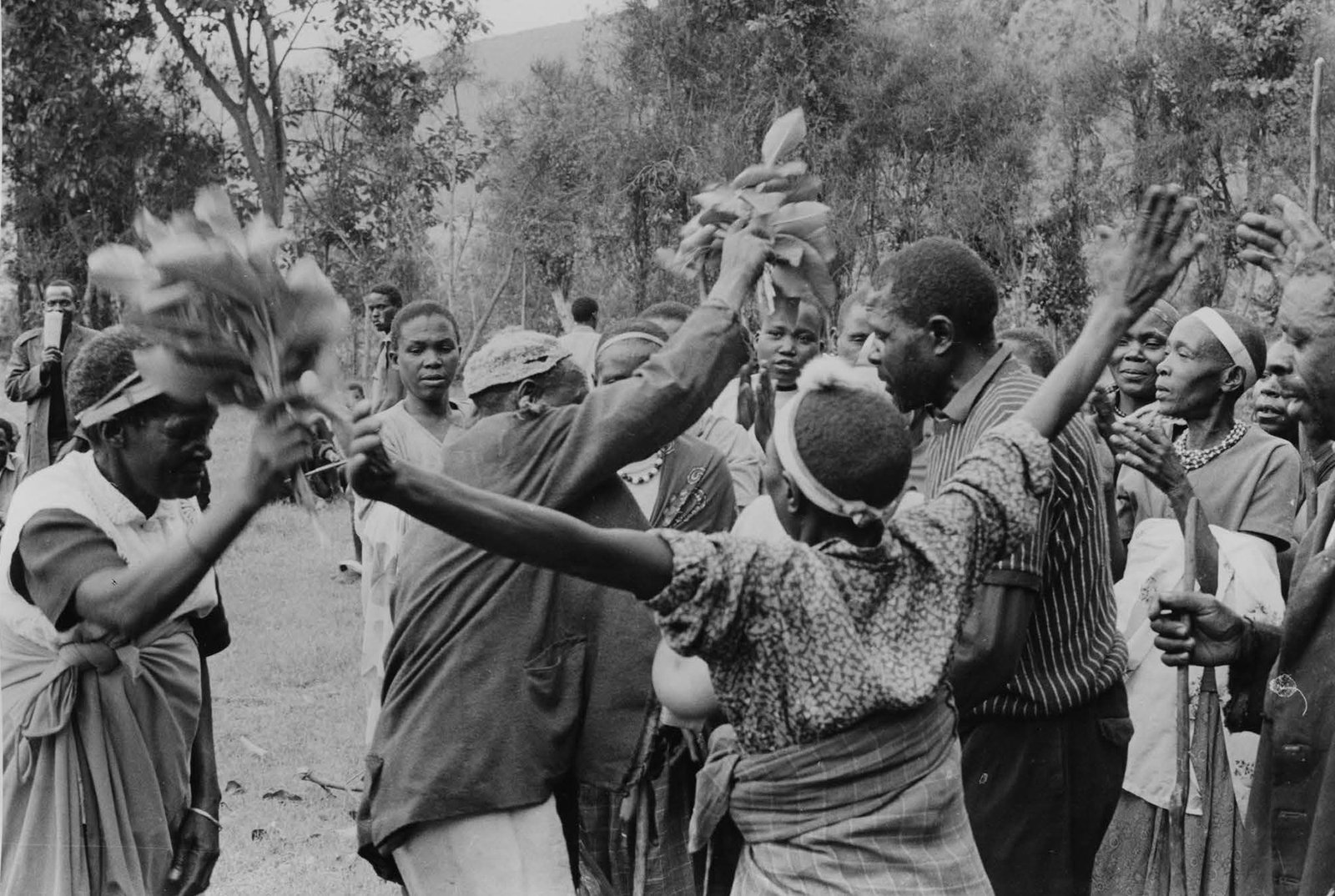
Remnants of the institution persist in folklore and popular memory. Although overt practice has largely ceased, stories, songs, and symbols of Ryangombe remain part of local oral traditions, especially among older populations and in folkloric performances. These cultural expressions serve as a historical record of an institution that once played a vital role in indigenous spiritual and social life.
Indeed, some objects associated with Ryangombe—such as sacred trees or relics—continue to be preserved in private households or rural sites, serving as cultural artifacts and markers of identity.
The story of the Ryangombe is emblematic of broader themes in African history: resilience amid suppression, the centrality of indigenous spirituality, and the consequences of colonization and forced cultural change. Its near eradication from public life in Rwanda illustrates how colonial and missionary efforts aimed at cultural domination often led to a dangerous subversion of the social fabric.
The interaction of the institution with the court, and its subsequent destruction, offers a window into the complex processes of cultural survival and forced eradication. Though physically diminished, the remnants serve as testimonies to a rich spiritual heritage that faced violent suppression—yet also hint at the resilience of indigenous identity.
The question of whether these spiritual struggles and their suppression contributed indirectly to the complex root causes of the 1994 genocide remains open but poignant. Some scholars argue that the undermining of indigenous structures and identities during colonization laid the groundwork for future ethno-social tensions, while others urge caution in drawing direct lines.
In sum, the story of the Ryangombe underscores the importance of understanding African Indigenous Spirituality as a vital, living dimension of history and culture—one that colonialism sought to erase, but which endures through memory, folklore, and ongoing cultural expressions.

Massimo Introvigne (born June 14, 1955 in Rome) is an Italian sociologist of religions. He is the founder and managing director of the Center for Studies on New Religions (CESNUR), an international network of scholars who study new religious movements. Introvigne is the author of some 70 books and more than 100 articles in the field of sociology of religion. He was the main author of the Enciclopedia delle religioni in Italia (Encyclopedia of Religions in Italy). He is a member of the editorial board for the Interdisciplinary Journal of Research on Religion and of the executive board of University of Pennsylvania Press’ Nova Religio. From January 5 to December 31, 2011, he has served as the “Representative on combating racism, xenophobia and discrimination, with a special focus on discrimination against Christians and members of other religions” of the Organization for Security and Co-operation in Europe (OSCE). From 2012 to 2015 he served as chairperson of the Observatory of Religious Liberty, instituted by the Italian Ministry of Foreign Affairs in order to monitor problems of religious liberty on a worldwide scale.