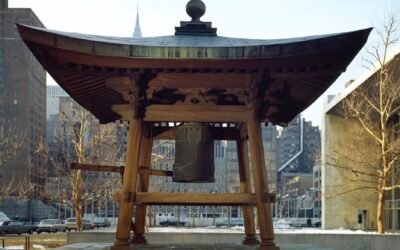
At a global scholarly gathering in Rome, a session explored Taiwan’s unresolved issues of tax justice and freedom of religion or belief.
by María Vardé
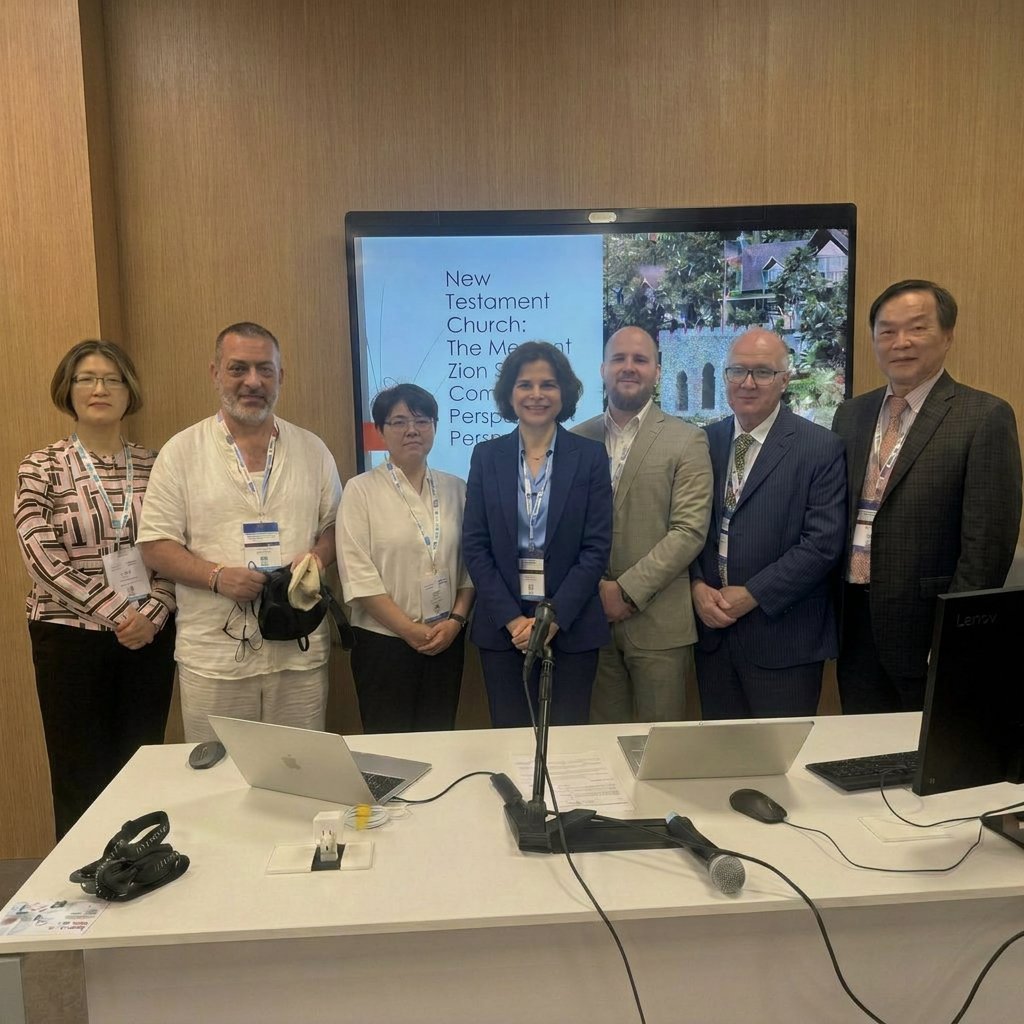
On July 2, 2026, the European Academy of Religion held its Ninth Annual Conference at LUISS University of Rome, one of the largest academic gatherings in the world devoted to the study of religion. Among the many sessions, one examined freedom of religion or belief in Taiwan through the lens of the Tai Ji Men case. This long‑running controversy continues to raise questions about institutional integrity, tax justice, and the treatment of spiritual minorities. The session was chaired by Camelia Marin, deputy director of Soteria International, who offered a concise overview of the case’s essential facts and framed the discussion within broader concerns about administrative behavior and human rights.

The first paper was delivered by Massimo Introvigne, managing director of CESNUR and a sociologist of religions. He explored the history of the New Testament Church and its dramatic confrontation with the Taiwanese state during the Martial Law period. His analysis traced the movement’s origins in Hong Kong, the revelation of Mount Zion in Taiwan, and the years of repression that culminated in forced evictions, raids, and violence.
Introvigne’s visit to Mount Zion in January 2026 provided vivid context for his comparison between the New Testament Church and Tai Ji Men. Interestingly, Introvigne went there with Tai Ji Men dizi (disciples), who were able to compare their experience with those who lived through the persecution of Mount Zion.
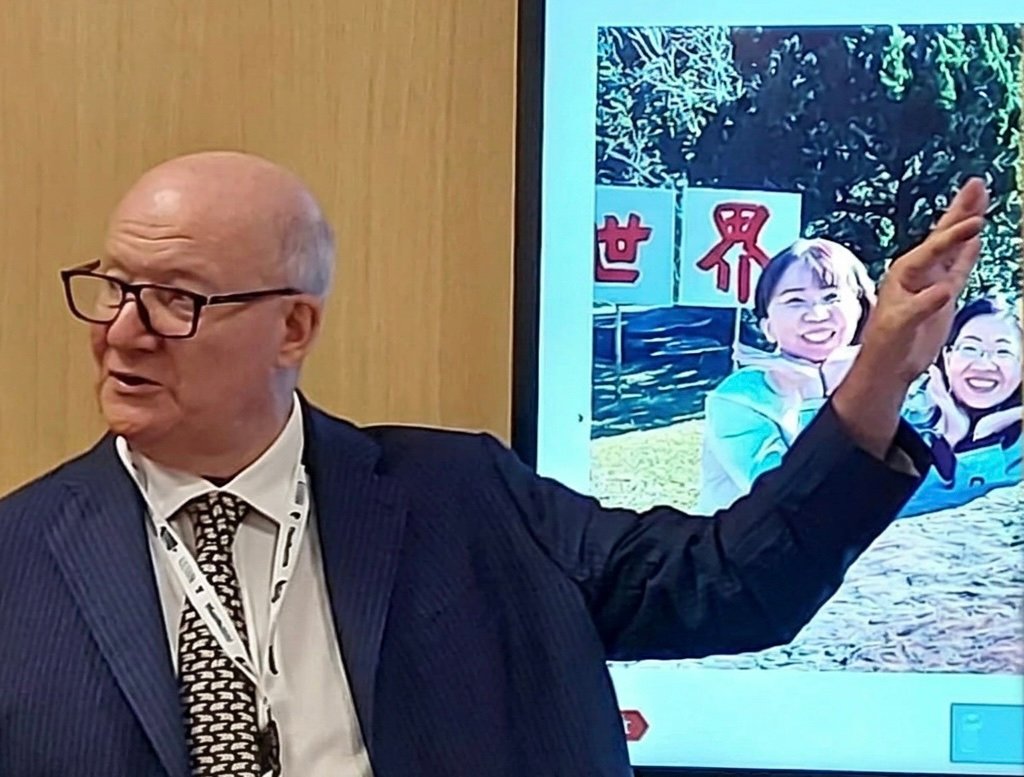
Although the two communities differ profoundly in theology and lifestyle, both encountered state suspicion and administrative pressure. Introvigne argued that the mechanisms of repression changed across eras, yet the underlying logic remained recognizable. The New Testament Church suffered under authoritarian rule, while Tai Ji Men faced bureaucratic persistence in a democratic era. The comparison illuminated how administrative habits can survive political transitions and how spiritual communities respond with resilience, continuity, and global outreach.
The second paper, presented by Davide S. Amore, a lecturer in literature and history at a high school, a historian of religions, and a medievalist philologist who also sometimes serves as imam at his local mosque. Amore examined taxation as a subtle instrument capable of producing discriminatory effects. He argued that fiscal systems, although formally neutral, rely on interpretation and classification, which can create structural bias. He introduced the concept of “administrative persecution,” describing forms of pressure that operate through lawful procedures yet generate cumulative harm.
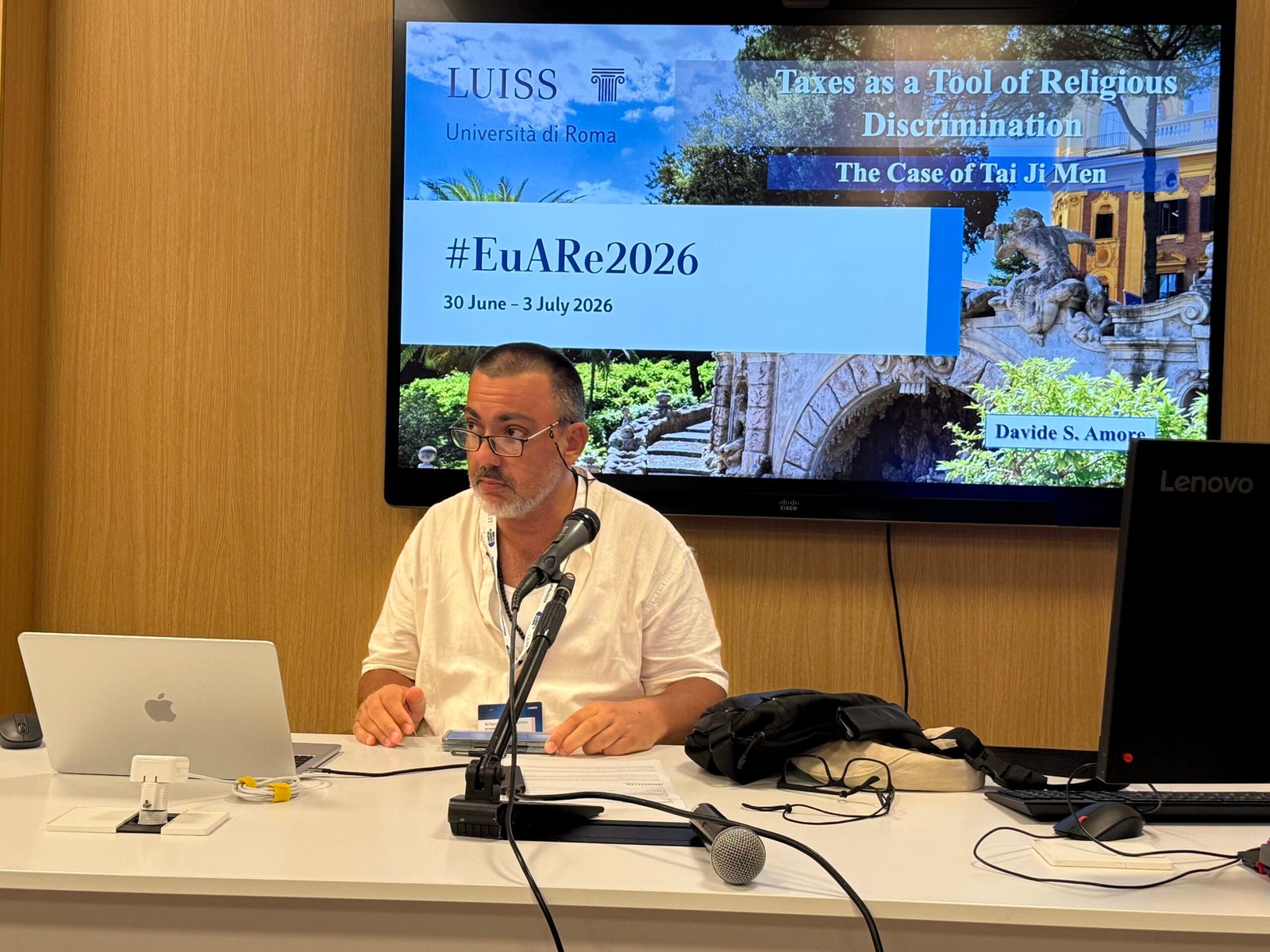
The Tai Ji Men case, he explained, illustrates how administrative inertia can persist even after courts have clarified the facts. The reclassification of disciples’ gifts as taxable income of a non‑existent cram school revealed how bureaucratic interpretation can reshape the meaning of spiritual practices. Amore emphasized that such dynamics undermine legal certainty, equality before the law, and the principles of freedom of religion or belief. He called for greater attention to low‑intensity forms of discrimination embedded in ordinary governance.
The third paper, by Márk Nemes of the Hungarian Academy of Arts and deputy director of CESNUR, explored the spiritual significance of Miaoli, the sacred land confiscated and nationalized in 2020. Drawing on interviews with long‑standing and newer members of Tai Ji Men, Nemes analyzed how practitioners remember and emotionally relate to the lost land. He compared Miaoli to the “temenoi” of classical antiquity, sacred groves that served as spaces of worship, sacrifice, and mystical experience.
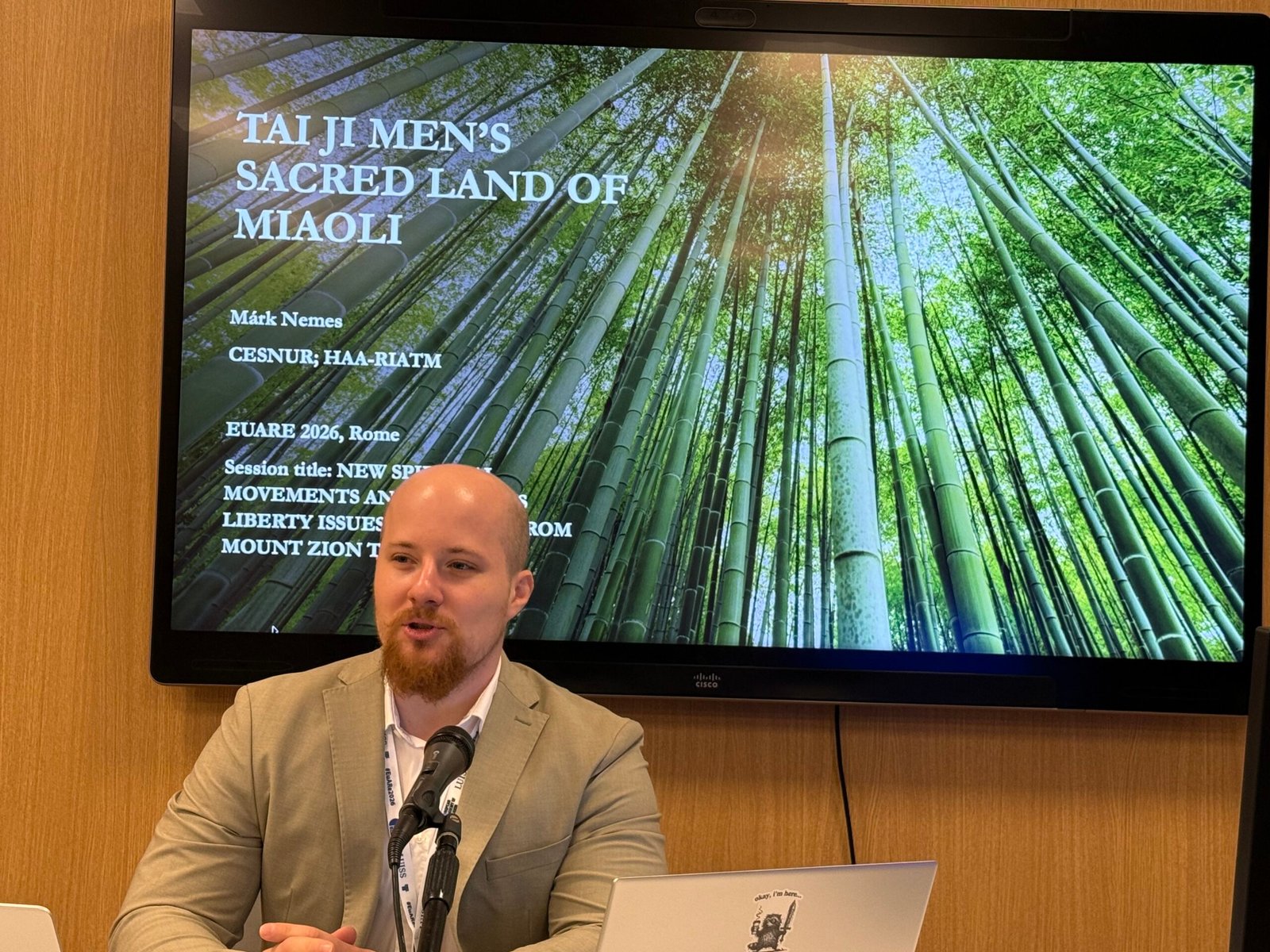
Nemes showed how Miaoli functions as a lost sacred space within Tai Ji Men’s identity culture, shaping collective memory and resilience. The paper mapped the diverse ways dizi interpret the land’s meaning and illustrated how spiritual communities negotiate identity when deprived of places central to their religious imagination.
The fourth paper was delivered by semiconductor executive and Tai Ji Men dizi Chuang Yi‑Chen, who drew an unexpected yet compelling parallel between the precision‑driven world of microchip manufacturing and the fragile architecture of human rights. She argued that trust is the foundation of both advanced technology and democratic governance. In her industry, a deviation of a few nanometers can destroy an entire production line. In society, deviations from equality can erode public trust and destabilize institutions.
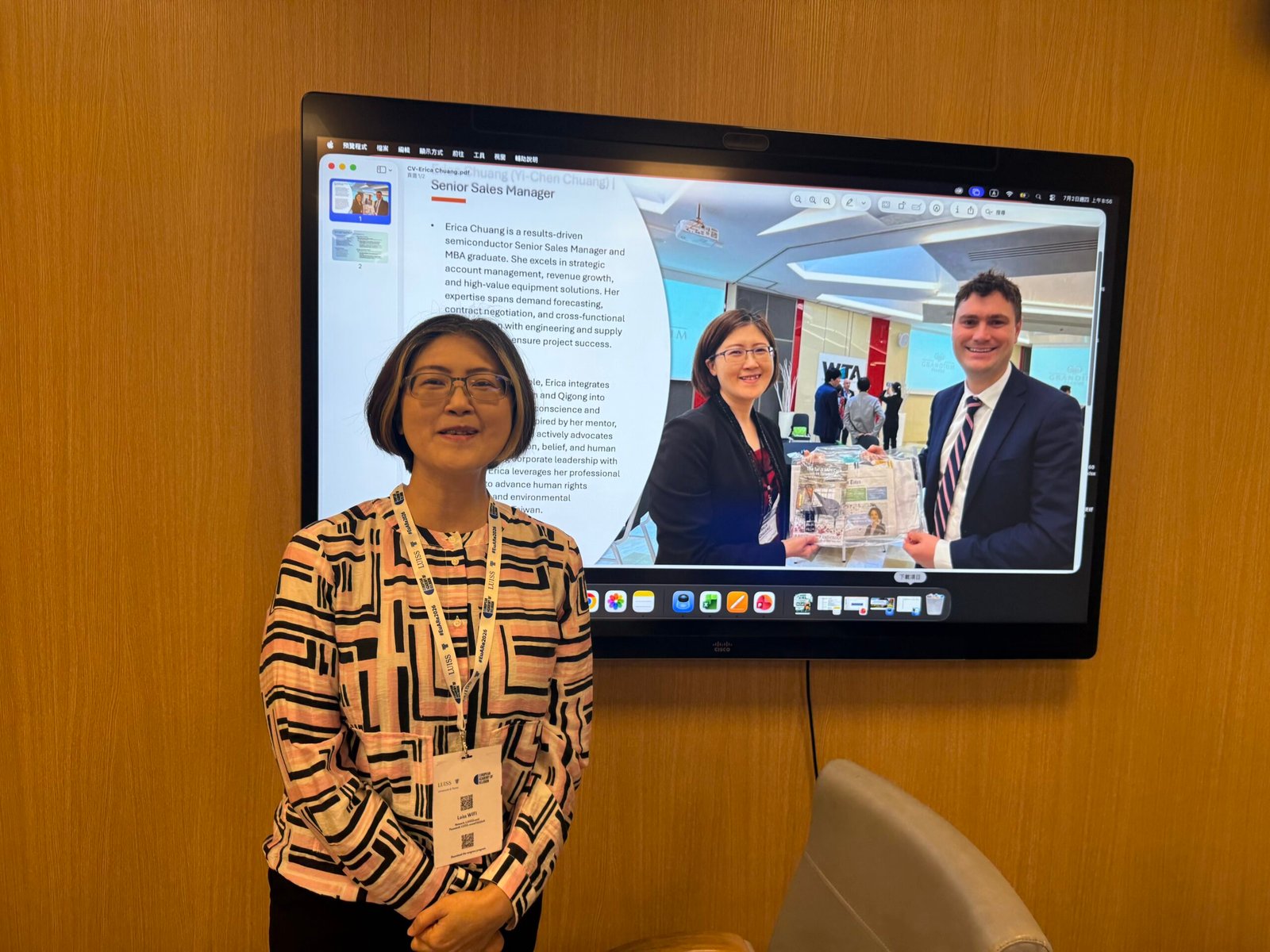
Chuang presented the Tai Ji Men case as an example of systemic failure, where mechanisms designed to protect citizens were misused due to the collapse of equality and transparency. She offered personal testimony as a Tai Ji Men disciple, describing self‑funded journeys to promote conscience, love, and peace. Her reflections emphasized that freedom of belief is the ultimate indicator of whether equality has been realized and that human rights systems must aspire to “zero discrimination” with the same rigor that semiconductor systems pursue “zero defects.”
The fifth paper, by marketing specialist Halope Hsu, another Tai Ji Men dizi, focused on the master‑disciple tradition and the misunderstandings that contributed to the Tai Ji Men case. Hsu described her experience growing up in Tai Ji Men, where she encountered a warm, harmonious environment rooted in ancient cultural values. She explained that the master‑disciple relationship is based on trust, gratitude, and the transmission of wisdom, rather than contractual obligations or commercial exchange. The voluntary gifts offered by disciples express respect and cultural continuity.
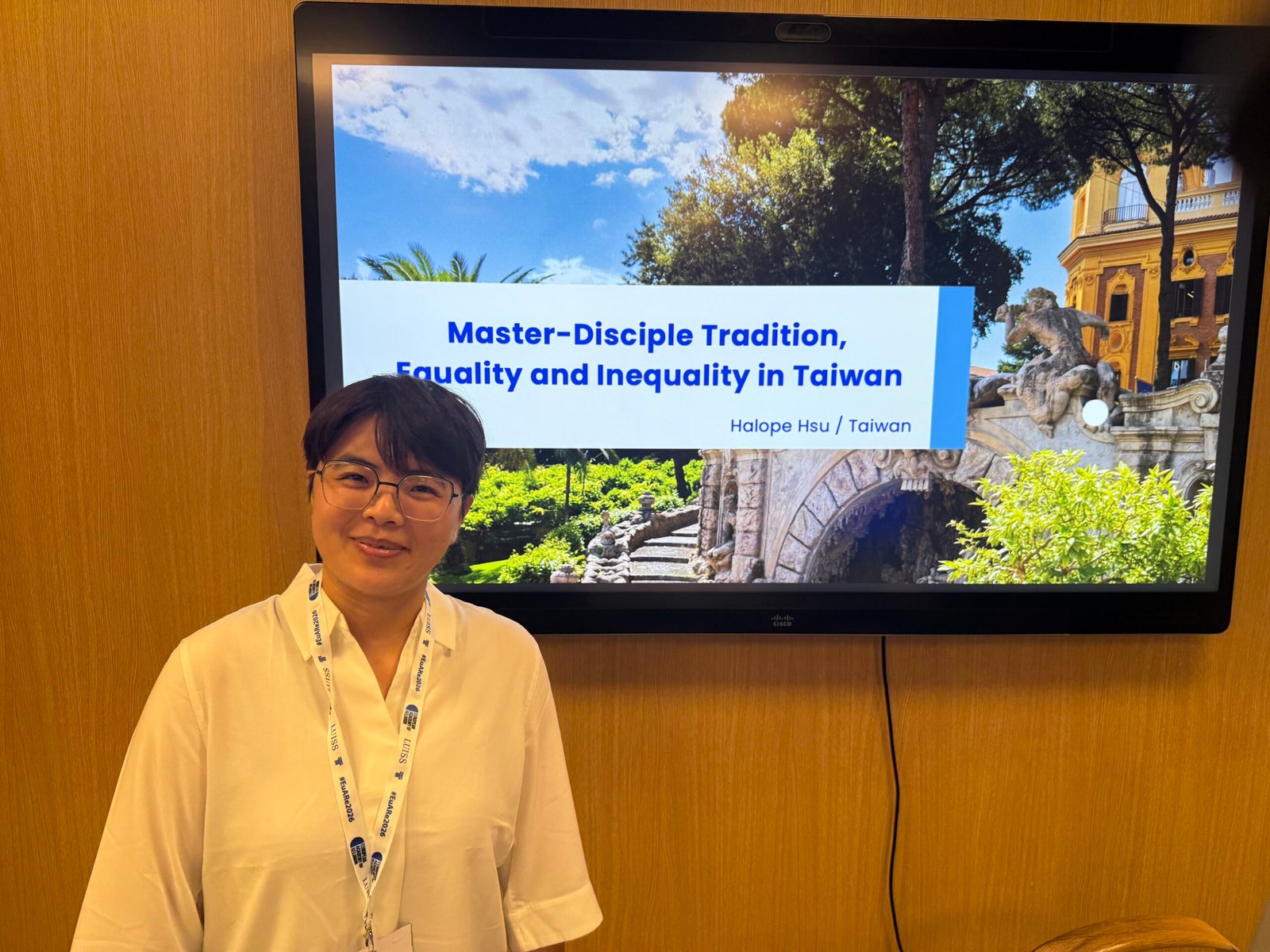
Hsu recounted the 1996 crackdown, the defamatory media coverage, and the central controversy over whether these gifts were expressions of gratitude or taxable tuition fees. She emphasized that equality requires more than mechanical rule‑application; it requires cultural understanding and the courage to correct institutional mistakes. Her testimony highlighted how Tai Ji Men’s teachings on conscience, courage, and gratitude shaped her response to injustice and strengthened her commitment to human dignity.
The sixth paper, presented by Lu Ming-Chun, an environmental engineering professor at National Chung Hsing University in Taichung, Taiwan, offered a sustainability‑oriented perspective on the Tai Ji Men case. Lu argued that sustainability requires justice, trust, and institutional integrity. He introduced the concept of “moral sustainability,” describing the long‑term capacity of a society to uphold human dignity and public trust. Drawing on environmental engineering principles, he compared unresolved institutional injustice to persistent pollution that accumulates and harms ecosystems unless actively remediated.
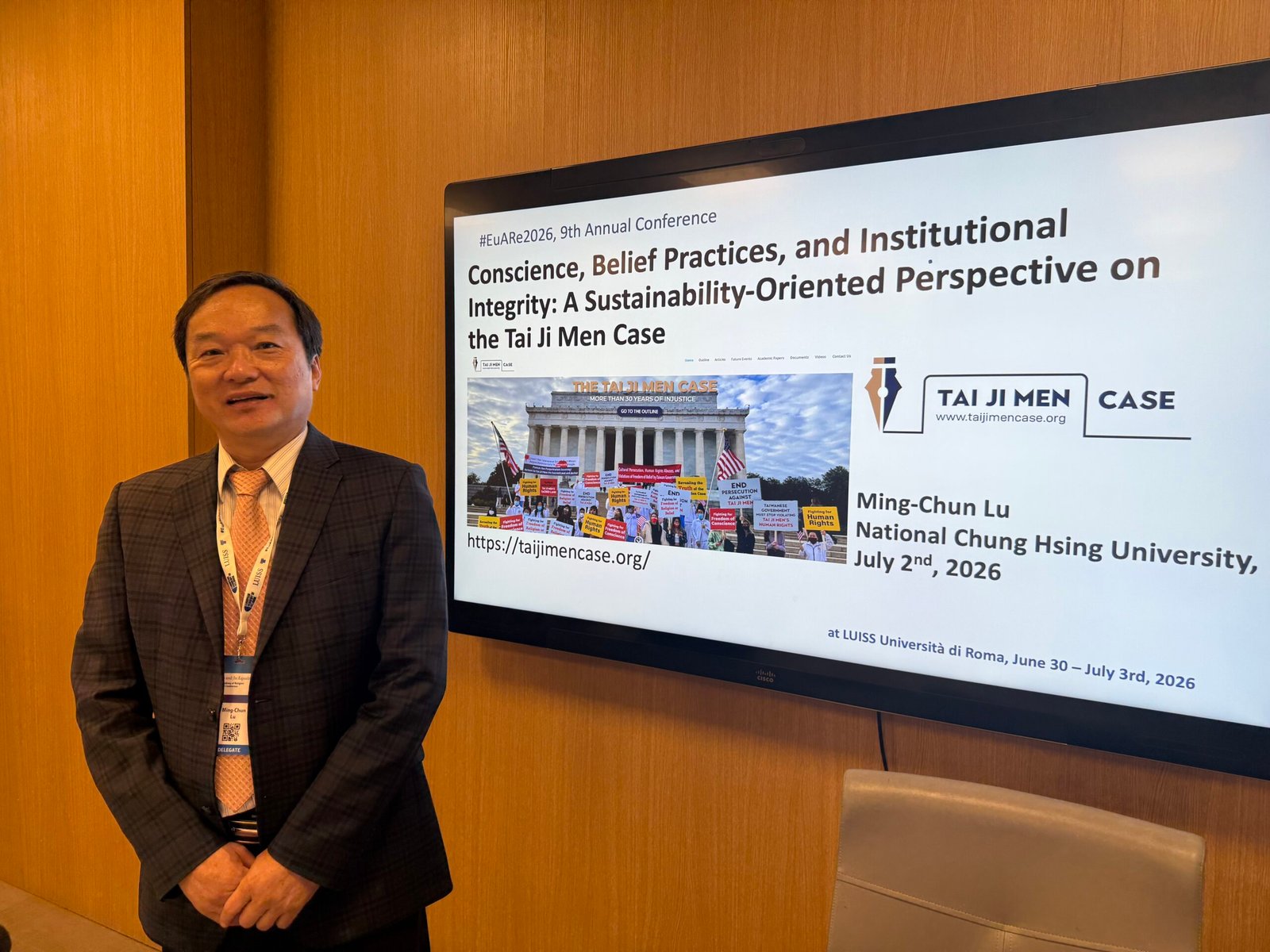
Lu described the Tai Ji Men case as an example of “moral pollution,” in which administrative errors continued to cause harm even after judicial clarification. He emphasized that freedom of conscience and belief are essential components of sustainable development and that institutional failures undermine democratic resilience. Lu highlighted Tai Ji Men’s global contributions to conscience education, including the Movement of an Era of Conscience, which inspired the United Nations to establish the International Day of Conscience and the International Day of Hope. He concluded that sustainability begins with safeguarding dignity, conscience, and freedom.
The session attracted scholars from all continents, as is typical of the European Academy of Religion’s conferences. Participants engaged actively with the speakers, asking questions and offering comparative perspectives from their own regions. Many expressed appreciation for the opportunity to understand the systemic problems of tax justice and freedom of religion or belief in Taiwan, which remain little known outside East Asia. They also remarked on the beauty, cultural depth, and global outreach of Tai Ji Men’s initiatives. The dialogue in Rome demonstrated how academic exchange can illuminate complex issues and how spiritual communities contribute to global conversations on conscience, justice, and human dignity.

Maria Vardé graduated in Anthropological Sciences at the University of Buenos Aires and is currently a researcher at the Instituto de Ciencias Antropológicas, Facultad de Filosofía y Letras, Universidad de Buenos Aires (Institute of Anthropological Sciences, Faculty of Philosophy and Humanities, University of Buenos Aires). She has written and lectured on archeology, spirituality, and freedom of religion or belief.