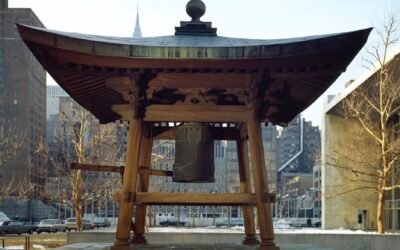
The East Asian Society for the Scientific Study of Religion met at Fo Guang Shan Buddha Museum from July 1 to 4.
by Marco Respinti
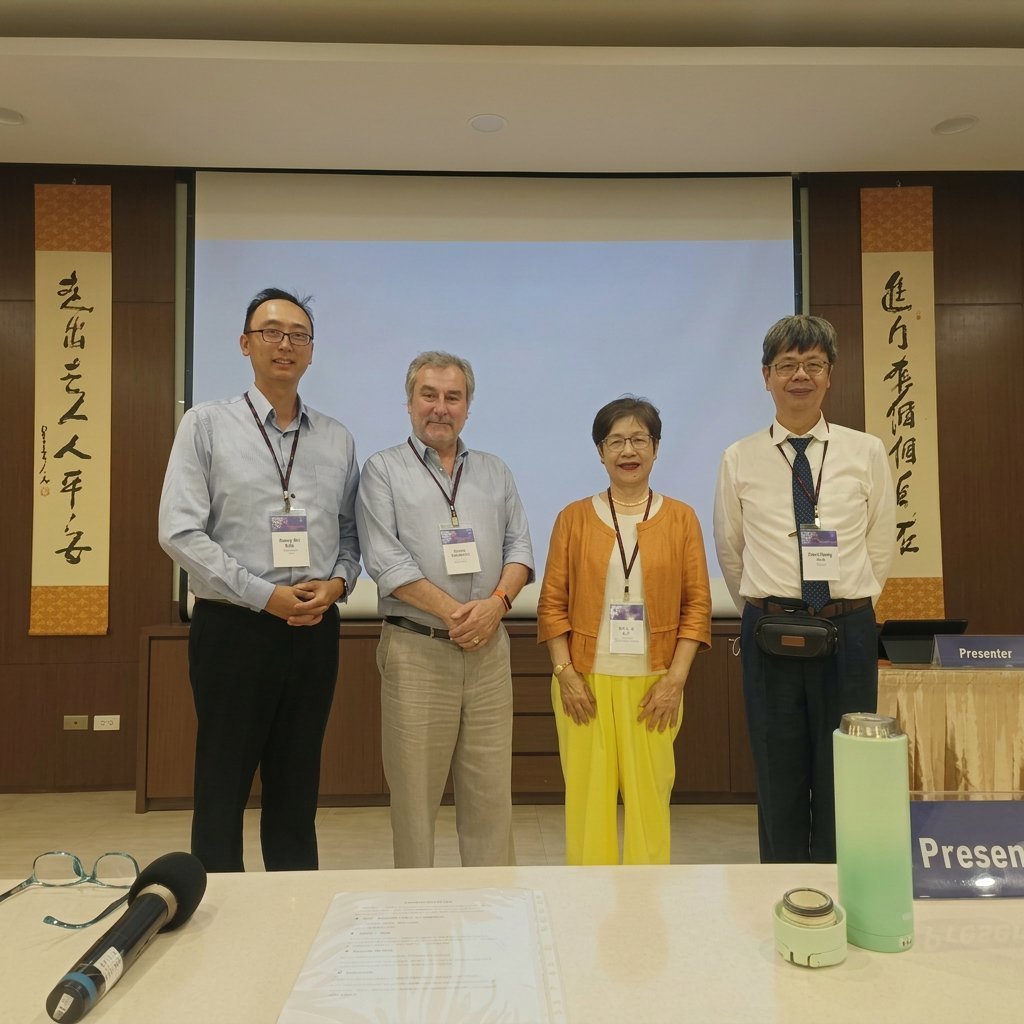
The Fo Guang Shan Buddha Museum in Kaohsiung is one of Asia’s most striking cultural landmarks—a place where architecture, spirituality, and scholarship meet. It was therefore a fitting venue for the 8th Annual Conference of the East Asian Society for the Scientific Study of Religion (EASSSR), held from July 1 to 4, 2026. Scholars from across East Asia and beyond gathered to explore the complexities of religion in contemporary society. Among the many sessions, one held on July 1 featured an in-depth discussion of the Tai Ji Men case, one of Taiwan’s most emblematic and long-running freedom of religion or belief controversies.
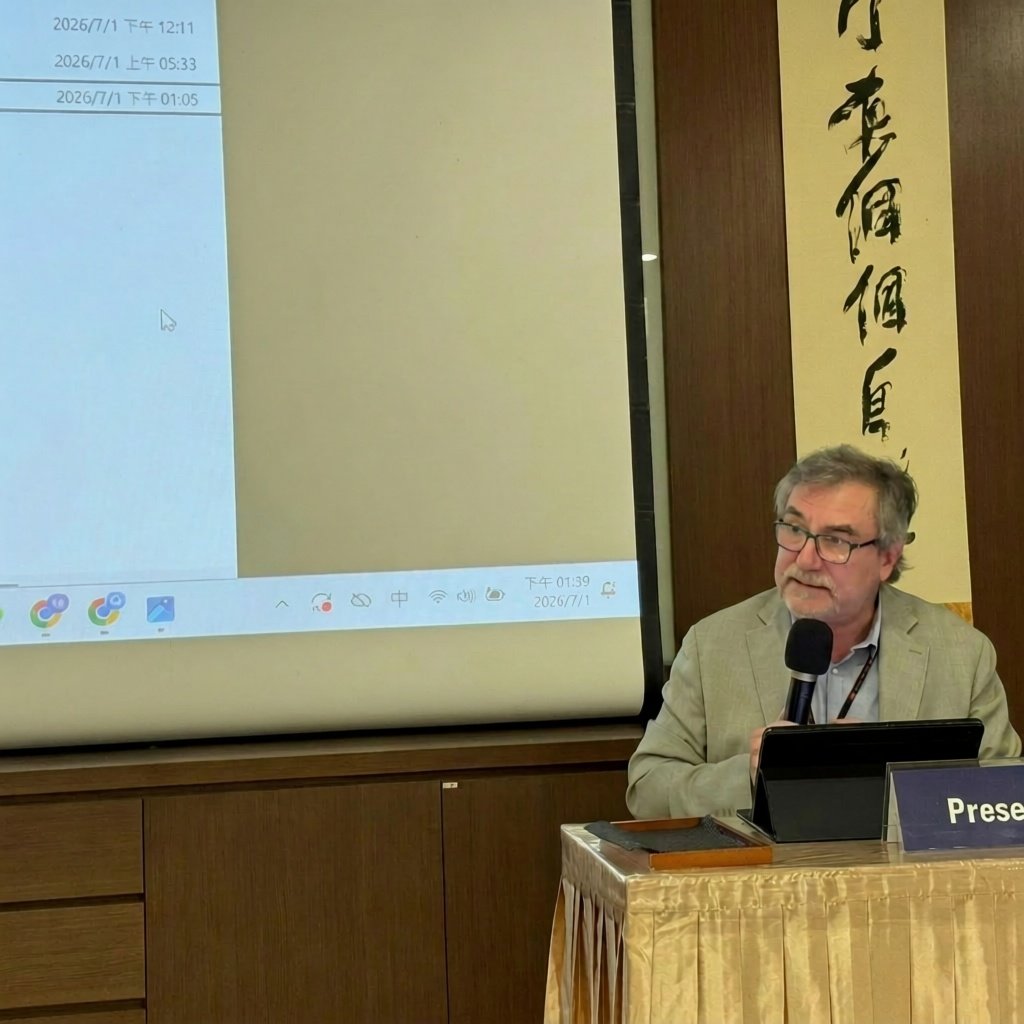
I had the honor of opening the session, presenting a paper coauthored with Massimo Introvigne. Our contribution examined the Tai Ji Men case within the broader landscape of religious liberty in East Asia, highlighting a paradox that has become increasingly visible. While nondemocratic regimes such as the People’s Republic of China continue to commit egregious violations of freedom of religion or belief—documented daily in “Bitter Winter,” the magazine I serve as director-in-charge—East Asia’s democracies, including Taiwan, Japan, and South Korea, often reproduce subtler but structurally significant forms of delegitimization against minority spiritual movements. We argued that four categories of actors converge in this erosion: secularist bureaucracies, extremist groups whose violence fuels moral panic, majoritarian religious institutions that politicize faith, and anticult movements that weaponize stigmatizing labels. The Tai Ji Men case, with its decades-long administrative afterlife despite full judicial exoneration, exemplifies how democratic systems can fail when bureaucratic inertia, media narratives, and anticult rhetoric align.
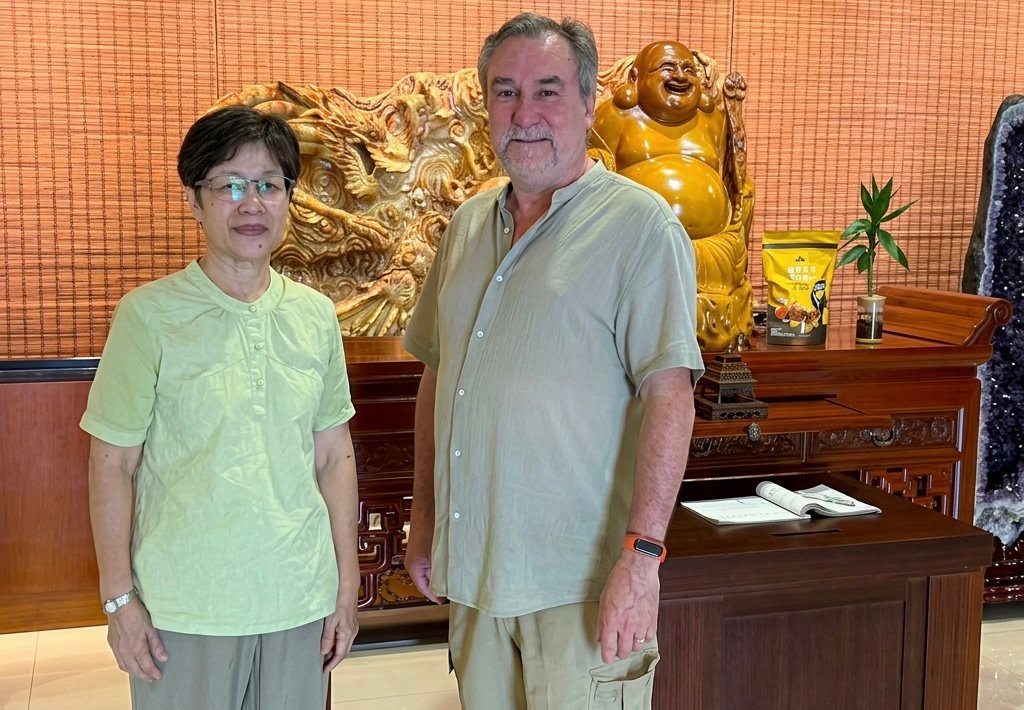
The second paper was delivered by Lee LiChun (Rowena Lee), a retired high school English teacher and Tai Ji Men dizi (disciple). Speaking from an emic perspective, she described how Tai Ji Men’s culture of conscience, love, and peace had shaped her life for more than thirty years. Her testimony moved the audience as she recounted the 1996 crackdown, the absurd accusations—including the infamous claim of “raising goblins”—and the long legal battle that culminated in the 2007 Supreme Court ruling declaring Tai Ji Men innocent of all charges.
Lee emphasized how the National Taxation Bureau’s refusal to implement the court’s decision led to the 2020 nationalization of Tai Ji Men’s sacred land. Drawing on international tax reform discussions she attended in Prague, she highlighted how Taiwan’s tax incentive system creates structural conflicts of interest that harm taxpayers and undermine religious liberty. Her presentation combined personal experience, legal analysis, and civic engagement, illustrating how persecution affects both individuals and society.
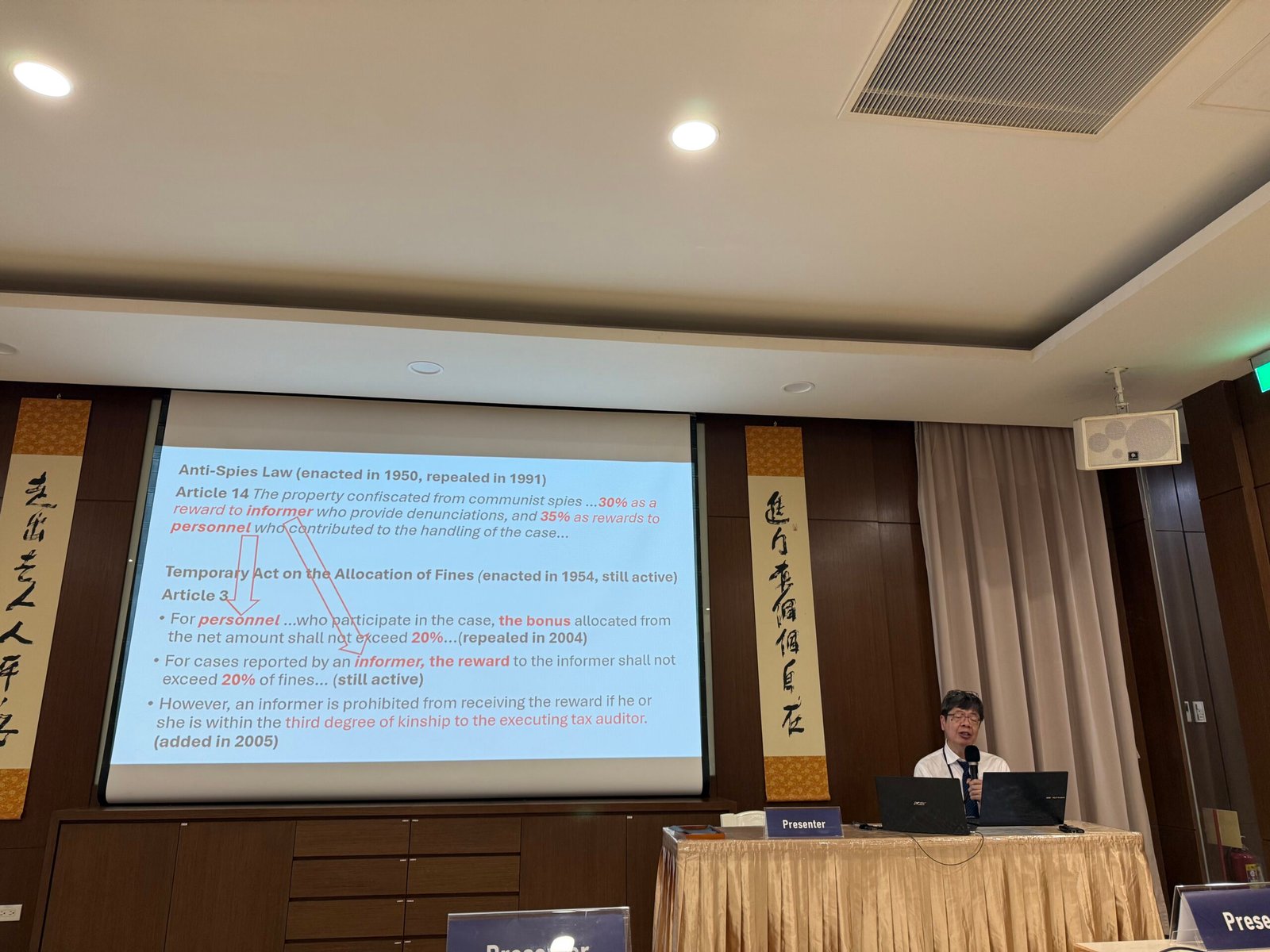
The third paper, presented by Wu Chihchung, who serves as Vice President of a medical equipment manufacturing company in Taiwan and is also affiliated with the Tai Ji Men Qigong Academy. The paper examined the Tai Ji Men case through two lenses: the longterm impact of negative media coverage and the structural problems of Taiwan’s tax incentive system. The speaker noted that although the accusations of the 1990s were disproven in court, the media narratives of that era continue to circulate online. In the age of artificial intelligence, algorithms retrieve and reproduce outdated or misleading content, perpetuating stigma against groups already exonerated.
The paper’s core traced the historical roots of Taiwan’s tax bonus system, linking it to authoritarian-era practices such as the “Anti-Spy Law,” which incentivized false accusations. The speaker compared Taiwan’s situation with historical abuses of “substantial taxation” in Weimar Germany and Nazi Germany—not to equate contexts, but to warn that structural patterns can reappear when institutional safeguards are weak. The paper concluded that Taiwan must abolish tax-related incentive payments to protect taxpayers’ rights and prevent administrative practices that may endanger freedom of religion or belief.
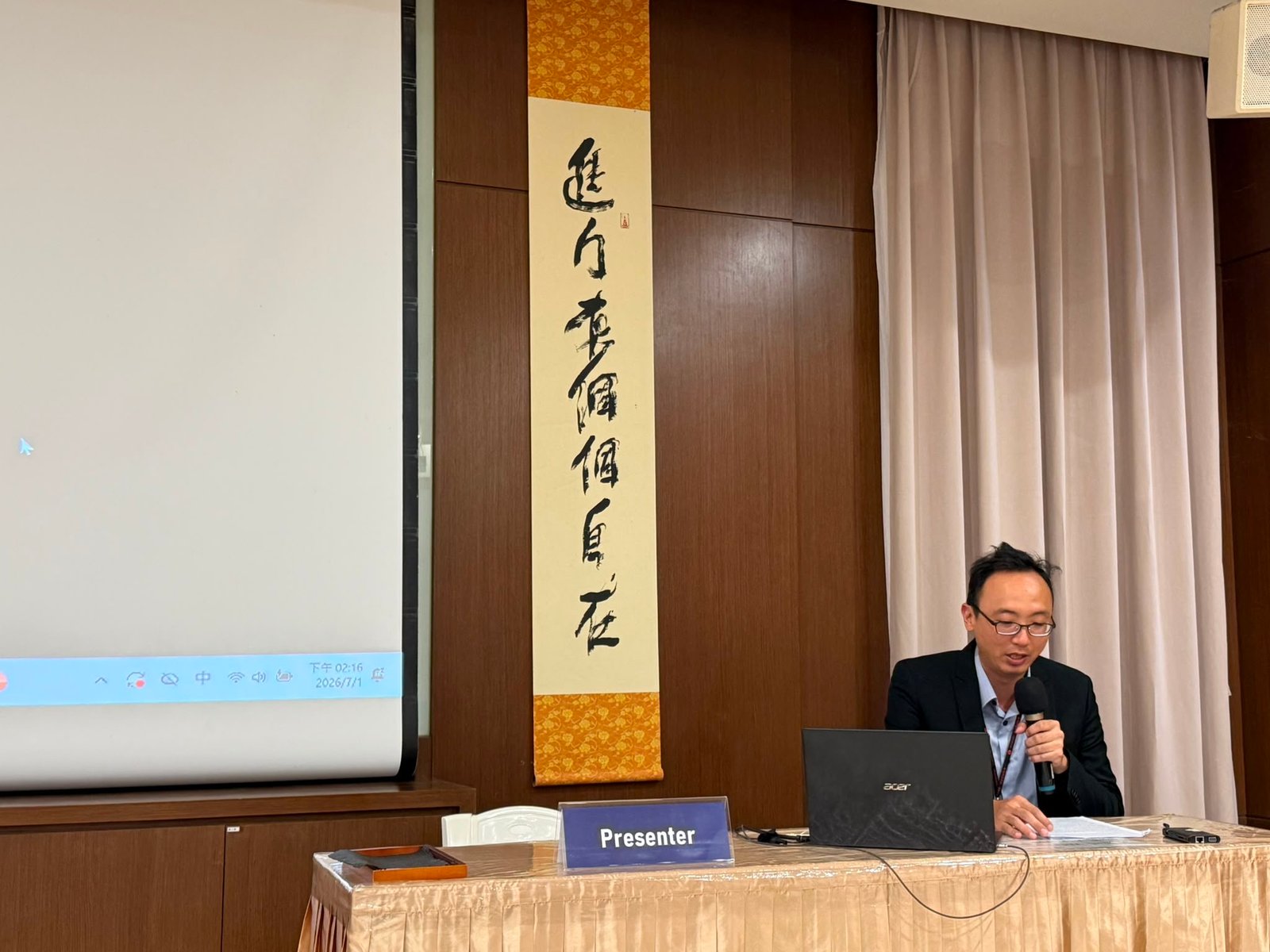
Wen Shang-Bin, a sales supervisor in the business sector and Tai Ji Men dizi, delivered the final paper. His presentation offered a deeply personal reflection on how the Tai Ji Men case affected his family. He recounted the story of his aunt, Wen Xiuzhen, who spoke publicly to defend Tai Ji Men in 1996 and was subsequently searched, questioned, stigmatized, and professionally demoted. The stress eventually destroyed her health, and she passed away in 1999.
Wen described how his family transformed grief into a commitment to justice, guided by the teachings of Tai Ji Men’s Shifu (Grand Master), Dr. Hong Taotze, who encourages disciples to face adversity with kindness and courage. Wen proposed a three-dimensional analysis of the case: the misinterpretation of red envelopes as taxable income, the incomplete nature of transitional justice in Taiwan, and the structural conflict of interest created by tax bonuses. He argued that the case illustrates how remnants of authoritarian administrative culture persist within Taiwan’s bureaucracy, undermining judicial decisions and threatening freedom of religion or belief. His testimony underscored the human cost of institutional failure and the need for systemic reform.
The session at Fo Guang Shan demonstrated once again that the Tai Ji Men case is not merely a legal dispute but a window into broader issues of conscience, governance, and human dignity. It revealed how democratic societies must remain vigilant against administrative practices that can quietly erode fundamental freedoms.
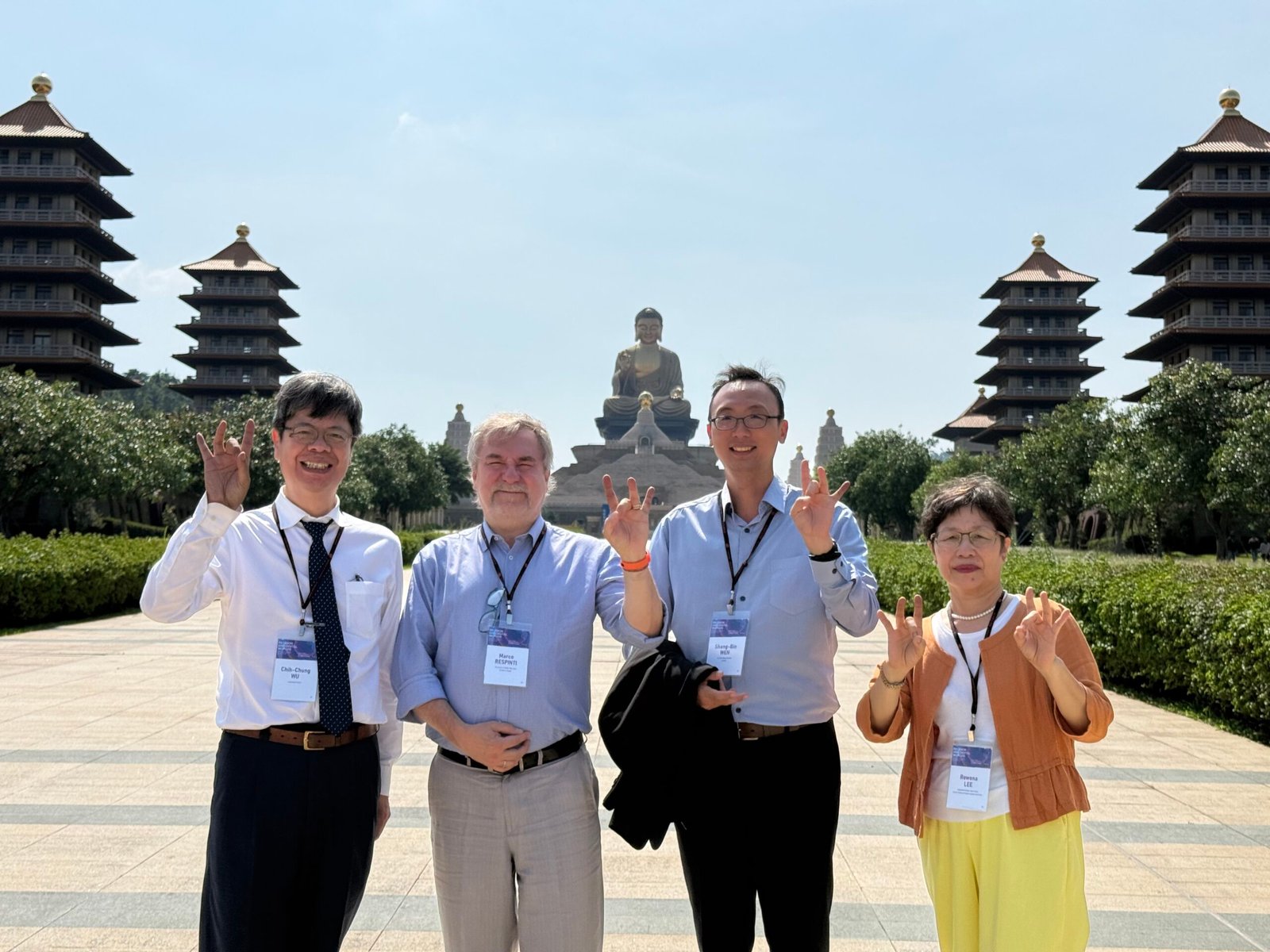
In the serene setting of the Buddha Museum, surrounded by symbols of compassion and wisdom, the speakers reminded us that religious liberty is not only a constitutional principle but a lived reality that must be protected “for everybody, everywhere, all the time,” as former U.S. Ambassador-at-Large for international religious freedom Sam Brownback once said.
Every analysis of the Tai Ji Men case is a call to conscience. And conscience, as Tai Ji Men teaches, is the foundation upon which peace, justice, and true freedom must be built.

Marco Respinti is an Italian professional journalist, member of the International Federation of Journalists (IFJ), author, translator, and lecturer. He has contributed and contributes to several journals and magazines both in print and online, both in Italy and abroad. Author of books and chapter in books, he has translated and/or edited works by, among others, Edmund Burke, Charles Dickens, T.S. Eliot, Russell Kirk, J.R.R. Tolkien, Régine Pernoud and Gustave Thibon. A Senior fellow at the Russell Kirk Center for Cultural Renewal (a non-partisan, non-profit U.S. educational organization based in Mecosta, Michigan), he is also a founding member as well as a member of the Advisory Council of the Center for European Renewal (a non-profit, non-partisan pan-European educational organization based in The Hague, The Netherlands). A member of the Advisory Council of the European Federation for Freedom of Belief, in December 2022, the Universal Peace Federation bestowed on him, among others, the title of Ambassador of Peace. From February 2018 to December 2022, he has been the Editor-in-Chief of International Family News. He serves as Director-in-Charge of the academic publication The Journal of CESNUR and Bitter Winter: A Magazine on Religious Liberty and Human Rights.