An exile’s tragic and loving story of wisdom, compassion, and assassination.
by Abdurehim Gheni Uyghur
“Seek the exile’s grief in foreign lands, away from home,
Ask the longing lover how deep the wounds become,
What meaning or taste is left in a life without a state?
Ask him who lost his homeland; he knows the bitter fate.”
— From the Uyghur novel “The Wandering Soul”
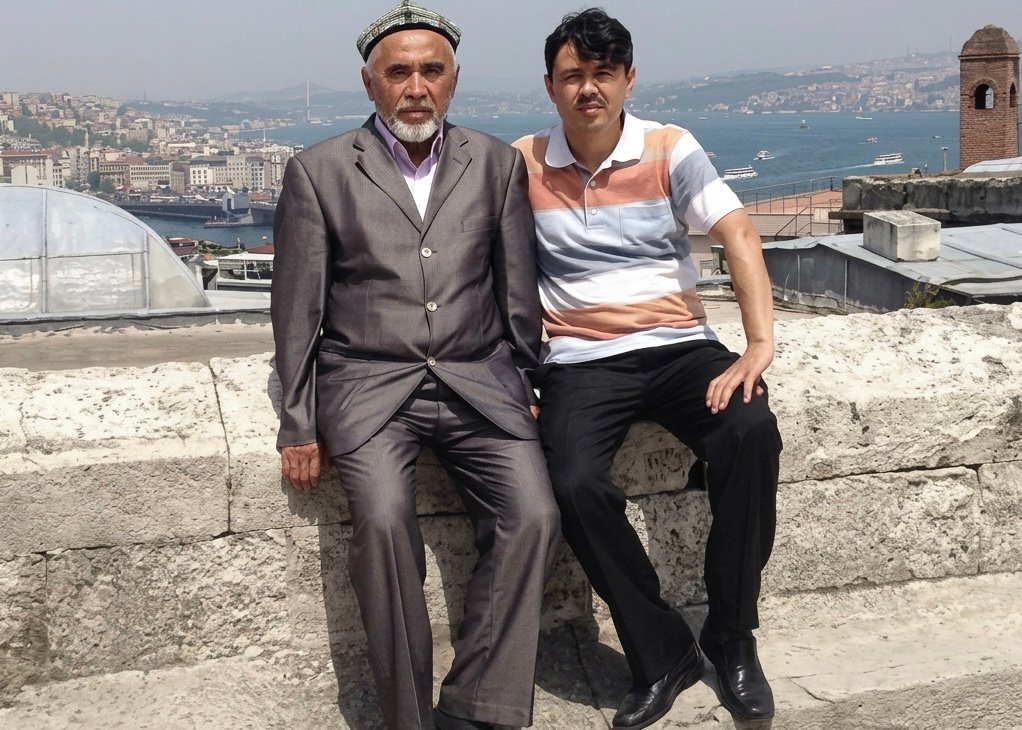
For an exile, the bond with family is both a sanctuary and a source of profound, unending pain. For me, a Uyghur brutally separated from his loving father, every passing day is a struggle against heartbreaking memories. It has been years since I was forced into silence, unable to reach the man who raised me. Today, the words of the very last phone conversation with my father echo incessantly in my ears.
The advice my father gave me then may well be the unspoken words of millions of Uyghur fathers who are currently undergoing subhuman humiliations in Chinese concentration camps across occupied East Turkistan. They are the words they cannot speak to their children in the diaspora, whose hearts break over the bitter fate of statelessness. On May 23, 2017, I spoke to my father over the phone for the final time. This date marks the beginning of that sinister period for me, when I lost contact forever with him and nineteen other family members.
“Father, how are you? Are you doing well?” I asked him at the time, weeping. Ever since my mother passed away, his heart had been broken. While on the line, I felt intensely guilty before him and said, crying, “Forgive me, my unfilial son. When you lay sick in the hospital, I could not stand by your side to care for you. I have failed my duty as a son.” My father consoled me with the following words
“My son, do not break your heart. Who could have predicted that you would have to leave your homeland to live as a wanderer abroad? Behind every destiny lies a wisdom. We have a saying: ‘If your own land is safe, your countenance will not turn pale.’ In exile, in foreign lands, everything may be materially perfect, but a part of your heart always remains empty; you can never laugh from the depths of your soul. Yet exile forces you to overcome difficulties and live with even greater courage. You have come to understand life and the world. Wherever you live, never forget the motherland that raised you. Take good care of your family, raise your children well, and give them a proper education. In exile, your wife and children are your only solace. Making them happy is making me happy.”
For as long as I can remember, my late father always listened meticulously to the words of his own father. He lived strictly by our Uyghur proverb: “If your parents are pleased, God is pleased.” I, too, always attached enormous value to my father’s advice.
During that short conversation, he also said the following to me: “My son, you live in a country that is totally different from ours. Therefore, abide by the laws of that country and be a good citizen. Rely on your own strength to make a living. We Uyghurs say: ‘Do not humiliate yourself, but exhaust your own strengths.’ My son, when you told me that you had successfully studied in the Netherlands and started working as a soil analyst at a soil research institute, I was so incredibly proud of you! Thoroughly learn the soil technology of the West. In the land where you were born and raised, agriculture is the foundation. The agricultural development of your homeland sorely needs advanced technology. Should a day come when you get the chance to return, take that technology with you to develop the soil where you grew up. Work hard, add value to society, because only then will you possess dignity. Be an example for your children and ensure they get an excellent upbringing.”
Since the Chinese government permanently wiretaps foreign phone calls, we were extremely cautious with our words at the time. While speaking, my father sighed deeply. Through that, I felt the words he could not speak aloud. I could not have imagined in my wildest dreams that these, as if his soul already sensed it, would be his very last words and his testament to me. Since that day, I have never been allowed to hear my father’s voice again.
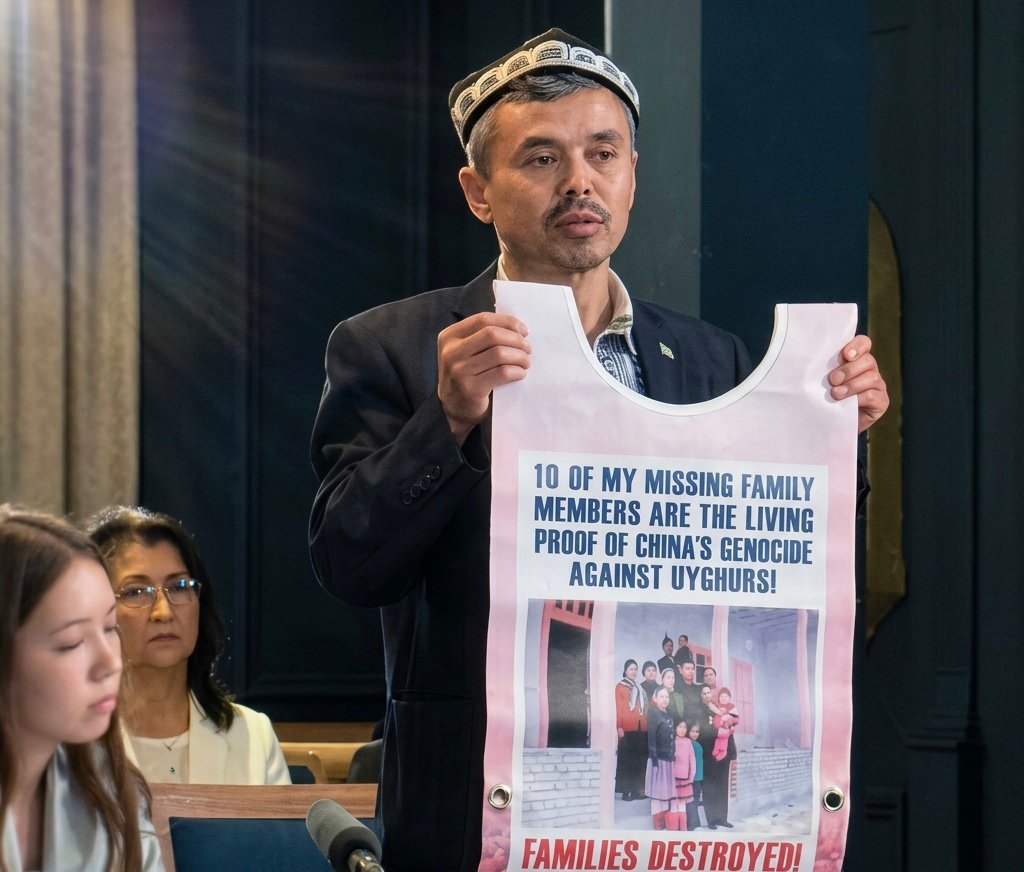
Seven years later, in July 2024, I was invited by the World Citizens’ Court to testify in the trial where Xi Jinping was indicted for violating the Rome Statute. To prevent me from participating in this court and speaking out against the ongoing genocide, the Chinese government temporarily took my sick father and my brother out of the concentration camp. They forced them to call me to compel me to waive my testimony.
When I refused this staged encounter, they immediately sent me a video via Telegram showing my father terminally ill and lethargic on a bed, while my brother stood next to him, under heavy pressure, “advising” me to stop my activism. This was meant to break me psychologically and emotionally. It was the very last time I saw the face of my ailing father.
However, this rancid blackmail by the Chinese government could not deter me from appearing before the court. The court ultimately issued a symbolic arrest warrant against Xi Jinping based on eleven crimes against humanity. In revenge, the Chinese government immediately locked my sick father back into the concentration camp, where he was killed through torture two months later. This tragic news was officially investigated and confirmed by the prominent journalist Shohret Hoshur of Radio Free Asia.
I miss the voice of this caring, hardworking, and sincere father so terribly. His face is forever seared into my retina. Sometime later, I realized how deep a father’s love truly is, because I am now a father myself and know how hard it is to raise children in a world torn apart by injustice.
Father, you used to say: “I burn with love for my child, and my child burns for his own.” Every time my children climb onto my shoulders, I remember these words. You have fully fulfilled your duty as a father; my duty has only just begun. Within our people, we have the wisdom: “The son is the secret of his father.” Your sense of justice taught me to see the distinction between right and wrong, between friend and enemy. You are my glorious ancestor; you are my guide. May your resting place be in paradise, father!
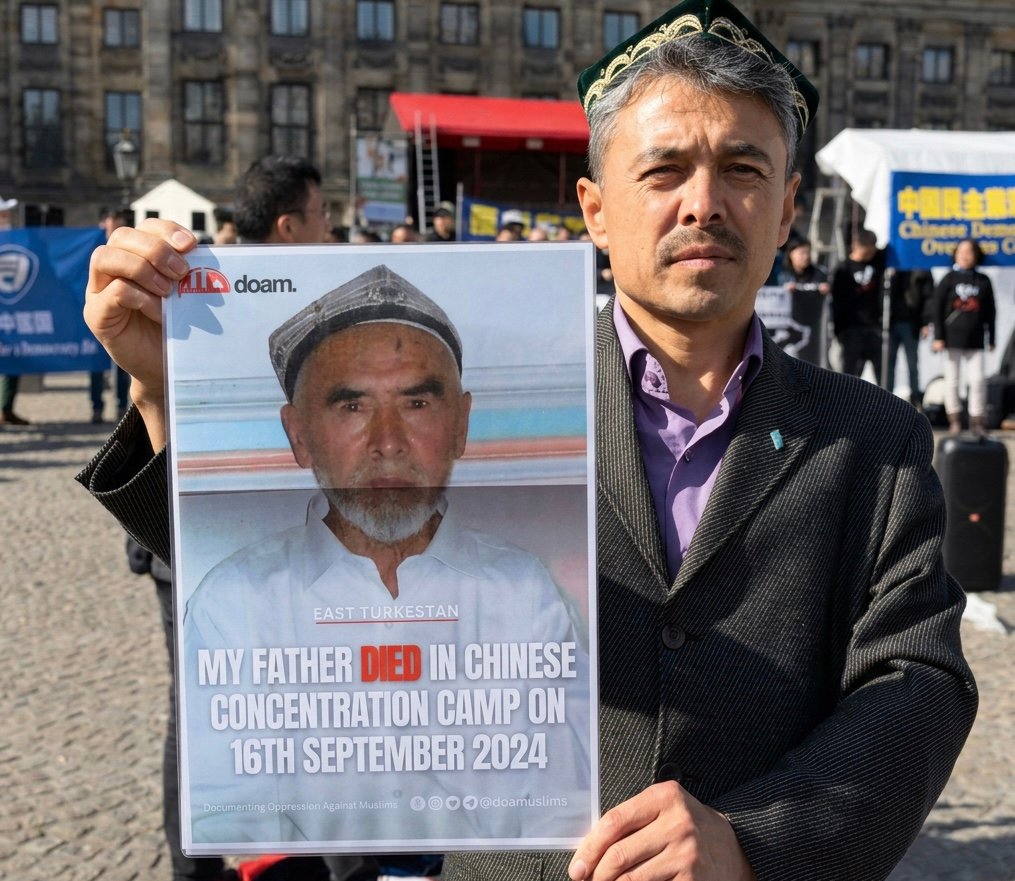
My personal tragedy is unfortunately not an isolated incident, but the daily, bitter reality of millions of Uyghurs in occupied East Turkistan. This genocide, which the world thought would never happen again in the 21st century and which China anxiously tries to hide, continues unabated today.
According to independent reports by the United Nations (UN‑OHCHR) and Amnesty International, between 1 million and 1.8 million Uyghurs and other Turkic Muslim minorities have been unlawfully detained in camps since 2017.
Although the Chinese authorities claim that these camps have since been closed, the situation has in reality transformed into a structural and permanent system. Research by the U.S. Holocaust Memorial Museum (USHMM) and Dr. Adrian Zenz shows that at least 500,000 Uyghurs, following the so‑called closure of the camps, were transferred to formal prisons with long‑term sentences. Millions of others are being deployed by the state for large‑scale forced labor in factories and fields.
Research using satellite imagery by the Australian Strategic Policy Institute (ASPI) has uncovered more than 380 large‑scale detention camps and high‑security prison complexes spread across the entire region—from Kashgar and Khotan to Urumqi and Ghulja.
Behind these walls, a systematic destruction of identity takes place: torture, psychological manipulation, forced sterilization of women, and a total ban on the Uyghur language and the Islamic religion. While parents disappear into prisons, their children are placed in state‑run boarding schools, where they are completely alienated from their mother tongue and culture. These crimes of the Chinese government have now been officially recognized as genocide by the parliaments of over ten countries, including the Netherlands, Canada, and the United States.
My father’s words remain the compass of my life. I will continue to make his voice heard, not only for my own children but for the millions of Uyghur fathers and children who are brutally and unjustly separated from each other today by a regime that fears the truth.
Rest in peace, my dear father!
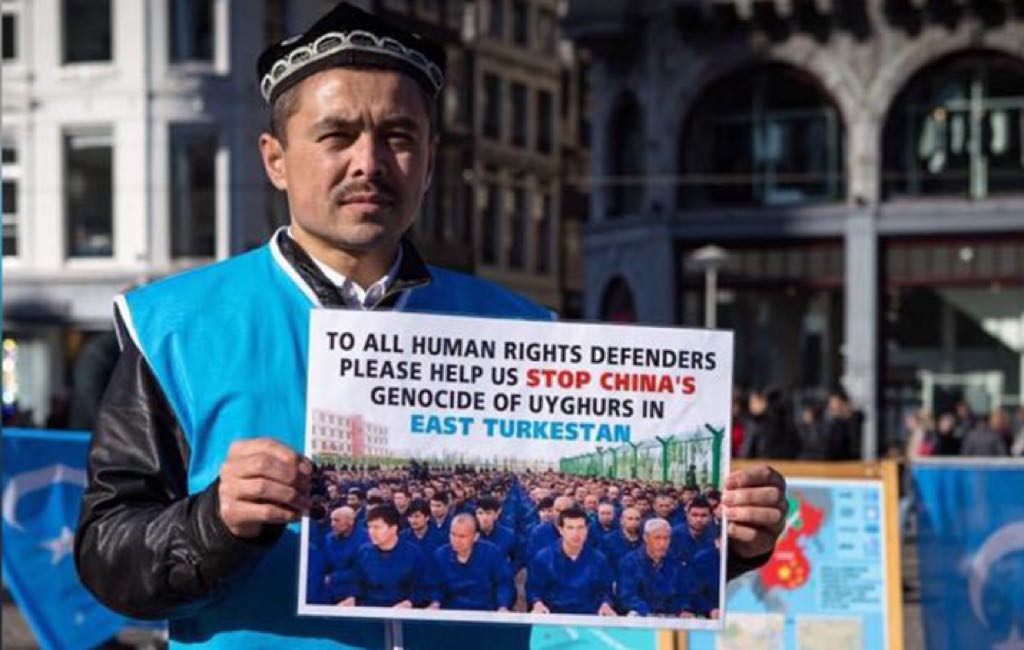
Abdurehim Gheni is a Uyghur activist living in the Netherlands who became famous for his solo protests in Dam Square in Amsterdam. He also educates tourists to the reality of the Uyghur genocide.