A course in Beijing shows how the Sinicization of Islam means aligning doctrine, education, and identity with Party ideology and “Confucianism.”
by Ma Guangyao
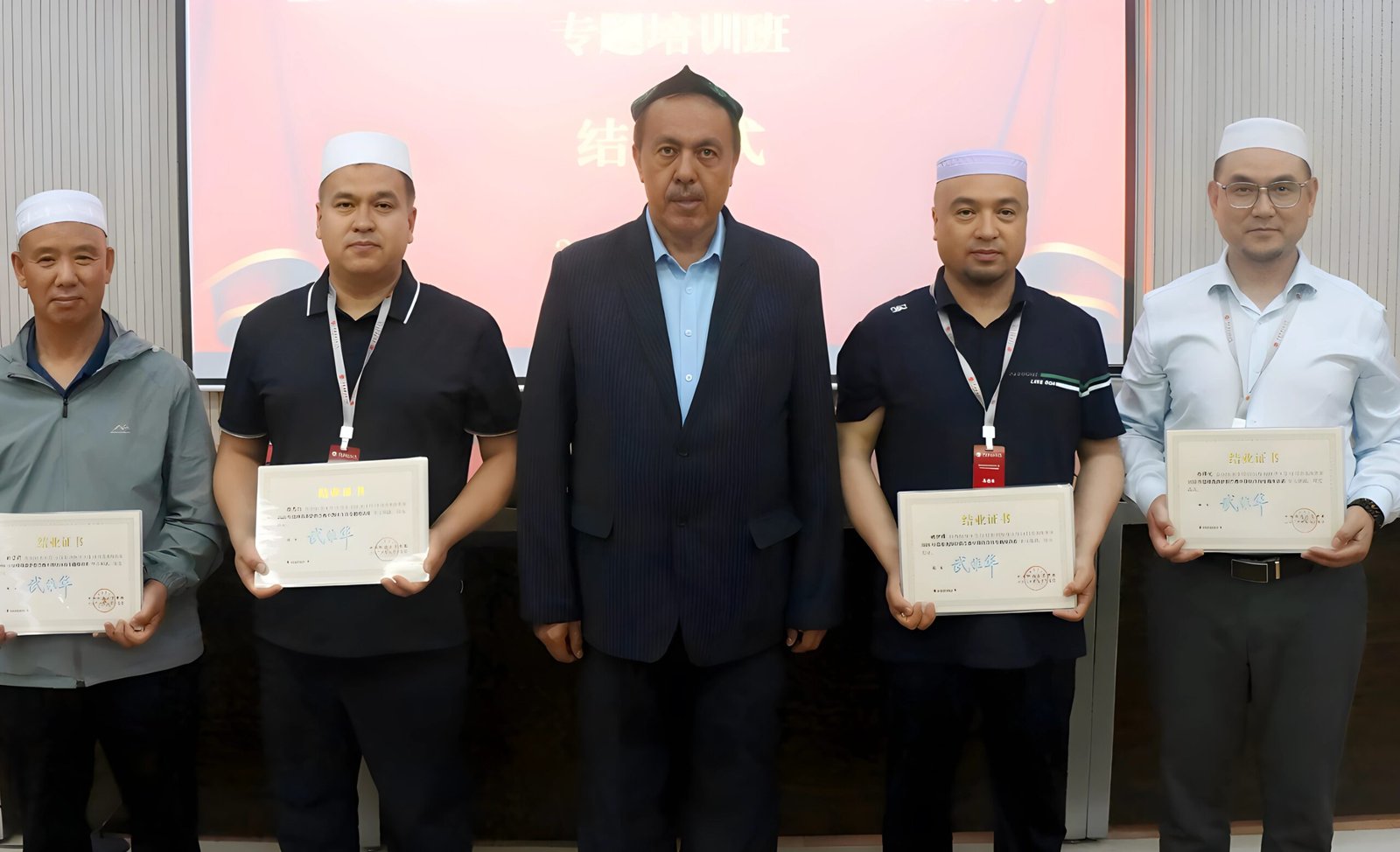
The latest training program for imams and Islamic teachers, held from May 10 to 16 at the Central Institute of Socialism in Beijing, offered another glimpse into the direction China expects Islam to take. The event was presented as a seminar on the Sinicization of Islam, yet the curriculum focused almost entirely on Xi Jinping’s political thought. The Quran appeared only as a distant backdrop, while the real focus was on consolidating ideological loyalty.
The opening speeches set the tone. Participants were told to study Xi Jinping’s views on religion, absorb “Xi Jinping Thought on Socialism with Chinese Characteristics for a New Era,” and cultivate what officials called the correct understanding of the nation, ethnicity, history, culture, and religion. The language echoed the formula now used across all officially recognized faiths: religious leaders are expected to guide believers toward identification with the state, the Party, and the narrative of national rejuvenation. The training was less a discussion of Islamic theology than an exercise in political formation.
The program lasted seven days and included lectures on Xi Jinping Cultural Thought, the Party’s approach to religious governance, and the construction of a unified national identity. Forty-five imams and Islamic educators from across China attended. Their task was to learn how to reinterpret Islam in ways that reinforce the Party’s priorities. The emphasis on governance according to law referred not to Islamic jurisprudence but to the regulatory framework that places all religious activity under state supervision.
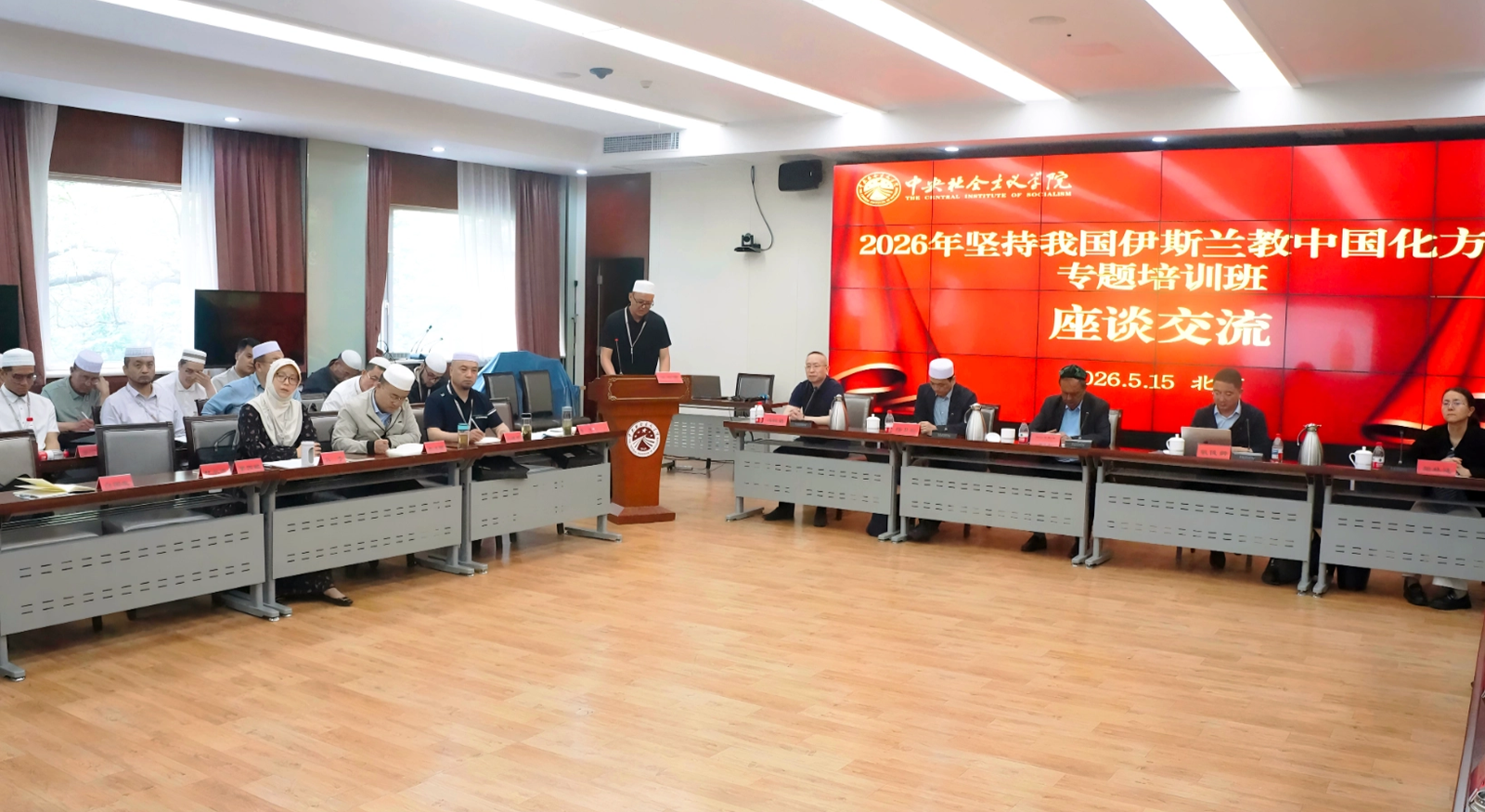
During the seminar, participants exchanged views on topics such as the Sinicization of Islam, the cultivation of a shared national consciousness, and the training of what officials call dual-competence personnel—religious figures who can preach while also functioning as transmitters of Party ideology. One session focused on integrating Islam with Confucianism, a theme that has become increasingly fashionable within the CCP. Officials promote the idea that Islam should harmonize with Confucian moral concepts, even though this synthesis has little grounding in Islamic tradition and “Confucianism” is reinterpreted by downplaying its spiritual elements. The trend reflects a broader ambition to reshape all religions into carriers of a state-approved cultural identity.
The closing ceremony repeated the same message: Islamic clergy must contribute to China’s modernization and to the project of national unity. The Party’s vocabulary dominated every aspect of the event. The training was framed as a patriotic duty, and the participants were reminded that their role is to guide believers toward loyalty to the state.
This latest seminar illustrates how the Sinicization of Islam has evolved. It no longer refers to cultural adaptation or dialogue with Chinese civilization. It has become a political program in which religious leaders are expected to internalize and disseminate Party doctrine. The prominence of Xi Jinping’s thought throughout the training shows how far this process has advanced. Islam is being reinterpreted through a political lens, and the clergy is being trained to ensure that the faithful follow the same path.

Uses a pseudonym for security reasons.