The Fourth World Conference on Religious Dialogue and Cooperation, held in Skopje on 22–24 June, featured a session on Taiwan’s freedom of religion or belief issues and the Tai Ji Men culture.
by Márk Nemes
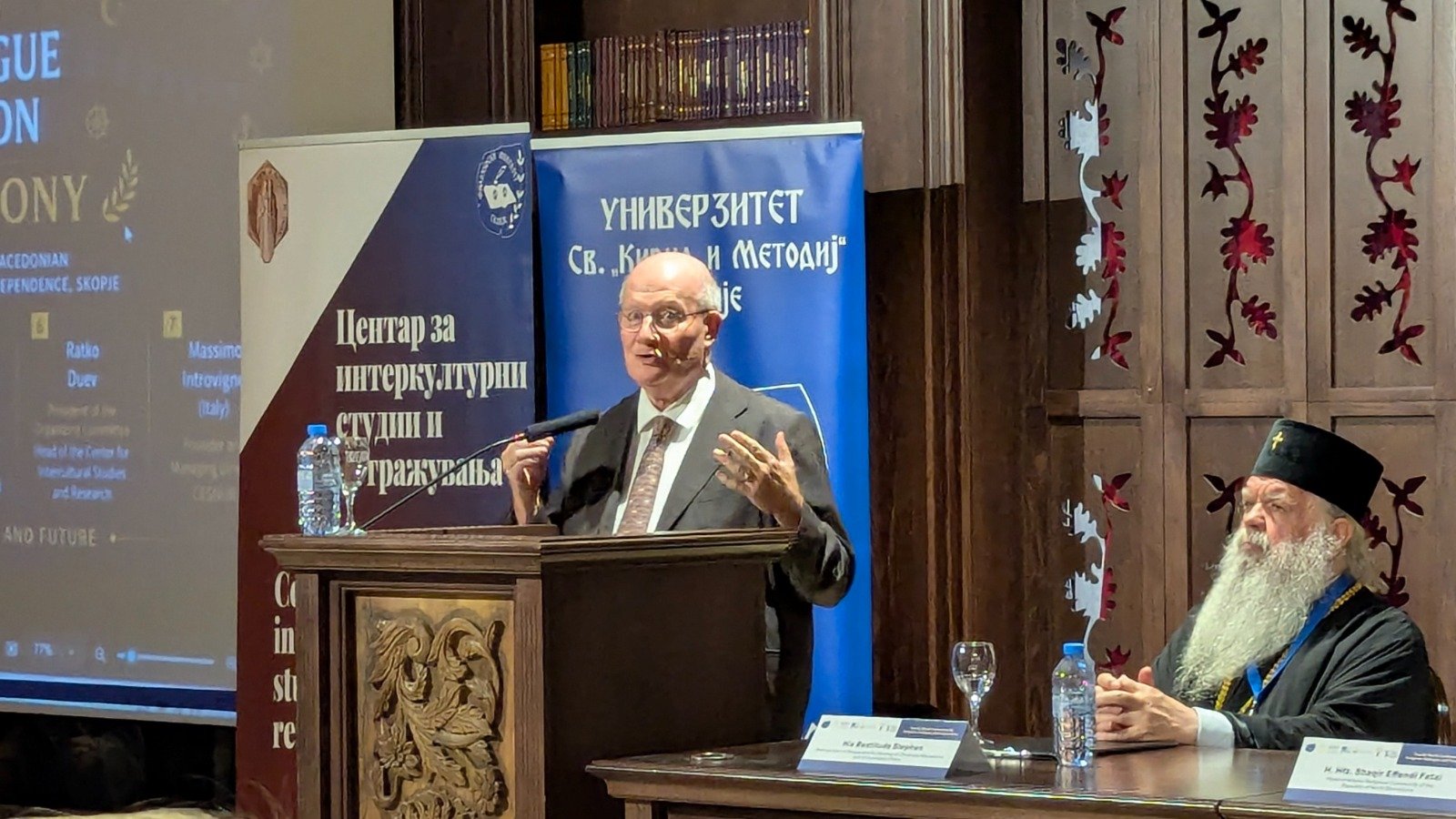
The Fourth World Conference on Religious Dialogue and Cooperation was held from June 22 to 24, 2026, at the Macedonian Village complex overlooking Skopje. Organized by the Center for Intercultural Studies and Research at the Faculty of Philosophy of the University of Skopje, and supported by the Ministry of Culture and Tourism, the event brought together scholars, researchers, religious leaders, and civil society representatives from several countries to examine the theme “Religion as a Weapon of War: in the Past, Present and Future.”
The opening ceremony was marked by the presence of North Macedonia’s two most prominent religious authorities. His Beatitude Stephen, Metropolitan of Skopje and Archbishop of Ohrid and Macedonia and Justiniana Prima, reflected on the responsibility of religious communities to resist manipulation and uphold peace. He was joined by Shaqir Effendi Fetai, Head of the Islamic Religious Community of Macedonia, who emphasized the need for interfaith solidarity amid geopolitical tensions. Their joint appearance set a tone of cooperation and moral seriousness that resonated throughout the conference.
CESNUR was a co-organizer of the event, and its managing director, Massimo Introvigne, also spoke at the opening ceremony and in three sessions devoted to religious liberty worldwide.
Among the many panels, one session on June 24 stood out for its comparative and interdisciplinary approach: a full academic discussion devoted to the Tai Ji Men case, examining it through the lenses of conscience, institutional violence, political instrumentalization, and modern forms of religious conflict. The session brought together scholars of religion and Tai Ji Men dizi (disciples), offering a multifaceted analysis of a case that has become emblematic of how administrative systems can generate long-term conflict with spiritual communities.
The session opened with Rosita Šorytė, representing the European Federation for Freedom of Belief (FOB). She argued that the Tai Ji Men case illustrates how conscience can become both a moral compass and a form of resistance when institutions fail. Šorytė emphasized that Tai Ji Men’s response to injustice has been characterized not by confrontation but by resilience grounded in conscience, a theme she developed by situating the case within broader patterns of administrative discrimination. She introduced the short Tai Ji Men film “Children from Heaven,” explaining that the movie explores the “five poisons” of human nature—fear, prejudice, anger, ignorance, and greed—and contrasts them with the movement’s emphasis on inner transformation. The film, she noted, provides a symbolic framework for understanding how internal ethical work can counter external injustice.
Her introduction to the session’s papers framed the discussion around a central question: How can conscience serve as a stabilizing force when legal and administrative systems malfunction? María Vardé, a researcher at the University of Buenos Aires, delivered the first paper. Her presentation examined the Tai Ji Men case through the lens of legal anthropology, focusing on what she called “categorical misfit.”
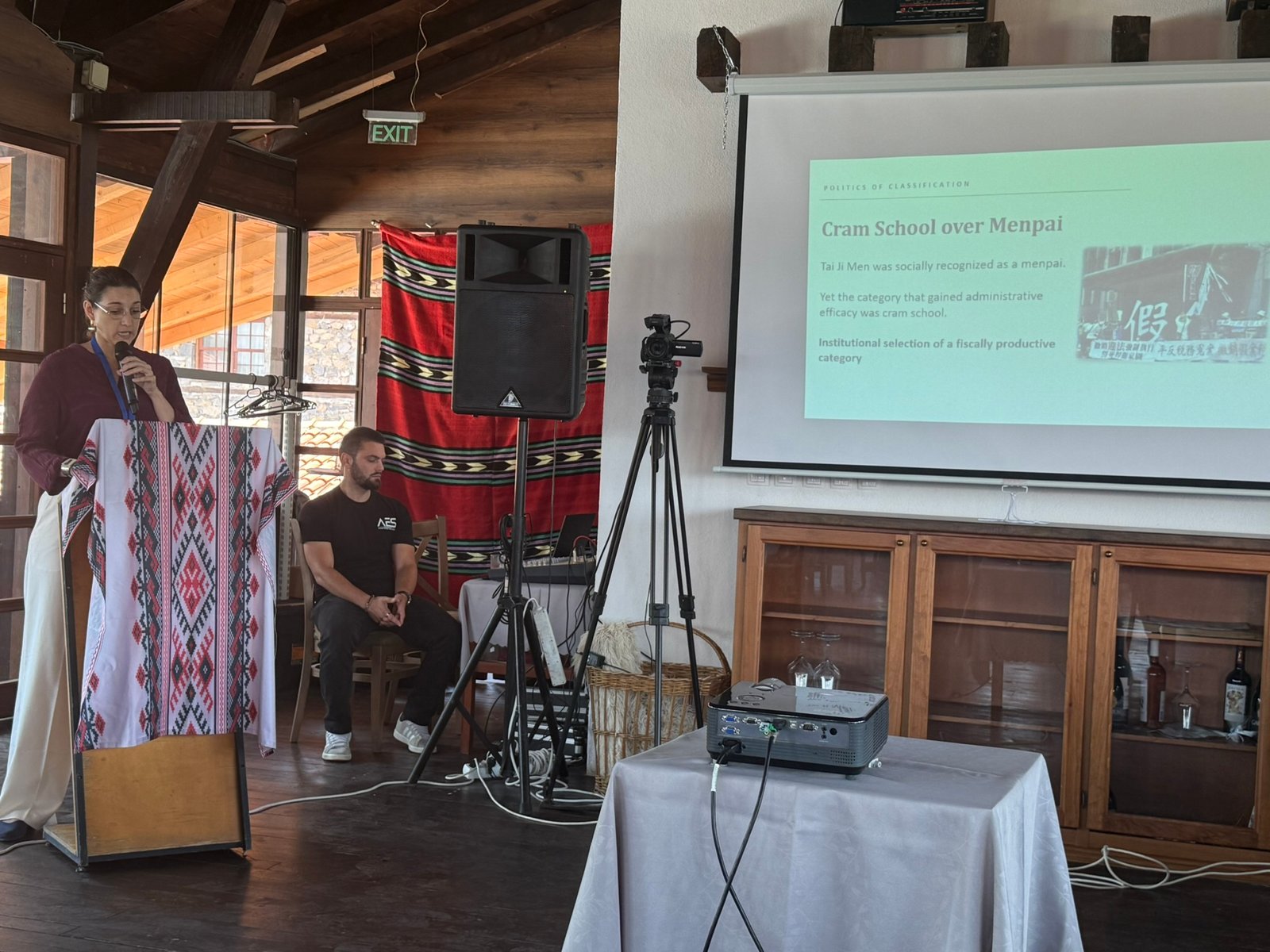
Vardé argued that Tai Ji Men does not fit neatly into the administrative categories used by the Taiwanese state—neither a business, nor a school, nor a conventional religious institution. This misalignment, she explained, created a bureaucratic vacuum in which institutional violence could emerge. When a “menpai” is forced into categories that do not correspond to its nature, such as the false category of “cram school” used by a prosecutor and bureaucrats to accuse Tai Ji Men of tax evasion, administrative systems generate conflict and injustice.
Her analysis showed how misclassification can become a mechanism of harm, producing decades of legal and fiscal pressure even after courts clarified the facts, emphasized that Tai Ji Men is not a cram school, and found it innocent of all crimes, including tax evasion. The Tai Ji Men case, she concluded, demonstrates how categorical misfit can escalate into long-term institutional violence.
Yang MingSheng, a Tai Ji Men dizi and consultant in patent strategy, explored how political systems may instrumentalize religious identity for purposes unrelated to religion itself. Drawing on comparative examples—from the Balkans to East Asia—Yang argued that political actors often appropriate religious symbols or identities to mobilize support, justify repression, or construct narratives of threat. He described how conscience-oriented reform can counteract such instrumentalization, emphasizing that conscience provides a universal ethical foundation that transcends political manipulation.
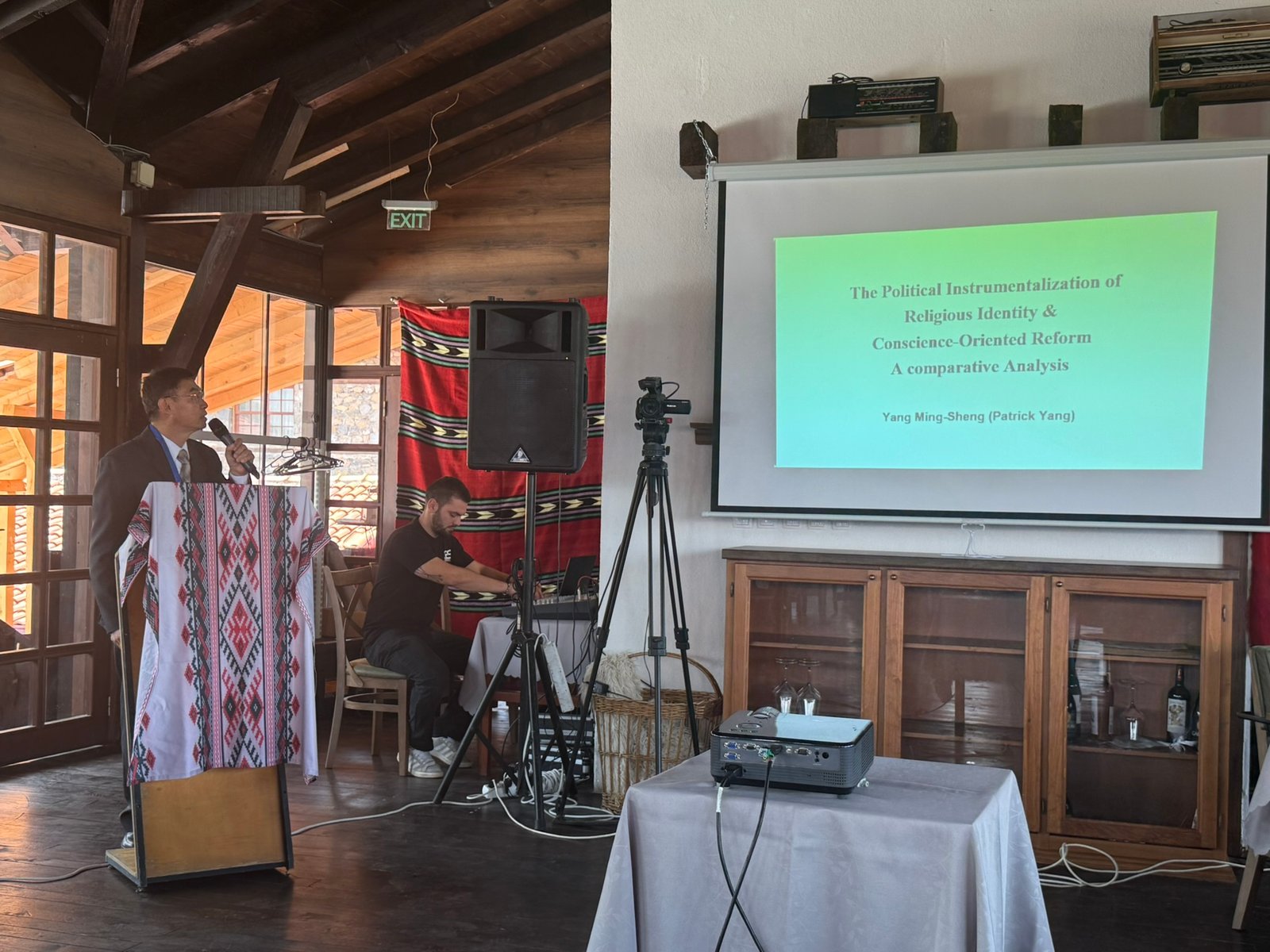
Yang’s contribution highlighted the need to distinguish between religion as lived practice and religion as a political tool, noting that the Tai Ji Men case exemplifies how misrepresentation of spiritual identity can lead to systemic injustice.
Wang YuRan, another Tai Ji Men dizi and a law student, offered a perspective grounded in both legal training and personal experience. She described herself as a young person exploring the world of law who has personally experienced institutionalized religious conflict, and her dual identity shaped her analysis.
Wang argued that in modern rule-of-law societies, religious conflict often takes nonviolent institutional forms. Instead of weapons, it operates through administrative decisions, tax systems, legal procedures, and media narratives. In this framework, religion and spirituality become not actors of conflict but objects of governance, subject to redefinition and control. She emphasized that the Tai Ji Men case demonstrates how administrative abuse can persist even after judicial clarification. When institutions fail to correct errors, she noted, the rule of law loses its purpose. Her central argument was that law without conscience can become a tool of harm. Transparency, integrity, and accountability are essential, but they cannot replace the ethical responsibility of those who enforce the law.
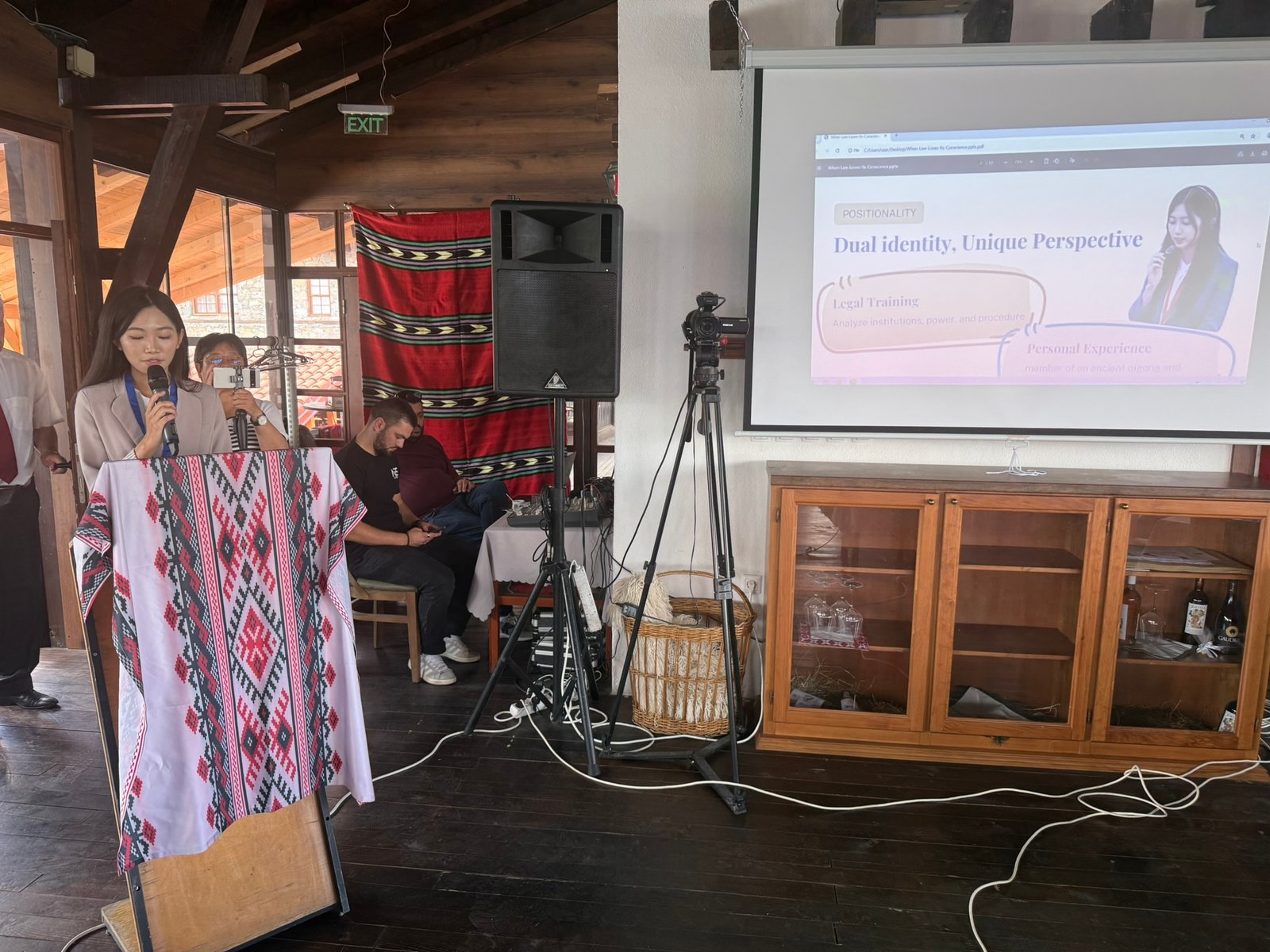
Wang also highlighted the constructive role of spiritual communities. Through cultural exchange and conscience education across 123 countries, Tai Ji Men shows how spirituality can promote peace and ethical reflection. Her reflections on governance in Brunei, a country she visited with her Shifu (Grand Master) and a Tai Ji Men delegation, illustrated how policies grounded in genuine concern for people can foster trust and stability.
Kenny Jeng, a retired chemical engineer, offered a broad conceptual analysis enriched by a long Tai Ji Men personal experience. He began by noting that religion is often imagined as a sanctuary of peace. Yet, history shows that religious language and symbolism can be appropriated to legitimize aggression or mobilize populations.
Jeng argued that so-called “religious wars” are rarely driven by doctrine alone. More often, political actors instrumentalize religious identity—or misunderstand religion—to justify violence, territorial expansion, or the consolidation of power. Conversely, certain fundamentalist movements invoke religious rhetoric to legitimize violent resistance. These dynamics, he noted, demonstrate that no tradition is entirely immune to misuse.
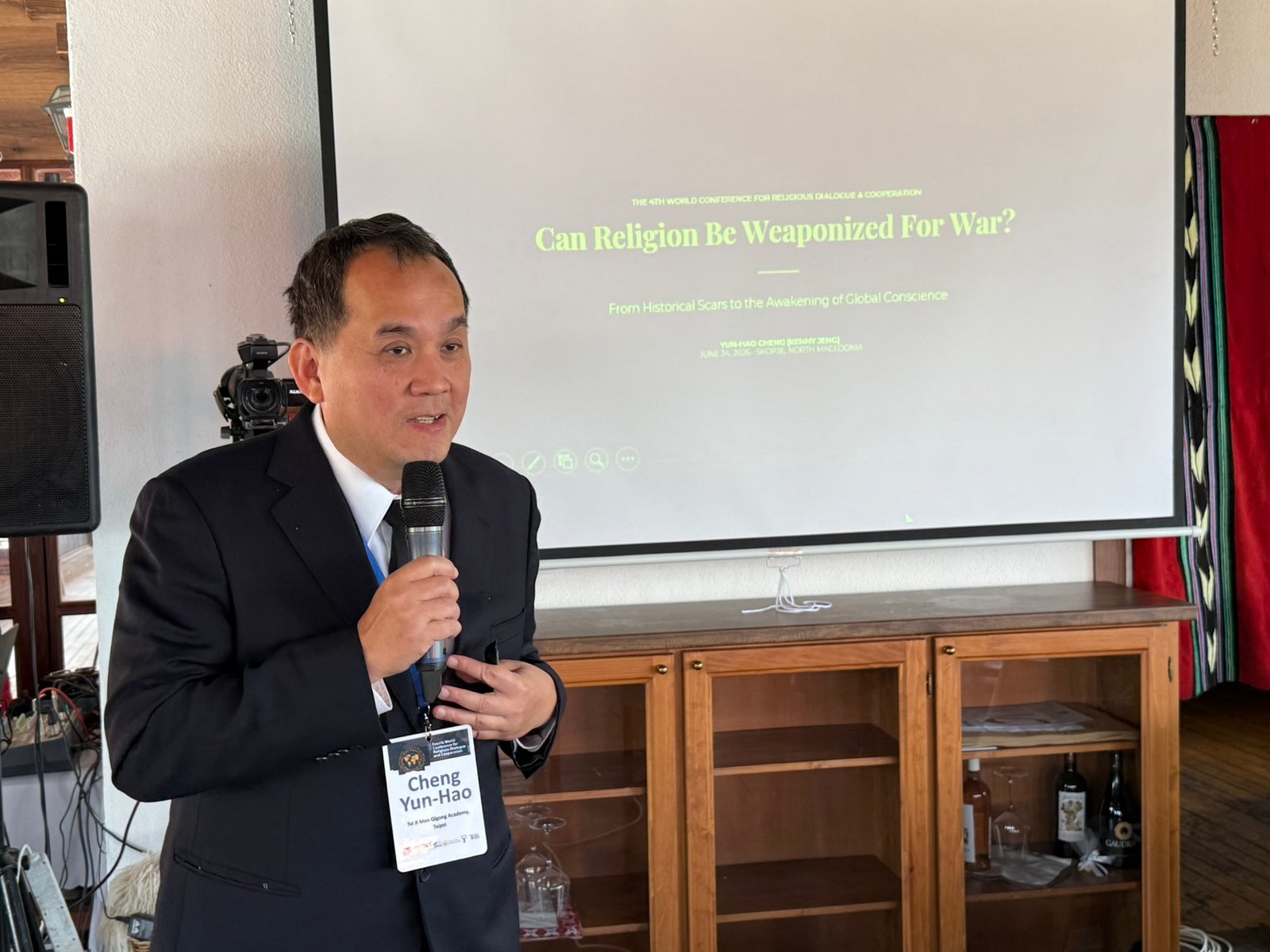
He then turned to the complementary pattern of state persecution of religious communities, which he described as another form of warfare—one directed against freedom of belief itself. In this context, he examined how legal and fiscal systems can be weaponized against minority spiritual groups. Jeng emphasized that religion becomes a weapon when it provides a moral veneer for actions that conscience would otherwise forbid. Demonization silences guilt and persuades followers that violence is a duty. In the digital age, he warned, influencers, algorithms, and emotionally charged narratives can accelerate this process.
The antidote, he argued, lies in conscience, understood as a postsecular, transreligious, practice-based concept. Drawing on the Era of Conscience movement initiated by Tai Ji Men’s Shifu, Dr. Hong Tao-Tze, Jeng described conscience as an inner moral compass that must be cultivated through self-reflection and moral discipline. Jeng then connected these themes to the Tai Ji Men case, identifying it as an example of administrative inertia and the misuse of taxation as a tool of persecution. He concluded that religion without conscience becomes vulnerable to manipulation; religion guided by conscience becomes a bridge rather than a weapon.
The final paper was delivered by Massimo Introvigne, whose study examined the repression of Taiwan’s New Testament Church and its Mount Zion community near Kaohsiung and its parallels with the Tai Ji Men case. Introvigne argued that both cases reveal how spiritual movements can become targets when their autonomy is perceived as threatening by political or administrative actors. He traced the history of the New Testament Church’s repression in the 1970s and 1980s, noting patterns of misrepresentation, bureaucratic hostility, and the use of legal mechanisms to constrain religious freedom.
He then compared these dynamics with the Tai Ji Men case, highlighting both similarities and differences. While the historical contexts differ, both cases demonstrate how administrative systems can generate long-term conflict with spiritual communities when misclassification, prejudice, or institutional inertia take hold.
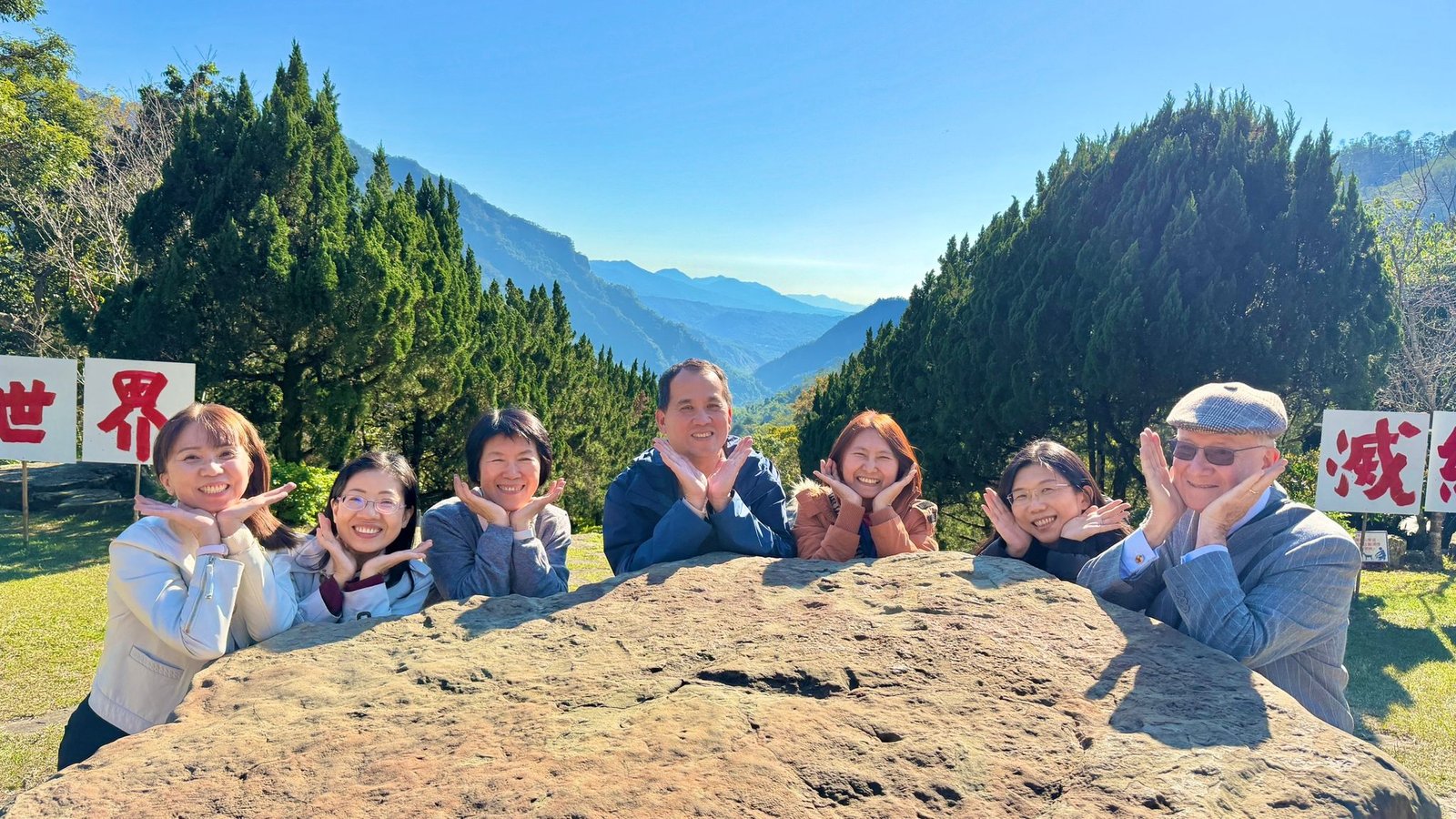
Introvigne concluded that these cases offer important lessons for contemporary democracies: freedom of religion requires not only legal guarantees but also vigilance against administrative practices that may subtly or persistently undermine those guarantees.
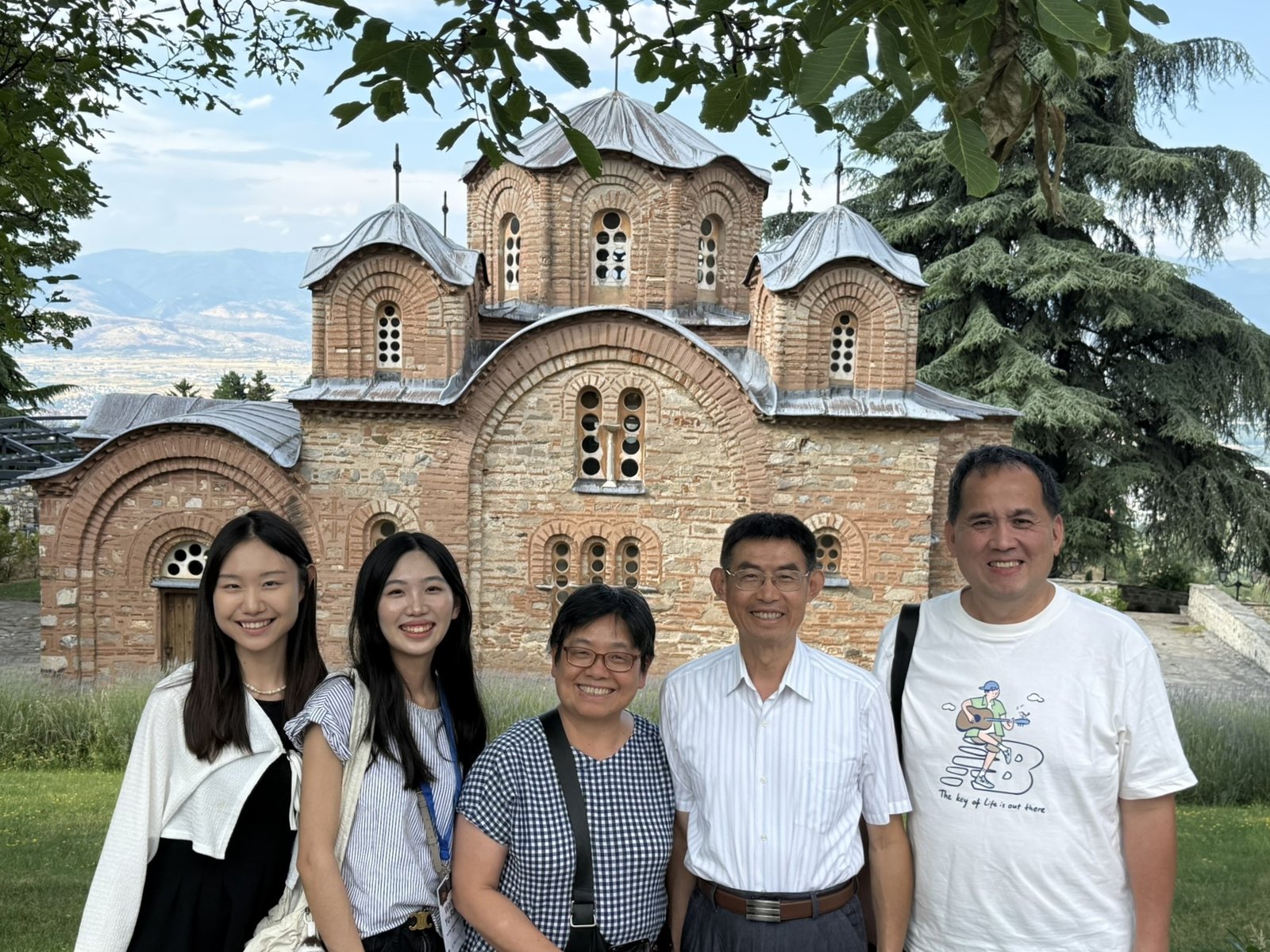
Beyond the academic discussions, Tai Ji Men dizi participated in cultural tours exploring the Sunni Muslim, Christian, and Bektashi heritage of Skopje and nearby Tetovo. These visits offered participants an opportunity to engage with North Macedonia’s diverse religious landscape while also becoming familiar with Tai Ji Men culture.
Since 2026 marks the 60th anniversary of the Tai Ji Men Qigong Academy, the dizi gifted all participants with a specially created perpetual calendar, featuring 31 wise quotes from Dr. Hong TaoTze paired with highlights from the global cultural goodwill tours of the Tai Ji Men Cultural Goodwill Group.
The gesture symbolized the spirit of the session: dialogue, conscience, cultural exchange, and the hope that ethical reflection can counteract the misuse of religion and restore its role as a force for peace.

Márk Nemes is a historian and a graduate in the academic study of religions. He received his doctorate in philosophy at the University of Szeged’s PhD program in 2025 and works as a researcher at the Hungarian Academy of Arts’ Research Institute of Art Theory and Methodology. As an awardee of the Hungarian National Eötvös Scholarship, he served as a visiting researcher at CESNUR from 2023 to 2024. For the past 10 years, he has focused on researching new, alternative, and emergent forms of religiosity in Hungary, Iceland, the US and most recently, in Italy. Since 2025, he serves as the Deputy Director of CESNUR