How the revival of discredited psychological‑coercion theories inside trafficking frameworks endangers every religious and spiritual community: a call to action.
by Massimo Introvigne
For much of the twentieth century, unpopular religions were targeted through theories of “brainwashing” that claimed believers had been stripped of free will by mysterious psychological forces. Courts eventually rejected these models as unscientific, yet they shaped decades of discrimination against groups labeled as “cults” and against communities that powerful interests wanted to marginalize.
The historical pattern is well documented. Roman authors accused early Christians of sorcery, Chinese imperial officials used similar accusations against unauthorized sects. Medieval polemicists recycled the charge against movements they branded heretical. Nineteenth‑century critics of the Latter‑day Saints insisted that no rational person could embrace “Mormonism” unless falling under a mesmeric influence. Modern anticult ideology replaced the vocabulary of magic with the language of psychology, but the underlying logic remained the same.
These theories entered public discourse through sensationalist accounts rather than empirical evidence, and scholars later acknowledged their speculative and political nature. Courts across democratic jurisdictions reached similar conclusions. A U.S. federal court in the 1990 Fishman case held that theories of coercive persuasion practiced by religious and spiritual organizations were not sufficiently established to be admitted as evidence. The European Court of Human Rights observed in 2010, in a case opposing the Jehovah’s Witnesses to Russia, that there was no generally accepted scientific definition of mind control and that behaviors often cited as evidence of coercion were common across many religious traditions. These precedents reflected a broad consensus: allegations of psychological subjection in religious contexts are too vague and too easily weaponized, and they allow authorities to substitute their own value judgments for the lived experiences of believers.
By the early 2000s, many believed that “brainwashing” theories had been relegated to the margins of legal practice. They survived in the media, where deprogrammers such as Steven Hassan promoted simplified versions of the old discredited models, but they no longer shaped judicial outcomes. France only remained an exception, preserving the concept under new names in its 2001 anti‑cult legislation and expanding it further in 2024 with the criminalization of psychological subjection.
The U.S. Commission on International Religious Freedom (USCIRF) repeatedly criticized the influence in countries such as Russia and France of an “anti-cult movement informed by pseudo-scientific concepts like ‘brainwashing’ and ‘mind control’” (2020 report “The Anti-cult Movement and Religious Regulation in Russia and the Former Soviet Union”), adding its authoritative voice to an international scholarly and legal consensus.
Yet history rarely moves in straight lines. What had been expelled through the front door began to reappear through the windows. The return did not take the form of a direct rehabilitation of “brainwashing.” It emerged through the infiltration of “brainwashing” rhetoric into the interpretation of human‑trafficking statutes. Trafficking law carries immense moral authority, and to be accused of trafficking is to be placed among the most serious criminals. Critics of new and conservative religious groups realized that trafficking frameworks offered a promising new terrain. They could revive “brainwashing” theories by using terms such as “psychological coercion,” “grooming,” “coerced slave labor,” or “manipulation,” terms that sound modern and clinical but function identically to the older pseudoscientific models when applied to spiritual movements.
Argentina became the first major testing ground for this strategy. Its anti‑trafficking legislation, adopted in a climate of moral panic about organized crime, included one of the broadest international definitions of “trafficking.” This conceptual blurring encouraged expansive categories of vulnerability and victimhood, in which individuals could be classified as victims even when they denied being harmed. Beginning in 2018, the special prosecutorial office for human trafficking, PROTEX, established ties with domestic and international anti‑cult activists and began prosecuting groups stigmatized as “cults” on trafficking theories infused with brainwashing rhetoric. It later expanded to mainline churches. Volunteer work within religious communities was reinterpreted as forced labor obtained through psychological coercion. If members denied being victims, this was taken as evidence that they had been manipulated. Groups such as the Christian new religious movement Cómo vivir por Fe, Pastor Roberto Tagliabué’s church, and the Iglesia Tabernáculo Internacional faced prosecutions that courts rejected because the alleged victims had joined voluntarily and did not consider themselves exploited. Yet, other cases were allowed to proceed, and several remain pending. The same prosecutors have also targeted Opus Dei and large evangelical charities, accusing them of slave labor under trafficking theories that rely heavily on psychological‑coercion narratives.
The United States has experienced a similar conceptual drift. The Supreme Court held in 1988 in “United States v. Kozminski” that involuntary servitude required physical or legal coercion and warned that extending the statute to psychological coercion alone would criminalize ordinary religious, social, and economic relationships. Congress amended the law in 2000 through the Trafficking Victims Protection Act, adding psychological means as a basis for forced‑labor charges, but the legislative history shows that Congress intended to target specific threats such as violence, deportation, or legal action in the context of organized crime exploiting migrants and sex workers. In 2021, the Biden Administration’s updated “National Action Plan to Combat Human Trafficking” stated that forced labor “often occurs alongside otherwise legitimate … activity” connected to organizations “widely perceived by the public as reputable”—explicitly removing institutional respectability as a shield from prosecution, a shift that had far-reaching consequences in subsequent years.
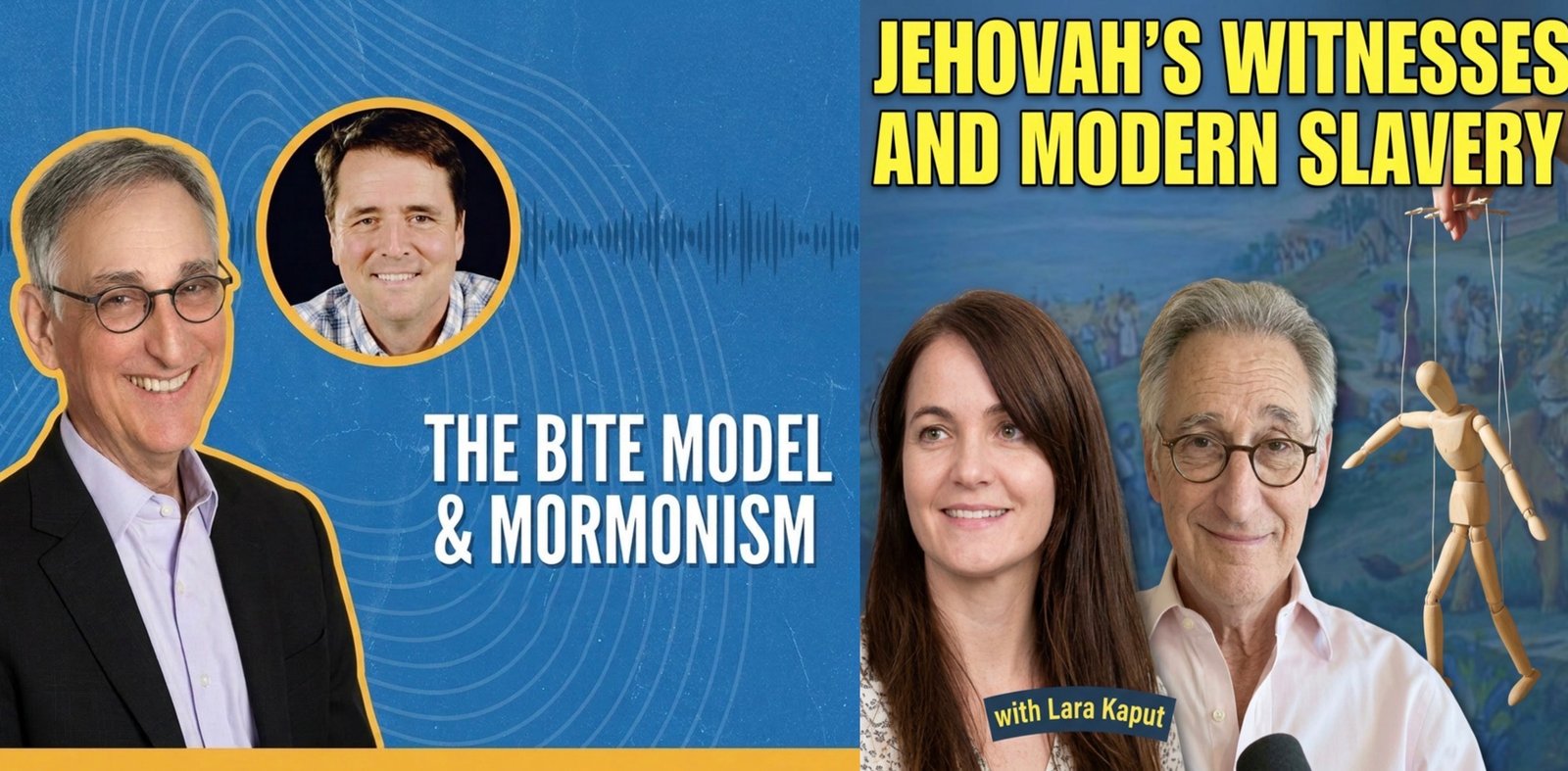
Activists seized on the ambiguity and began presenting trafficking as a new lens through which to view minority religions. Steven Hassan’s influence expanded through federal anti‑trafficking training programs, and his model known as BITE, widely regarded by scholars of religion as a pseudo‑scientific pop psychology digest of the old “brainwashing” theories, was increasingly applied to identify supposed “cults” engaging in mind control and trafficking. In recent years, Hassan has extended this model to the Church of Jesus Christ of Latter‑day Saints and even to non‑religious organizations, including conservative political groups supporting President Trump.
Already in November 2015, the FBI Law Enforcement Bulletin had published an article advocating for “A Victim-Centered Approach to Sex Trafficking Cases,” which explicitly embedded Hassan’s BITE model as the recommended framework for identifying how traffickers maintain psychological control over victims. Hassan appeared in several events alongside anti‑trafficking executives of the Department of Justice.
By 2023, that framework had slowly migrated from the FBI training literature into active operational use and was targeting religious organizations as it had happened in Argentina before (which was also due to contacts between Argentine and U.S. agencies and prosecutors). Paul Chang, the U.S. Department of Labor’s Regional Anti-Human Trafficking Coordinator who helps oversee nation-wide training in trafficking prosecutions, explained its application on a federal training podcast in April 2023: “People don’t normally think that if you are being trafficked in a religious organization that you are potentially labor trafficked in many cases. But this is actually not unique, and it happens more often than you think… The best way to explain this is through the BITE model.”
The penetration of this new trafficking ideology applied to religion and spirituality into American law enforcement is further illustrated by a 2023 report published by the U.S. Department of Justice, which stated that “among the most notable labor‑trafficking trends in recent years is forced labor perpetrated by religious organizations.” The report cited the Church of Scientology, the large Hindu group BAPS, and several Christian groups as examples, even though the Department of Justice later dropped the BAPS case it had initiated. This convergence between “brainwashing” ideology and trafficking enforcement represented a significant institutional shift.
Several cases are now pending in the United States. A 2025 lawsuit against the Community of Jesus in Massachusetts alleges trafficking based on volunteer labor. Civil litigation continues against BAPS despite the closure of the federal investigation. Anticult activists have openly stated that they hope these cases will create precedents to be used against other religious communities. The OneTaste case has become a focal point of concern. Some of OneTaste’s courses taught ways to enhance women’s female awareness and sexual consciousness through both meditative and physical techniques. Even those who disagree with the inherent philosophy of the courses should be concerned with the use of “brainwashing” rhetoric in the trial to support a conviction for conspiracy to force labor.

Federal investigators conducted a lengthy investigation into alleged sexual misconduct and were unable to sustain it. At the sentencing stage, prosecutors attempted once more to introduce sexual misconduct—and the court struck that effort down citing insufficient evidence. The defendants received sentences for labor violations rather than for sexual offenses. This distinction matters as a well-established prosecutorial strategy for advancing novel and dangerous legal theories is to select defendants whose cases have something to do with sex, ensuring that the precedent slips past public scrutiny. OneTaste fit that template. The precedent, however, now applies to everyone.
The first‑degree decision created alarm in the legal community because it marked the first time in U.S. federal case law that a forced‑labor conviction rested entirely on psychological coercion theories without physical coercion. Hassan served as the personal therapist to key government witnesses and appeared repeatedly in the media campaign surrounding the case. Many observers believe he obtained through OneTaste the new legal precedent he had long sought.
The return of “brainwashing” theories has not occurred through a frontal assault. It has unfolded through conceptual drift, legal ambiguity, and the rebranding of discredited ideas in new terminology. Trafficking law has become the preferred vehicle for this transformation because it carries moral weight and its language is flexible enough to absorb psychological coercion narratives. The danger for religious liberty is immediate and structural. Once psychological coercion becomes an accepted basis for trafficking prosecutions, any religious or spiritual community can be targeted. The content of a group’s teachings becomes secondary. What matters is the model used to interpret those teachings. If prosecutors or activists can claim that intense commitment, volunteer labor, or deference to leaders constitute evidence of psychological manipulation, then every religion is vulnerable. The groups targeted today may be unfamiliar or controversial. The groups targeted tomorrow may be mainstream.
This is the moment to act. The revival of “brainwashing” theories through trafficking frameworks threatens the foundations of freedom of religion or belief. It demands coordinated monitoring, legal advocacy, and public education. It requires engagement with legislators and international bodies to ensure that trafficking statutes remain anchored in concrete forms of coercion rather than in speculative psychological models. It calls for alliances across religious traditions, because the danger is shared by all. The trajectory is already visible in Argentina, in the United States, and in the growing influence of activists within institutions that shape global trafficking policy. The time to respond is now.
Endorsed by
Alessandro Amicarelli, attorney and President of the European Federation for Freedom of Belief, London, UK
Eileen Barker, London School of Economics (em.), London, UK
David Bromley, Virginia Commonwealth University (em.), Richmond Virginia
Bernard Doherty, Charles Sturt University, Canberra, Australia
Willy Fautré, Human Rights Without Frontiers, Brussels, Belgium
Holly Folk, Western Washington University, Bellingham, Washington
Karolina Maria Kotkowsha, Jagiellonian University, Krakow, Poland
J. Gordon Melton, Baylor University (ret.), Waco, Texas
Rebecca Moore, San Diego State University (em.), San Diego, California
Márk Nemes, Hungarian Academy of Arts’ Research Institute of Art Theory and Methodology, Budapest, Hungary
Susan Palmer, Concordia University, Montreal, Quebec
James T. Richardson, University of Nevada (em.), Reno, Nevada
Bernadette Rigal-Cellard, Université Bordeaux Montaigne, Bordeaux, France
Rosita Šorytė, International Observatory for the Religious Liberty of Refugees, Torino, Italy
Keith Thompson, University of Notre Dame Australia, Sydney, Australia
María Vardé, University of Buenos Aires (lecturer and Ph.D. candidate), Buenos Aires, Argentina
Catherine Wessinger, Loyola University, New Orleans, Louisiana
Stuart Wright, Lamar University, Beaumont, Texas
Peter Zoehrer, Forum for Religious Freedom Europe, Vienna, Austria
Read a letter of endorsement:

Massimo Introvigne (born June 14, 1955 in Rome) is an Italian sociologist of religions. He is the founder and managing director of the Center for Studies on New Religions (CESNUR), an international network of scholars who study new religious movements. Introvigne is the author of some 70 books and more than 100 articles in the field of sociology of religion. He was the main author of the Enciclopedia delle religioni in Italia (Encyclopedia of Religions in Italy). He is a member of the editorial board for the Interdisciplinary Journal of Research on Religion and of the executive board of University of Pennsylvania Press’ Nova Religio. From January 5 to December 31, 2011, he has served as the “Representative on combating racism, xenophobia and discrimination, with a special focus on discrimination against Christians and members of other religions” of the Organization for Security and Co-operation in Europe (OSCE). From 2012 to 2015 he served as chairperson of the Observatory of Religious Liberty, instituted by the Italian Ministry of Foreign Affairs in order to monitor problems of religious liberty on a worldwide scale.