A new U.S. Congressional‑Executive Commission report describes a global strategy of intimidation far beyond China’s borders.
by Massimo Introvigne
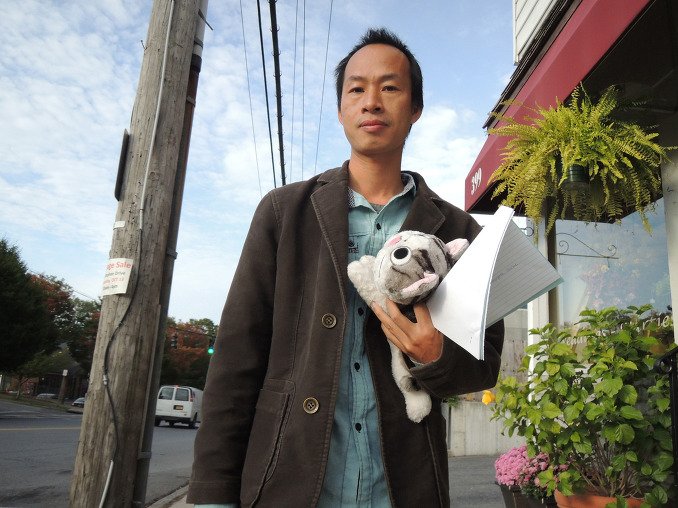
The U.S. Congressional‑Executive Commission on China has released a report that offers a sobering and comprehensive examination of the PRC’s expanding global tactics of repression and influence that reach far beyond its borders. It is a document that traces a pattern of pressure, fear, and manipulation that affects activists, diaspora communities, cultural institutions, and democratic systems. The report states that these operations pose profound challenges to human rights, sovereignty, and the stability of democracies around the world.
The narrative that emerges is one of a government determined to silence any voice that challenges the political line of the Chinese Communist Party. The report describes how Hong Kongers, Uyghurs, Tibetans, dissidents, and former officials are confronted with a combination of physical aggression, digital harassment, legal pressure, and cultural censorship. The description of assaults against protesters in the United States, including the violent scenes during the 2023 APEC Summit in San Francisco, shows how intimidation is carried out even in countries that pride themselves on the protection of free expression. The report recounts how Chinese diplomats coordinated with local proxies to confront demonstrators critical of Xi Jinping, creating an atmosphere of fear among those who dared to speak publicly.
Digital harassment is presented as a new frontier. The report details AI‑generated sexualized deepfakes targeting women activists and exiled politicians. These fabrications are designed to humiliate, discredit, and isolate their targets. The cases of Carmen Lau Ka‑man and Ted Hui Chi‑fung illustrate how technology is weaponized to damage reputations and discourage political engagement. The report explains that these attacks rely on gender stereotypes that punish women who take public risks, adding a layer of psychological violence to the political one.
Coercion by proxy is another recurring theme. The report recounts the case of Kwok Yin‑sang, imprisoned after attempting to cancel an insurance policy connected to his daughter, a Hong Kong protester living abroad. This method turns family members into instruments of pressure, creating anguish among activists who fear for the safety of relatives still in China. The same logic appears in the cancellation of a New York film festival that planned to address the Hong Kong protests and the COVID‑19 lockdowns. Online harassment and coordinated pressure led to the suppression of the event, showing how cultural spaces are targeted when they host narratives that Beijing dislikes.
Legal intimidation is described as a complementary tool. The report cites the case of Ma Ju, a Uyghur asylum seeker in the United States, who faced lawsuits initiated by Chinese state‑linked entities. These actions drain resources and create uncertainty for those who already live in precarious conditions. The report presents these lawsuits as part of a broader strategy that uses foreign legal systems to silence witnesses and advocates.
Censorship in the arts and academia appears repeatedly. The case of the Sheffield Hallam University and the removal of a Tibetan multimedia installation in Bangkok after pressure from Chinese diplomats are two examples among many. The report portrays these interventions as attempts to shape the global cultural landscape, discouraging institutions from hosting works that challenge Beijing’s preferred narratives.
The report also examines the influence exerted within international organizations. It describes how government‑organized NGOs operate inside UN bodies to promote Beijing’s positions, monitor dissent, and intimidate civil society. The misuse of INTERPOL red notices is another concern. Although some countries reject these requests as political, the report warns that vulnerabilities remain and that dissidents continue to face risks when traveling or seeking asylum.
Critics of China are also targeted. For example, the report notes a Chinese attempt to discredit the Madrid-based human rights organization Safeguard Defenders through false posts.
Influence operations directed at foreign societies are presented as an integral part of this strategy. The report describes networks of associations, cultural groups, and economic ties used to shape perceptions of Hong Kong, Taiwan, Xinjiang, and other sensitive issues. These activities often appear benign, yet they create channels through which political pressure can be applied. The opacity of these networks makes them difficult for democratic governments to identify and counter.
The consequences for diaspora communities are severe. The report describes a climate of fear in which harassment, threats, and digital attacks discourage activism. Many individuals reduce their public engagement because they fear retaliation against relatives in China. Women and vulnerable groups face additional pressure because they are targeted through gendered stereotypes and degrading digital campaigns. The psychological toll is heavy, and the sense of isolation grows.
Democratic governments face a complex challenge. The report acknowledges that the United States and its allies have begun to respond through sanctions, legislation, and intelligence cooperation. Yet legal systems struggle to address harassment that crosses borders and uses digital tools. International mechanisms remain exposed to political manipulation. Economic considerations often complicate diplomatic responses. The report calls for strategies that combine law enforcement, diplomacy, and community support, and that recognize the scale of the threat.
The document concludes with a warning. It describes a sustained effort to shape global narratives, silence dissent, and influence political life far beyond China’s borders. Violence, digital harassment, legal intimidation, cultural suppression, and covert influence form a single architecture of control. The report urges democratic societies to understand the scope of this challenge and to act with determination to protect universal rights and the integrity of public life.

Massimo Introvigne (born June 14, 1955 in Rome) is an Italian sociologist of religions. He is the founder and managing director of the Center for Studies on New Religions (CESNUR), an international network of scholars who study new religious movements. Introvigne is the author of some 70 books and more than 100 articles in the field of sociology of religion. He was the main author of the Enciclopedia delle religioni in Italia (Encyclopedia of Religions in Italy). He is a member of the editorial board for the Interdisciplinary Journal of Research on Religion and of the executive board of University of Pennsylvania Press’ Nova Religio. From January 5 to December 31, 2011, he has served as the “Representative on combating racism, xenophobia and discrimination, with a special focus on discrimination against Christians and members of other religions” of the Organization for Security and Co-operation in Europe (OSCE). From 2012 to 2015 he served as chairperson of the Observatory of Religious Liberty, instituted by the Italian Ministry of Foreign Affairs in order to monitor problems of religious liberty on a worldwide scale.