Sensationalist media, fake news, and propaganda fueled a rapid mobilization of violent protests.
by Massimo Introvigne
International scholars who have followed the Ahmadi Religion of Peace and Light (AROPL) for years were already deeply concerned by the disproportionate police raid of 29 April 2026. Yet what followed in the days after the operation revealed a second, equally troubling dimension of the crisis: the rapid mobilization of racist and religiously hostile protests around the movement headquarters at Webb House, Crewe, Cheshire, fueled by misinformation, sensationalist media coverage, and online propaganda. For those of us who have studied new religious movements for decades, the pattern is familiar. When a minority faith is publicly stigmatized, especially through dramatic police actions, the social environment around it can deteriorate with alarming speed. What happened in Crewe in May and early June 2026 is a textbook example of how moral panic, disinformation, and latent prejudice can combine to produce real‑world violence.
The first protests began almost immediately after the raid, but the most intense episodes started on 3 May, when Webb House was reopened to the community. Within hours, a protest had formed outside the premises, mobilized largely through TikTok livestreams. Observers noted that a significant proportion of the protesters were teenagers, some as young as thirteen, drawn in by sensational online narratives portraying AROPL as dangerous, criminal, or predatory. The chants recorded on video were unambiguous: “Get them out,” “F*** off home,” “We don’t want nonces here,” and other slogans that combined xenophobia, Islamophobia, and defamatory accusations of sexual misconduct. None of these accusations had any basis in fact. No allegation of paedophilia has ever been made in any formal legal proceeding against any member of the community. Yet the protesters repeated these claims with absolute conviction, demonstrating how quickly falsehoods can become social truth when amplified through digital platforms.
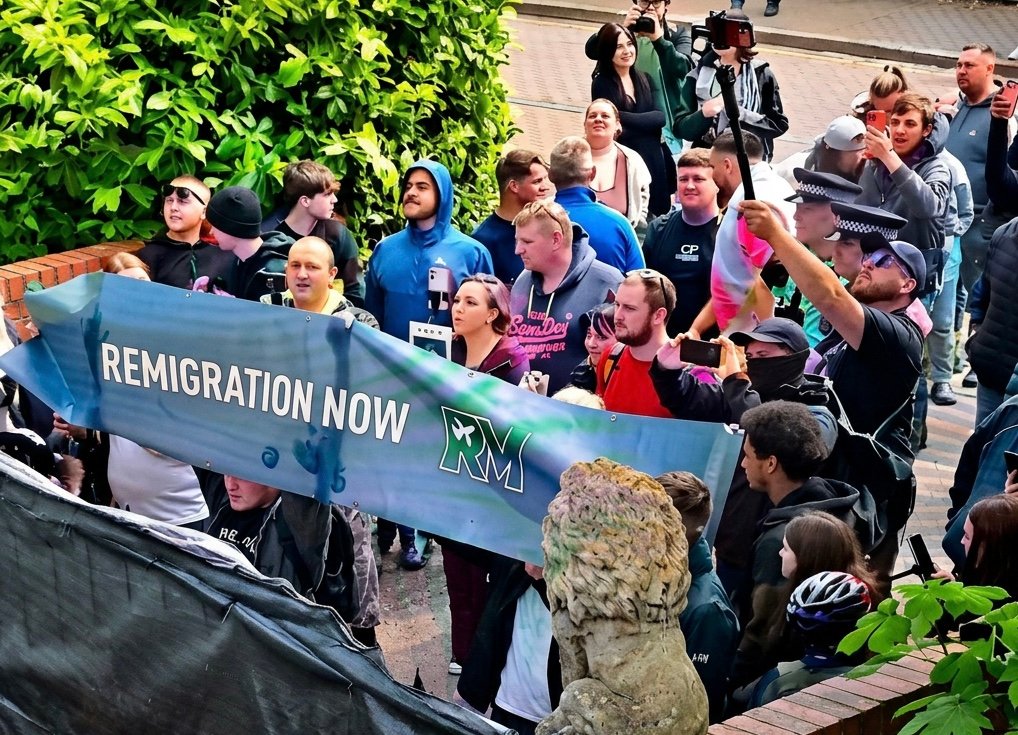
The presence of a so‑called “remigration” flag, a symbol associated with extremist calls for the mass expulsion of non‑white populations, underscored the ideological nature of the protest. This was a manifestation of a broader ecosystem of far‑right rhetoric that has increasingly targeted minority religions, immigrants, and non‑white ethnic communities. The fact that many of the protesters were minors highlighted the extent to which online radicalization can shape the behavior of young people. Scholars of extremism have long warned that adolescents are particularly vulnerable to simplified narratives of threat and purity, especially when these narratives are packaged in the emotionally charged, algorithmically amplified formats typical of platforms like TikTok.
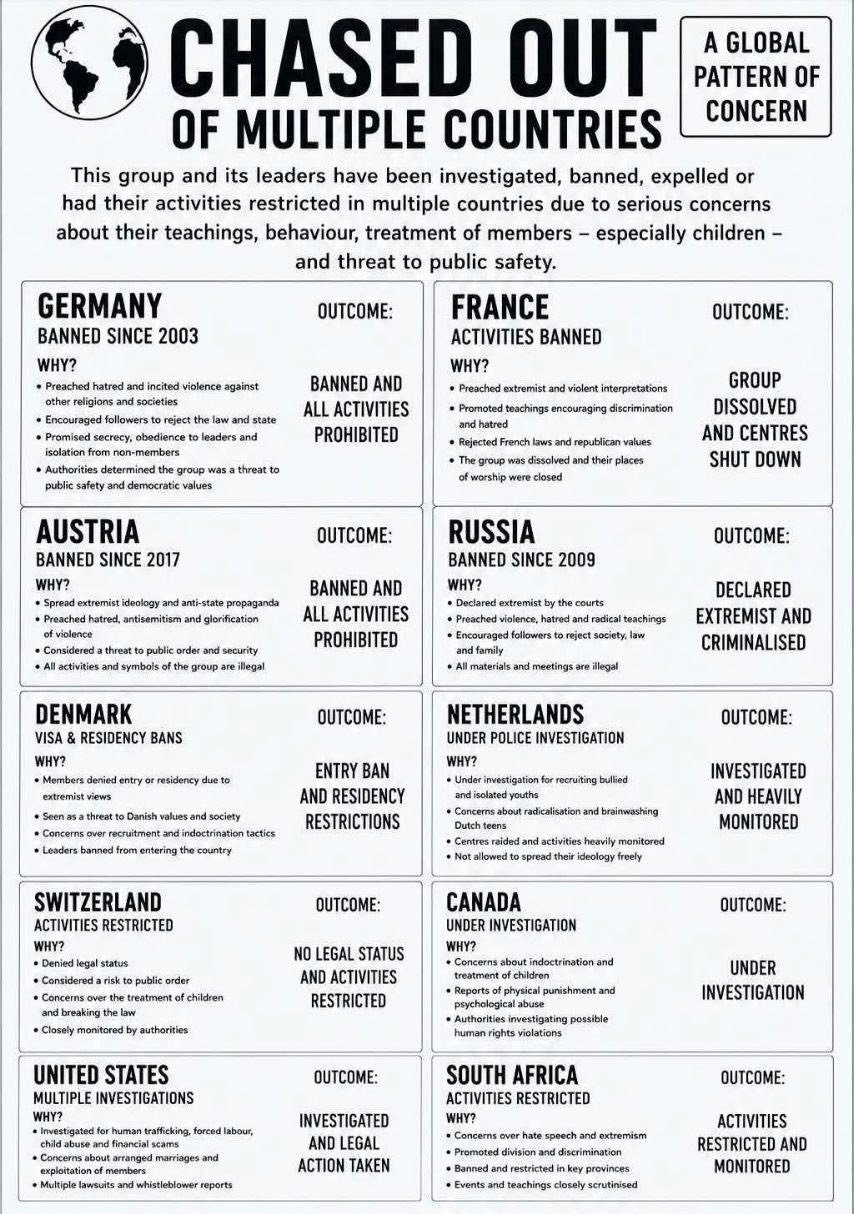
The misinformation circulating online in the days after the raid was astonishing in its volume and its absurdity. One widely shared flyer claimed that AROPL had been “banned in Russia in 2009,” even though the movement was founded in 2015. Other posts asserted that AROPL had been expelled from multiple democratic countries, an entirely false claim. No democratic nation has ever banned the group.
Yet these fabrications were repeated so frequently that they acquired the appearance of legitimacy. Some TikTok livestreams muted their audio to avoid content moderation, while others displayed AI‑designed posters that mimicked the style of official community safety leaflets. These posters contained a series of unsubstantiated allegations presented as fact. The Ahmadi Religion of Peace and Light issued a public statement warning that the posters were false and that police reports had been filed against those distributing them. The warnings did little to slow the spread.
Local media coverage in the days surrounding the raid adopted a tone that several observers described as racially and religiously charged. Sensational headlines, dramatic imagery, and uncritical repetition of anti‑cult statements contributed to an atmosphere in which AROPL members were portrayed as inherently suspicious. This is a pattern well documented in the academic literature on new religious movements. When the media frames a minority religion as dangerous, deviant, or criminal, the public often responds with hostility, even in the absence of evidence.
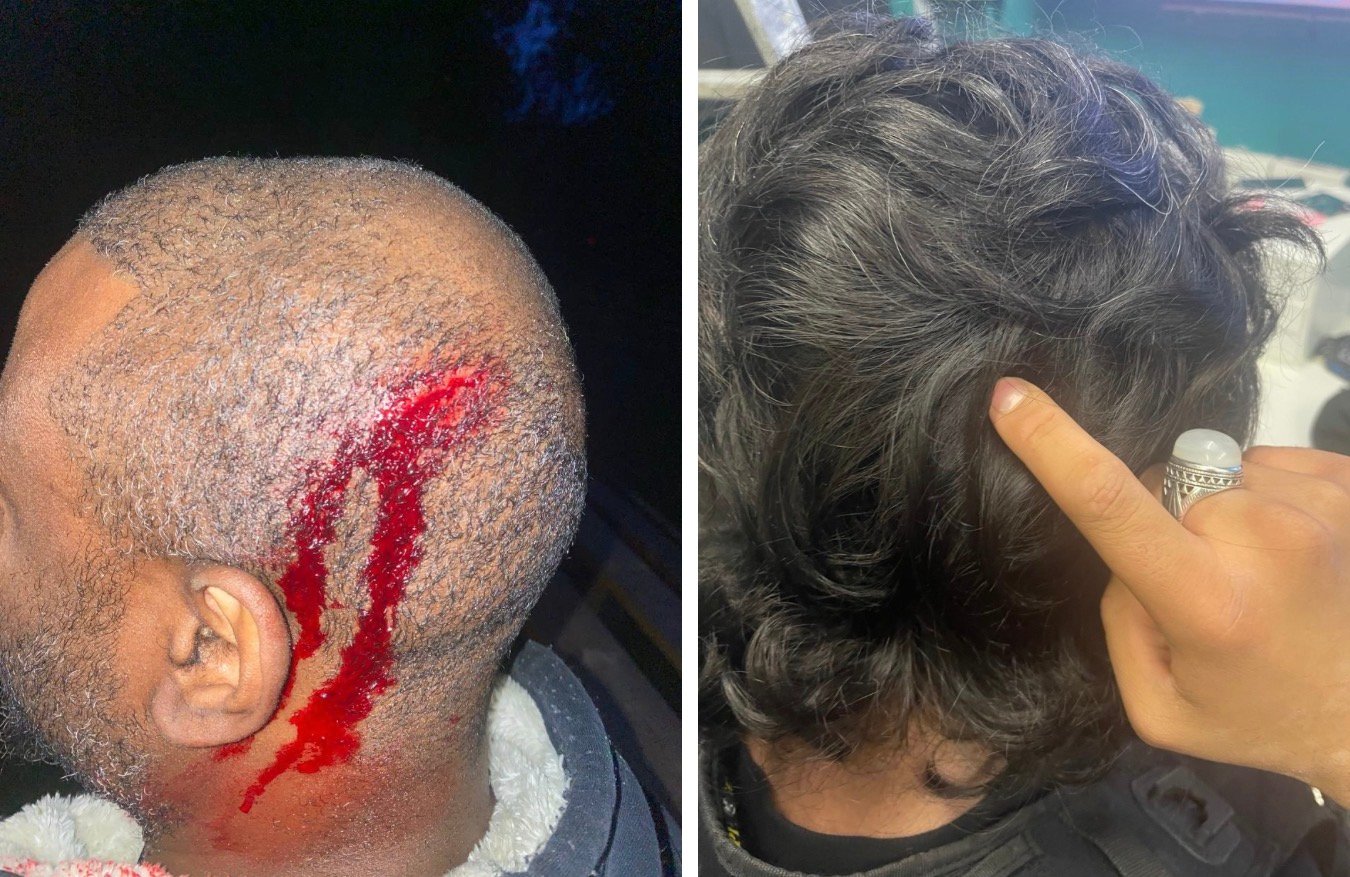
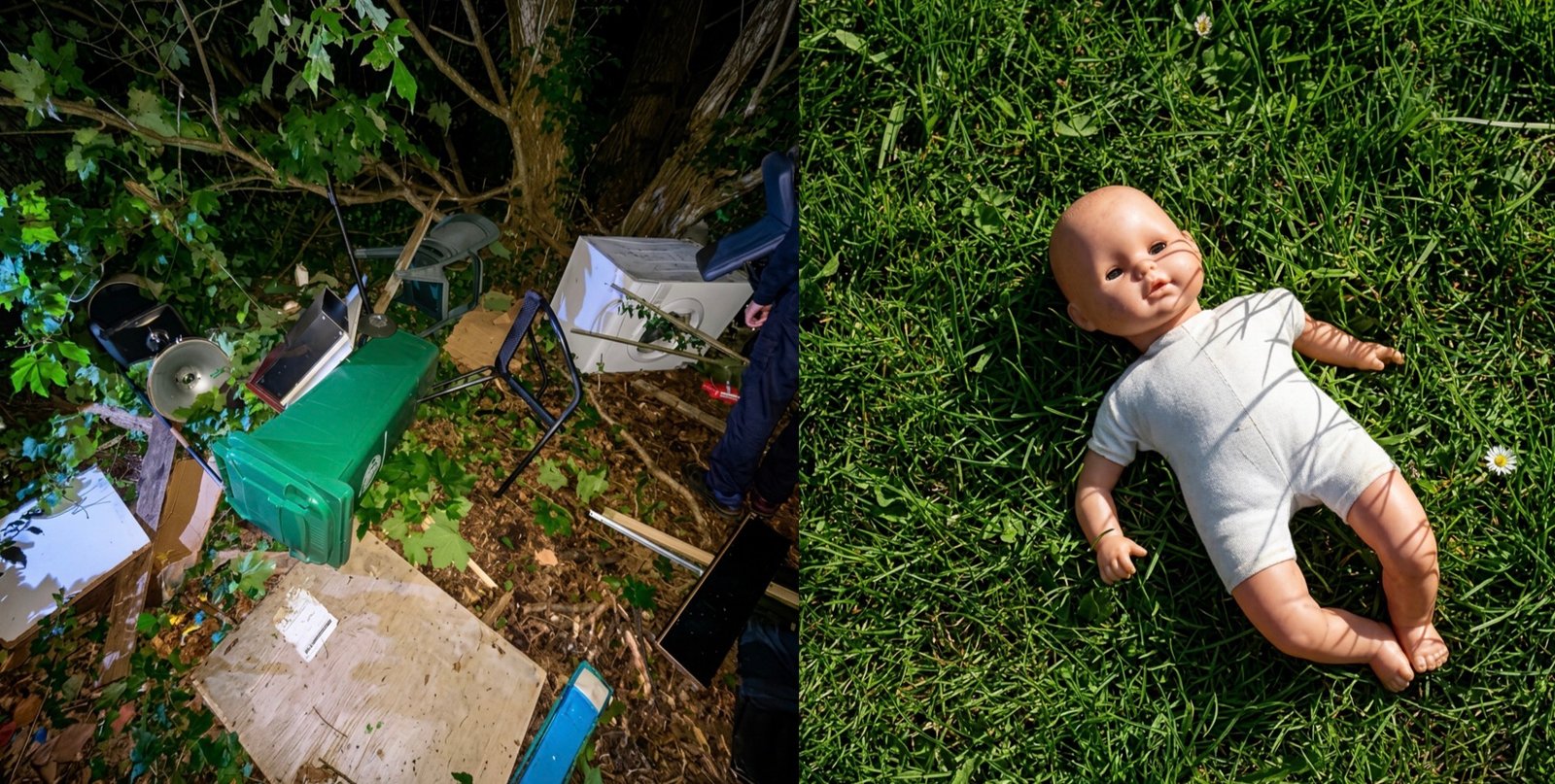
The events demonstrated how quickly online hostility can translate into physical danger. Protesters gathered at points around Webb House where the perimeter was more easily breached. Objects were thrown over the fence, including trash, metal poles, wooden poles, and even a washing machine. One protester was arrested after a large concrete stone was thrown over the fence and struck a security guard on the head, causing a deep laceration that required stitches. In a separate incident, two rocks were thrown, injuring another community member. In a subsequent TikTok livestream, a protester was heard admitting that a large stone had been thrown.
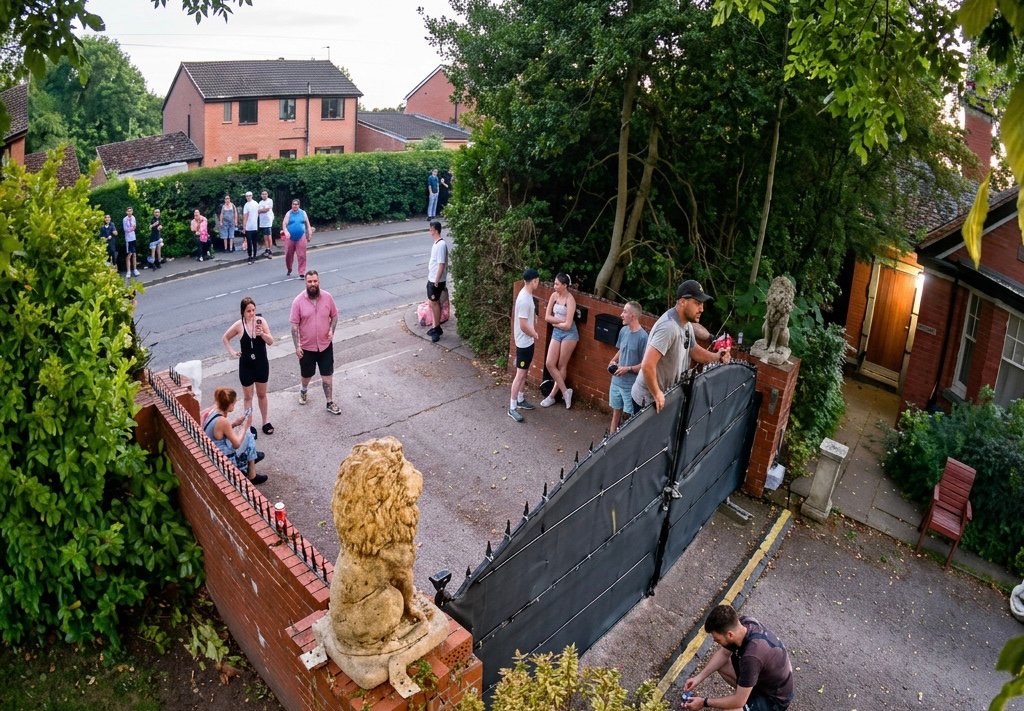
The situation escalated further in the days that followed. On 3 and 4 May, TikTok live-streamers coordinated attempts to identify weak points in the perimeter, encouraged others to “rush the fence,” and discussed possible weapons. Minors climbed trees, fences, and walls, trespassing repeatedly. Eggs, bottles, and stones were thrown. Red flares were launched into the premises. Threats of arson circulated online. Protesters scouted the rear fence from the train tracks. AROPL members attempted peaceful engagement by arranging for an ice‑cream van, only for the vendor to be harassed until he fled out of fear.
By 5 May, fires were reported near the property, believed to have been started during the protests. Attempts to breach the rear gate continued. Unknown liquids were sprayed onto the premises. Rocks and debris were thrown from West Street. Two members were injured by projectiles. An ambulance took more than two hours to arrive. A washing machine was thrown over the fence. The crowd grew to around one hundred people.
The violence did not subside. On 6 May, threats of fireworks and petrol bombs were reported during TikTok livestreams. Claims circulated that individuals described as Albanian were approaching with weapons. Stones were thrown again. Protesters argued with police. Attempts to climb the fence continued.
On 9 May, crowds of up to forty people crossed the property line. A woman attempted to set fire to a tarp at the front gate and was later charged with an arson‑related offence. A banner reading “Remigration Now” was hung. Racial slurs were shouted. Minors climbed the back fence. A van played loud music and racially offensive songs. Alcohol was consumed openly. Protesters sat on the brick walls at the gate. A visibly intoxicated man threw a beer can over the fence. Attempts to tear down the tarp continued.
On 10 May, minors threw eggs at members. Individuals previously reported for online threats appeared at the gate, attracting a larger crowd. Stones were thrown. Masked individuals sat on the brick wall. Vehicles were followed. License plates were posted online. Images of drivers were shared. Members reported being followed almost daily. Two individuals were seen kicking the back gate of Webb House and throwing sticks and stones over the perimeter. As they walked away, they shouted racially abusive language at a security guard by name and directed anti‑Islamic slurs at community members. The fact that they knew the guard’s name suggested a level of targeted hostility that went beyond spontaneous anger. It indicated surveillance, doxxing, or at least a deliberate effort to identify individuals associated with the community.
The pattern continued through mid‑May. On 12 May, individuals kicked the west gate, broke the fence, and then jumped over the wall. When an AROPL member pursued them and informed them they were trespassing, he was punched. Two rioters were arrested for trespassing and assault. On 13 May, a minor climbed the main gate. Rocks were thrown. A member with autism was mocked online. A live-streamer who had lingered at the gate for weeks received a dispersal order after threatening a guard.
On 14 May, a man wanted for failing to appear in court trespassed and vandalized a sign. Another protester disrupted surveillance with a laser. On 17 May, protesters obstructed vehicles. On 18 May, boys kicked the back gate, ripped barriers, and littered on the property. Fireworks were shot onto the premises. A drunk man impersonated a police officer. On 19 May, a protester blocked a vehicle and shouted aggressively. Another exposed himself at the gate. Sensitive information about members appeared on TikTok, raising concerns about leaks.
On 20 May, professional photographers linked to major media outlets appeared at the gate. Trespassing continued. A drone was flown at low altitude, allegedly attempting to injure a guard. A man lifted a child onto the wall to film the property. A dispersal order was issued and then withdrawn due to an error in the reported location. Protesters obstructed CCTV cameras with flashlights.
On 21 May, a confrontation occurred between a local supporter of AROPL and a protester. Police inspectors took a statement from a member injured earlier, only to question him about unrelated matters. Online chatter discussed the use of torches to blind guards and disrupt surveillance. Floodlights became a point of contention. Harassment continued.
On 22 May, a man was caught trespassing. Children banged on the back gate and spat on the property. Lasers were used again. On 23 May, live-streamers harassed guards, displayed car registration plates, and shouted abuse. Lasers were shone into guards’ eyes. Gates were kicked. Signs were damaged. On 24 May, posters created by protesters were placed around the premises. Rocks were thrown. Trespassing continued. Police response was delayed or absent.
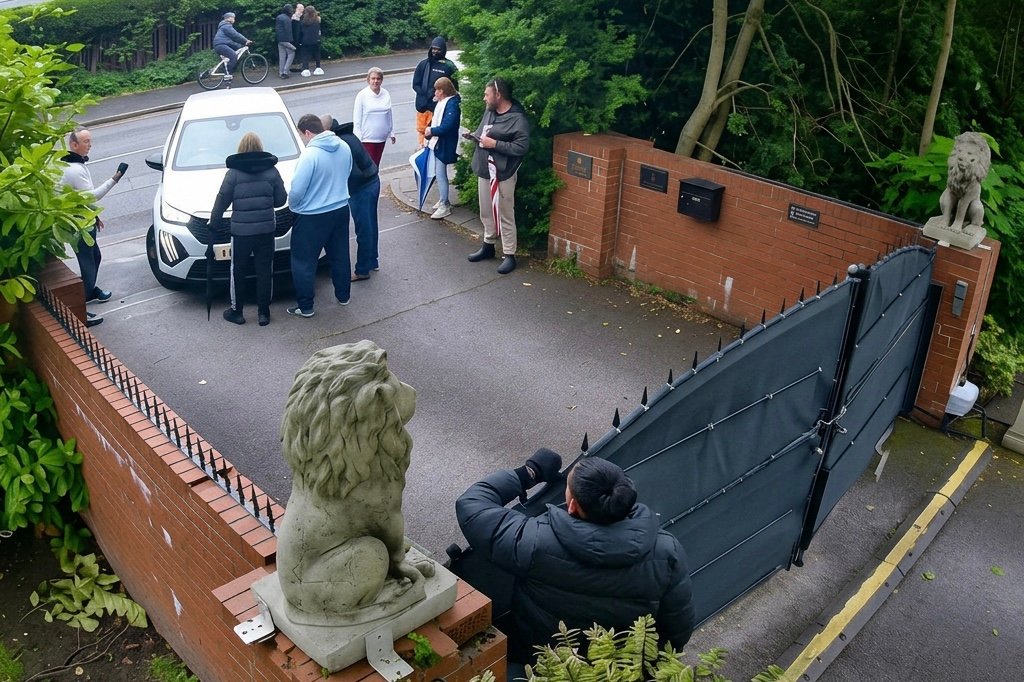
On 25 May, protesters blocked vehicles. A suspicious car followed members. A counter‑protester holding a banner reading “Say No to Islamophobia” was attacked. A knife was reportedly carried by one of the protesters. On 26 May, threats were shouted at guards. Vehicles were blocked again. Signs were broken. Verbal abuse escalated. Flashlights were used to disrupt CCTV. On 27 May, spikes were damaged. Eggs and wet tissues were thrown. Lasers were used again. A chain and padlock were broken.
The escalation continued into June. In the night between May 31 and June 1, rioters broke the front gate of Webb House. The damage was followed by further disorder on 1 June, when protests resumed in the Victoria Avenue area. According to a BBC report, Cheshire Police acknowledged “several incidents of disorder and disruption” near the headquarters of the Ahmadi Religion of Peace and Light. A dispersal order was imposed in the evening, making it an offence for anyone to return to the area for up to forty‑eight hours. Four rioters were arrested. These developments confirmed that the climate surrounding Webb House had reached a point where sustained police presence and emergency powers were required simply to contain the unrest.
A further development in the night between 1 and 2 June revealed how far the hostility had spread beyond Webb House. One member of the Ahmadi Religion of Peace and Light, a pregnant woman who is under a ban preventing her from residing in Cheshire, had been living temporarily at an undisclosed location. Her face appeared on flyers circulated on social media by rioters, and her address was leaked by a neighbour. She has reported that while she was inside the house she heard loud banging on the door and realized that TikTok agitators had surrounded the property and were preparing to force entry. She called the police, who arrived and advised her to leave immediately, warning that the same pattern of harassment unfolding at Webb House could occur there as well. By that time her address had already been shared widely online. Officers escorted her out through the back of the property to ensure she was not followed. She then spent the night driving in search of a safe place to stay, fearing that any temporary refuge might be compromised as soon as her location became known.
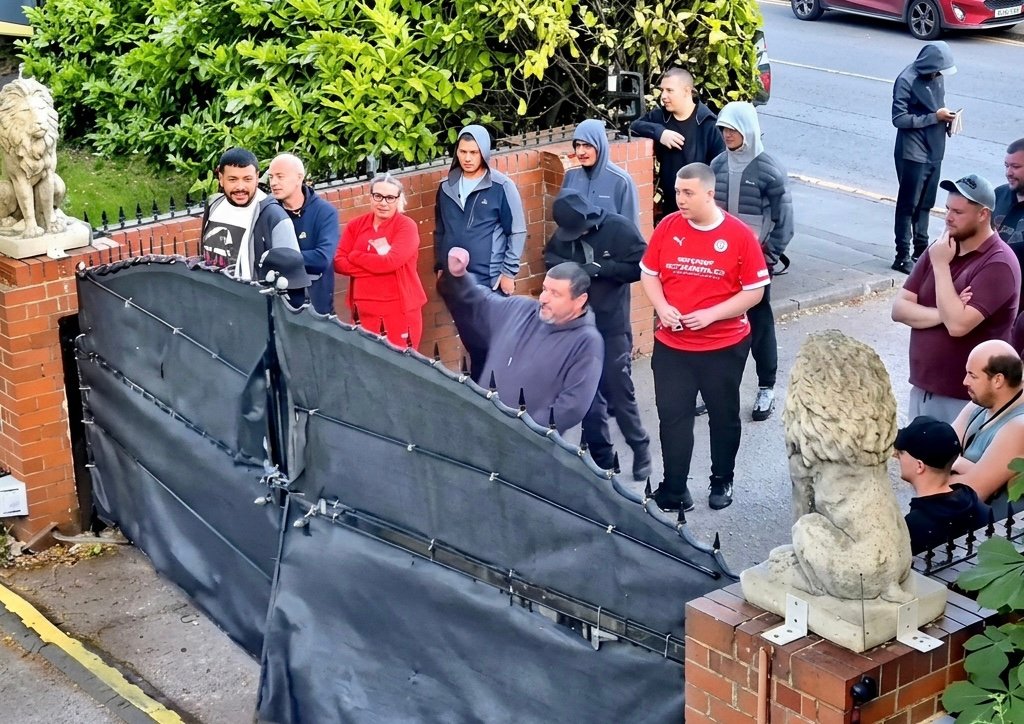
The cumulative effect of these events has been profound. Members of AROPL report feeling unsafe in public, being filmed by strangers, followed, or surrounded by groups of individuals. Many have restricted their movements. Some have stopped leaving their homes except when necessary. The psychological impact of being subjected to sustained harassment, combined with the trauma of the raid itself, has been severe. One witness summarized the situation succinctly: the public and disproportionate manner in which the community was treated has placed its members in danger. The combination of police action, media slander, and online incitement has created a volatile environment in which violence is likely.
From a scholarly perspective, the events in Crewe illustrate several well‑known mechanisms of social panic. A dramatic state action signals to the public that a group is dangerous. Media coverage amplifies this signal. Online platforms provide fertile ground for the rapid spread of misinformation. Pre‑existing prejudices—racial, religious, or cultural—are activated and channeled into collective hostility. This hostility manifests in real‑world actions, ranging from verbal harassment to physical violence. Scholars of moral panic have documented this pattern for decades.
The moment the police framed the community as a potential threat, the public imagination filled in the rest. The fact that the allegations originated from a single unverified source did not matter. The fact that no evidence of wrongdoing had been presented did not matter. The fact that scholars had studied the group for years and found no indication of criminality did not matter. What mattered was the spectacle of the raid, the images of officers in riot gear, the headlines, the rumors, and the viral videos. In this sense, the events in Crewe are a warning for all minority religions. They demonstrate how fragile the protections of liberal democracy can be when fear, prejudice, and misinformation converge.
The responsibility for addressing this situation does not lie solely with law enforcement. It requires a broader societal reckoning with how digital platforms amplify hostility, how media narratives shape public perception, and how easily vulnerable communities can become targets of collective aggression. Scholars will continue to document and analyze what happened in Crewe, although analysis alone is insufficient. There must be accountability, transparency, and a commitment to ensuring that such events do not recur. The rights to religious freedom, safety, and freedom from harassment are fundamental rights that must be protected—even when a community is unpopular or misunderstood.

Massimo Introvigne (born June 14, 1955 in Rome) is an Italian sociologist of religions. He is the founder and managing director of the Center for Studies on New Religions (CESNUR), an international network of scholars who study new religious movements. Introvigne is the author of some 70 books and more than 100 articles in the field of sociology of religion. He was the main author of the Enciclopedia delle religioni in Italia (Encyclopedia of Religions in Italy). He is a member of the editorial board for the Interdisciplinary Journal of Research on Religion and of the executive board of University of Pennsylvania Press’ Nova Religio. From January 5 to December 31, 2011, he has served as the “Representative on combating racism, xenophobia and discrimination, with a special focus on discrimination against Christians and members of other religions” of the Organization for Security and Co-operation in Europe (OSCE). From 2012 to 2015 he served as chairperson of the Observatory of Religious Liberty, instituted by the Italian Ministry of Foreign Affairs in order to monitor problems of religious liberty on a worldwide scale.