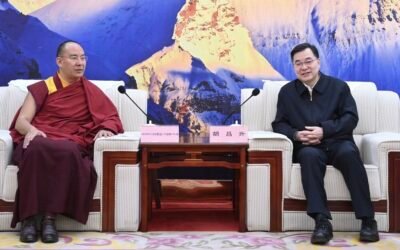
Fearful of the event’s increasing success, Beijing attempts to diminish the holy journey to the point of insignificance.
by Lopsang Gurung
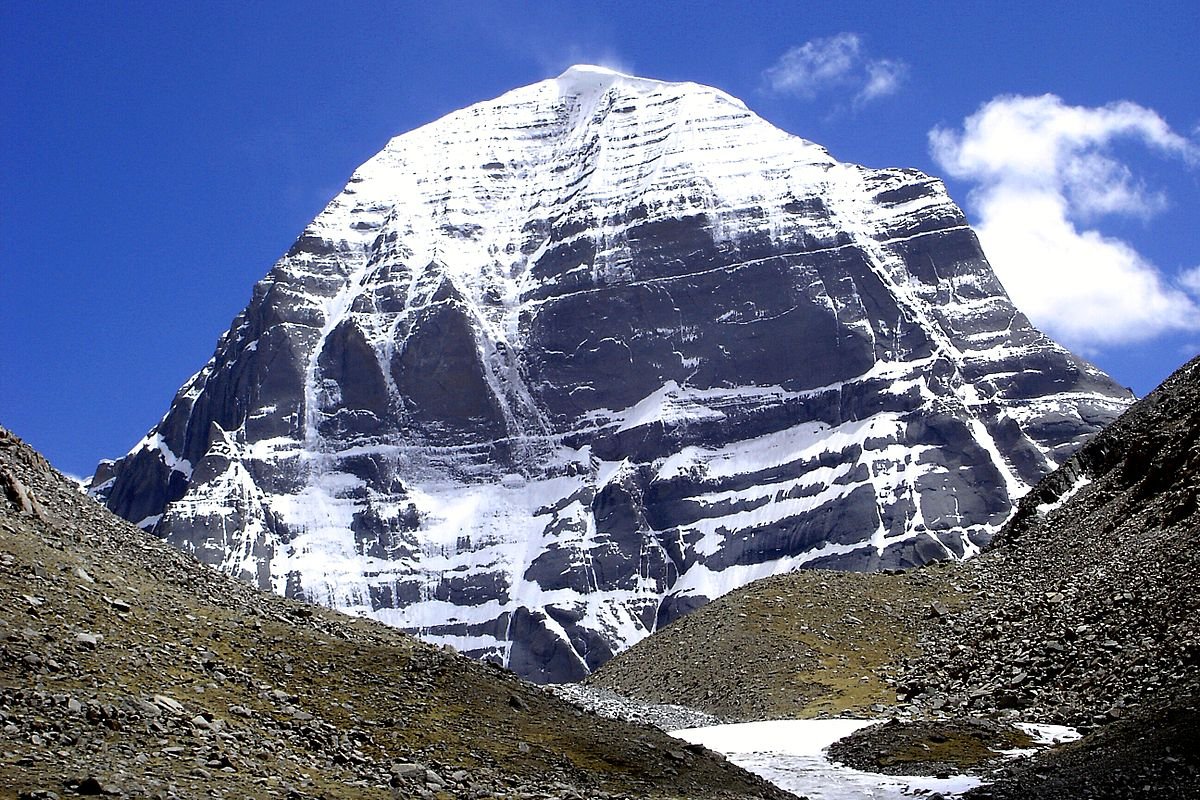
Each year, as the Tibetan New Year arrives and spring draws near, thousands of Tibetans traditionally embark on a journey to Mount Kailash, a sacred peak respected in Buddhism, Hinduism, Jainism, and Bon. It stands out as one of the few places on earth where these four religions find common ground. Unfortunately, the Chinese authorities share a different viewpoint: they believe Tibetans should not be allowed to visit freely.
This year, according to information from Tibetan sources, the authorities have added another layer of restrictions for Tibetans wanting to walk around the mountain. The system is straightforward: if a pilgrimage holds deep meaning, spiritual value, and cultural importance, Beijing will find a way to control it to the point of insignificance.
Tibetans now have to register with local security offices before they can step onto the pilgrimage route. This process includes new travel permits, background checks, and a review of “relevant documents,” a phrase that in China can cover anything from an ID card to a political loyalty test. Pilgrims report that even after getting the required papers, they are often stopped at checkpoints and questioned again. Nothing says “religious harmony” like a new military outpost on a sacred trail.
Those who do not have the correct permit risk being detained immediately. Several Tibetans have already been turned back or temporarily held, highlighting that today in Tibet, simply walking around a holy mountain can be seen as a public security threat.
Mount Kailash, located in the Ngari region, is not merely a mountain. For Buddhists, it is associated with Demchok, the deity of bliss. For Bon practitioners, it connects to the legendary Shenrab Miwo. For Hindus, it is the home of Shiva.
For Jains, it represents the path to spiritual liberation. In short, it is one of the most significant pilgrimage sites in Asia.
Traditionally, Tibetans circumambulate the mountain to gain merit, cleanse negative karma, and follow in the footsteps of saints like Milarepa, who is believed to have meditated there. Completing one circuit is said to cleanse a lifetime of obscurations; twelve circuits, an entire cosmic cycle; and 108 circuits, well, enlightenment is nearly guaranteed.
But enlightenment is not an acceptable outcome in the current political climate.
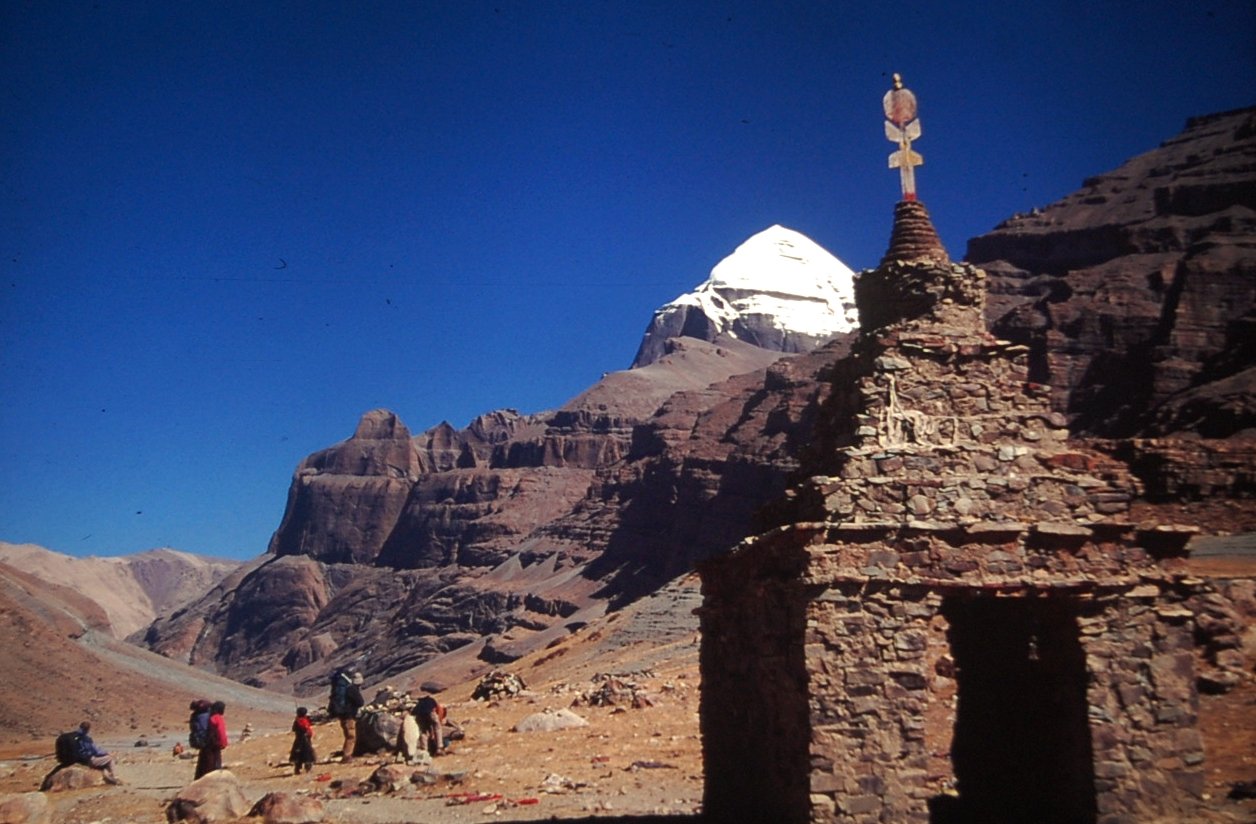
The new restrictions fit into a larger trend: Beijing’s effort to convert Tibetan religious life into a tightly controlled administrative process. Pilgrimage routes are monitored, monasteries are watched, and even prayer gatherings need official permission. Spirituality is only acceptable when it aligns with the state’s security framework.
Ironically, these measures affect Tibetans more than foreign tourists. International visitors often have easier access to the area than the people who have lived there for generations. A Tibetan pilgrim may need several permits to walk around a mountain revered by his ancestors for a thousand years, while a foreign traveler with a tour guide can sometimes pass through with fewer hurdles.
Despite the restrictions, Tibetans still try to undertake the pilgrimage. The cultural and spiritual significance of Mount Kailash runs too deep to be erased by paperwork. Each year, many continue the journey, even though it now requires navigating checkpoints, facing interrogations, and dealing with the constant risk of being turned back.
The Chinese authorities may manage to slow the flow of pilgrims, but they have not succeeded in extinguishing the devotion that drives them. In Tibet, faith has endured far worse than a new set of forms to fill out.

Uses a pseudonym for security reasons.