The case of Samten reveals the familiar cycle of detention, torture, and official denials.
by Lopsang Gurung
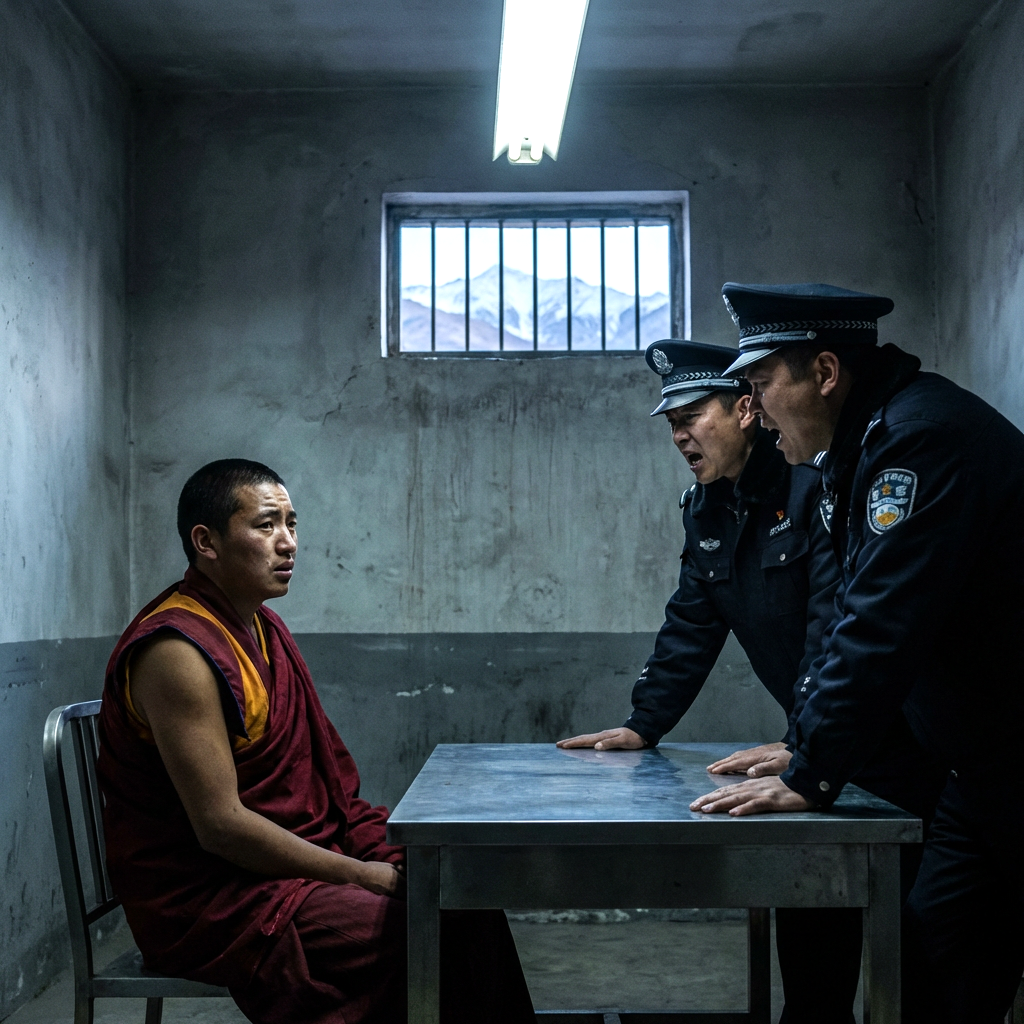
The death of a young Tibetan monk named Samten has once again revealed the violent forces that control religious life in Tibet. His body was returned to his monastery in early December, with a familiar narrative: he had “fallen suddenly ill,” according to the authorities, and despite emergency treatment, he could not be saved. No details about the illness, the hospital, or the circumstances of his detention were shared. What was given instead was a warning. The monks were told not to talk about what had happened.
In Tibet, silence is not a request. It is an order. But now, in March, somebody is speaking.
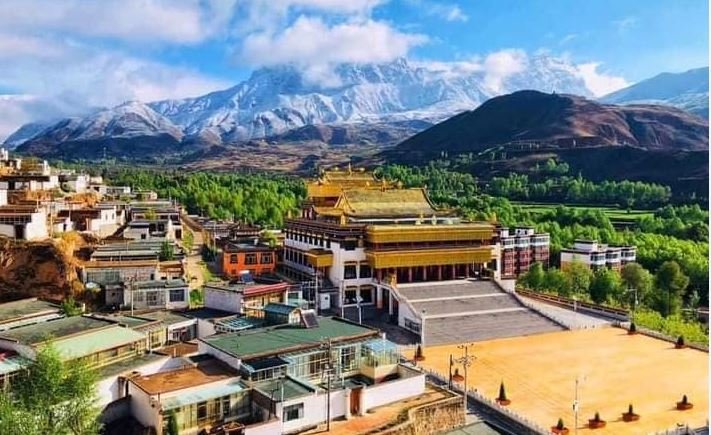
Samten was around twenty-five years old. He was part of Dhitsa Geden Tashi Chöding Ling, one of the four main monasteries in Palung County in the northern Amdo region. Founded by the first Je Shamar Pandita, the monastery has long been a center for Tibetan-language education and monastic scholarship. It is home to about four hundred monks, many of whom have already felt the tightening grip of state surveillance.
Dhitsa Geden Tashi Chöding Ling is known for preserving the Tibetan language. Its monks helped create early woodblock prints for modern Tibetan textbooks and took part in language preservation efforts. In the eyes of the authorities, this alone makes the monastery politically suspicious. In Tibet, culture itself is seen as a threat.
In 2021, police expelled dozens of underage monks from Dhitsa and nearby Jhakhyung Monastery as part of a broader effort to weaken monastic communities and disrupt the passing of religious education to younger generations.
That same year, Samten was detained for the first time. His offense was minor by most standards but significant under China’s rules: he had shared images and information on WeChat about the elections of the Central Tibetan Administration, the elected government-in-exile formed by Tibetans living abroad. As a result, he was placed under surveillance. Local security personnel monitored him closely, and the monastery itself became a site of constant observation. In Tibet, even the smallest sign of connection to the Dalai Lama or the exile community is seen as a political crime.
The second arrest was different. This time, Samten did not come back alive.
Sources inside the monastery reported that he died after being severely beaten during interrogation. The police did not acknowledge this, of course. They returned his body along with their official explanation and instructed the monks to remain silent. The fate of his family is unknown. Whether they were informed, pressured, or silenced is hard to confirm. In Tibet, families of detainees often vanish into the same cloud of intimidation that surrounds the victims.
Samten’s death reflects a pattern that has become noticeable in the months leading up to the Dalai Lama’s 90th birthday. Monasteries have faced raids, images of the Dalai Lama have been confiscated, senior monks have disappeared, and the state has intensified political education sessions. In one case, a respected scholar took his own life after being forced to denounce the Dalai Lama in front of his students. The campaign is coordinated, ideological, and relentless. It aims not only to control Tibetan Buddhism but to transform it into something unrecognizable, something loyal to the Chinese Communist Party rather than its own tradition.
The circumstances of Samten’s death are disturbingly familiar. Tibetans detained for political or religious reasons often die in custody, their bodies returned with vague explanations and strict orders not to ask questions. The pattern is so consistent that it has become a grim ritual: arrest, silence, death, denial, and forced forgetting. The authorities rely on fear to ensure that the story ends there.
But stories do not finish just because a government orders them to. They live on in whispers, in memories, in the quiet determination of monks who refuse to let a fellow practitioner disappear without a trace. They persist because Tibetans know that what happened to Samten could happen to any of them. They endure because the truth, even when buried, has a way of coming back to light.
Samten’s death serves as a warning about the rising repression in Tibet, where the state’s obsession with control has reached a level where even a young monk sharing information on a messaging app can be seen as a security threat. It is a reminder that the campaign against Tibetan Buddhism plays out on bodies—young bodies, unarmed bodies, bodies that enter police custody alive and leave as corpses.
The authorities may claim that Samten died of a sudden illness. They may threaten those who talk about him. They may hope that fear will erase what happened. But the monks of Dhitsa Geden Tashi Chöding Ling know the truth. And in Tibet, truth has a way of surviving even when those who carry it do not.

Uses a pseudonym for security reasons.