This time, Beijing lost. But in other cases, including Shen Yun’s, theaters surrendered to Chinese pressure.
by Massimo Introvigne
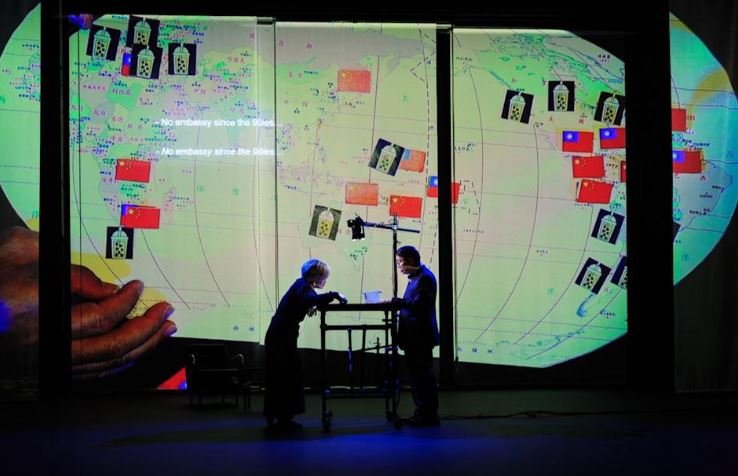
French and Taiwanese media reported that the local Chinese consulate reached out to the Strasbourg theater Le Maillon in early February to object to the planned performances of “Ceci n’est pas une ambassade” (“This Is Not an Embassy”). This documentary-style show was co-created by Rimini Protokoll and Taiwan’s National Theater and Concert Hall. It simulates the opening of a Taiwanese embassy and explores Taiwan’s unclear international status.
The play was chosen as the opening event for the “Démocraties en jeu” festival, which focuses on threats to democratic governance. When the theater’s director did not respond to the initial contact, the deputy consul general escalated the issue by directly writing to the City of Strasbourg, the theater’s main funder. He demanded the cancellation of the show, claiming it would hurt Sino-French relations.
Strasbourg’s mayor, Jeanne Barseghian, confirmed that she had received the letter and described the intervention as very serious. She pointed out that artistic freedom is protected by French law and reported the incident to the Regional Directorate of Cultural Affairs. The Chinese consulate did not respond to media requests for comment, nor did the Chinese Embassy in Paris or China’s Ministry of Foreign Affairs. Chinese state media have also stayed silent.

Taiwanese media quickly picked up this story. The “Liberty Times” published the statement from the Taipei Representative Office in France, praising the authorities in Strasbourg for standing up to political pressure and reaffirming that Taiwan’s voice “must not be silenced.” “SET News” reported that the Taiwan Cultural Center in Paris confirmed the performances would go on as planned and that local support was strong.
As reported by “Lingua Sinica,” cast member Chiayo Kuo pointed out on social media that the consulate’s effort to suppress a performance at a democracy-themed festival only highlighted “who the anti-democratic side is.”
The Strasbourg case fits into a larger trend in which Chinese diplomatic missions pressure foreign governments, cultural institutions, universities, and private venues to censor content that runs counter to Beijing’s political narratives. These efforts often target expressions of Taiwanese identity, references to Uyghurs or Tibet, and any acknowledgment of groups viewed as undesirable by the Chinese state.
One of the clearest examples is the ongoing pressure campaign against Shen Yun, a performing arts group linked to Falun Gong. Chinese embassies and consulates have repeatedly urged theaters around the world to cancel Shen Yun performances, often using the same arguments made in Strasbourg: that hosting the show would damage bilateral relations. They also insist Shen Yun promotes a “cult.” In several countries, local media outlets have echoed Beijing’s terms, repeating the Chinese government’s framing of Falun Gong and Shen Yun or information supplied by anti-cult organizations. This alignment between foreign media narratives and Chinese state propaganda makes it easier to justify cultural censorship.

The Strasbourg incident is important because it shows that China’s political pressure extends beyond national governments to municipal authorities, cultural institutions, and individual festival organizers. It indicates that Beijing is willing to influence European cultural programming, not just diplomatic matters directly. It also highlights the vulnerability of artistic institutions that rely on public funding and may feel pressured to avoid controversy. Furthermore, it reveals that China’s attempts to control narratives about Taiwan are intensifying, even in democratic societies with strong legal protections for free expression.
The response from Strasbourg’s mayor and cultural authorities is notable. By stating that artistic freedom is protected under French law and refusing to cancel the production, they set a precedent for resisting foreign political interference. Their position aligns with broader European concerns about authoritarian influence and shows that resistance is possible when local authorities uphold legal protections and reject external pressure. However, when the “cult” card is played, as in the case of Shen Yun, the outcome may be different.
China’s efforts to silence or marginalize groups it labels undesirable, including Taiwanese cultural institutions, Hong Kong activists, Uyghur organizations, or Falun Gong practitioners, extend beyond its borders and raise serious human rights concerns. These actions seek to export censorship, limit freedom of expression, and shape public discourse in democratic societies. The Strasbourg “battle” illustrates how cultural diplomacy can become a battleground for political influence and emphasizes the need for democratic institutions to remain vigilant.
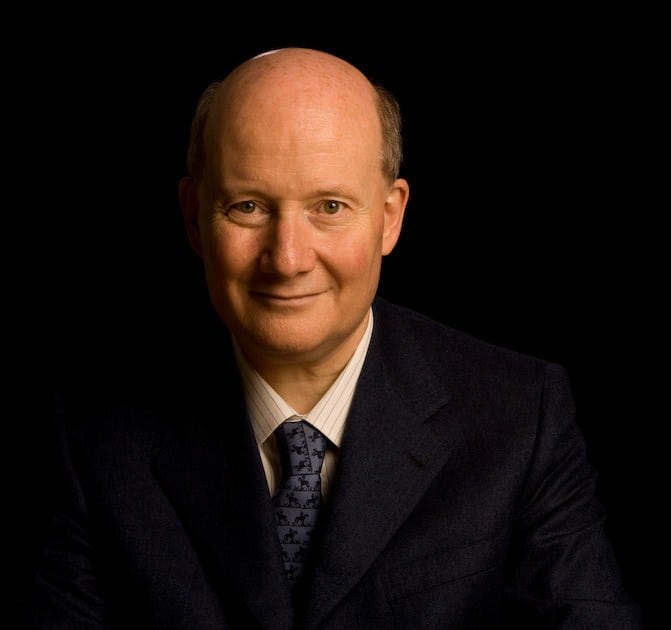
Massimo Introvigne (born June 14, 1955 in Rome) is an Italian sociologist of religions. He is the founder and managing director of the Center for Studies on New Religions (CESNUR), an international network of scholars who study new religious movements. Introvigne is the author of some 70 books and more than 100 articles in the field of sociology of religion. He was the main author of the Enciclopedia delle religioni in Italia (Encyclopedia of Religions in Italy). He is a member of the editorial board for the Interdisciplinary Journal of Research on Religion and of the executive board of University of Pennsylvania Press’ Nova Religio. From January 5 to December 31, 2011, he has served as the “Representative on combating racism, xenophobia and discrimination, with a special focus on discrimination against Christians and members of other religions” of the Organization for Security and Co-operation in Europe (OSCE). From 2012 to 2015 he served as chairperson of the Observatory of Religious Liberty, instituted by the Italian Ministry of Foreign Affairs in order to monitor problems of religious liberty on a worldwide scale.