Leading anti-cultist Dr. Cathleen A. Mann expressed her doubts that Hassan was an “expert on cults” and indeed “an expert in anything,” except “Hassanology.”
by Massimo Introvigne
Article 4 of 4. Read article 1, article 2, and article 3.
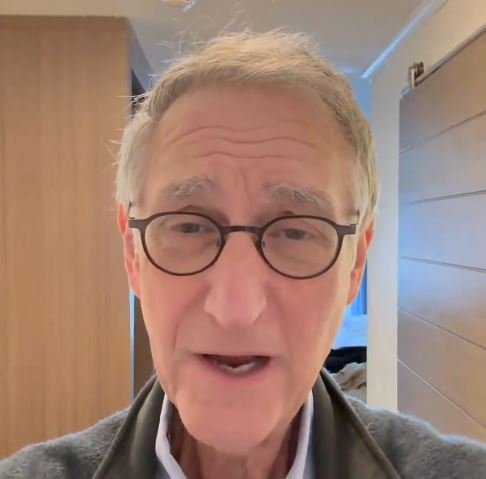
Hassan’s credibility as an expert has been challenged not only by scholars of new religious movements, who reject the Singer-derived “brainwashing” theories on which he relies and by courts of law. Criticism has also come from within the anti-cult movement itself.
Rick Ross, a long-time competitor of Hassan in the business of deprogramming and “exit counseling,” published a 2017 article on his “Cult News” website reporting a serious complaint from one of Hassan’s former clients. According to Ross, the client alleged that Hassan charged thousands of dollars, drained the client’s savings, and provided counseling that was “debilitating and damaging.” The client stated, “I did feel traumatized both during and after my therapy with [Steven Hassan].” Other professionals reportedly described Hassan’s counseling as “both unprofessional and potentially dangerous.” Ross also noted that Hassan had been the subject of a complaint to the Massachusetts Board of Registration of Allied Mental Health Professionals for violating client confidentiality. The complaint was dismissed without prejudice, but the Board reminded Hassan of the rules governing licensed mental health counselors.
On February 15, 2026, Ross was still complaining that Hassan’s charging high fees “has created the perception that deprogramming is only for the rich. Ross, however, is more the working man’s deprogrammer.” Ross told “The Telegraph” that he and Hassan “often compete for the same cases.” One client in 2023, “for instance, went to Hassan first” because “he had the education,” but then “found him lacking in compassion and overeager for money.”
Ross has a criminal record for crimes unrelated to “cults,” such as robbing jewelry shops, and his accusations should be taken with a grain of salt. Regardless, what he published suggests problematic aspects of Hassan’s counseling activities.
The most devastating criticism, however, came from within the anti-cult community’s most intellectual ranks. Dr. Cathleen A. Mann, who died in 2020, was one of the most prominent figures in the field of “cultic studies.” Although scholars of new religious movements disagreed with her on many issues, many respected her integrity. Mann’s critique of Hassan was severe. In a review of one of his books, she wrote: “‘Cults are on the rise’ seems to be the theme of this latest book [“Freedom of Mind”]. But there is no proof of this claim. Hassan offers no scientific study or survey with statistics to prove his theory. It may be that ‘cults are on a downward turn,’ or perhaps ‘cults have stayed the same.’ These possibilities may not help in the marketing and sale of books, but they are two equal possibilities. Of course, none of these statements regarding the growth or decline of cults is based upon scientific evidence. Hassan’s theories are not genuinely informative in any factual sense. It seems to me that Hassan’s purpose in conflating cult numbers is to frighten people and provide him with a marketing tool to sell books, rather than genuinely seeing so many groups and/or relationships as somehow being ‘cult-like.’ He certainly hasn’t proven otherwise in this book.”
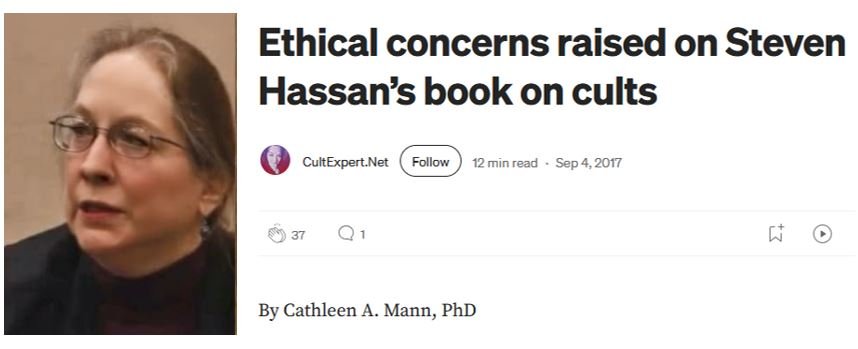
Mann also criticized Hassan’s use of the term “destructive mind control,” writing that it “is not a term used in any legal setting and that has no real meaning. Mind control seems quite ominous and rather sensational, but this term does nothing to further the discussion about the dynamics of cults and how they operate.”
Mann expressed her doubts that Hassan was an “expert concerning cults” and indeed “an expert in anything.” She accused Hassan of borrowing ideas without proper attribution. She noted that some of his concepts appeared to come from NeuroLinguistic Programming (NLP), a group that other anti-cultists have labeled a “cult”: “Hassan makes no mention of NLP whatsoever, nevertheless borrowing from it quite heavily.” More broadly, she wrote that “proper distinctions are not sufficiently made regarding what are actually Hassan’s purported ideas and the ideas he has copied from others, which have not been given proper attribution.” She observed that, as a non-academic, “Hassan is obviously not bound by an academic code of honor.” Nonetheless, “borrowing the ideas of others without citing them has frequently resulted in the expulsion of students from graduate school programs. No reputable academic journal would accept or countenance such omissions.”
Mann was equally critical of Hassan’s BITE model, writing that “Much of the BITE model is borrowed material from a 30-year-long tradition of social psychological research… The BITE model he now proposes is so broad that it could be applied to a very wide array of groups… The BITE model, as now applied by Hassan, has become a kind of philosophic construct not grounded in facts, but rather theories, many of them borrowed from others.”
Her most memorable line was her description of Hassan’s approach as a kind of “cult” itself that “might be called ‘Hassanology.’ In the world of cults, Hassanology essentially depicts Steve Hassan as the ultimate savior. He is a hammer, and there is an ever-expanding list of groups to be seen as nails. As they say, ‘When you are a hammer, everything looks like a nail.’ Of course, this might once again simply reflect a convenient marketing strategy.”
Mann concluded with a damning assessment: “There is a woeful lack of objective evidence to prove his theories… At the very least, extraordinary claims should require extraordinary evidence. Or has Hassanology become an ‘absolute science’?”
Taken together, these criticisms—from courts, former clients or victims, competitors, and one of the anti-cult movement’s most respected thinkers—paint a picture very different from the one Hassan presents. His alleged authority does not rest on scientific consensus, judicial endorsement, or scholarly accomplishment. Instead, it is rooted in a career that began with deprogramming, a practice now widely recognized as abusive, and continued with the promotion of theories rejected by mainstream scholarship. Even within the anti-cult community, his reputation is contested. The evidence suggests not a leading expert, but a figure whose claims and methods are persistently disputed.

Massimo Introvigne (born June 14, 1955 in Rome) is an Italian sociologist of religions. He is the founder and managing director of the Center for Studies on New Religions (CESNUR), an international network of scholars who study new religious movements. Introvigne is the author of some 70 books and more than 100 articles in the field of sociology of religion. He was the main author of the Enciclopedia delle religioni in Italia (Encyclopedia of Religions in Italy). He is a member of the editorial board for the Interdisciplinary Journal of Research on Religion and of the executive board of University of Pennsylvania Press’ Nova Religio. From January 5 to December 31, 2011, he has served as the “Representative on combating racism, xenophobia and discrimination, with a special focus on discrimination against Christians and members of other religions” of the Organization for Security and Co-operation in Europe (OSCE). From 2012 to 2015 he served as chairperson of the Observatory of Religious Liberty, instituted by the Italian Ministry of Foreign Affairs in order to monitor problems of religious liberty on a worldwide scale.