Two months after a court verdict in Shanxi, repression continues. It reveals something Beijing does not want to admit: Zhonggong is alive.
by Deng Huizhong
For a movement the CCP proudly declared “eradicated” in 2016, Zhonggong has an uncanny habit of reappearing in police bulletins. The latest example arrived in February 2026, when the China Anti Xie Jiao Association triumphantly published a long report celebrating the downfall of a “criminal cult” in Shanxi. The propaganda tone was familiar; the details, however, told a different story. Once again, the Party was forced to acknowledge—indirectly and with great irritation—that Zhonggong continues to exist, to organize, and to worry the Ministry of Public Security.
The case centers on Yang Dongmei, a 70-year-old woman from Changzhi, sentenced in November 2025 to seven years in prison for “using superstition to undermine the implementation of the law,” the standard charge applied to members of xie jiao, an expression translated as “evil cults” but that in fact means “organizations spreading heterodox teachings.” The verdict was final, yet the propaganda machine waited two months before publicizing it—an unusual delay that suggests the authorities wanted to package the case as a model victory in the ongoing campaign against Zhonggong.
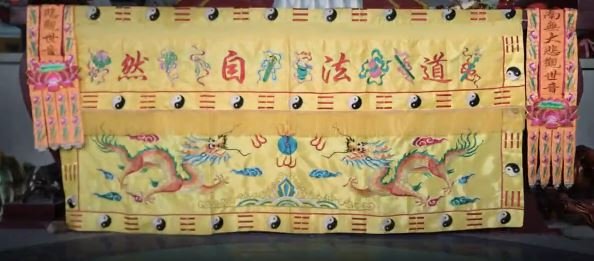
The official narrative is predictable: Yang allegedly rebuilt a “criminal pyramid,” invented “superstitious healing rituals,” and extracted money from gullible followers. The report describes a three-tier structure, 200 members, and a “cultural hall” confiscated as illegal property. This “cultural hall” was in fact the “Ancestor Culture Museum” (始祖文化馆)—a modest building that, according to the CCP, was an “illegal temple” but, according to locals, was little more than a community space where Qigong practitioners met. Its dramatic seizure and publicized demolition were clearly meant to symbolize the state’s victory over a movement it insists no longer exists.
But beneath the slogans, the story reveals something far more significant.
Zhonggong, founded in 1987 by Zhang Hongbao, was once one of the largest Qigong movements in China, with tens of millions of followers and support from high-ranking Party officials. After Zhang fled to the United States in 2000 and died in 2006, Beijing insisted the movement had been dismantled. In fact, it had reorganized abroad under Zhang’s secretary, Zhang Xiao, who rebuilt a clandestine network inside China under various names. During the COVID-19 pandemic, her anti-COVID Qigong exercises spread widely, prompting renewed alarm within the Ministry of Public Security.
The 2021 prosecution of Sun Xuhui, leader of another Zhonggong faction in Shandong, already showed that the movement had not disappeared. The new Shanxi case confirms that the CCP’s “success story” was largely fictional.
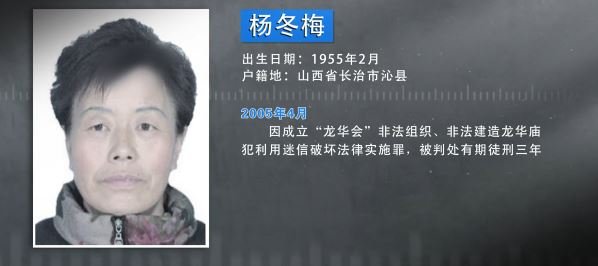
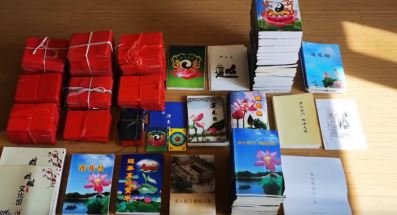
The propaganda report unintentionally provides the evidence. It describes a network operating across several provinces, with coordinated gatherings, printed materials, badges, and a hierarchy of organizers. It claims that police intercepted 31 people traveling to a “traditional culture study meeting” in 2022—an event that, according to the CCP, should not have been possible if Zhonggong had truly been eliminated. It also notes that Yang had previously been imprisoned in 2005 for leading a Zhonggong-related group. Yet, after her release, she was able to reconnect with a national network and rebuild a local structure.
This is not the profile of a movement that vanished twenty years ago. It is the profile of a group that survived underground, adapted, and continues to attract followers despite relentless repression.

The CCP’s accusations follow the standard template: “superstition,” “fraud,” “pyramid structure,” “mental control,” “family destruction,” and “social instability.” These are the same charges used against Falun Gong, The Church of Almighty God, and every other banned religious or spiritual group. Rather than descriptions of actual crimes, they are ideological labels designed to justify harsh sentences. The report’s insistence that Yang “forced members to donate” or “sold cosmic energy cards” is part of the ritualized language of anti-xie jiao propaganda, not evidence.
What the report does not explain is why hundreds of people—mostly elderly, according to the police—would risk arrest to attend Qigong gatherings, or why Zhonggong continues to attract followers decades after its founder’s exile and death. The answer, of course, is that the CCP has never been able to eliminate the demand for alternative spiritual practices, especially those that promise health, meaning, and community in a society where traditional structures have eroded. The Party offers only ideology and surveillance.
The repression of Zhonggong is not a story about “protecting the people,” as the propaganda claims. It is a story about a government terrified of any organization it does not control. The report, intended as a victory lap, instead reads like an admission of failure: Zhonggong is still there, still organizing, still attracting followers, and still provoking the CCP’s fear.
If the movement had truly been eradicated, Beijing would not need to keep arresting its members—or writing long articles insisting that the job is done.

Uses a pseudonym for security reasons.