“Rule of law and anti-xie-jiao theme parks” put together the ubiquitous propaganda for “Xi Jinping’s thought on the rule of law,” and the persecution of religious minorities.
by Massimo Introvigne

Last week, on December 14, the local CCP leaders were in Qiantang New District in Hangzhou, Zhejiang Province, for a special festive celebration. They inaugurated a “rule of law and anti-xie-jiao theme park” (处法治反邪教主题公园).
As Bitter Winter explained, “Xi Jinping’s thought on the rule of law” is now in CCP propaganda the equivalent of tomato juice in Italian restaurants. They put it everywhere. In essence, it teaches that you should regard as law what the CCP says is the law.
Its application to religion is that you consider as a xie jiao any movement the CCP labels a xie jiao. To make the notion understandable to Westerners, CCP publications translate xie jiao as “evil cults.” But since the words xie jiao have existed in China for centuries before the notion of “cult” emerged in the West, the translation is somewhat anachronistic. A better rendering would be “heterodox teachings,” and “heterodox” has always been intended as something the government, for whatever reason, does not approve of.
To show the connections between the rule of law and the crackdown on xie jiao, particularly The Church of Almighty God and Falun Gong (but the list is longer), the CCP has decided to entertain the citizens with theme parks. Calling them “anti-xie-jiao Disneylands” is perhaps premature, but after all the first Disneyland started from humble beginnings as well.
The CCP media explain that visitors, “while enjoying the scenery, can be subtly influenced by the propaganda and education of the rule of law against the xie jiao, forming a strong atmosphere of consciously resisting the harm of xie jiao, and advocating the rule of law.”
In Hangzhou, visitors may have fun with cartoons, artistic representations, educational programs, and even meet “characters” teaching them the ugliness of the xie jiao and the beauty of Xi Jinping’s rule of law. 10,000 visitors are expected within the next few weeks, or so the CCP says.

Hangzhou’s is not the first “rule of law and anti-xie-jiao theme park.” Indeed, they are proliferating around China. Jiaojiang District in Zhejiang Province opened its own in October, and boasts “a daily flow of thousands of people.” Hefei, in Anhui Province, followed suit in November. Liuhe District in Nanjing City, Jiangsu Province, had a large similar park of 60,000 square meters since November 2017. Jiangsu Province also hosts another large “rule of law and anti-xie-jiao theme park” in Huaiyin, which claimed to have received 30,000 visitors in its first six months. In the same province, yet another such theme park is in Luoshe Town, Huishan District. And there are more.

Some of these “theme parks” are large structures, others only sets of posters placed in pre-existing parks or residential districts. But, as the CCP says, each “combines anti-xie-jiao propaganda with fitness and leisure.” Whether Chinese citizens are more disturbed by the xie jiao or by the mandatory CCP ballyhoo is a different question.
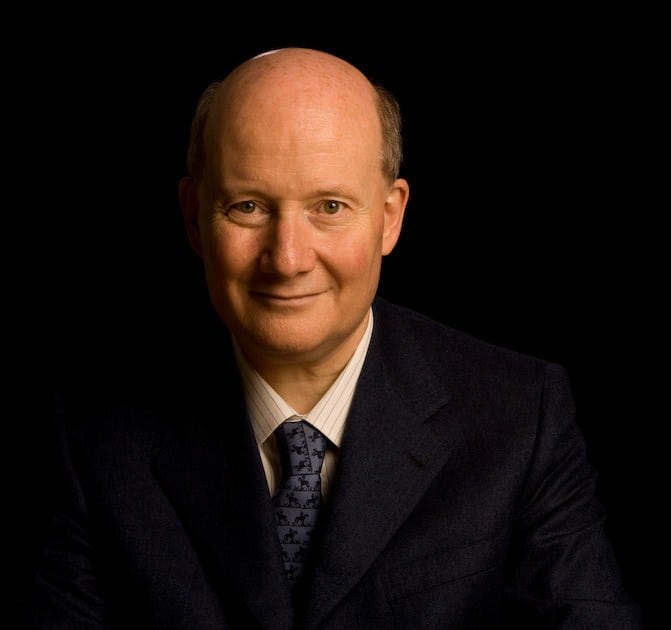
Massimo Introvigne (born June 14, 1955 in Rome) is an Italian sociologist of religions. He is the founder and managing director of the Center for Studies on New Religions (CESNUR), an international network of scholars who study new religious movements. Introvigne is the author of some 70 books and more than 100 articles in the field of sociology of religion. He was the main author of the Enciclopedia delle religioni in Italia (Encyclopedia of Religions in Italy). He is a member of the editorial board for the Interdisciplinary Journal of Research on Religion and of the executive board of University of Pennsylvania Press’ Nova Religio. From January 5 to December 31, 2011, he has served as the “Representative on combating racism, xenophobia and discrimination, with a special focus on discrimination against Christians and members of other religions” of the Organization for Security and Co-operation in Europe (OSCE). From 2012 to 2015 he served as chairperson of the Observatory of Religious Liberty, instituted by the Italian Ministry of Foreign Affairs in order to monitor problems of religious liberty on a worldwide scale.